Best Honey for Baking
Find the ideal honey varieties for baking cookies, cakes, breads, and pastries. Learn which honeys add moisture, flavor, and golden color to your baked goods.
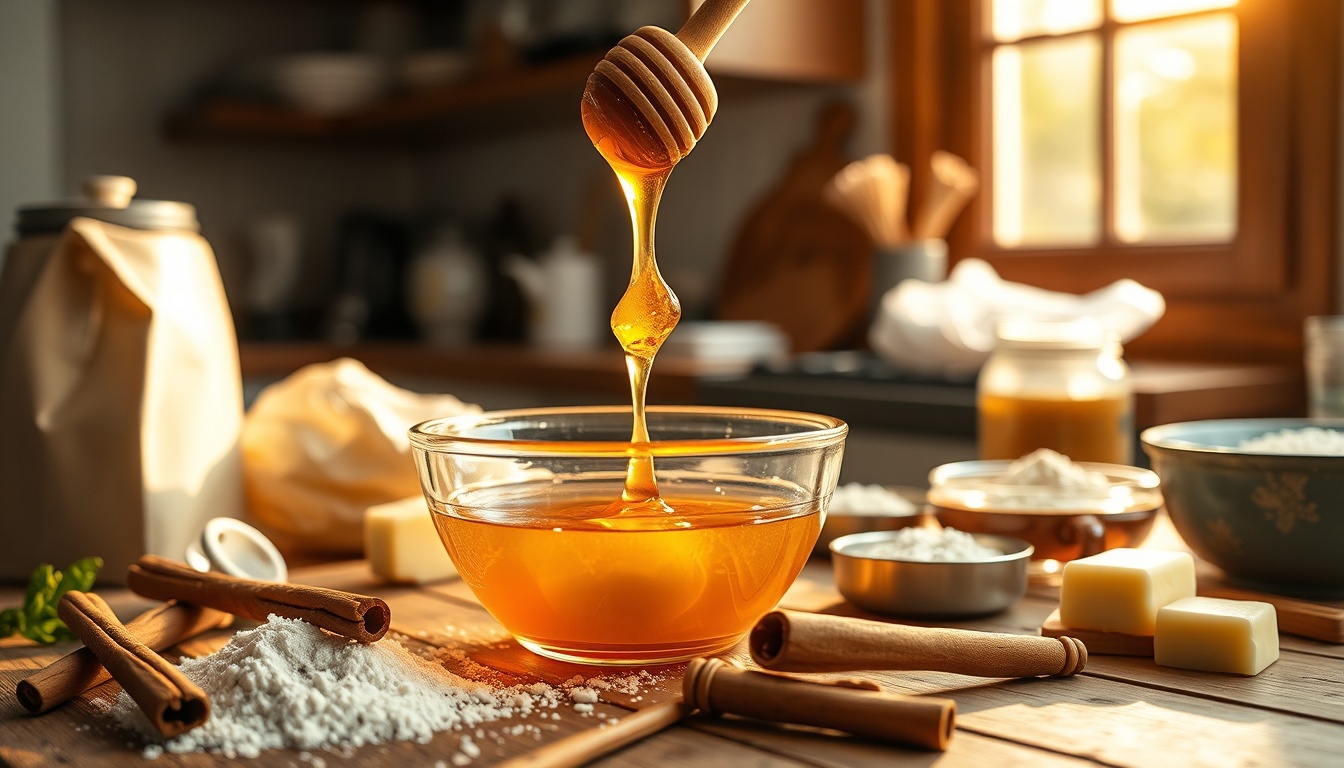
Quick Answer
Clover and wildflower honey are the best all-around choices for baking due to their mild, versatile flavor that lets other ingredients shine. For specialty baking, meadowfoam honey adds butterscotch-vanilla depth to pastries and glazes, while buckwheat honey creates richly flavored gingerbread and dark baked goods. Orange blossom honey is the best choice for citrus cakes, almond desserts, and floral pastries.
What to Look For
Choose a liquid honey for easy measuring and mixing. Mild-flavored honeys work best for most baking since they add moisture and subtle sweetness without dominating the final product. Light-colored honeys produce a golden hue in baked goods, while dark honeys create deeper color and bolder flavor. Raw honey works fine for baking—the heat will neutralize its enzymes regardless. When substituting honey for sugar, use about 3/4 cup honey per 1 cup sugar, reduce other liquids by 2 tablespoons, lower oven temperature by 25°F, and add 1/4 teaspoon baking soda per cup of honey to neutralize acidity.
Top Recommendations
The gold standard for baking. Its mild, clean sweetness adds moisture and golden color without competing with butter, vanilla, chocolate, or other flavors. Universally available and affordable for large-batch baking.
Buy in bulk (2-3 lb containers) from warehouse stores for the best value when baking frequently.
Slightly more complex than clover with multi-floral depth that adds interesting character to honey cakes, muffins, and quick breads. Versatile enough for any recipe calling for honey.
Local wildflower honey from farmers markets often has more character than mass-produced versions.
Its natural marshmallow-butterscotch-vanilla flavor elevates cookies, pastry glazes, and honey cakes. The unique flavor becomes part of the baked good rather than just adding sweetness.
Source from Oregon beekeepers for authentic meadowfoam. Worth the premium for special-occasion baking.
The bold, malty flavor creates exceptional gingerbread, dark rye bread, and hearty spice cookies. Its intensity stands up to strong spices like ginger, cinnamon, and cloves.
A little goes a long way due to its strong flavor. Start with half honey, half sugar in dark baking recipes.
Its delicate citrus-floral notes pair beautifully with almond, vanilla, and lemon in cakes, shortbread, and pastry glazes. Excellent for honey cakes and Middle Eastern-inspired baked goods like baklava. Stays liquid naturally, making it easy to measure and pour.
Spanish and Florida orange blossom honeys offer the most classic citrus-floral flavor; look for 100% orange blossom, not a wildflower blend.
How to Use
For most baking, substitute honey for sugar at a 3:4 ratio (3/4 cup honey per 1 cup sugar). Reduce other liquids by 2 tablespoons per cup of honey used. Lower your oven temperature by 25°F (about 15°C) since honey caramelizes faster than sugar. Add 1/4 teaspoon baking soda per cup of honey to balance acidity. Measure honey by lightly oiling your measuring cup first so it slides out cleanly. For recipes specifically designed for honey (like honey cake), follow the recipe as written. Honey keeps baked goods moist longer than sugar, making it excellent for make-ahead treats.
What to Avoid
Avoid strongly flavored honeys like manuka, chestnut, or thyme in delicate baked goods—their bold characters can overpower subtle flavors. Skip expensive specialty honeys for baking since heat destroys their unique enzymatic properties anyway. Do not use crystallized honey without reliquefying it first, as the granules may not dissolve evenly. Avoid using honey in recipes that rely on dry sugar for texture (like meringues or brittle), as honey moisture content will change the outcome.