Print-Ready Honey Reference Guides
Beautiful one-page reference guides for honey lovers. Print them out, stick them on your fridge, or save as PDF.
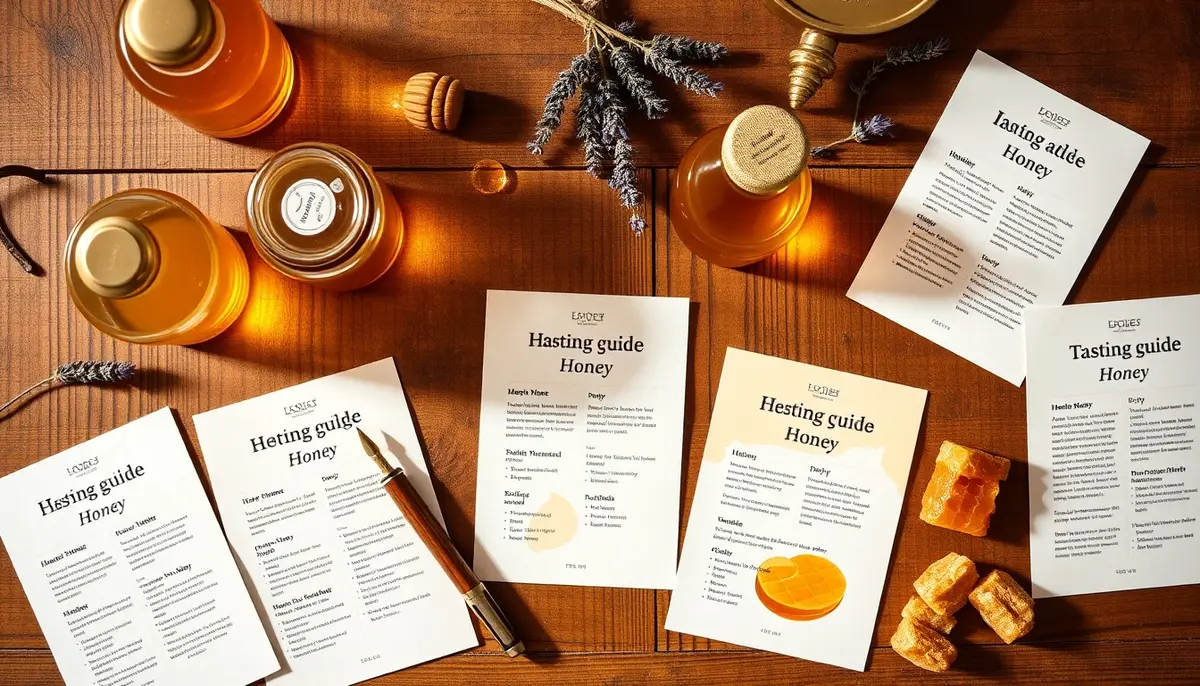
How to Print These Guides
Open the guide
Click any printable above to open the full page.
Click "Print This Page"
Use the print button on the page, or press Ctrl+P (Cmd+P on Mac).
Print or save as PDF
Print directly or choose "Save as PDF" in the print dialog for a digital copy.
Frequently Asked Questions
Which honey varieties should I include on my tasting scorecard?
Start with contrasting varieties to highlight differences: clover honey (neutral baseline), buckwheat honey (dark molasses intensity), acacia honey (delicate floral), and wildflower honey (complex botanical blend). For advanced tastings, compare regional varieties like sourwood honey Appalachian terroir vs tupelo honey Southern swamp character.
What's a reasonable price range for quality raw honey?
Expect $8-15/lb for everyday varieties like clover honey and wildflower honey. Premium single-origin varieties cost $15-30: buckwheat honey antioxidant powerhouse, sourwood honey Appalachian terroir, orange blossom honey citrus character. Therapeutic varieties like Manuka honey UMF 15+ range $45-70 due to proven antimicrobial properties.
Which honey varieties are best for different seasons?
Spring harvest: tupelo honey limited Florida window, orange blossom honey citrus bloom peak. Summer varieties: clover honey and wildflower honey abundance. Late summer treasures: sourwood honey August Appalachian peak. Fall harvest: buckwheat honey September antioxidant surge. Plan purchases around these harvest windows for peak freshness and availability.
How do I store different honey varieties properly?
Most varieties follow similar storage rules, but crystallization varies: clover honey and wildflower honey crystallize naturally in 2-6 months (easily reversible with warm water). Acacia honey and tupelo honey stay liquid 1-2+ years due to higher fructose content. Buckwheat honey crystallizes slowly (6-12+ months) maintaining dark color. Manuka honey requires extra moisture protection to preserve therapeutic MGO compounds.
Which honey varieties offer the best health benefits?
Buckwheat honey leads in antioxidants with ORAC 16,000+ (up to 20× more than clover honey). Manuka honey UMF 10+ offers proven antimicrobial MGO compounds for wound healing and digestive support. Acacia honey provides blood sugar benefits with low glycemic index (~32 vs ~69 for most honeys). Wildflower honey offers diverse botanical compounds from multiple nectar sources supporting overall wellness.
Want to learn more about honey varieties and quality?