Honey Color Scale Chart
Explore all 7 USDA Pfund color classes — from nearly colorless water white to rich dark amber. Select a class for example varieties, flavor notes and cooking ideas. Color describes appearance; taste the actual jar before choosing a pairing.
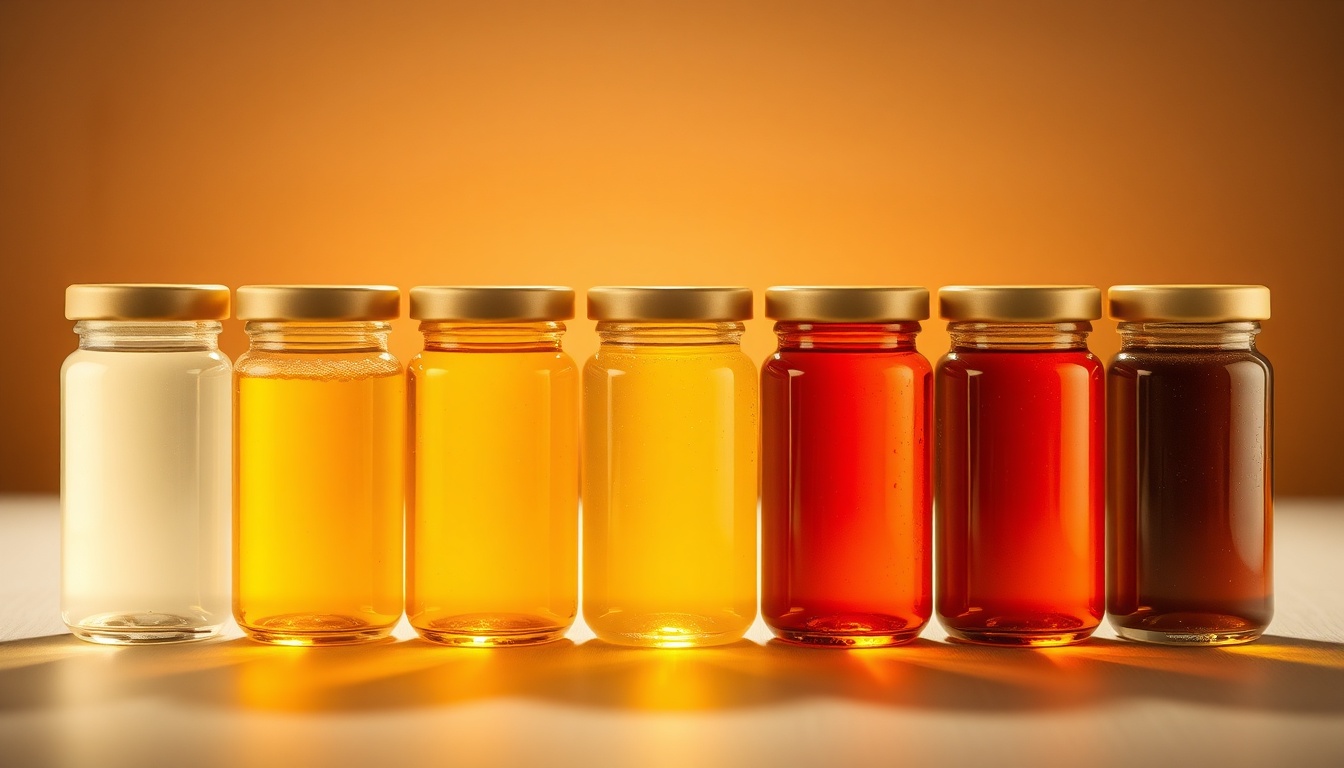
USDA honey color classes run from Water White (≤8 mm Pfund) to Dark Amber (>114 mm). The seven classes describe color separately from quality grade. Floral source and batch affect flavor; screen swatches cannot measure a jar.
Turn color into a buying shortlist
Use color as a clue, then check nutrition, local sourcing, and normal price ranges before treating one jar as the better buy.
Edited by Sam French · Raw Honey Guide Editorial Team
Source reviewed against primary literature and official guidance where available. Health content is educational, not medical advice, and does not replace a licensed clinician.
What Are the 7 USDA Honey Color Classes?
Light Honeys
Try with delicate dishes
Medium Honeys
Explore floral pairings
Dark Honeys
Try in a savory glaze
Select a color band to explore that class
Color Classes, Flavor Examples and Cooking Uses
A color class is a starting point for exploring honey. These variety examples are illustrative, and their actual color can cross class boundaries. Flavor comes from the particular floral source and batch, so sample a jar before deciding how to use it.
Water White
Examples may taste delicate, lightly floral or clean; pale color does not mean less sweetness.
Extra White
Look for clean sweetness and gentle floral notes; taste the particular jar before choosing a pairing.
White
Illustrative notes include floral, citrus and vanilla-like aromas, depending on the variety and batch.
Extra Light Amber
Examples can have floral, herbal or buttery notes; color alone cannot choose between them.
Light Amber
Possible notes include herbs, warm caramel or fruit, with substantial variation between varieties.
Amber
Some examples taste tangy, woody or molasses-like. An amber class is not a flavor or quality guarantee.
Dark Amber
Examples may be malty, earthy, woody, bitter-edged or molasses-like; not every dark jar has the same intensity.
What Is the Pfund Scale and How Is Honey Color Measured?
A Pfund reading expresses honey color in millimeters. USDA color designations are separate from quality grades: an Amber label describes appearance, not whether a jar is a better quality product. The boundaries below are reproduced in USITC Table I-4.
| Color class | Pfund reading |
|---|---|
| Water White | ≤8 mm |
| Extra White | >8–17 mm |
| White | >17–34 mm |
| Extra Light Amber | >34–50 mm |
| Light Amber | >50–85 mm |
| Amber | >85–114 mm |
| Dark Amber | >114 mm |
A boundary belongs to the lighter class: exactly 85 mm is Light Amber, and exactly 114 mm is Amber. Dark Amber includes all readings above 114 mm. Equal-width bands on this page show categories, not a linear measuring scale.
These screen swatches illustrate the seven classes; they are not calibrated measurements. Floral source and batch variation affect appearance and flavor, so a variety can span more than one color class.
Why Does Honey Color Vary Between Batches?
Natural Factors
- Floral source: Different nectar or honeydew sources can produce different appearances. Named varieties can vary between batches.
- Mixed sources: Bees may visit more than one kind of flower, so a harvest can contain a changing blend.
- Harvest: Different harvests need not have the same mix of floral sources.
- Region: Compare the actual batch rather than expecting a variety name to promise one color.
Post-Harvest Factors
- Storage: Honey can darken during storage; color alone cannot establish its age.
- Heating: Heating can change appearance, so compare samples with similar handling.
- Viewing conditions: Lighting and the container can change how the same sample looks.
- Crystallization: Crystallized honey appears lighter and more opaque than its liquid form.
Choose a Honey for the Dish
Start with a small taste
Notice the aroma and finish before adding honey to a recipe. Color can suggest an example to explore, but it cannot predict the flavor of every jar.
Match the other ingredients
Try a mild-tasting honey with fruit or yogurt, a floral example with toast or soft cheese, and a bold-tasting example in a savory glaze or spice cake.
Compare two batches
Taste two honeys in the same dish and lighting. The pairing you prefer is more useful than treating the darker or lighter jar as a universal winner.
Explore Honey Varieties by Color
Browse our database of 210+ honey varieties to find the perfect color and flavor for your needs.
Frequently Asked Questions About Honey Color
What determines the color of honey?
Does darker honey mean better quality?
What are the seven Pfund color boundaries?
Can I measure my honey by matching it to this screen?
Does honey color change over time?
How should I choose a honey for cooking?
Related Guides
Quality & Grading
Identify quality honey and spot fakes.
Read GuideHoney Flavor Wheel
Explore honey flavor profiles — 7 categories, 30+ subcategories.
Read GuideHoney Types Explained
Raw, filtered, pasteurized, creamed, and more.
Read GuideRelated Articles
Dark Honey vs Light Honey: What the Color Really Means
Is dark honey healthier? Learn what color tells you about antioxidants, minerals, flavor, and which type suits your needs.
Read ArticleManuka Honey Grading Systems Explained: UMF vs MGO vs KFactor
UMF vs MGO vs KFactor — manuka honey ratings decoded. Learn what the numbers mean and how to choose authentic manuka.
Read ArticleHoney Tasting Guide: How to Taste Honey Like an Expert
Learn how to taste honey like an expert: the 5 sensory elements, setting up a tasting flight, flavor notes for 12 major varieties, and the best food...
Read Article