Bee Pollen Benefits: Nutrition, Dosage & Evidence-Based Guide
Bee pollen is one of nature's most nutrient-dense foods — packed with complete protein, B vitamins, and 250+ bioactive compounds. Here is what the science says about its health benefits, how to take it safely, and how it compares to other bee products.
World Bee Day 2026 — Today, May 20!
Today marks global awareness of the vital role bees play in our food systems and ecosystems. When you choose bee pollen from local, ethical beekeepers, you directly support bee health and sustainable apiary management. Each granule represents the work of thousands of forager bees visiting millions of flowers — consuming bee pollen connects us to the intricate pollination networks that sustain biodiversity and agriculture worldwide.
Learn about World Bee Day 2026 →Last updated:
Bee pollen is flower pollen collected by honeybees, containing all essential amino acids, B-complex vitamins, 5,000+ enzymes, and flavonoid antioxidants. It's studied for antioxidant, immune, liver, and cardiovascular effects, and some research has looked at its use in athletic recovery. Because pollen allergies are relatively common, start with a small amount and watch for any reaction — talk to your doctor first if you have known allergies. Store refrigerated or frozen. Avoid if pregnant, allergic to pollen, or under 12 months old.
What Is Bee Pollen and How Do Bees Collect It?
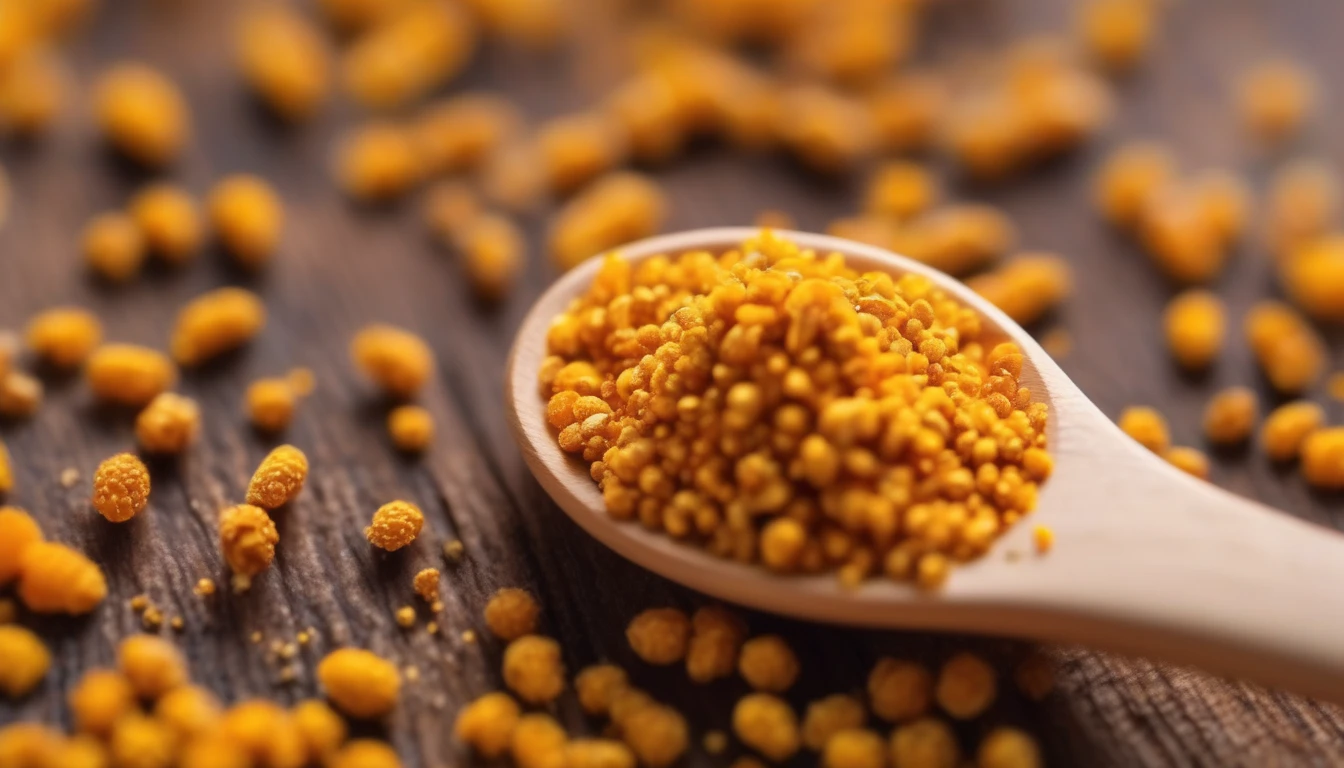
Bee pollen is the male seed of flowers that honeybees collect as their primary protein source. Forager bees visit hundreds of flowers per trip, scraping pollen grains from anthers and packing them into tiny baskets on their hind legs called corbiculae. Back at the hive, they mix the raw pollen with nectar and salivary enzymes, then pack it into comb cells where it undergoes lactic acid fermentation to become "bee bread" — the hive's staple food for brood rearing. The same foraging flights that produce bee pollen also create the floral nectar that becomes [clover honey](/honey/clover-honey), [wildflower honey](/honey/wildflower-honey), [buckwheat honey](/honey/buckwheat-honey), and other regional varieties depending on the dominant blooms. The pollen we consume as a supplement is collected before this fermentation step, using a small trap at the hive entrance that gently scrapes granules from returning foragers' legs. Each granule is about the size of a sesame seed and contains approximately 2.5 million flower pollen grains. The color varies from bright yellow and orange to deep purple, red, and even black depending on the floral source — clover pollen is golden (correlating with light [clover honey](/honey/clover-honey)), wildflower pollen is multi-colored (like [wildflower honey](/honey/wildflower-honey) complexity), and poppy or buckwheat pollen is nearly black (matching dark [buckwheat honey](/honey/buckwheat-honey)). Bee pollen is sometimes called nature's most complete food because it contains all essential amino acids, making it one of the few plant-based complete proteins. Typical composition is roughly 40% carbohydrates, 35% protein, 5% fats, 5% water, and 15% vitamins, minerals, and bioactive compounds including flavonoids, carotenoids, and phytosterols.
Key Takeaways
- Bee pollen is flower pollen collected by honeybees and packed into hind-leg baskets called corbiculae
- Each granule contains ~2.5 million pollen grains from multiple flower species
- Color varies by floral source — golden (clover), multi-colored (wildflower), dark (buckwheat, poppy)
- Composition: ~35% protein (all essential amino acids), 40% carbs, 5% fats, plus vitamins and minerals
- Contains bioactive compounds including flavonoids, carotenoids, phenolic acids, and phytosterols
- Collected via hive-entrance traps that gently scrape granules from returning forager bees
What Are the Evidence-Based Health Benefits of Bee Pollen?
Bee pollen has been studied for a range of health benefits, with the strongest evidence in anti-inflammatory and antioxidant activity. A 2015 review in Evidence-Based Complementary and Alternative Medicine identified over 250 bioactive substances in bee pollen including flavonoids (quercetin, kaempferol, rutin), phenolic acids, enzymes, and coenzymes. For antioxidant protection, bee pollen's ORAC (Oxygen Radical Absorbance Capacity) value rivals that of many superfoods — a 2019 study in Molecules found that bee pollen extracts scavenged free radicals at rates comparable to vitamin C. For liver health, a 2013 study in the Turkish Journal of Medical Sciences found that bee pollen protected rat liver cells from damage by carbon tetrachloride, reducing oxidative stress markers by 40-60%. For immune modulation, a 2021 review in Nutrients noted that bee pollen stimulates both innate and adaptive immune responses — it increases macrophage activity and modulates cytokine production, potentially reducing the duration of upper respiratory infections. In athletic performance, a 2018 study in the Journal of Exercise Nutrition & Biochemistry found that bee pollen supplementation (20g/day for 4 weeks) significantly reduced muscle damage markers (creatine kinase) and inflammation (CRP) in athletes after exhaustive exercise. For cardiovascular health, animal studies consistently show that bee pollen reduces LDL cholesterol and triglycerides while increasing HDL cholesterol. Some evidence suggests benefit for prostate health — a proprietary bee pollen extract (Cernilton) has been used in European urology clinics for decades and was found in a 2000 BJU International study to improve symptoms in 78% of men with chronic prostatitis.
Key Takeaways
- Contains 250+ bioactive substances including quercetin, kaempferol, and rutin flavonoids
- Antioxidant capacity rivals vitamin C — scavenges free radicals effectively (2019 Molecules study)
- Liver protection: reduced oxidative stress markers by 40-60% in animal studies
- Immune modulation: increases macrophage activity and modulates cytokine production
- Athletic recovery: 20g/day reduced muscle damage markers and inflammation after exercise
- Prostate health: Cernilton extract improved symptoms in 78% of chronic prostatitis patients
What Nutrients Are in Bee Pollen?
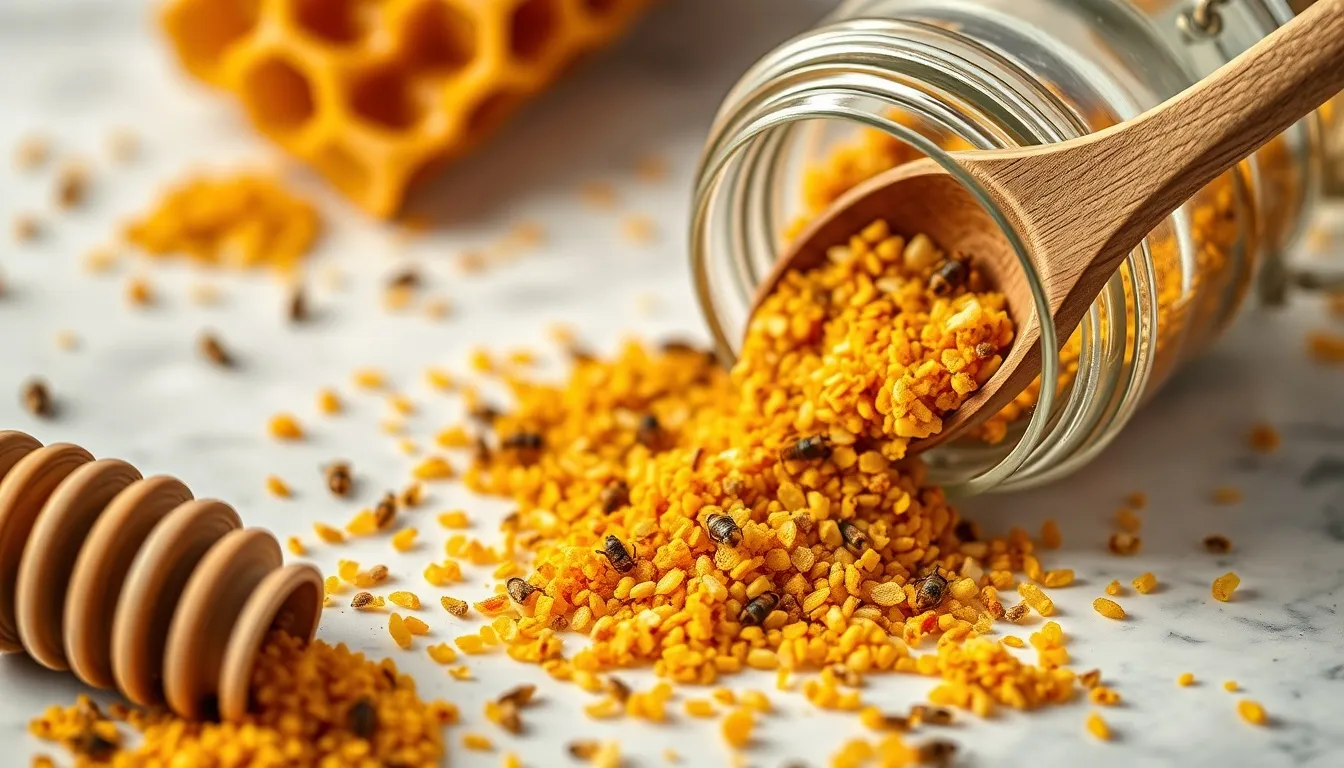
Bee pollen is exceptionally nutrient-dense. Per tablespoon (approximately 10g), it provides about 40 calories, 3.5g of protein, 6g of carbohydrates, and 0.5g of fat. It contains all 22 amino acids including the 9 essential amino acids that the human body cannot synthesize, making it a rare complete plant protein. The B-vitamin content is particularly notable: bee pollen is one of the richest natural sources of B-complex vitamins including B1 (thiamine), B2 (riboflavin), B3 (niacin), B5 (pantothenic acid), B6 (pyridoxine), B9 (folate), and B12 (in trace amounts from bacterial contamination during fermentation). It provides meaningful amounts of vitamin C, vitamin E, and beta-carotene (provitamin A). The mineral profile includes iron, zinc, selenium, calcium, magnesium, potassium, and phosphorus. Bee pollen contains over 5,000 enzymes and coenzymes — more than any other food — which aid in digestion and cellular metabolism. The flavonoid content ranges from 0.5% to 8% by weight depending on floral source, with quercetin, kaempferol, myricetin, and isorhamnetin being the most prevalent. These flavonoids are responsible for many of bee pollen's anti-inflammatory and antioxidant effects. Notably, the nutritional profile varies significantly by geographic region and floral source — pollen from diverse wildflower sources tends to have the broadest nutrient spectrum, while single-source pollen (like from rape or sunflower) may be higher in specific compounds.
Key Takeaways
- Per tablespoon (10g): ~40 calories, 3.5g protein, 6g carbs — a complete protein with all essential amino acids
- Richest natural source of B-complex vitamins (B1, B2, B3, B5, B6, B9, and trace B12)
- Minerals include iron, zinc, selenium, calcium, magnesium, potassium, and phosphorus
- Contains 5,000+ enzymes and coenzymes — more than any other food
- Flavonoid content ranges 0.5-8% by weight (quercetin, kaempferol, myricetin)
- Nutritional profile varies by floral source — wildflower pollen has the broadest nutrient spectrum
How Should You Take Bee Pollen?
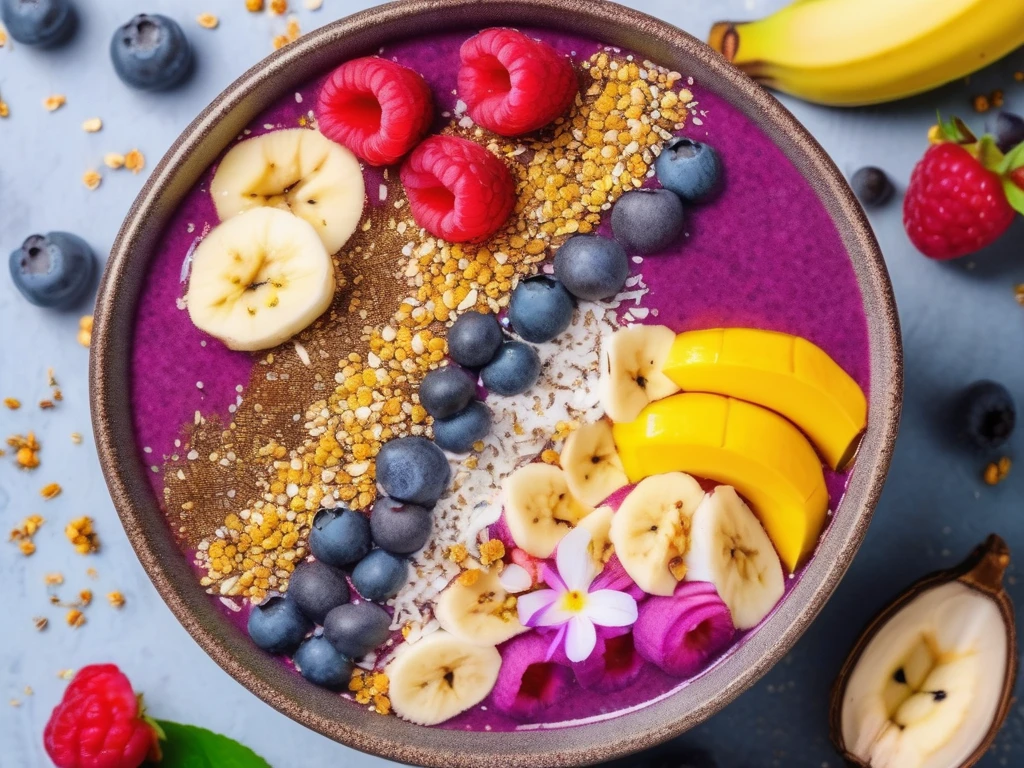
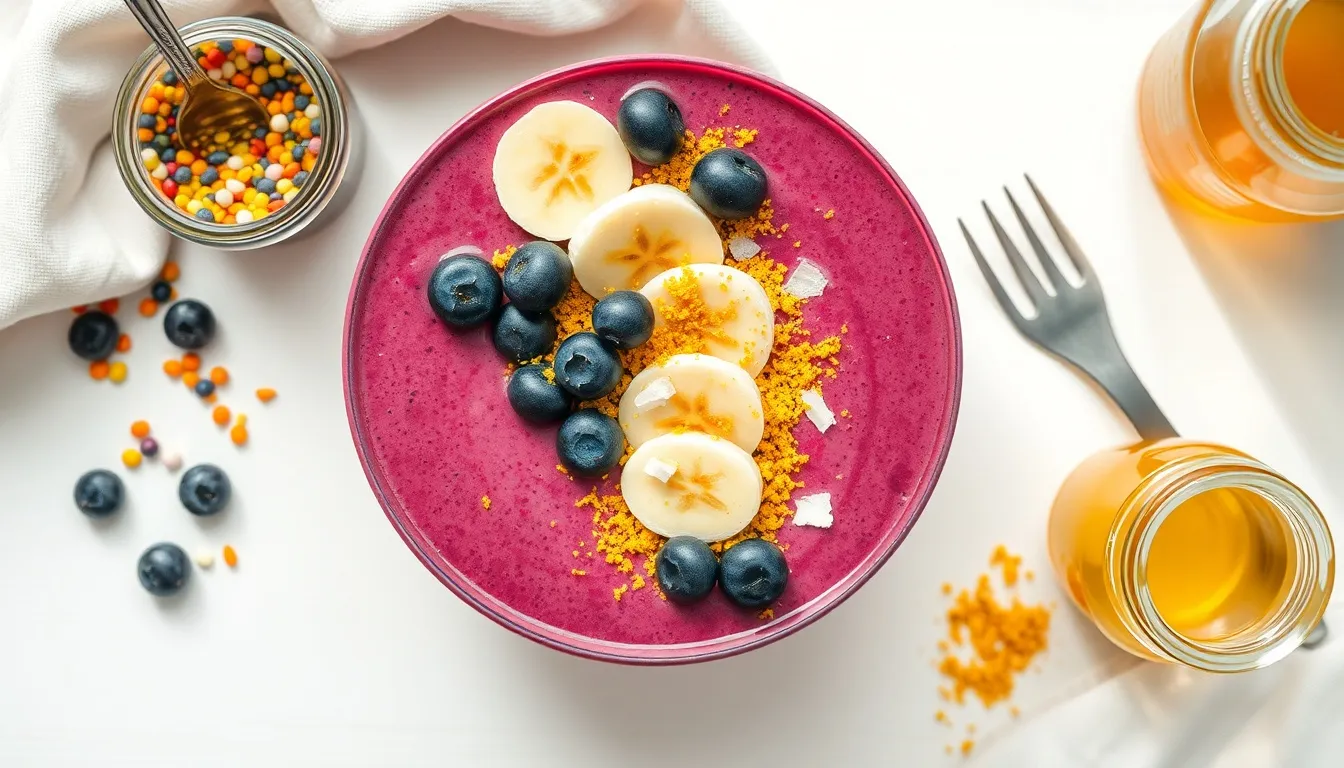
Because pollen allergies are relatively common, many people are cautious the first time they try bee pollen and watch for any allergic reaction before making it a regular part of their diet — talk to your doctor first if you have known pollen or bee sting allergies. Bee pollen can be eaten straight as chewy, slightly sweet-bitter granules, but many people prefer to blend it into smoothies, sprinkle it over yogurt, oatmeal, or acai bowls, stir it into honey, or mix it into salad dressings. Avoid cooking or heating bee pollen above 104°F (40°C) as heat destroys many of the delicate enzymes and B vitamins that make it nutritionally valuable. For maximum absorption, some practitioners recommend soaking the granules in water for 2-3 hours or blending them to break open the tough outer pollen shell (exine), which is made of sporopollenin — one of the most chemically resistant biological polymers known. That said, human stomach acid and digestive enzymes can break down most of the pollen wall over several hours. Fresh bee pollen should be refrigerated or frozen to preserve enzymatic activity — at room temperature, it loses nutritional value within weeks. Frozen bee pollen retains its potency for up to two years. When buying, look for locally sourced, multi-colored granules (indicating diverse floral sources) that are soft and slightly moist rather than dry and crumbly.
Key Takeaways
- People with pollen, bee sting, or seasonal allergies should talk to a doctor before trying bee pollen
- There is no standard dose — many people start with a small amount and see how they tolerate it
- Do not heat above 104°F (40°C) — heat destroys enzymes and B vitamins
- Add to smoothies, yogurt, oatmeal, acai bowls, or eat straight as granules
- Blend or soak 2-3 hours to break open the tough sporopollenin outer shell for better absorption
- Store in refrigerator or freezer — frozen pollen retains potency for up to 2 years
How Does Bee Pollen Compare to Other Bee Products?
The beehive produces several distinct products, each with different compositions and health applications. Bee pollen is the raw protein source — highest in amino acids, B vitamins, and enzymes, primarily valued for antioxidant, anti-inflammatory, and nutritional supplementation. Honey is the hive's carbohydrate store — predominantly sugars (fructose, glucose) with smaller amounts of enzymes, phenolics, and hydrogen peroxide, best known for wound healing, cough suppression, and prebiotic effects. Different honey varieties offer unique therapeutic properties: [Manuka honey](/honey/new-zealand-manuka-umf-15) provides exceptional antimicrobial activity, [buckwheat honey](/honey/buckwheat-honey) delivers the highest antioxidant levels among common honeys, [acacia honey](/honey/acacia-honey) offers gentle digestibility, and [wildflower honey](/honey/wildflower-honey) provides diverse polyphenol profiles from multiple floral sources. Propolis (bee glue) is a resinous mixture bees make from tree sap, beeswax, and saliva to seal the hive — it has the strongest antimicrobial properties of any bee product, containing over 300 compounds including caffeic acid phenethyl ester (CAPE), and is used medicinally for oral health, wound healing, and immune support. Royal jelly is a protein-rich secretion from nurse bees' hypopharyngeal glands, fed exclusively to queen larvae — it contains the unique fatty acid 10-HDA (10-hydroxy-2-decenoic acid), studied for anti-aging, neuroprotective, and hormone-regulating effects. Bee bread is fermented bee pollen — the fermentation increases bioavailability of nutrients and adds beneficial lactic acid bacteria, making it generally more digestible than raw pollen. Each product has its niche: bee pollen for broad-spectrum nutrition and exercise recovery, propolis for immune defense and antimicrobial needs, royal jelly for longevity and hormonal support, and honey varieties like [clover honey](/honey/clover-honey) for everyday wellness and [orange blossom honey](/honey/orange-blossom-honey) for culinary applications. Many practitioners recommend combining multiple bee products for synergistic effects.
Key Takeaways
- Bee pollen: highest in protein, B vitamins, and enzymes — best for nutrition and athletic recovery
- Honey varieties: carbohydrate-rich with specific benefits (Manuka antimicrobial, buckwheat antioxidants)
- Propolis: strongest antimicrobial properties (300+ compounds including CAPE), used for immune support
- Royal jelly: contains unique 10-HDA fatty acid — studied for anti-aging and neuroprotective effects
- Bee bread: fermented pollen with improved bioavailability and added probiotic bacteria
- Combining multiple bee products may provide synergistic health benefits
What Are the Safety Precautions and Side Effects of Bee Pollen?
The most serious risk of bee pollen is allergic reaction, which can range from mild (itching, hives, swelling) to life-threatening anaphylaxis. People with pollen allergies, asthma, or known bee sting allergies are at highest risk, and there have been documented case reports of anaphylaxis in people with no prior known allergies. Some people try bee pollen in hopes of desensitizing to seasonal allergies, but this is unproven for that purpose and should only be attempted under the direct supervision of an allergist. Pregnant and breastfeeding women should avoid bee pollen due to insufficient safety data — some animal studies suggest potential uterine stimulant effects, and pollen can contain environmental contaminants. Infants under 12 months should never consume bee pollen due to the same botulism risk as honey — the spores of Clostridium botulinum can be present in any raw bee product. People taking prescription medications, especially blood thinners or immunosuppressants, should talk to their doctor before adding bee pollen to their diet. Quality varies enormously between products — look for pollen from reputable beekeepers in unpolluted areas, as bee pollen can accumulate heavy metals, pesticides, and environmental toxins. A 2017 study in Environmental Monitoring and Assessment found pesticide residues in 40% of commercial bee pollen samples, though levels were generally below regulatory limits. The FDA classifies bee pollen as a food supplement, not a medicine — health claims on labels are not pre-approved.
Key Takeaways
- Allergic reactions can range from mild hives to life-threatening anaphylaxis, even in people with no known allergies
- People with pollen allergies, asthma, or bee sting allergies are at highest risk of reaction
- Avoid during pregnancy and breastfeeding due to insufficient safety data
- Never give to infants under 12 months — same botulism risk as honey
- People on prescription medications, especially blood thinners or immunosuppressants, should talk to their doctor first
- Quality varies — 40% of commercial samples had pesticide residues; buy from trusted local beekeepers
Frequently Asked Questions
What are the main health benefits of bee pollen?
Bee pollen provides antioxidant protection rivaling vitamin C, anti-inflammatory effects (reducing exercise-induced muscle damage markers), immune modulation (increased macrophage activity), liver protection (reducing oxidative stress markers by 40-60% in studies), cardiovascular support (lowering LDL cholesterol), and prostate health benefits. It contains 250+ bioactive substances including quercetin, kaempferol, and rutin flavonoids.
How much bee pollen should you take per day?
There is no established standard dose. Because pollen allergies are relatively common, many people start with a very small amount and watch for any allergic reaction before making it a regular part of their diet — talk to your doctor first if you have known pollen or bee sting allergies. Do not heat above 104°F (40°C) as heat destroys enzymes and B vitamins.
Is bee pollen safe for everyone?
No. People with pollen allergies, asthma, or bee sting allergies are at highest risk of allergic reaction, which can include anaphylaxis. Pregnant and breastfeeding women should avoid it due to insufficient safety data. Never give bee pollen to infants under 12 months due to botulism risk. People on prescription medications, especially blood thinners or immunosuppressants, should talk to their doctor before trying it.
What nutrients are in bee pollen?
Per tablespoon (10g), bee pollen provides about 40 calories, 3.5g of complete protein (all essential amino acids), B-complex vitamins (B1, B2, B3, B5, B6, B9), iron, zinc, selenium, calcium, and 5,000+ enzymes. It also contains flavonoids (0.5-8% by weight) including quercetin and kaempferol.
How does bee pollen differ from propolis and royal jelly?
Bee pollen is the hive's protein source, highest in amino acids, B vitamins, and enzymes — best for nutrition and exercise recovery. Propolis has the strongest antimicrobial properties (300+ compounds) for immune support. Royal jelly contains unique 10-HDA fatty acid studied for anti-aging effects. Honey is the carbohydrate store, best for wound healing and cough suppression.
How should you store bee pollen?
Fresh bee pollen should be refrigerated or frozen to preserve enzymatic activity. At room temperature, it loses nutritional value within weeks. Frozen bee pollen retains its potency for up to 2 years. Look for locally sourced, multi-colored granules that are soft and slightly moist rather than dry and crumbly.
Edited by Sam French · Raw Honey Guide Editorial Team
Source reviewed against primary literature and official guidance where available. Health content is educational, not medical advice, and does not replace a licensed clinician.
Get the Honey Buyer's Cheat Sheet (free PDF)
16 varieties on one page — color, flavor, best use and what a fair price looks like — from the 268 honeys we track.
Related Guides
Health Benefits
Nutritional and therapeutic benefits of honey.
Read GuideRoyal Jelly Benefits
Anti-aging, brain health, skin, dosage, and 10-HDA guide.
Read GuidePropolis Benefits
Antimicrobial properties, immune support, and dosage guide.
Read GuideRelated Articles
Bee Pollen Benefits: Nutrition, Allergies, and What Science Says
Bee pollen: nutrition, anti-inflammatory effects, allergy support, and athletic performance. Choosing and storage guide.
Read ArticlePropolis Benefits: What Science Says About This Bee Superfood
Propolis benefits: immune support, wound healing, oral health, and anti-inflammatory effects. Tincture forms and safety guide.
Read ArticleRoyal Jelly Benefits: Nutrition, Uses, and What Science Says
Royal jelly benefits: immune support, skin health, cholesterol reduction, and brain function. Usage and safety guide.
Read ArticleWant to explore the full range of bee products and honey varieties?