Royal Jelly Benefits: Nutrition, Dosage & Evidence-Based Guide
Royal jelly is the exclusive food that transforms an ordinary bee larva into a queen — extending her lifespan 40-fold. Here is what the research says about its benefits for humans, how to take it, and how it compares to honey, bee pollen, and propolis.
Last updated:
Royal jelly is a protein-rich secretion from nurse bees containing 10-HDA — a unique fatty acid found nowhere else in nature. Clinical trials have studied it for cholesterol, blood sugar, cognitive function, and skin elasticity — see the sections below for specific findings and citations. It comes as fresh frozen royal jelly (taken sublingually) or freeze-dried capsules; there is no single agreed dose, so talk to your doctor before starting. Always consult a doctor or allergist about safe allergy testing first — anaphylaxis has been fatal. Avoid with hormone-sensitive cancers, in children under 12 months, and during pregnancy.
What Is Royal Jelly and How Do Bees Produce It?
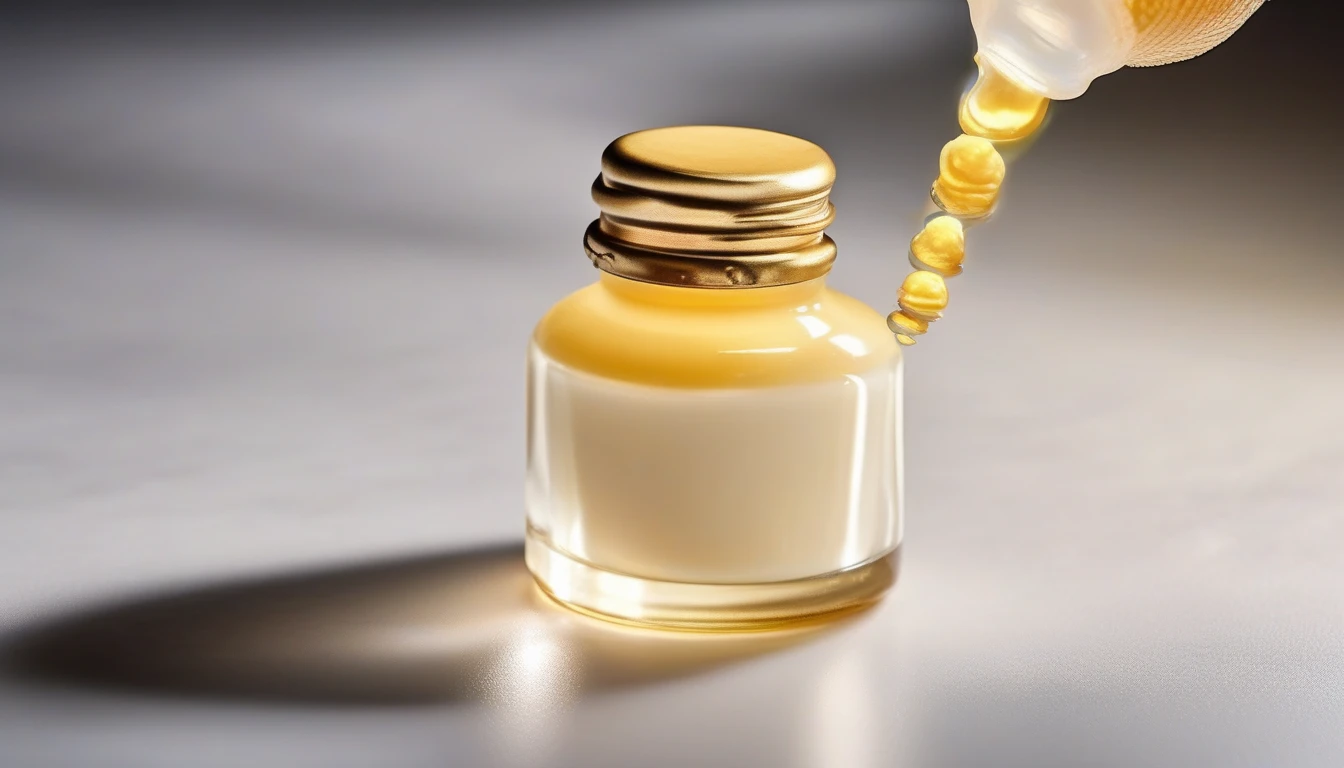
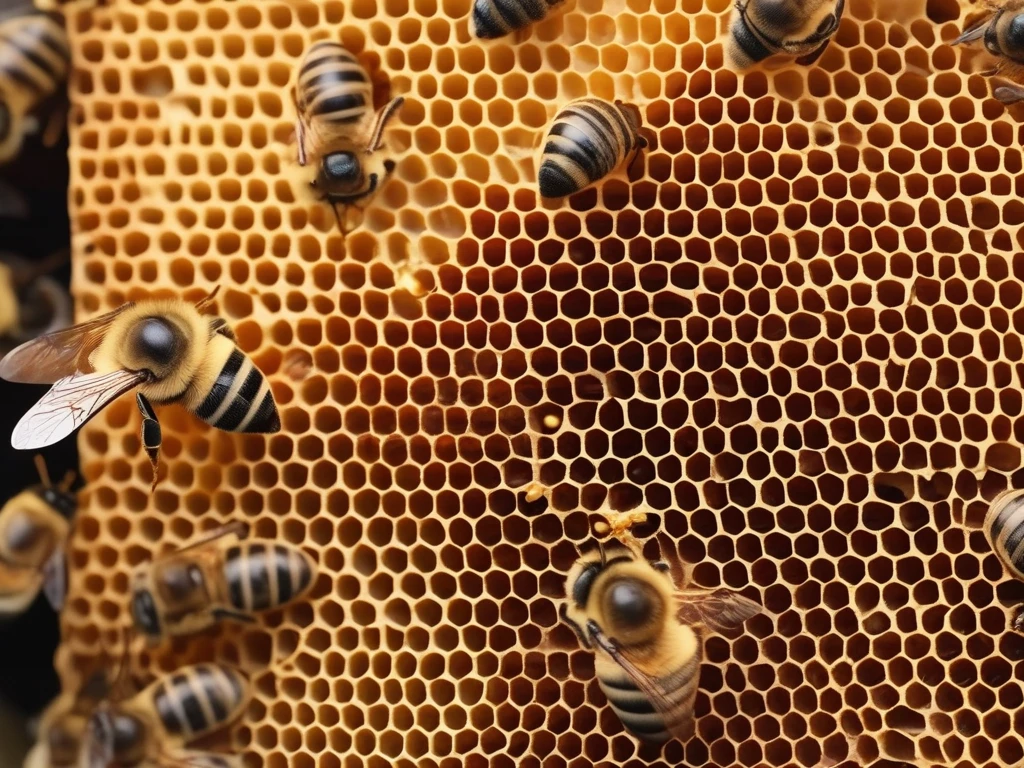
Royal jelly is a thick, milky-white secretion produced by the hypopharyngeal and mandibular glands of young worker bees (nurse bees), typically between 5 and 15 days old. All honeybee larvae receive royal jelly for their first three days of life, but only larvae selected to become queens are fed royal jelly exclusively throughout their entire development. This dietary difference is solely responsible for the dramatic biological divergence between queens and workers — despite being genetically identical. Queens grow 60% larger, develop functional ovaries capable of laying 2,000+ eggs per day, and live 3-5 years compared to the worker's 6-week lifespan during summer. Fresh royal jelly is approximately 60-70% water, 12-15% proteins (including a family of nine proteins called Major Royal Jelly Proteins or MRJPs), 10-16% sugars (glucose and fructose), 3-6% lipids, and 2-3% vitamins, minerals, and other bioactive compounds. Its most distinctive component is 10-hydroxy-2-decenoic acid (10-HDA), a unique fatty acid found nowhere else in nature. 10-HDA typically makes up 1.5-6% of royal jelly's dry weight and is used as the primary quality marker — reputable products specify their 10-HDA content. A strong hive produces only about 500g of royal jelly per year, making it the rarest and most expensive bee product. Commercial royal jelly is harvested by tricking hives into producing queen cells — beekeepers graft young larvae into artificial queen cups, and nurse bees flood these cups with royal jelly. The jelly is collected 72 hours after grafting, before the queen cells are capped. It must be frozen or lyophilized (freeze-dried) immediately to preserve bioactivity, as fresh royal jelly degrades rapidly at room temperature.
Key Takeaways
- Secreted by nurse bees' hypopharyngeal glands — fed to all larvae for 3 days, to queens for life
- Sole dietary factor that transforms a genetically identical larva into a queen (60% larger, 40x longer lifespan)
- Composition: 60-70% water, 12-15% proteins (MRJPs), 10-16% sugars, 3-6% lipids, 2-3% vitamins/minerals
- Contains 10-HDA — a unique fatty acid found nowhere else in nature (1.5-6% of dry weight)
- A hive produces only ~500g per year — the rarest and most expensive bee product
- Must be frozen or freeze-dried immediately after harvest to preserve bioactivity
What Are the Evidence-Based Health Benefits of Royal Jelly?
Royal jelly has been studied for anti-aging, neuroprotective, cardiovascular, immune-modulating, and skin health effects, primarily driven by its unique 10-HDA content and MRJP proteins. For cholesterol and cardiovascular health, a 2019 meta-analysis in the Journal of Functional Foods analyzing 11 randomized controlled trials found that royal jelly supplementation significantly reduced total cholesterol by an average of 10.4 mg/dL and LDL cholesterol by 7.7 mg/dL, with doses of 300-3,000mg/day over 4-12 weeks. For blood sugar regulation, a 2016 systematic review in the Canadian Journal of Diabetes analyzed 7 RCTs and found that royal jelly supplementation significantly reduced fasting blood glucose by an average of 6.1 mg/dL in patients with type 2 diabetes, with greater effects at doses of 1,000mg/day or higher. Neuroprotective effects are among the most promising areas of research — 10-HDA has been shown to stimulate neurogenesis (new brain cell growth) and increase brain-derived neurotrophic factor (BDNF) production in animal studies. A 2020 study in Nutrients found that 6 months of royal jelly supplementation (800mg/day) improved mental health scores and cognitive function in elderly subjects. For skin health, a 2022 randomized trial in Dermatology and Therapy found that 12 weeks of oral royal jelly supplementation (3,000mg/day) significantly improved skin moisture, elasticity, and wrinkle depth compared to placebo — potentially via collagen synthesis stimulation and protection against UV-induced damage. Anti-inflammatory effects have been demonstrated through 10-HDA's inhibition of pro-inflammatory cytokines (TNF-α, IL-6) and NF-κB signaling, similar to propolis but through different molecular pathways. For fertility, a 2018 RCT in the International Journal of Gynecology & Obstetrics found that royal jelly supplementation (1,000mg/day) improved several fertility markers in women undergoing IVF treatment.
Key Takeaways
- Cardiovascular: reduced total cholesterol by 10.4 mg/dL and LDL by 7.7 mg/dL (2019 meta-analysis of 11 RCTs)
- Blood sugar: reduced fasting glucose by 6.1 mg/dL in type 2 diabetes patients (2016 systematic review)
- Neuroprotection: 10-HDA stimulates neurogenesis and BDNF; 800mg/day improved cognition in elderly (2020 RCT)
- Skin health: 3,000mg/day improved moisture, elasticity, and wrinkle depth over 12 weeks (2022 RCT)
- Anti-inflammatory: 10-HDA inhibits TNF-α, IL-6, and NF-κB through pathways distinct from propolis
- Fertility: 1,000mg/day improved fertility markers in women undergoing IVF (2018 RCT)
What Are the Key Compounds in Royal Jelly?
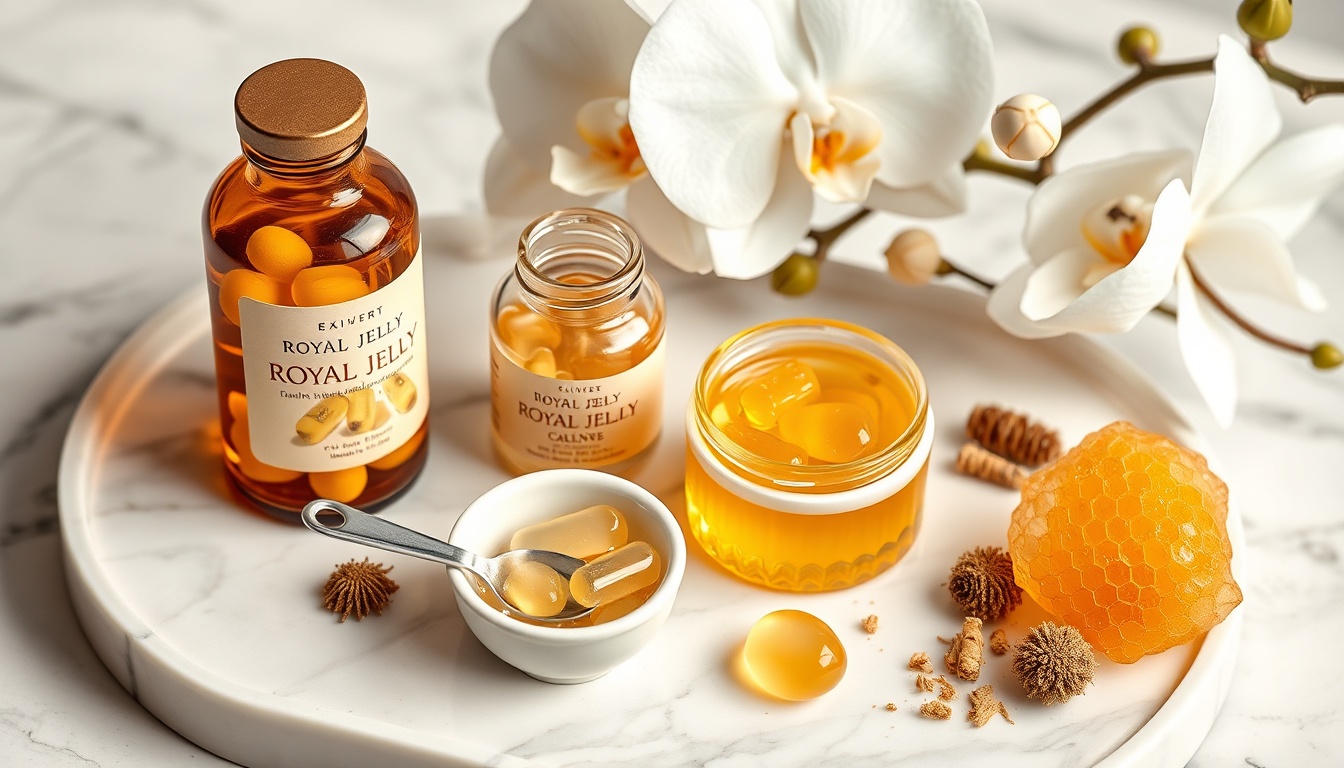
Royal jelly's bioactivity stems from a unique combination of compounds not found in any other natural product. 10-Hydroxy-2-decenoic acid (10-HDA) is the signature compound — a medium-chain fatty acid that makes up 1.5-6% of royal jelly's dry weight and serves as the primary quality marker. 10-HDA has demonstrated antibacterial, anti-inflammatory, immunomodulatory, and neuroprotective effects in numerous studies. It inhibits histone deacetylase (HDAC), an enzyme involved in gene expression regulation, which may partially explain how royal jelly triggers the developmental switch that turns larvae into queens. Major Royal Jelly Proteins (MRJPs 1-9) are a family of glycoproteins unique to royal jelly. MRJP1 (also called royalactin) is the most abundant, making up approximately 50% of total royal jelly protein. A landmark 2011 study in Nature identified royalactin as the specific compound responsible for queen determination — when fed to fruit fly larvae, it increased their body size and ovary development, demonstrating cross-species activity. MRJPs also have antioxidant, antimicrobial, and immunostimulatory properties. Royal jelly contains all essential amino acids, with particularly high levels of proline, lysine, and glutamic acid. It is one of the richest natural sources of pantothenic acid (vitamin B5) — containing 35-50μg/g compared to 0.1-10μg/g in most foods — along with B1 (thiamine), B2 (riboflavin), B6 (pyridoxine), B8 (inositol), B9 (folate), and trace amounts of vitamins A, C, D, and E. Mineral content includes potassium, calcium, magnesium, zinc, iron, and manganese. Acetylcholine — a neurotransmitter critical for memory and muscle function — is present at concentrations of 1-2mg/g, the highest known concentration in any natural food source.
Key Takeaways
- 10-HDA (1.5-6% dry weight): unique fatty acid — antibacterial, neuroprotective, HDAC inhibitor
- Royalactin (MRJP1): identified in Nature (2011) as the compound that determines queen development
- All 9 essential amino acids with high levels of proline, lysine, and glutamic acid
- Richest natural source of pantothenic acid (B5): 35-50μg/g — 3-500x more than most foods
- Acetylcholine at 1-2mg/g — highest concentration in any natural food source
- Complete B-vitamin complex plus trace amounts of vitamins A, C, D, and E
How Should You Take Royal Jelly?
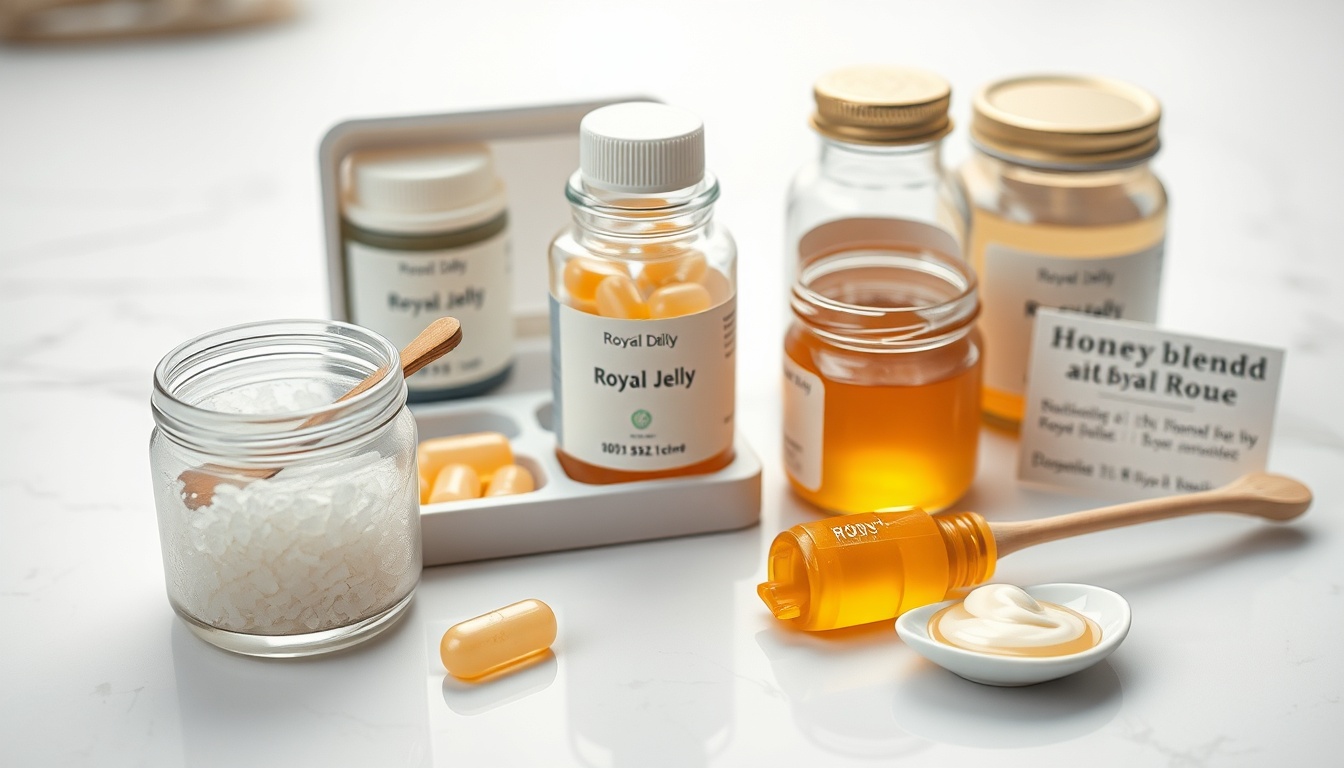
Royal jelly is available in several forms: fresh (frozen), freeze-dried (lyophilized), capsules, tablets, liquid ampules, and as an ingredient in honey blends. Fresh royal jelly is the most potent form but must be kept frozen (-18°C/0°F) and thawed only for immediate use — it degrades within days at room temperature and within 2-3 months even refrigerated. Fresh royal jelly has a strong, distinctive taste: sour, slightly bitter, and astringent, with a creamy texture. Many people mix it with honey (a 1:20 to 1:100 ratio) to mask the taste — [clover honey](/honey/clover-honey) provides mild sweetness that complements royal jelly without overpowering, [wildflower honey](/honey/wildflower-honey) adds botanical complexity, or [acacia honey](/honey/acacia-honey) offers delicate floral notes with a lower glycemic impact. Freeze-dried royal jelly concentrates the bioactives by removing water — 1g of freeze-dried royal jelly is roughly equivalent to 3g of fresh. When buying freeze-dried products, check that they specify 10-HDA content (ideally 5%+ for freeze-dried, 1.5%+ for fresh). Liquid ampules (common in Europe and Asia) contain royal jelly dissolved in a honey or sugar base — convenient but often diluted. Royal jelly-enriched honey blends are the most palatable option but typically contain very small amounts (0.5-2%). There is no single agreed dose or treatment duration for royal jelly — talk to your doctor before starting any supplementation, about what form, amount, and duration might be appropriate for you. Store all royal jelly products away from heat, light, and moisture.
Key Takeaways
- Fresh (frozen): the most potent form — must stay frozen and be used quickly; ask your doctor about an appropriate amount
- Freeze-dried capsules: a more convenient alternative — look for 5%+ 10-HDA content on the label
- Fresh royal jelly degrades within days at room temperature — freeze at -18°C for up to 2 years
- 1g freeze-dried ≈ 3g fresh royal jelly (water removed, bioactives concentrated)
- There is no universally agreed dose or duration — talk to your doctor before starting supplementation
- Royal jelly honey blends (0.5-2%) are the most palatable option but the most diluted
How Does Royal Jelly Compare to Other Bee Products?
Each bee product occupies a distinct niche in the hive and has corresponding strengths as a health supplement. Royal jelly is the hive's growth hormone — the exclusive food that transforms a worker larva into a queen. Its unique 10-HDA fatty acid and royalactin protein have no equivalents in other bee products, making it the best-studied bee product for anti-aging, cognitive health, skin rejuvenation, and fertility support. It is also the most expensive (typically $5-30 per gram for quality fresh royal jelly) and the most perishable. Honey is the hive's energy store — primarily sugars with enzymes, hydrogen peroxide, and phenolic compounds. [Manuka honey](/honey/new-zealand-manuka-umf-15) excels at wound healing with clinical UMF antimicrobial activity, [buckwheat honey](/honey/buckwheat-honey) provides well-studied cough suppression with 9× more antioxidants than [clover honey](/honey/clover-honey), while [wildflower honey](/honey/wildflower-honey) offers diverse prebiotic gut support from multiple botanical sources. Honey varieties like [acacia honey](/honey/acacia-honey) provide the most affordable, versatile, and shelf-stable daily wellness support with favorable glycemic profiles. Bee pollen is the hive's protein source — the most nutritionally dense bee product with all essential amino acids, B vitamins, and over 5,000 enzymes. Bee pollen is optimal for nutritional supplementation, exercise recovery, and broad-spectrum antioxidant protection. Propolis is the hive's immune system — with 300+ antimicrobial compounds, it has the strongest antibacterial, antiviral, and antifungal properties of any bee product. Propolis is best for immune defense, oral health, and wound protection. Its key compound CAPE inhibits NF-κB inflammation differently from 10-HDA. Beeswax is the structural material — used mainly in cosmetics, candles, and food wraps. For a comprehensive approach, many practitioners recommend combining multiple bee products: royal jelly for vitality and skin health, propolis for immune defense, bee pollen for nutrition, and raw honey varieties for daily wellness ([wildflower honey](/honey/wildflower-honey) for everyday use, [buckwheat honey](/honey/buckwheat-honey) for maximum antioxidants, [Manuka honey](/honey/new-zealand-manuka-umf-15) for therapeutic support). These products work through different mechanisms and may provide synergistic benefits when used together.
Key Takeaways
- Royal jelly: unique 10-HDA and royalactin — best for anti-aging, cognition, skin, and fertility
- Honey varieties: [Manuka honey](/honey/new-zealand-manuka-umf-15) wound healing, [buckwheat honey](/honey/buckwheat-honey) cough/antioxidants, [acacia honey](/honey/acacia-honey) daily wellness
- Bee pollen: most nutritionally dense — best for exercise recovery and broad-spectrum antioxidants
- Propolis: strongest antimicrobial (300+ compounds) — best for immune defense and oral health
- Royal jelly is the most expensive ($5-30/g) and most perishable bee product
- Combining bee products may offer synergistic benefits through complementary mechanisms
What Are the Safety Precautions and Side Effects of Royal Jelly?
The most serious risk associated with royal jelly is allergic reaction, which can range from mild contact dermatitis and hives to severe anaphylaxis. Fatal anaphylactic reactions to royal jelly have been documented, including cases reported by the Australian Adverse Drug Reactions Advisory Committee (ADRAC) — making allergy the most critical safety concern. People with known allergies to bee stings, bee products, pollen, or specific plant allergens (birch, mugwort) have a significantly higher risk. A 2012 review in the World Allergy Organization Journal noted that royal jelly proteins — particularly MRJP1 and MRJP2 — are the primary allergens, and that cross-reactivity with bee venom allergens occurs in some individuals. Asthma patients appear particularly vulnerable to severe royal jelly reactions. Given the risk of severe reactions, talk to a doctor or allergist before use — including about safe allergy-testing procedures — rather than self-administering a test dose. Common mild side effects include gastrointestinal discomfort (nausea, stomach cramps, diarrhea), which usually resolves when taken with food. Royal jelly has estrogenic activity — compounds including 10-HDA and certain fatty acids can bind estrogen receptors. People with hormone-sensitive conditions (breast cancer, ovarian cancer, endometriosis, uterine fibroids) should avoid royal jelly or consult their oncologist before use. Pregnant and breastfeeding women should avoid royal jelly supplementation due to insufficient safety data and potential hormonal effects. Children under 12 months must not consume royal jelly due to the same Clostridium botulinum spore risk that applies to honey and all raw bee products. Royal jelly may interact with blood-thinning medications (warfarin, aspirin) due to mild antiplatelet effects, and may enhance the blood pressure-lowering effect of antihypertensive drugs. People taking immunosuppressants should use caution, as royal jelly stimulates immune activity. Stop supplementation 2 weeks before any scheduled surgery.
Key Takeaways
- Anaphylaxis risk is the most serious concern — fatal reactions have been documented (ADRAC cases)
- Higher risk if allergic to bee stings, pollen, birch, or mugwort — asthma patients especially vulnerable
- Given documented fatal reactions, talk to a doctor or allergist before use, including about safe allergy-testing procedures
- Has estrogenic activity — avoid with hormone-sensitive cancers, endometriosis, and uterine fibroids
- Avoid during pregnancy, breastfeeding, and in children under 12 months (botulism risk)
- May interact with blood thinners, blood pressure medications, and immunosuppressants
Frequently Asked Questions
What are the main health benefits of royal jelly?
How do you take royal jelly?
Is royal jelly safe for everyone?
What is the difference between royal jelly and honey?
What is 10-HDA and why does it matter?
How does royal jelly compare to bee pollen and propolis?
Which honey varieties should I choose for different health goals alongside royal jelly?
Edited by Sam French · Raw Honey Guide Editorial Team
Source reviewed against primary literature and official guidance where available. Health content is educational, not medical advice, and does not replace a licensed clinician.
Get the Honey Buyer's Cheat Sheet (free PDF)
16 varieties on one page — color, flavor, best use and what a fair price looks like — from the 268 honeys we track.
Related Guides
Bee Pollen Benefits
Nutrition, dosage, and evidence-based health benefits.
Read GuidePropolis Benefits
Antimicrobial properties, immune support, and dosage guide.
Read GuideBeeswax Uses & Benefits
Skincare, candle making, food applications, DIY recipes, and buying guide.
Read GuideRelated Articles
Royal Jelly Benefits: Nutrition, Uses, and What Science Says
Royal jelly benefits: immune support, skin health, cholesterol reduction, and brain function. Usage and safety guide.
Read ArticleBee Pollen Benefits: Nutrition, Allergies, and What Science Says
Bee pollen: nutrition, anti-inflammatory effects, allergy support, and athletic performance. Choosing and storage guide.
Read ArticleBeeswax Benefits: 8 Science-Backed Uses for Skin, Health, and Home
Beeswax benefits: skin barrier protection, wound healing, lip care, and household uses. How it compares to other bee products.
Read ArticleWant to explore the full range of bee products and honey varieties?