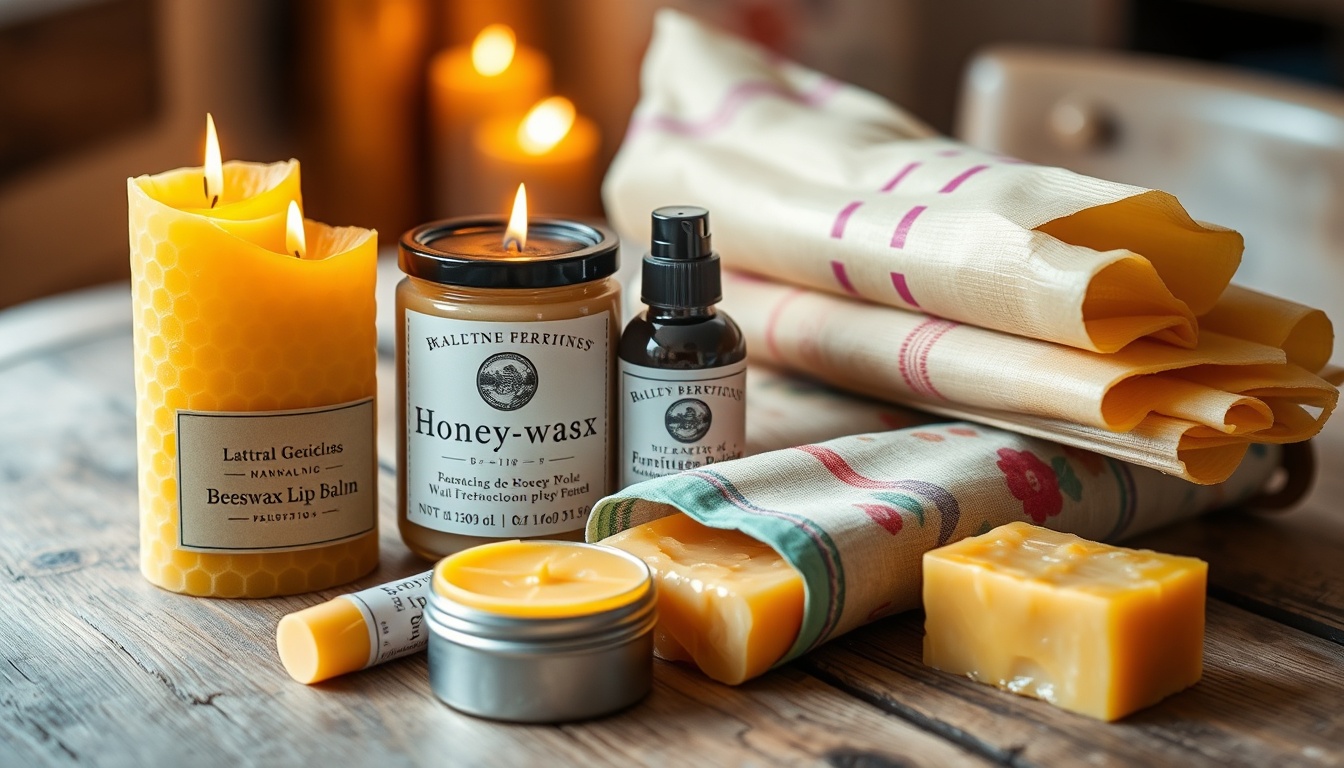
What Is Beeswax and Why Does It Matter?
Beeswax is a natural wax produced by honey bees (Apis mellifera) from specialized glands on the underside of their abdomens. Worker bees secrete thin wax scales, then chew and mold them to build the hexagonal comb structure that serves as the colony's nursery, pantry, and communication hub. It takes approximately 8.4 pounds of honey to produce just 1 pound of beeswax — making it one of nature's most labor-intensive materials.
While honey, propolis, bee pollen, and royal jelly get most of the attention in the bee products world, beeswax has been used in human applications for over 6,000 years — from ancient Egyptian embalming to Roman writing tablets to medieval church candles. Today, it appears in cosmetics, pharmaceuticals, food coatings, and household products.
**Today is World Bee Day 2026! 🌻** This global awareness day celebrates bee health and the sustainability of our hive ecosystems. Every time you choose natural beeswax products, you support beekeeping communities and bee conservation. Beeswax represents one of nature's most remarkable materials — requiring 8.4 pounds of wildflower honey, clover honey, or buckwheat honey to produce just one pound of protective comb. Supporting beeswax and honey producers helps sustain the bee colonies that pollinate our food supply.
Chemically, beeswax is a complex mixture of over 300 compounds: primarily esters (67%), hydrocarbons (14%), fatty acids (12%), and smaller amounts of free alcohols, flavonoids, and volatile compounds. This composition gives it unique properties — a melting point of 62-65°C, water resistance, plasticity at skin temperature, and biocompatibility that synthetic waxes struggle to match.
This guide examines what research actually says about beeswax's benefits, separating evidence from tradition. For broader context on bee products, see our guides on eating honeycomb (which includes beeswax) and how bees make honey.
1. Skin Barrier Protection and Moisturization
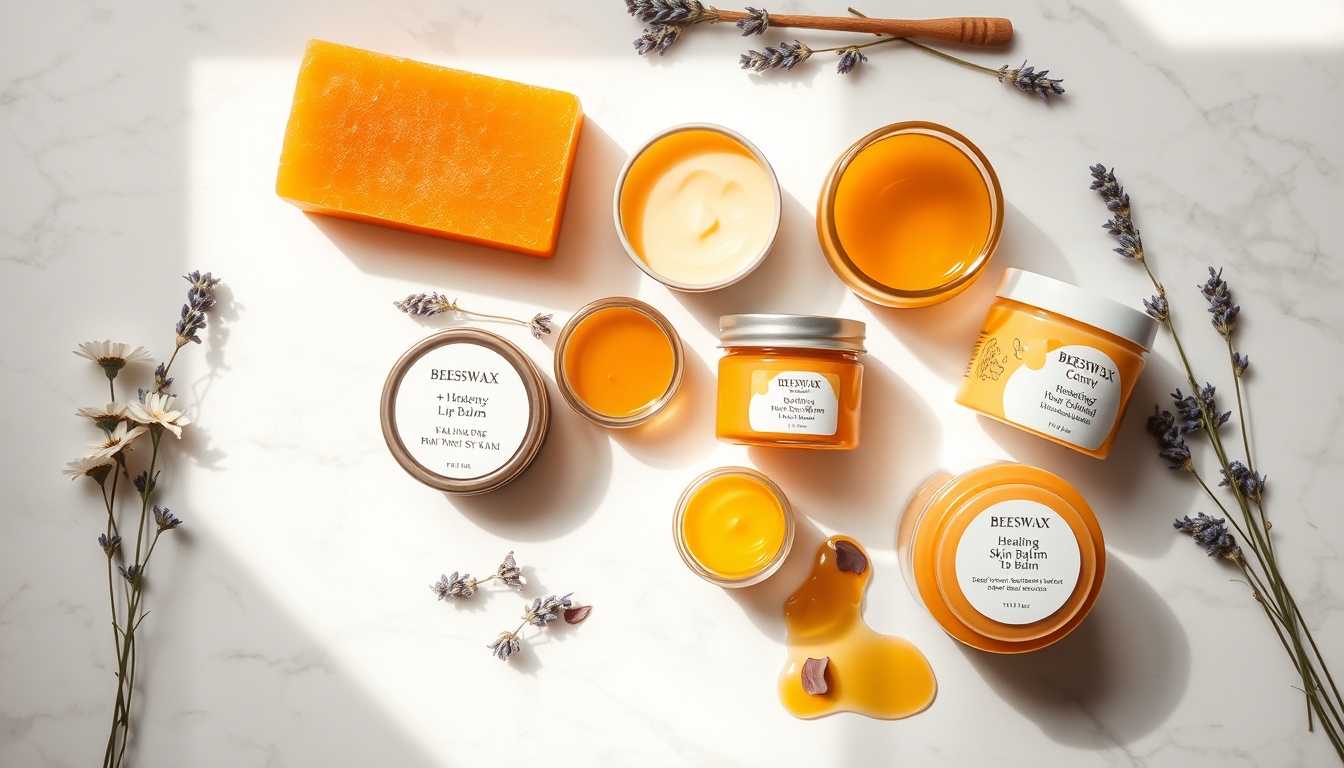
Beeswax's most well-documented benefit is its ability to form a protective, breathable barrier on the skin. Unlike petroleum-based occlusives (like petrolatum) that create an impermeable seal, beeswax forms a semi-occlusive layer that locks in moisture while still allowing some gas exchange — a property documented in a 2005 study in the Journal of Cosmetic Science.
A 2003 study in Complementary Therapies in Medicine tested a honey-beeswax-olive oil mixture on patients with eczema, psoriasis, and dermatitis. After 2 weeks, 80% of eczema patients and 60% of psoriasis patients showed significant improvement. The researchers attributed the results to the combination of beeswax's barrier function, honey's antimicrobial activity, and olive oil's emollient properties.
Beeswax's barrier effect comes from its ester content — long-chain fatty acid esters that are structurally similar to the ceramides and wax esters naturally found in the skin's stratum corneum. This compatibility means beeswax integrates with the skin's existing lipid matrix rather than sitting on top of it, creating a more natural and effective moisture seal.
For people with dry, cracked, or irritated skin, beeswax-based balms provide long-lasting protection that withstands handwashing better than lighter moisturizers. This makes beeswax particularly useful for occupational dermatitis, winter skin cracking, and conditions like eczema where barrier repair is the primary treatment goal.
Pro Tip
Beeswax works best as the "seal" layer applied after water-based products. Apply a hydrating serum or honey face mask first, then lock moisture in with a thin layer of beeswax-based balm.
Get the Honey Buyer's Cheat Sheet (free PDF)
16 varieties on one page — color, flavor, best use and what a fair price looks like — from the 268 honeys we track.
2. Wound Healing and Antimicrobial Activity
Beeswax has been used in wound care for millennia, and modern research confirms several relevant mechanisms. A 2012 study in the African Journal of Traditional, Complementary and Alternative Medicines found that beeswax demonstrated antimicrobial activity against Staphylococcus aureus, Salmonella enterica, and Candida albicans — common wound pathogens.
The antimicrobial activity comes primarily from beeswax's fatty acid components, particularly palmitic acid and 10-hydroxy-2-decenoic acid (also found in royal jelly), which disrupt bacterial cell membranes. Additionally, propolis residues naturally present in unrefined beeswax contribute antibacterial flavonoids like pinocembrin and galangin.
A 2015 study in Burns evaluated a beeswax-based ointment for partial-thickness burns and found healing times comparable to silver sulfadiazine (the standard topical treatment) with less pain during dressing changes — burn care should still be directed by a medical professional, especially for anything beyond a minor burn. The beeswax formed a protective wound cover that maintained a moist healing environment while preventing external contamination.
For serious wounds, medical-grade Manuka honey UMF 10+ remains the evidence-based first choice due to its superior antimicrobial potency. But for minor cuts, scrapes, cracked skin, and chapped lips, beeswax-based balms provide practical protection with mild antimicrobial support. Combining beeswax with buckwheat honey for antioxidant density, eucalyptus honey for respiratory antimicrobial properties, or wildflower honey for diverse glucose oxidase activity creates synergistic healing formulations. The combination of honey and beeswax — as found naturally in honeycomb — may be more effective than either alone.
3. Anti-Inflammatory Properties
Beeswax contains several compounds with documented anti-inflammatory activity. The most studied are its long-chain fatty alcohols — particularly triacontanol and octacosanol — which have been shown to inhibit inflammatory pathways in both animal and in-vitro studies.
A 2017 review in Evidence-Based Complementary and Alternative Medicine documented beeswax fatty alcohols' ability to reduce pro-inflammatory cytokines (TNF-α, IL-1β, IL-6) and inhibit the NF-κB pathway — the same master inflammatory switch targeted by honey's polyphenols. A 2005 study in the Journal of Medicinal Food found that D-002 (a mixture of beeswax alcohols) reduced inflammatory markers by 30-40% in animal models.
The 2003 Complementary Therapies in Medicine study on the honey-beeswax-olive oil mixture found that the combination was effective for inflammatory skin conditions, suggesting that beeswax's anti-inflammatory compounds work synergistically with honey's NF-κB-inhibiting polyphenols. For maximum anti-inflammatory benefits, consider using buckwheat honey (3-9× higher antioxidant levels than clover honey), chestnut honey for exceptional polyphenol density, or heather honey for unique anti-inflammatory compounds in beeswax-based formulations.
Beeswax fatty alcohols have also shown anti-ulcer activity. A 2007 study in Pharmacological Research tested D-002 (beeswax alcohols) on gastric ulcer models and found protective effects comparable to omeprazole (a standard proton pump inhibitor) in that animal study — this is preclinical evidence, not a reason to stop a prescribed PPI without talking to a doctor. For digestive health context, see our honey and gut health guide.
4. Lip Care and Chapped Lip Treatment
Beeswax is the foundation of most natural lip balms — and for good reason. The skin on lips lacks oil glands and is only 3-5 cell layers thick (compared to 16+ on the rest of the face), making it exceptionally vulnerable to moisture loss, UV damage, and environmental irritation.
Beeswax addresses lip care through multiple mechanisms: its semi-occlusive barrier reduces transepidermal water loss (TEWL), its vitamin A content supports cell turnover in thin lip tissue, its fatty acids provide emollient softening, and its natural fragrance compounds mask the taste of other functional ingredients.
A 2018 study in the Journal of Cosmetic Dermatology comparing natural lip care ingredients found that beeswax-based formulations maintained lip hydration significantly longer than petroleum jelly-based alternatives at the 4-hour mark, attributed to beeswax's ability to integrate with skin lipids rather than simply sitting on the surface.
For best results, apply beeswax lip balm after gentle exfoliation and onto slightly damp lips. The wax seals in the existing moisture rather than adding moisture itself. Combining beeswax with honey creates a particularly effective lip treatment: honey draws moisture from the air (humectant) while beeswax prevents its evaporation (occlusive). Wildflower honey and clover honey offer gentle, reliable humectant activity for sensitive lips, while acacia honey provides exceptional gentleness for those with sensitive skin or frequent cold sores. Add coconut oil for additional emollient softening.
5. Cholesterol and Cardiovascular Support
One of the more surprising areas of beeswax research involves its cardiovascular effects. The long-chain fatty alcohols in beeswax (collectively called policosanols) have been studied extensively for cholesterol-lowering properties, though the evidence is nuanced and somewhat controversial.
A 2002 study in the American Journal of Clinical Nutrition tested beeswax-derived policosanols (D-003) and found significant reductions in LDL cholesterol (15-25%) and total cholesterol, with increases in HDL cholesterol, in hypercholesterolemic patients. A 2005 meta-analysis in Pharmacological Research of 29 clinical trials found consistent LDL reductions of 17-24% from policosanol supplementation.
However, subsequent independent replication studies — particularly a 2006 German study in the American Heart Journal — failed to reproduce these dramatic effects, suggesting that the original Cuban-sourced studies may have overstated benefits. The current scientific consensus is that beeswax policosanols may have modest cholesterol-lowering effects, but not at the magnitude initially claimed.
For cardiovascular health through bee products, the stronger evidence supports honey's effects on cholesterol (2022 Nutrition Reviews meta-analysis of 18 RCTs) and honey's effects on blood pressure. Beeswax policosanols may provide additional modest benefits as part of a dietary approach, but should not replace statins or other prescribed medications.
6. Joint and Muscle Pain Relief
Beeswax has been used traditionally in poultices and warming balms for joint and muscle pain, and modern research provides some mechanistic support. The anti-inflammatory fatty alcohols in beeswax can penetrate skin when combined with carrier oils, delivering localized anti-inflammatory effects to underlying tissues.
A 2004 study in the Journal of Clinical Pharmacology tested a topical beeswax-based formulation (containing beeswax, honey, and olive oil) on patients with osteoarthritis of the knee. After 4 weeks, the treatment group showed significant improvements in pain scores and joint function compared to placebo, with the researchers noting the combined anti-inflammatory effects of all three ingredients.
Beeswax's role in topical pain relief is primarily as a delivery vehicle and barrier agent: it melts at skin temperature (releasing active compounds slowly), forms a warming occlusive layer that increases local blood flow, and keeps the formulation in contact with the skin for extended periods. This sustained-release effect is why beeswax appears in many therapeutic balms.
For arthritis and inflammatory pain, combining beeswax topically with honey's anti-inflammatory polyphenols and consuming honey internally may provide a dual approach. Dark honey varieties like buckwheat honey, chestnut honey, and heather honey provide maximum anti-inflammatory compounds for both topical beeswax formulations and internal consumption. See also our guide on honey and turmeric for another evidence-based anti-inflammatory combination.
7. Hair and Scalp Health
Beeswax is a traditional hair care ingredient with practical applications for styling, frizz control, and scalp health. Its plasticity at body temperature allows it to coat hair shafts without the crunchiness of synthetic gels, providing flexible hold and moisture sealing.
The 2003 Complementary Therapies in Medicine study tested the honey-beeswax-olive oil mixture on patients with seborrheic dermatitis of the scalp and found significant improvement in scaling, itching, and hair loss after 4 weeks of use. The beeswax component contributed by sealing the scalp's moisture barrier and providing a vehicle for honey's antifungal effects against Malassezia (the yeast responsible for dandruff).
For natural hair care, beeswax is particularly useful for: **Loc maintenance** — provides hold and moisture sealing for dreadlocks without buildup from synthetic products; **Frizz control** — smooths the hair cuticle and prevents humidity from penetrating the shaft; **Split end management** — temporarily seals split ends by coating the damaged cuticle; **Beard grooming** — the foundation of most beard balms, providing shaping hold with conditioning.
The main limitation is removal: beeswax requires warm water and a clarifying agent (apple cider vinegar rinse or gentle shampoo) to fully wash out. Buildup can occur with daily use. For a lighter approach to honey-based hair care, use honey masks (water-soluble) for conditioning and reserve beeswax for styling and scalp treatment.
8. Household and Practical Uses
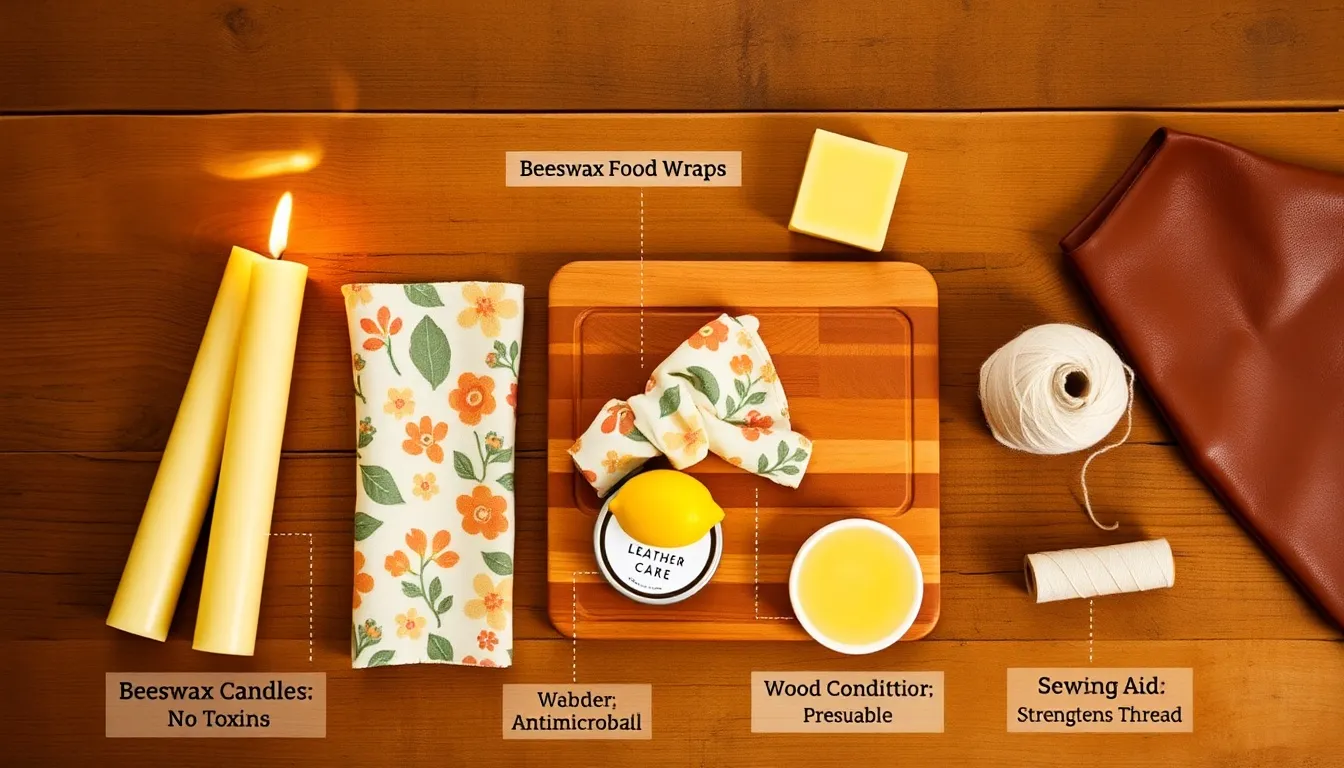
Beyond health and beauty, beeswax has practical household applications that leverage its water resistance, low toxicity, and natural fragrance:
**Beeswax candles:** Burn cleaner than paraffin (petroleum-based) candles — they produce significantly less soot, no toxic benzene or toluene emissions, and release a subtle honey scent. They also burn longer per ounce. A 2007 study in Indoor Air found that paraffin candles emitted alkanes, alkenes, and ketones at measurable levels, while beeswax candles produced negligible emissions.
**Beeswax food wraps:** A sustainable alternative to plastic wrap, beeswax wraps use cotton coated in beeswax, jojoba oil, and tree resin to create a moldable, reusable food cover. The mild antimicrobial properties of beeswax provide additional food safety benefits. Wraps last 6-12 months with proper care.
**Wood conditioner:** Beeswax mixed with mineral oil creates a natural wood finish for cutting boards, furniture, and wooden utensils. It fills pores, repels water, and provides a warm luster without the chemical off-gassing of polyurethane finishes.
**Leather conditioner:** Beeswax-based leather care products waterproof and condition leather goods while maintaining breathability — superior to petroleum-based products that can dry leather over time.
**Sewing and crafts:** Beeswax is used to strengthen thread, lubricate needles, prevent tangles, and create batik fabric art. Its versatility in crafts has been valued since ancient times.
Beeswax vs Other Bee Products
Here's how beeswax fits in the complete bee products ecosystem:
**Beeswax vs honey:** Honey is primarily consumed internally for health benefits (antioxidants, prebiotics, antimicrobial), while beeswax is primarily used topically for skin/hair care and in household products. They work synergistically when combined — as in honeycomb, which delivers both. For therapeutic combinations, pair beeswax with Manuka honey for wound care, buckwheat honey for anti-inflammatory benefits, wildflower honey for general skin care, or acacia honey for gentle applications. Eating small amounts of beeswax is safe (FDA GRAS status) and provides dietary fatty alcohols.
**Beeswax vs propolis:** Propolis is the stronger antimicrobial and anti-inflammatory agent (thanks to CAPE and concentrated flavonoids), making it better for immune support, throat spray, and wound treatment. Beeswax excels as a physical barrier, moisture seal, and delivery vehicle. Unrefined beeswax contains propolis residues that contribute mild antimicrobial activity.
**Beeswax vs bee pollen:** Bee pollen is a nutritional supplement (22-30% protein, 200+ polyphenols) consumed internally, while beeswax is used primarily topically. They serve entirely different purposes and don't directly compete.
**Beeswax vs royal jelly:** Royal jelly is a concentrated nutritional supplement with unique compounds (10-HDA, royalactin) taken internally for immune and skin health. Beeswax shares 10-HDA but at lower concentrations, and is used externally. Royal jelly is far more expensive and potent per dose.
For a comprehensive comparison of all bee products and their uses, see our types of honey guide and honey nutrition facts.
How to Choose Quality Beeswax
Not all beeswax is equal. Here's what to look for:
**Color and aroma:** Fresh, unrefined beeswax ranges from pale yellow to deep golden-brown with a pleasant honey/floral scent. White beeswax has been bleached (often chemically) and lacks some beneficial compounds. Avoid beeswax with no scent or a chemical smell — it may be adulterated with paraffin.
**Source:** Look for beeswax from identified apiaries or beekeeping co-ops, similar to buying raw honey from farmers markets. Beeswax from commercial honey operations may contain pesticide residues (particularly varroacides used in mite treatment).
**Processing:** Minimally processed (filtered but not bleached) beeswax retains more beneficial compounds. Cosmetic-grade beeswax is filtered to remove debris but retains its color and fragrance. Pharmaceutical-grade is more refined but may lose some bioactive compounds.
**Form:** Available as blocks, pellets/pastilles (easiest to melt for DIY projects), sheets (for candle rolling), and pre-made products (balms, wraps, candles). Pellets are the most versatile for home use.
**Certification:** USDA Organic beeswax ensures the bees foraged in certified organic areas and no prohibited substances were used in the hive. This is especially important for lip products and food wraps where beeswax contacts food or mucous membranes.
The Bottom Line
Beeswax completes the suite of bee products with unique strengths: it's the best bee product for physical skin protection, moisture barrier repair, and practical household applications. While it lacks the potent internal health benefits of honey or propolis, its external applications are backed by clinical evidence for skin conditions, wound care, and anti-inflammatory effects.
The strongest evidence supports beeswax for: (1) skin barrier protection and eczema/dermatitis management, especially in the honey-beeswax-olive oil combination; (2) lip care, where it outperforms petroleum-based alternatives; (3) wound healing, where it provides protective coverage with mild antimicrobial activity; and (4) anti-inflammatory applications, both topical and internal through its fatty alcohol content.
For practical daily use, beeswax is most accessible as an ingredient in lip balms, moisturizing balms, hair styling products, food wraps, and candles. Combined with raw honey, olive oil, or coconut oil, it forms the basis of effective DIY skincare. Choose wildflower honey or clover honey for gentle daily formulations, buckwheat honey for anti-inflammatory needs, or Manuka honey for therapeutic applications. The simplest way to consume beeswax is by eating honeycomb, which delivers beeswax alongside honey, propolis traces, and bee pollen in their natural form.
