Is Farmers Market Raw Honey Worth It?
Usually, yes, when the seller kept the bees. You get honey from a known place and can ask how it was processed. Before you pay, check that the vendor names where the hives are, the label states a net weight, and the price per pound makes sense next to the $7.15 US beekeepers averaged on direct sales in 2025.
That $7.15 is the average price US beekeepers received for honey they sold directly to consumers in 2025, from the USDA National Agricultural Statistics Service (NASS) Honey report released March 13, 2026. The same report puts honey sold to co-ops, packers and private buyers at $2.45 a pound and the all-channel average at $3.05. Selling direct paid beekeepers almost three times as much per pound as selling wholesale.
At a market you can ask the person who kept the bees where they foraged, when the honey came off the hives and how it was strained. In a supermarket the label usually names a brand or a packer. Fine filtering is legal and is not fraud: USDA's grade standards for extracted honey define "filtered" honey as honey with all or most of the fine particles, pollen grains and air bubbles removed. It also removes the pollen that can show where honey came from.
How common is that in stores? The best-known number is old and did not come from USDA. In November 2011 Food Safety News bought more than 60 honey products in 10 states and Washington, D.C., and had Texas A&M palynologist Vaughn Bryant analyze them for pollen. 76% of the grocery-store samples had all their pollen removed, as did 77% from big-box stores and 100% from drugstores; every farmers market sample had the amount of pollen he expected. Treat it as a 2011 snapshot, not a current national rate. For more on spotting adulterated honey, see our authenticity guide, and for what "raw" can and cannot mean, see raw vs regular honey.
7 Questions to Ask a Honey Vendor
The beekeeper is standing right there. These questions help you judge the honey and tell beekeepers from resellers.
- "Where are your hives?" — A beekeeper will give a specific answer: a town, a road, a farm name. "Various locations" deserves a follow-up. Some vendors buy bulk honey and repackage it
- "What were the bees working?" — Beekeepers know their local bloom. Expect answers like "mostly clover and wildflower" or "we put hives near the apple orchards in spring." A vague answer from someone who says they kept the bees is a yellow flag
- "Is this raw, and what do you mean by raw?" — There is no federal definition of raw honey; the National Honey Board says the term "generally means honey that has not been heated or filtered." Ask whether the honey was warmed to bottle it and whether it was strained or filtered
- "When was this harvested?" — Ask for the season and year. In most of the US, harvests run from early summer into fall, depending on region; see our harvest season guide. Older honey is safe but may have darkened or lost some aroma
- "How do you handle varroa mites?" — Not a trick question. The Honey Bee Health Coalition's varroa guide (9th edition, 2026) tells beekeepers to sample mite levels regularly and treat when mites pass a threshold. A beekeeper who monitors mites will be able to tell you how
- "Can I taste before I buy?" — Most honey vendors offer samples. Tasting is the fastest way to tell a spring honey from a fall one, or one floral source from another
- "Do you have comb honey or chunk honey?" — Comb honey is honey still sealed in the wax the bees built. A vendor with comb from their own hives is very likely a beekeeper, not a reseller
Pro Tip
Genuine beekeepers like talking about their bees. If a vendor gets annoyed by basic questions or cannot answer them, that tells you something.
Get the Honey Buyer's Cheat Sheet (free PDF)
16 varieties on one page — color, flavor, best use and what a fair price looks like — from the 268 honeys we track.
Red Flags: How to Spot Resellers and Fake Local Honey
Not every vendor at a farmers market kept the bees. Some buy bulk honey, sometimes imported, and label it "local." Two common rules of thumb are wrong: clear honey is not proof of heating, and liquid honey is not proof of processing. These are the signs that do deserve questions.
- A price below what beekeepers get wholesale — In 2025 US beekeepers averaged $2.45 a pound selling to co-ops, packers and private buyers (USDA NASS). A "local raw" jar priced near or below that, per pound, deserves a question about where it came from. Use the jar checker below to convert a jar price to dollars per pound
- No answers to basic beekeeping questions — If the vendor does not know how many hives they run, how they handle mites or when they last extracted, they probably did not produce the honey
- Varieties that cannot be local — There is no local Manuka in Ohio: Manuka honey comes from New Zealand and Australia. Tupelo outside the Southeast or sourwood far from the Appalachians deserves a question too. "Acacia" is different: European acacia honey comes from black locust, a tree native to the Appalachians and the Ozarks (USDA Forest Service), so a US beekeeper can sell real black locust honey. Ask where the trees were
- Clarity used as a sales pitch, either way — Straining removes wax and bits of comb but leaves pollen; fine filtering removes the pollen too (USDA grade standards). Freshly strained raw honey can look clear, and cloudy honey can still be a reseller's. Ask how it was strained instead of judging by eye
- A claim that honey "never crystallizes" because it is pure — Crystallization speed depends mainly on glucose content. Some honeys stay liquid for a long time naturally; the FAO names black locust, chestnut and tupelo. A jar that stays liquid is not proof of heating, and one that sets solid is not proof of quality
Understanding Farmers Market Honey Prices
Farmers market honey costs more than supermarket honey. USDA's annual survey shows where the money goes. In 2025, according to the NASS Honey report:
- Honey sold direct to consumers by the beekeeper averaged $7.15 a pound
- Honey sold to co-ops, packers and private buyers averaged $2.45 a pound
- All channels together averaged $3.05 a pound, up 27% from the revised 2024 average of $2.41
- Direct sales of NASS's "all other honey, area specialties" class averaged $8.94 a pound, the highest of its color classes
- These are survey averages from operations with five or more colonies, across every container size and honey type. They are not a price list for your market: small jars, comb and varietal honey can sit well above them
Pro Tip
Compare jars per pound, not per jar, and check the net weight on the label: honey is sold by weight, so a "12 oz" honey jar holds 12 ounces by weight, not 12 fluid ounces. If you buy a lot of one honey, ask about larger jars or pails and compare their per-pound price. The price per ounce calculator compares up to eight jars at once.
USDA NASS annual producer prices by sales channel, US dollars per pound. Not adjusted for inflation.
Scroll the chart left for earlier years.
Show the data table
| Year | Producer direct retail | All channels (average) | Co-ops, packers and private buyers |
|---|---|---|---|
| 1998 | $1.147 | $0.655 | $0.629 |
| 1999 | $1.266 | $0.599 | $0.561 |
| 2000 | $1.328 | $0.594 | $0.545 |
| 2001 | $1.406 | $0.669 | $0.633 |
| 2002 | $1.454 | $1.286 | $1.275 |
| 2003 | $1.849 | $1.404 | $1.371 |
| 2004 | $1.887 | $1.085 | $1.015 |
| 2005 | $1.833 | $0.904 | $0.816 |
| 2006 | $1.91 | $1.042 | $0.937 |
| 2007 | $1.961 | $1.032 | $0.956 |
| 2008 | $2.197 | $1.41 | $1.34 |
| 2009 | $2.784 | $1.445 | $1.392 |
| 2010 | $3.054 | $1.603 | $1.531 |
| 2011 | $3.284 | $1.729 | $1.643 |
| 2012 | $3.405 | $1.951 | $1.878 |
| 2013 | $3.735 | $2.121 | $2.047 |
| 2014 | $4.066 | $2.161 | $2.064 |
| 2015 | $4.096 | $2.09 | $1.955 |
| 2016 | $4.62 | $2.075 | $1.881 |
| 2017 | $4.777 | $2.156 | $2.01 |
| 2018 | $4.21 | $2.166 | $2.011 |
| 2019 | $4.85 | $1.97 | $1.70 |
| 2020 | $5.22 | $2.03 | $1.78 |
| 2021 | $5.04 | $2.54 | $2.30 |
| 2022 | $6.04 | $2.96 | $2.74 |
| 2023 | $6.55 | $2.52 | $2.23 |
| 2024 | $5.74 | $2.69 | $2.27 |
| 2025 | $7.15 | $3.05 | $2.45 |
Takeaway: in 2025, beekeepers selling their own honey direct averaged $7.15 a pound, 2.9× the $2.45 co-ops, packers and private buyers paid them. The direct price was $1.15 in 1998.
Source: USDA NASS, Honey, released March 13, 2026 and the earlier annual reports, via the Raw Honey Guide price index. Each year is shown as first published; NASS revises the previous year in the next report. Prices come from operations with five or more colonies.
Is This Jar Fairly Priced?
Pick the jar size or type the net weight, then enter the price. The checker shows the price per pound and per ounce and sets it next to what US beekeepers were paid per pound in 2025 by sales channel. The same checker sits on the honey price per ounce calculator, and the price index methodology explains where the USDA numbers come from. For store prices, see the honey price comparison.
Jar price checker
Pick the jar size or type the net weight from the label (weight ounces, not fluid ounces), then the price. The checker converts the jar to dollars per pound and puts it next to what US beekeepers were paid in 2025. Nothing you type leaves this page.
Price per pound
—
Price per ounce
—
Enter the price to see how this jar compares.
- Sold to co-ops, packers and private buyers, 2025$2.45/lb
At this rate, a 12 oz jar costs $1.84.
- All sales channels (average), 2025$3.05/lb
At this rate, a 12 oz jar costs $2.29.
- Sold direct to consumers by the beekeeper, 2025$7.15/lb
At this rate, a 12 oz jar costs $5.36.
- Your jar—
A benchmark is context, not a verdict. The USDA averages do not separate jar sizes, comb or varietal honey, and a price says nothing on its own about whether honey is real or local. Ask the vendor the questions earlier in this guide.
Source: USDA NASS, Honey, released March 13, 2026 (2025 prices from operations with five or more colonies), via the Raw Honey Guide price index.
Seasonal Honey: What to Buy and When
Farmers markets give you access to seasonal harvests. Each harvest has a different color and flavor depending on what was blooming. The months below fit much of the northern US; ask your beekeeper about local timing.
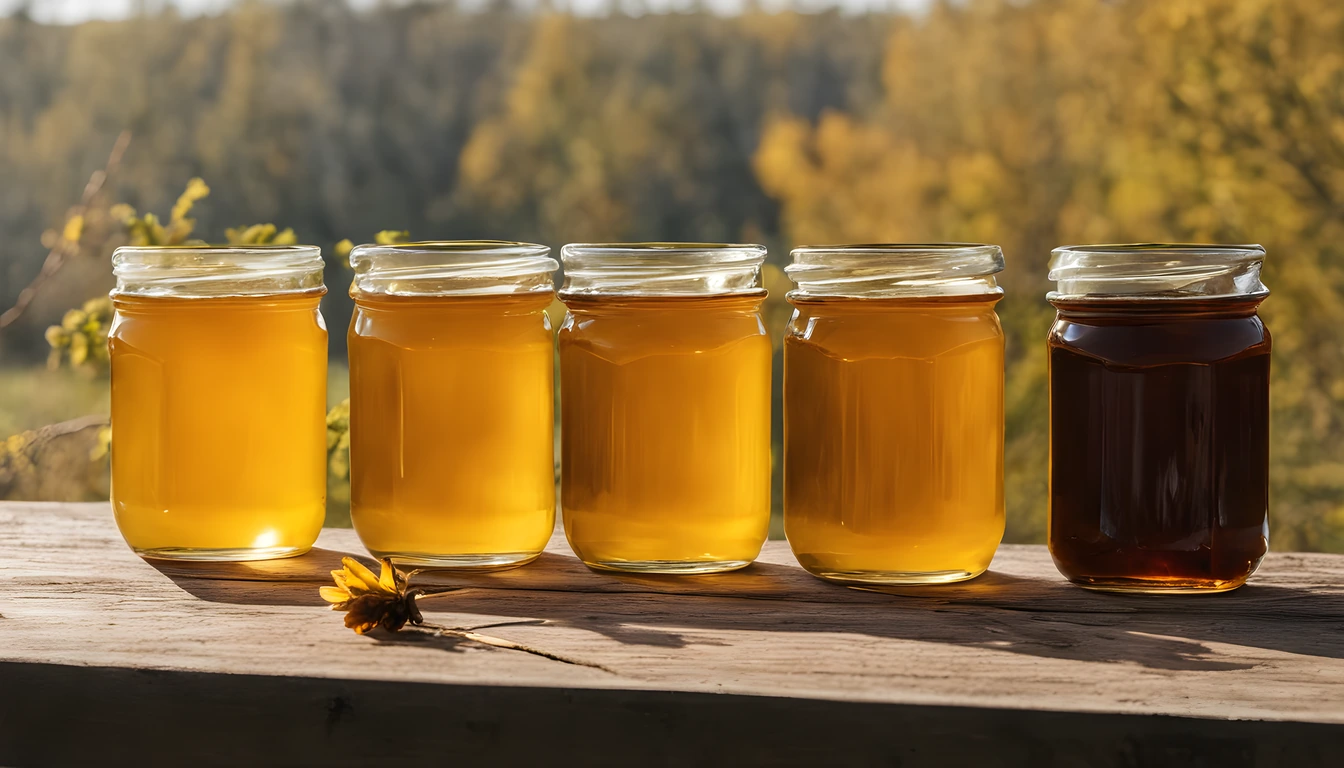
- Spring honey (April-June) — Often the lightest and mildest of the year, from fruit tree blossoms, clover and spring wildflowers
- Summer honey (July-August) — Medium color and fuller flavor, from basswood, sunflowers and summer wildflowers
- Fall honey (September-October) — Usually the darkest and strongest, from aster, goldenrod and late wildflowers. Dark, malty buckwheat honey also comes in this window. Some people find fall honey too strong; others wait all year for it
- Specialty harvests — Some beekeepers move hives to one crop (blueberry fields, buckwheat plantings, orange blossom groves) and sell single-source honey from that flow. Worth seeking out for flavor
Pro Tip
Spring markets often sell the previous season's honey; new honey tends to appear once summer harvests are in. Late summer and fall markets usually have the widest range.
How to Store Farmers Market Honey
Raw honey needs no special care, but a few habits keep its flavor and texture.
- Keep the lid tight — Honey absorbs moisture from the air, and extra water lets yeasts ferment it. Always reseal the jar
- Store it at room temperature, away from the stove — The FAO notes that honey stored above 25°C (77°F) loses much of its aroma within a few months. A kitchen cabinet is fine; you do not need to refrigerate honey
- Expect a cool spot to crystallize it faster — Crystallization is fastest around 14°C (57°F) and almost stops above 25°C (77°F) or below 5°C (41°F), per the FAO. A cold garage or basement shelf sets honey sooner than a kitchen cupboard
- Use a clean, dry spoon — Water or crumbs in the jar can start fermentation. Do not double-dip
- Do not worry about crystallization — all honey crystallizes eventually, according to the National Honey Board. To re-liquefy, set the jar in warm water and stir; Southern Cross University advises never warming honey above 45°C (113°F). More in why honey crystallizes
Pro Tip
Sealed honey keeps for years. The National Honey Board says a shelf life of two years is often stated for practical purposes, and archaeologists have found pots of honey thousands of years old in Egyptian tombs, still preserved (Smithsonian Magazine). Over time it may darken or crystallize; see does honey expire?
Beyond the Jar: Other Bee Products at Farmers Markets
Many beekeepers sell more than liquid honey. Markets often add pollinator events around National Pollinator Week, held each June (June 22-28 in 2026).
- Beeswax candles — Made from the wax bees build comb with, including the cappings beekeepers slice off frames before extracting honey
- Beeswax wraps — Reusable food wraps made from cotton coated in beeswax, usually with oil and tree resin
- Bee pollen — Pollen pellets bees carry home, collected in traps at the hive entrance and sold dried as a food topping. It can cause serious allergic reactions in people with pollen allergies (Choi et al., 2015)
- Propolis — The resin bees collect to seal gaps in the hive. Vendors sell it as tinctures and sprays
- Whipped or creamed honey — Controlled crystallization gives a smooth, spreadable texture; see creamed vs raw honey