The Fake Honey Problem Is Bigger Than You Think
Studies estimate that up to 76% of honey sold in US grocery stores has been ultra-filtered — a process that removes pollen, making it impossible to trace the honey's origin. Some of this honey is adulterated with corn syrup, rice syrup, or other cheap sweeteners. The problem is so widespread that the term "honey laundering" has entered the vocabulary of food safety investigators.
The FDA defines honey as "a thick, sweet, syrupy substance that bees make as food from the nectar of flowers." If it's been diluted with syrups, it isn't real honey. But since adulterated honey looks and tastes similar to the real thing, consumers need practical ways to evaluate what they're buying.
No single home test is 100% conclusive — laboratory testing with methods like Nuclear Magnetic Resonance (NMR) or C4 sugar analysis is the gold standard. But the tests below can help you identify obviously fake or heavily adulterated honey, and more importantly, teach you what to look for when shopping.
1. The Water Dissolve Test
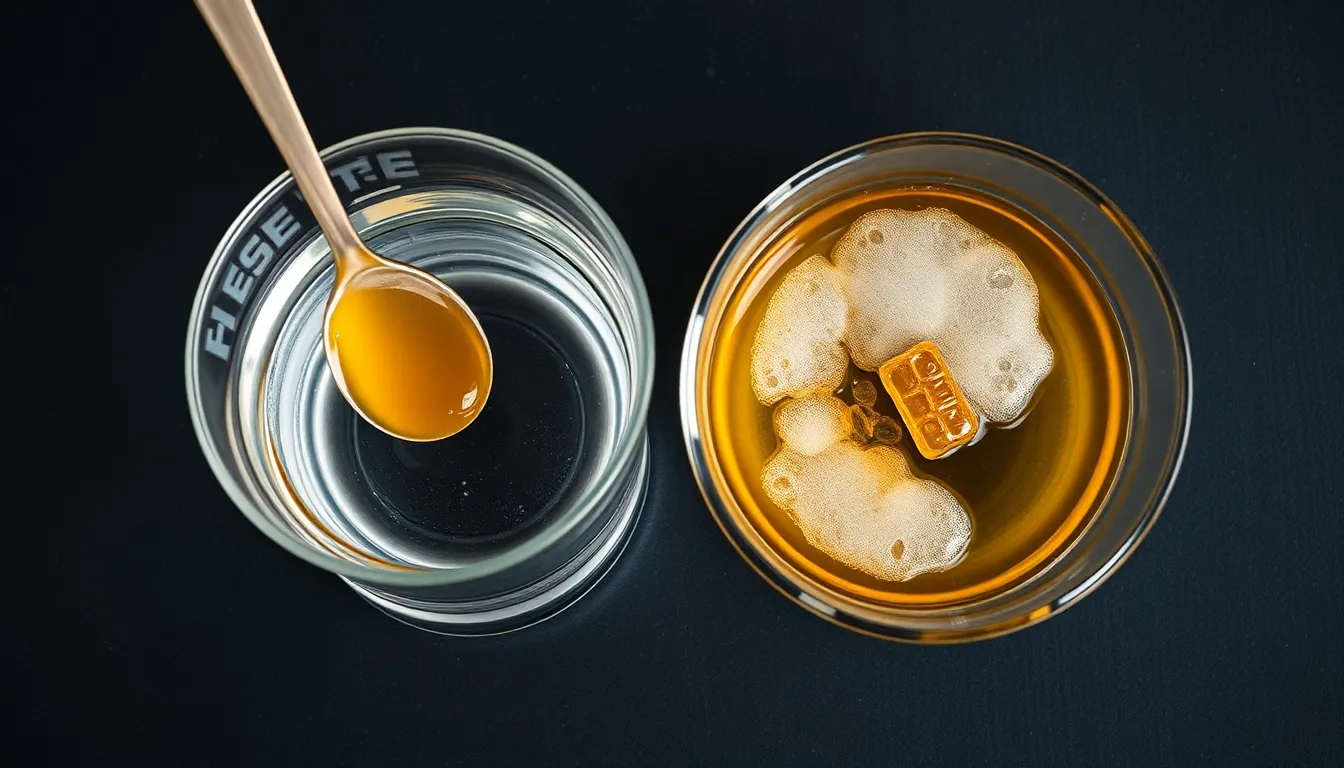
Fill a glass with room-temperature water and add a tablespoon of honey. Real honey sinks to the bottom and sits in a lump before slowly dissolving when stirred. Fake honey that's been diluted with sugar syrup dissolves almost immediately without stirring.
This works because real honey is denser than water (specific gravity around 1.4) and has a complex molecular structure that resists dissolving quickly. Corn syrup and rice syrup are already in a more dissolved state and integrate with water much faster.
Pro Tip
Use room-temperature or cold water. Hot water dissolves both real and fake honey quickly, making the test useless.
Get the Honey Buyer's Cheat Sheet (free PDF)
16 varieties on one page — color, flavor, best use and what a fair price looks like — from the 268 honeys we track.
2. The Thumb Test
Put a small drop of honey on your thumb. Real honey stays in place or moves very slowly — it's viscous and sticky. Fake or adulterated honey tends to run or spread quickly because added syrups reduce its natural thickness.
This test is most useful in warm conditions (above 75°F) where the difference is obvious. In cold weather, even adulterated honey may move slowly because all sugary liquids become more viscous when cold.
3. The Paper Towel Test
Drop a small amount of honey onto a paper towel or napkin. Real honey has low moisture content (typically 17-18%) and should sit on the surface without soaking through quickly. If the honey absorbs into the paper towel right away, it may contain added water or be heavily diluted.
A caveat: some real honeys have naturally higher moisture content (up to 20% is legal in the US), and these may absorb slightly. Thinner honeys like acacia ($12-20/lb) absorb slightly faster than thicker varieties like buckwheat ($15-25/lb). This test catches the worst offenders — heavily diluted products — but won't detect sophisticated adulteration.
4. The Flame Test
Dip the tip of a matchstick or cotton wick in honey, then try to light it. Real honey has low enough moisture that the coated wick should ignite and burn briefly. If the honey contains significant added water, the match will sputter or refuse to light.
This test demonstrates honey's low moisture content, which is one of its defining characteristics. Real honey is a supersaturated sugar solution with very little free water, which is why it doesn't ferment and has such a long shelf life. Added water changes this property.
Pro Tip
The flame test works best with a cotton wick dipped in honey rather than a match tip. Let the coated wick dry for a few seconds before lighting.
5. The Crystallization Check
Real honey crystallizes over time — this is natural and actually a sign of authenticity. Most real honey will start forming crystals within a few months, especially if stored below 70°F. If you've had a jar for 6-12 months and it still looks perfectly clear and liquid, that's a reason to be suspicious.
Fake honey made with corn syrup or inverted sugar syrup often stays permanently liquid because it lacks the glucose-to-fructose ratio that triggers crystallization. However, some real honeys (like acacia and tupelo, $25-45/lb) are naturally slow to crystallize due to their high fructose content, so this test alone isn't definitive.
6. The Vinegar Test
Mix a tablespoon of honey into a half cup of water, then add 2-3 drops of white vinegar. Stir and observe. If the mixture foams or fizzes, the honey may be adulterated with certain additives. Real honey dissolved in water should not produce a foaming reaction with vinegar.
This test specifically detects certain industrial adulterants. It won't catch all types of adulteration (corn syrup, for instance, won't react with vinegar), but it's one more data point in your evaluation.
7. The Bread Test
Spread honey on a slice of bread and wait a few minutes. Real honey will firm up the surface of the bread slightly because it draws moisture out. Fake honey with high water content will soak into the bread and make it soggy, similar to how syrup behaves.
This test leverages honey's hygroscopic nature — real honey absorbs moisture from its environment rather than adding to it. It's the same property that makes honey a natural preservative.
What These Tests Can and Cannot Tell You
Home tests are useful for catching obvious fakes — products that are mostly corn syrup with honey flavoring, or heavily diluted honey with added water. They are not reliable for detecting sophisticated adulteration where small amounts of rice syrup or sugar syrup have been blended into real honey.
The most reliable way to ensure you're getting real honey is to buy from trustworthy sources: local beekeepers, farmers markets, or brands that can trace their honey back to the apiary. If you can visit the beekeeper and see the hives, you know the honey is real.
- Home tests catch: heavily diluted honey, corn syrup products labeled as honey, honey with significant added water
- Home tests miss: small-percentage adulteration with rice syrup, enzymatically inverted sugar syrups, blended honey that meets legal definitions but isn't pure
- Gold standard: NMR spectroscopy and C4 sugar ratio testing in accredited labs
Understanding Real Honey's Nutritional Profile
Knowing what genuine honey should contain nutritionally is another way to evaluate authenticity. Real raw honey delivers a complex profile of enzymes and trace minerals that adulterated products lack. A tablespoon of authentic honey provides roughly 64 calories. Genuine honey also contains measurable amounts of polyphenols and flavonoids that can be detected through laboratory analysis.
The type of honey also affects what you should expect. Darker varieties like buckwheat honey ($15-25/lb) are much darker and bolder than light honeys like acacia ($12-20/lb), and manuka honey ($35-60+ UMF 10+) has unique methylglyoxal compounds that are impossible to replicate with syrups. Understanding these natural variations helps you recognize when a product's taste, color, or behavior doesn't match its label claims.
How to Buy Real Honey: What to Look For
The best defense against fake honey is knowing what to look for before you buy. Label reading and sourcing matter far more than home tests after the fact.
- Buy from local beekeepers or farmers markets — this is the most reliable source for pure honey
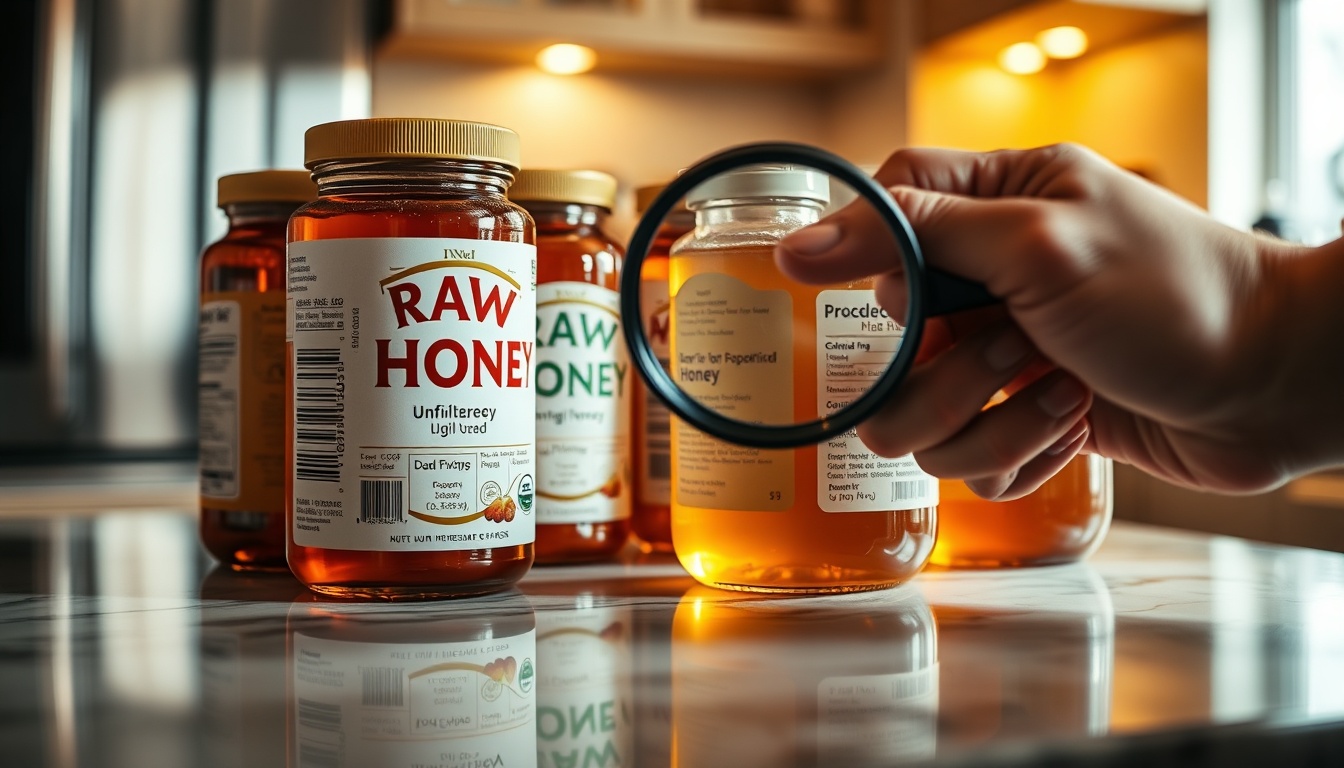
- Look for a single country of origin on the label, not "blend of honeys from multiple countries"
- Check for "True Source Certified" or similar third-party verification seals
- Avoid suspiciously cheap honey — if a 16 oz jar costs less than $5, it's likely not pure. For reference, real clover honey costs $8-15/lb, wildflower $10-18/lb, and specialty varieties like sourwood or tupelo $20-45/lb
- Look for raw or unfiltered on the label — these are less likely to be adulterated because they retain pollen that proves origin
- Check the ingredients list — it should say "honey" and nothing else; avoid products listing corn syrup, sugar, or other sweeteners
- Single-varietal honeys (clover, wildflower, buckwheat) from named US producers are generally reliable
Pro Tip
The phrase "pure honey" on a label is not legally regulated in the same way as "organic" or "raw." Some products labeled "pure honey" have tested positive for adulteration. Third-party certifications are more trustworthy than marketing claims.
Common Types of Honey Fraud
Understanding how honey fraud works helps you know what you're defending against. The most common types include:
- Ultra-filtration: Removes all pollen to hide geographic origin, often used to disguise honey that's been illegally transshipped to avoid tariffs
- Sugar syrup adulteration: Blending honey with corn syrup, rice syrup, or beet sugar syrup to increase volume while reducing cost
- Moisture manipulation: Adding water to increase weight (honey is sold by weight), which can lead to fermentation
- Mislabeling origin: Labeling Chinese or Indian honey as a product of another country to avoid anti-dumping tariffs
- Fake varietal claims: Labeling generic wildflower honey as manuka, tupelo, or other premium varieties to charge higher prices — real manuka costs $35-60+ and real tupelo $25-45/lb