Why Manuka Grading Systems Matter
Manuka honey is the most counterfeited honey in the world. New Zealand produces roughly 1,700 tonnes of Manuka honey per year, yet an estimated 10,000+ tonnes are sold globally under the Manuka label. Grading systems exist to separate genuine, tested Manuka from the fakes — but the competing standards confuse more buyers than they help.
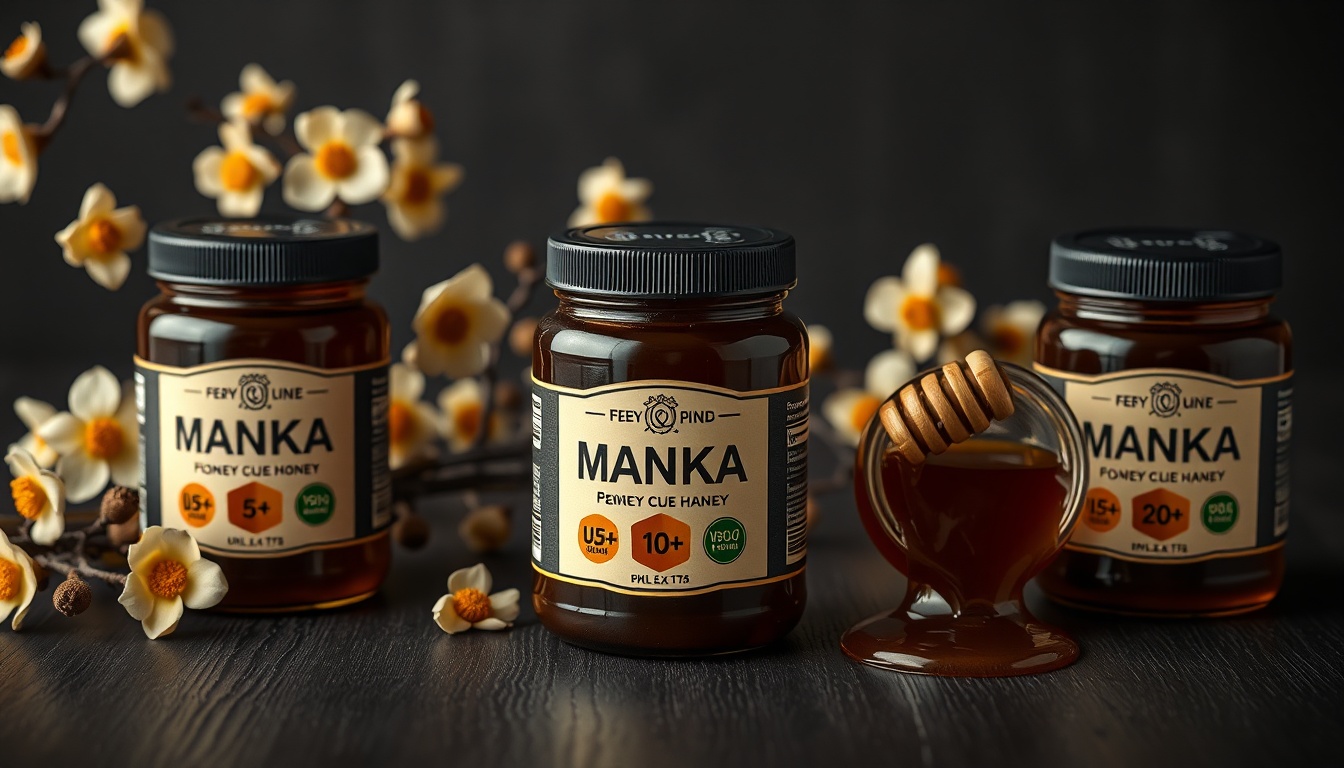
Three grading systems dominate the market: UMF (Unique Manuka Factor), MGO (Methylglyoxal), and KFactor. Each measures different things, uses different scales, and is backed by different organizations. Understanding what each number actually means is the difference between buying a jar worth $60 and one worth $6.
MGO: The Chemical Marker
MGO stands for methylglyoxal, the compound responsible for Manuka honey's unique antibacterial activity. All genuine Manuka honey contains MGO — it forms naturally when dihydroxyacetone (DHA) from Manuka nectar converts over time. The MGO number on a jar tells you the concentration in milligrams per kilogram.
MGO is the most straightforward grading system because it measures one specific, testable compound. An independent lab can verify the MGO level of any Manuka honey sample. There is no subjective interpretation involved.
- MGO 30-82 — Low activity. Comparable to regular raw honey. Fine for everyday sweetening but no significant antibacterial advantage
- MGO 83-262 — Moderate activity. Suitable for general wellness, daily consumption, and mild sore throat relief
- MGO 263-513 — High activity. Effective for therapeutic use — wound care support, digestive health, stronger antibacterial action
- MGO 514-828 — Very high activity. Premium therapeutic grade. Used in clinical settings and for serious skin conditions
- MGO 829+ — Ultra-high activity. Extremely rare and expensive ($80-150+ per jar). Mainly for targeted medicinal applications
Pro Tip
MGO levels increase naturally as Manuka honey ages. A jar with MGO 250 today may test at MGO 300+ in a year. This is why some producers sell "maturing" Manuka at lower prices — it's legitimate honey that hasn't reached peak MGO yet.
Get the Honey Buyer's Cheat Sheet (free PDF)
16 varieties on one page — color, flavor, best use and what a fair price looks like — from the 268 honeys we track.
UMF: The Gold Standard
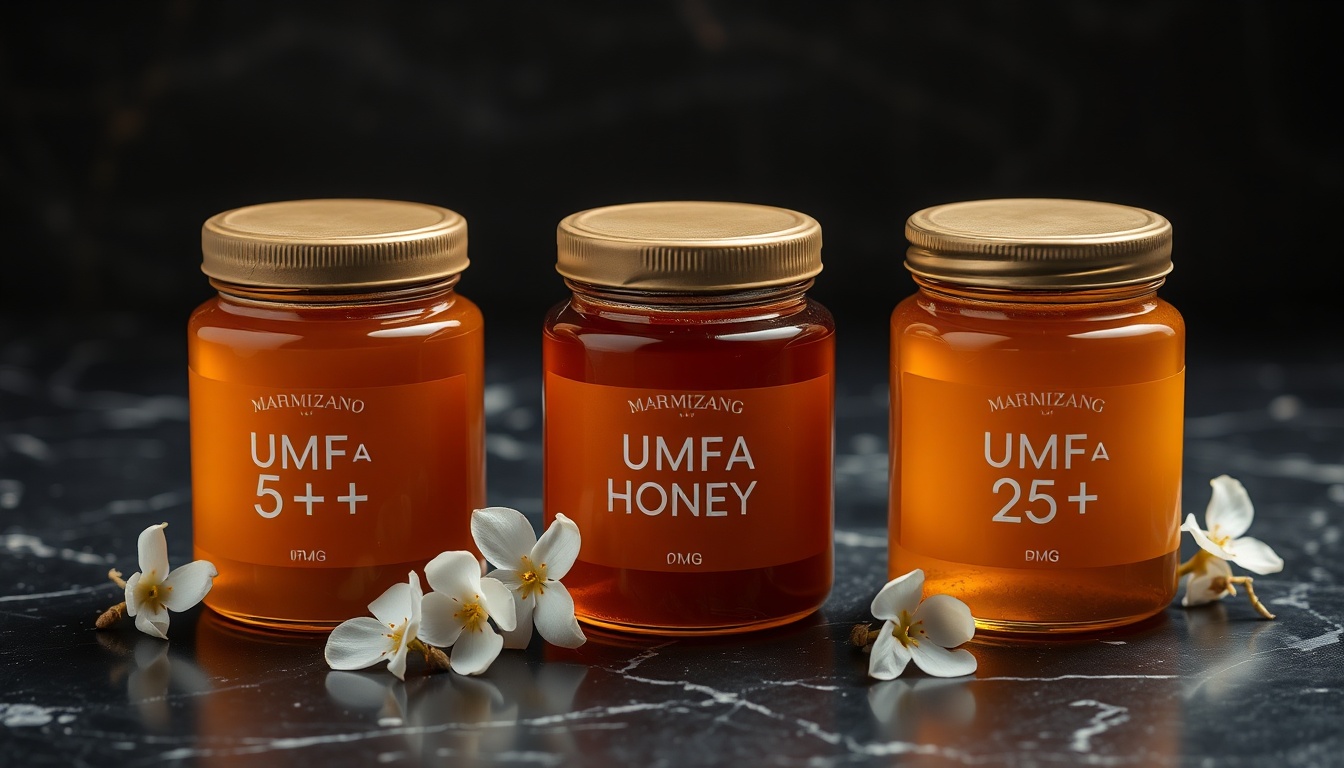
UMF (Unique Manuka Factor) is the oldest and most comprehensive Manuka grading system. Developed in New Zealand and managed by the UMF Honey Association (UMFHA), it tests for four key markers: MGO (antibacterial potency), leptosperin (a chemical unique to Manuka nectar that proves botanical authenticity), DHA (the precursor to MGO, indicating future potency), and HMF (hydroxymethylfurfural, a freshness indicator — high HMF means the honey has been overheated or is old).
The UMF number is derived from these combined markers and roughly corresponds to the antibacterial effectiveness compared to a phenol disinfectant solution. UMF 10 means the honey's antibacterial activity is equivalent to a 10% phenol solution.
- UMF 5+ — Entry level. Verified as genuine Manuka but minimal therapeutic benefit. Good for daily use as a premium table honey
- UMF 10+ — The minimum therapeutic grade. Suitable for immune support, minor wound care, and sore throat relief. This is the sweet spot for most consumers
- UMF 15+ — Strong therapeutic grade. Higher antibacterial activity for more targeted health applications. Noticeable price jump from UMF 10+
- UMF 20+ — Premium therapeutic grade. Significant antibacterial potency. Used by naturopaths and in complementary medicine
- UMF 25+ — Ultra-premium. Very limited supply. Prices typically exceed $100 per 250g jar. Diminishing practical returns over UMF 20+ for most uses
UMF vs MGO: Direct Conversion
Since UMF incorporates MGO as a key component, there is a direct relationship between the two scales. This conversion table helps you compare products that use different labeling.
- UMF 5+ = MGO 83+ (entry-level Manuka)
- UMF 10+ = MGO 263+ (minimum therapeutic)
- UMF 12+ = MGO 356+ (moderate therapeutic)
- UMF 15+ = MGO 514+ (strong therapeutic)
- UMF 18+ = MGO 696+ (high therapeutic)
- UMF 20+ = MGO 829+ (premium therapeutic)
- UMF 25+ = MGO 1200+ (ultra-premium, very rare)
Pro Tip
When comparing prices, always convert to the same scale. A jar labeled "MGO 400" is roughly equivalent to UMF 13 — not UMF 400. Unscrupulous sellers exploit this confusion by printing large MGO numbers to make their honey seem more potent than a lower UMF-rated competitor.
KFactor: The Controversial Alternative
KFactor is a proprietary grading system created by Wedderspoon, a major Manuka honey brand. Unlike UMF and MGO, KFactor does not directly measure antibacterial activity. Instead, it evaluates a broader set of quality indicators including pollen count, live enzymes, pH levels, antioxidant levels, phenolic compounds, and DHA.
KFactor has three tiers: KFactor 12 (raw monofloral Manuka), KFactor 16 (raw Manuka with higher purity), and KFactor 22 (premium raw Manuka with the highest pollen and enzyme levels). The system emphasizes rawness and purity over antibacterial potency.
The honey industry is divided on KFactor. Supporters argue it measures overall quality rather than just one compound. Critics point out that it doesn't test for MGO — the specific compound that gives Manuka its unique medicinal properties — and that the grading criteria are controlled by a single company rather than an independent body.
Which Grading System Should You Trust?
For most buyers, UMF is the safest choice. It is the most comprehensive system, independently audited, and backed by the New Zealand government's export requirements. Every UMF-licensed producer must have their honey tested by an approved independent laboratory, and the UMFHA conducts regular compliance audits.
MGO is perfectly reliable when the testing is done by a reputable lab. The issue is that MGO-only labeling has no mandatory third-party verification — a producer can print "MGO 400" on a jar without the oversight that UMF requires. Buy MGO-labeled honey only from brands you trust or that provide a certificate of analysis.
KFactor is fine if you want high-quality raw Manuka for general eating. But if you're buying Manuka specifically for its antibacterial properties — wound care, immune support, sore throat treatment — choose UMF or MGO-rated honey instead, since KFactor doesn't guarantee a specific antibacterial potency.
New Zealand Government Standards (2018)
In 2018, the New Zealand Ministry for Primary Industries (MPI) established an official scientific definition for Manuka honey. Any honey exported from New Zealand as "Manuka" must pass a specific test measuring five attributes: four chemical markers (3-phenyllactic acid, 2-methoxyacetophenone, 2'-methoxybenzoic acid, and 4-hydroxyphenyllactic acid) plus a DNA marker from the Manuka pollen.
This government standard is separate from UMF, MGO, and KFactor — it determines whether honey can legally be called "Manuka" at all, regardless of its activity rating. It was introduced specifically to combat the global Manuka fraud problem.
The MPI definition has two categories: monofloral Manuka (predominantly from Manuka flowers) and multifloral Manuka (a blend where Manuka is a significant but not dominant source). Only monofloral Manuka delivers the full antibacterial properties consumers expect.
Pro Tip
Look for "New Zealand Manuka" on the label along with a UMF or MGO rating. Australian Manuka honey exists and can be excellent, but it is graded under different systems and is not regulated by MPI standards.
How to Spot Fake or Misleading Manuka Labels
The gap between genuine Manuka production and global sales volume means fake Manuka is everywhere. Here are the red flags and verification steps every buyer should know.
- No UMF or MGO rating — If a jar just says "Manuka Honey" with no activity rating, it may contain minimal Manuka nectar blended with cheaper honey
- Suspiciously low price — Genuine UMF 10+ Manuka costs $25-40+ for a 250g jar. A $12 jar claiming "Manuka" is almost certainly mislabeled or heavily blended
- No New Zealand or Australian origin — Manuka trees (Leptospermum scoparium) only grow in New Zealand and parts of Australia. "Manuka" from other countries is not genuine
- Missing license number — All UMF-rated honey must display a UMF license number on the jar. You can verify this at umf.org.nz
- Vague terms like "Manuka blend" or "with Manuka" — These indicate the jar contains some Manuka mixed with other, cheaper honeys. The Manuka content may be as low as 5-10%
- No lot or batch number — Reputable producers include batch numbers that can be traced to specific testing certificates
What Rating Should You Buy?
Your ideal Manuka grade depends entirely on how you plan to use it. Higher ratings are not always better — they're more expensive and the stronger flavor can be overpowering in food and drinks. If you're still deciding between raw honey and Manuka, start here.
- Daily eating and cooking — UMF 5+ / MGO 83+ is sufficient. The flavor is milder and the price is reasonable for everyday use ($15-25 per jar)
- General wellness and immune support — UMF 10+ / MGO 263+ is the most popular and cost-effective therapeutic grade ($25-40 per jar)
- Sore throat and cold symptoms — UMF 10-15+ / MGO 263-514+ provides meaningful antibacterial action for acute symptoms
- Wound care and skin conditions — UMF 15-20+ / MGO 514-829+ for direct topical application. Consult a healthcare provider for serious wounds
- Maximum medicinal potency — UMF 20+ / MGO 829+ for targeted therapeutic use. The price premium over UMF 15+ is steep and practical benefits plateau for most people
Pro Tip
For most consumers, UMF 10+ (MGO 263+) offers the best balance of documented therapeutic benefit and value. Jumping to UMF 15+ costs 40-60% more but doesn't deliver 40-60% more benefit for general wellness purposes.
Storing Manuka Honey for Maximum Potency
Proper storage preserves the MGO content that you're paying a premium for. Manuka honey is more resilient than most foods, but poor storage can degrade its active compounds.
Keep Manuka honey at room temperature (below 25°C / 77°F) in a dark cupboard. Do not refrigerate — cold temperatures cause crystallization and make the honey harder to use (though crystallized Manuka is still fully potent). Never heat Manuka honey above 40°C (104°F), as high temperatures degrade MGO and enzymes. Use a clean, dry spoon every time to avoid introducing moisture or bacteria.
Properly stored, Manuka honey maintains its potency for years. The MGO content actually increases over time as DHA converts to MGO. A jar of UMF 10+ today may naturally reach UMF 12+ levels after 18-24 months of storage.
Matching Manuka Grade to Specific Health Conditions
Beyond general buying guidelines, recent clinical research has clarified which Manuka grades are most effective for specific health applications. Choosing the right grade means you get therapeutic benefit without overpaying for potency you don't need.
For wound healing and burns, UMF 15+ (MGO 514+) is the clinical standard. The 2015 Cochrane review of 3,011 participants found that medical-grade Manuka at this potency accelerated healing time for partial-thickness burns by 4-5 days compared to conventional dressings. FDA-cleared wound products like Medihoney use this grade range.
For skin conditions like eczema and psoriasis, UMF 10-15+ (MGO 263-514+) applied topically has shown promise in clinical trials. A 2017 randomized controlled trial found that Manuka honey cream applied twice daily reduced eczema severity scores significantly compared to a paraffin-based emollient. The key is consistent application over 2-4 weeks.
For sinus infections and congestion, UMF 12+ (MGO 356+) is recommended. A 2008 University of Ottawa study demonstrated that Manuka at this potency was effective at disrupting bacterial biofilms — the protective structures that make chronic sinus infections resistant to antibiotics.
For general anti-inflammatory support, UMF 10+ (MGO 263+) consumed daily (1-2 teaspoons) provides meaningful polyphenol intake. The 2022 Nutrition Reviews meta-analysis of 18 RCTs found that regular honey consumption reduced C-reactive protein and other inflammatory markers, with darker, higher-activity honeys showing stronger effects.
Pro Tip
If you are using Manuka for a specific health condition, consistency matters more than ultra-high potency. Daily use of UMF 10+ over several weeks typically delivers better results than occasional use of UMF 20+.