Manuka Honey vs Buckwheat Honey
A detailed comparison to help you choose the right honey for your needs.
Quick Answer
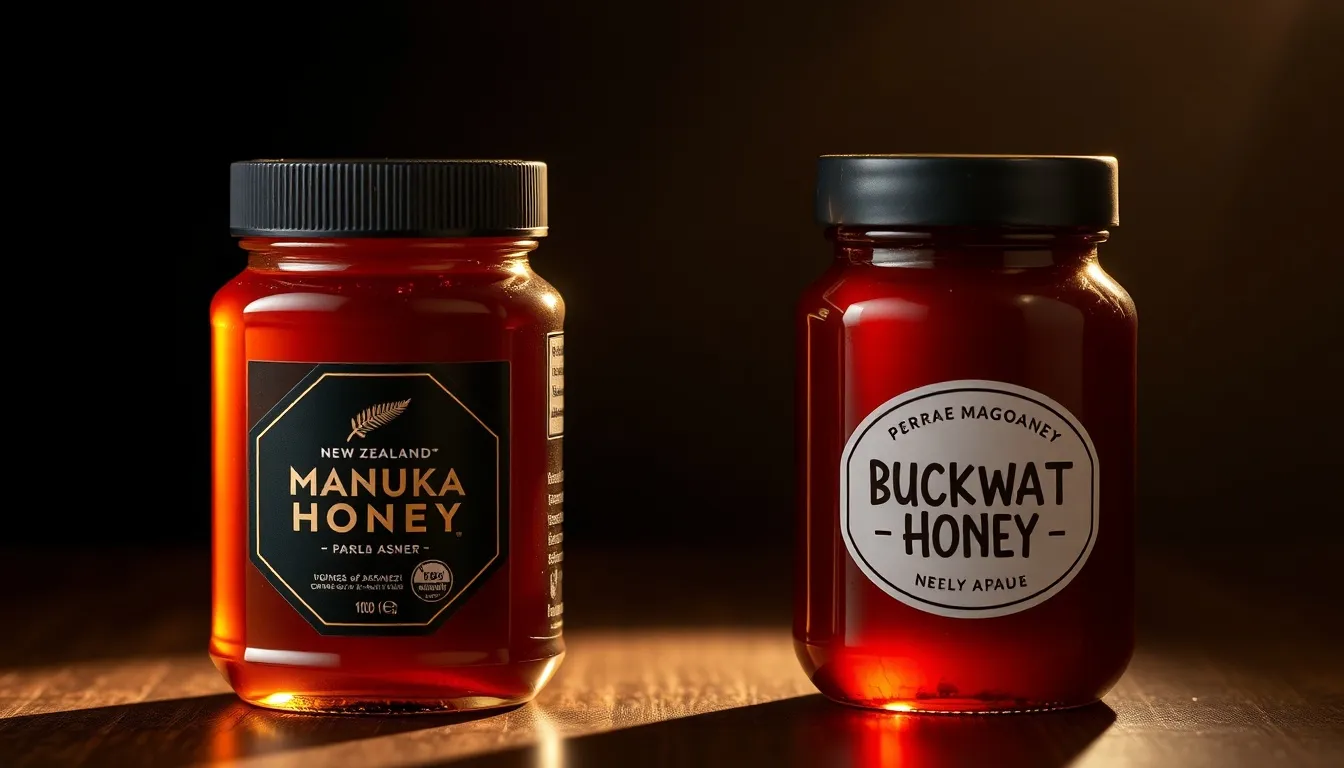
Manuka delivers clinically validated antibacterial activity via MGO for wound care and immune support; buckwheat brings the highest antioxidant levels of any common honey and clinically demonstrated cough-suppressing benefits at a fraction of the cost. Both are dark, nutrient-dense honeys, but they excel in different areas. Choose manuka for targeted antibacterial therapy, buckwheat for daily antioxidant intake and respiratory relief.
At a Glance
Manuka Honey
Earthy, herbal, slightly bitter
Wound healing, immune support, digestive health
$30-$80 per jar
New Zealand
Buckwheat Honey
Bold, malty, molasses-like
Cough relief, antioxidants, robust cooking
$10-$20 per jar
United States, Canada, Europe
Head-to-Head
Flavor Comparison
These are both bold, assertive honeys for people who enjoy complex flavors, but they taste quite different.
Manuka has an earthy, herbal quality with slight bitterness and a creamy, almost waxy texture. Some detect eucalyptus or tea-tree notes, which makes sense given its botanical cousin, the manuka bush. Buckwheat honey is even more intense with rich malty, molasses-like notes and a lingering toffee finish. It is among the darkest honeys available, sometimes nearly black, with a robust character that some compare to dark brown sugar or treacle. Neither honey is subtle. Both will dominate any dish they are added to. Buckwheat tends to be slightly more divisive because of its nearly savory intensity, while manuka's herbal notes are unusual but less overwhelming to first-time tasters.
Nutrition Comparison
Manuka and buckwheat are both nutritional powerhouses, but their strengths differ completely.
Buckwheat honey holds the record for highest antioxidant content among common honey varieties — ORAC values of approximately 796 μmol TE/100g (Gheldof & Engeseth 2002, J. Agric. Food Chem.), rivaling blueberries and dark chocolate on a per-gram basis. Its exceptional phenolic content comes from chlorogenic acid, rutin, and quercetin. As a cough suppressant, a 2012 study in Pediatrics found buckwheat honey outperformed dextromethorphan (a common OTC cough suppressant) in reducing nighttime cough frequency in children. Manuka contains methylglyoxal (MGO), a compound with validated non-peroxide antibacterial activity effective against drug-resistant bacteria including MRSA. Standard UMF 10+ manuka carries MGO 263+ mg/kg. Its ORAC values (~55–100 μmol TE/100g) are significantly lower than buckwheat, but ORAC measures a completely different benefit than MGO antibacterial activity — the two honeys are not competing in the same health dimension. Both offer strong anti-inflammatory properties from different chemical pathways.
Best Use Cases
Manuka's antibacterial reputation is best known through medical-grade wound-care products used under clinical supervision, not home treatment of wounds, acne, or stomach ulcers — talk to a healthcare provider about those.
Many people include manuka as a general wellness addition to their diet. Buckwheat honey is the antioxidant champion, and its cough-suppressing effect is backed by a pediatric RCT (Paul et al. 2007) — talk to your doctor about how to use it for a nighttime cough. In the kitchen, buckwheat honey pairs brilliantly with strong cheeses, dark breads, barbecue sauces, and robust marinades where its bold flavor becomes an asset.
Price Comparison
The cost difference is dramatic.
Buckwheat honey runs $10 to $20 per jar, while manuka commands $30 to $80 or more. For daily antioxidant supplementation and cough relief, buckwheat delivers exceptional value. If you specifically need MGO-based antibacterial properties, manuka is the only option, making its premium justifiable for those specific applications.
Our Verdict
Buckwheat honey is the better value proposition for most people seeking a health-forward honey. Its superior antioxidant profile and clinically demonstrated cough-suppressing ability come at a fraction of manuka's price. However, manuka is irreplaceable for wound care and conditions requiring its unique MGO antibacterial activity. The ideal strategy is to keep buckwheat as your daily health honey and reserve manuka for therapeutic situations where its specific compounds are needed.
Frequently Asked Questions
Which has more antioxidants, manuka or buckwheat?
Can buckwheat honey be used on wounds like manuka?
Which is better for sore throat or coughs, manuka or buckwheat?
What MGO or UMF level do I need in manuka honey for it to actually work?
Is buckwheat honey good value compared to manuka?
Can I give buckwheat or manuka honey to children?
Best Honey For...
More Honey Comparisons
View allRelated Guides
Health Benefits
Nutritional and therapeutic benefits of honey.
Read GuideHoney for Sore Throat
Evidence-based sore throat relief.
Read GuideQuality & Grading
Identify quality honey and spot fakes.
Read GuideRelated Articles
Manuka Honey Benefits: 10 Science-Backed Uses Worth Knowing
10 evidence-based manuka honey benefits — wounds, sore throats, gut health, and skin care. Which UMF/MGO grade to buy.
Read ArticleManuka Honey Grading Systems Explained: UMF vs MGO vs KFactor
UMF vs MGO vs KFactor — manuka honey ratings decoded. Learn what the numbers mean and how to choose authentic manuka.
Read ArticleHoney for Wound Healing: The Science Behind Nature's Bandage
Medical-grade honey dressings are used in clinical wound care — evidence, best types, Medihoney, and what the research shows.
Read ArticleHoney for Eye Health: Benefits, Risks, and What Science Says
Can honey benefit eye health? Evidence on antimicrobial and anti-inflammatory properties for dry eyes and conjunctivitis.
Read ArticleRaw Honey vs Manuka Honey: Which Should You Buy?
Raw honey vs manuka honey: compare price, antibacterial strength, taste, and best uses. Is manuka worth the premium?
Read Article