Why This Comparison Matters
Raw honey and Manuka honey are two of the most searched honey terms online — and two of the most confused. Many shoppers assume they are the same thing, or that Manuka is automatically "better" than raw honey. The truth is more nuanced: they overlap in some ways but differ significantly in origin, price, and best uses.
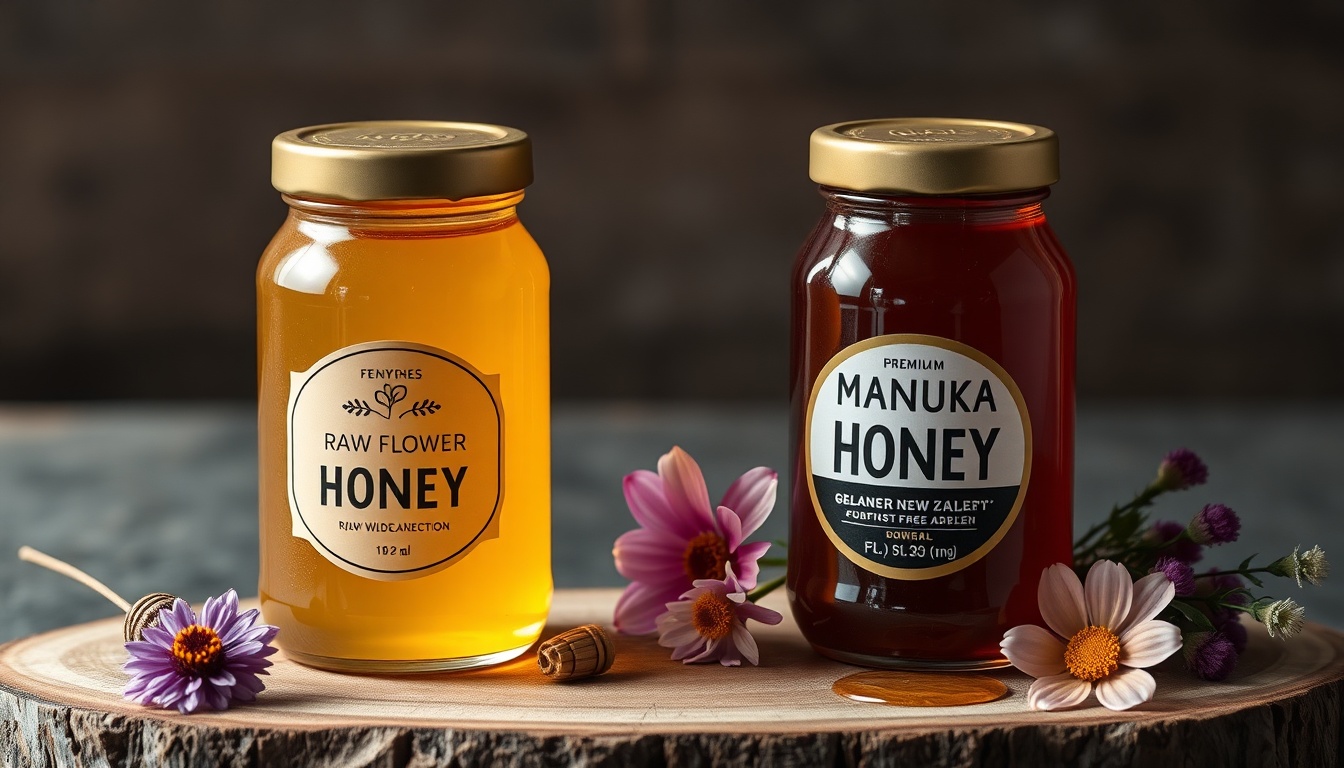
"Raw honey" describes how the honey was processed (or rather, not processed). "Manuka honey" describes where the honey came from — bees foraging on the Manuka bush (Leptospermum scoparium) in New Zealand and parts of Australia. Manuka honey can be raw, and raw honey can come from any floral source. Understanding this distinction is key to spending your honey budget wisely.
What Is Raw Honey?
Raw honey is honey that has not been heated above hive temperature (approximately 95°F / 35°C) or ultra-filtered. It retains the natural enzymes, pollen, propolis, and antioxidants that are present when bees cap the comb. There is no legal or FDA definition of "raw" for honey, but the term generally means minimal processing.
Raw honey comes in hundreds of varieties depending on the floral source — clover, wildflower, buckwheat, orange blossom, tupelo, and many more. Prices range from $8-20 per pound depending on the variety and source. It can be found from local beekeepers, farmers markets, and specialty stores.
- Not heated above ~95°F (35°C) during extraction and bottling
- Not ultra-filtered — retains pollen, propolis traces, and natural enzymes
- Can come from any floral source in any region worldwide
- Price range: $8-20/lb for most varieties
- Contains enzymes (glucose oxidase, diastase), antioxidants, and trace vitamins
Get the Honey Buyer's Cheat Sheet (free PDF)
16 varieties on one page — color, flavor, best use and what a fair price looks like — from the 268 honeys we track.
What Is Manuka Honey?
Manuka honey is produced by bees that forage on the Manuka bush (Leptospermum scoparium), native to New Zealand and southeastern Australia. What makes Manuka unique is methylglyoxal (MGO), a naturally occurring compound that gives it strong antibacterial properties beyond what regular honey offers.
All honey has some antibacterial activity due to hydrogen peroxide produced by the enzyme glucose oxidase. Manuka honey has this PLUS MGO, giving it what researchers call "non-peroxide activity" (NPA). This means its antibacterial effect survives even when hydrogen peroxide is neutralized — which happens inside the body. This is why Manuka is the only honey approved for medical wound care in some countries.
- Produced exclusively from Leptospermum scoparium (Manuka bush) nectar
- Contains methylglyoxal (MGO) — a unique antibacterial compound
- Graded by UMF (Unique Manuka Factor) or MGO rating systems
- Most comes from New Zealand; some from Australia
- Price range: $25-80+ per 8.8 oz jar depending on grade
- Clinical evidence for wound healing, digestive health, and sore throat relief
Head-to-Head Comparison
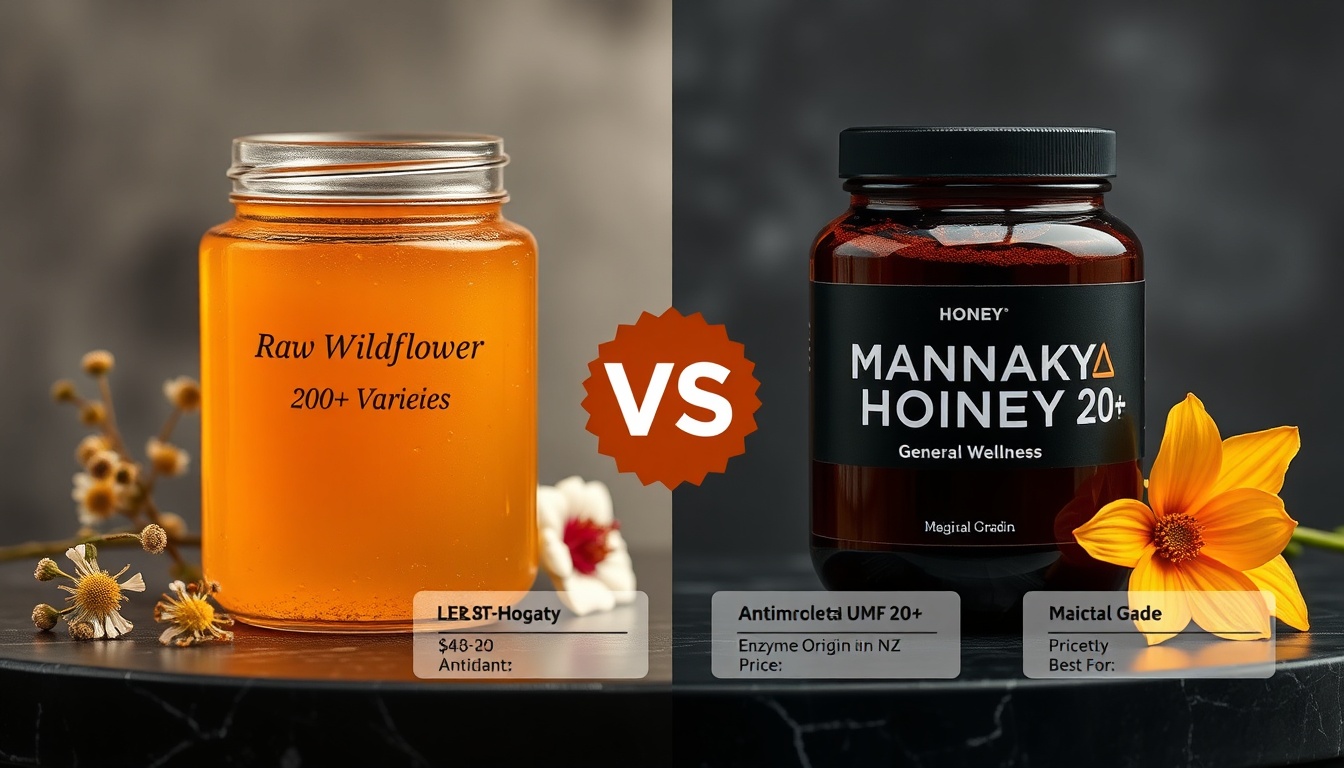
Here is how raw honey and Manuka honey stack up across the factors most buyers care about.
- PRICE: Raw honey ($8-20/lb) vs Manuka ($30-100+/lb). Manuka costs 3-10x more. Lower-grade Manuka (UMF 5+) is the most affordable; medical-grade (UMF 15+) commands premium prices.
- ANTIBACTERIAL STRENGTH: Both have hydrogen peroxide activity. Manuka adds MGO-based non-peroxide activity, making it significantly stronger for wound care and infection-resistant bacteria. For kitchen and general wellness use, this advantage matters less.
- TASTE: Raw honey varies hugely by floral source — mild clover, bold buckwheat, floral orange blossom. Manuka has a distinctive earthy, slightly medicinal, herbal taste that some people love and others find too strong for everyday sweetening.
- ENZYMES & POLLEN: Raw honey retains all natural enzymes and pollen. Manuka honey from reputable brands is also minimally processed, but some mass-market Manuka is heated during export processing. Look for "raw" on Manuka labels if this matters to you.
- AVAILABILITY: Raw honey is available everywhere — local beekeepers, farmers markets, grocery stores. Genuine Manuka is imported and sold through specialty retailers and online. Counterfeiting is a major issue with Manuka.
- BEST FOR WOUNDS: Manuka wins. Clinical evidence from peer-reviewed studies supports Manuka for wound healing, burns, and surgical wound care. Regular raw honey has some evidence too, but Manuka's consistent MGO content makes it the medical choice.
- BEST FOR DAILY USE: Raw local honey wins on value. For sweetening tea, cooking, baking, and general wellness, there is no meaningful benefit to spending 5-10x more on Manuka when raw wildflower or clover honey delivers excellent nutrition and flavor.
When Manuka Is Worth the Premium
Manuka honey is worth paying more for specific situations where its unique MGO content provides a measurable advantage over regular honey. For general sweetening and cooking, it is not.
- Wound care and minor burns — UMF 15+ Manuka (or medical-grade Manuka dressings) is a popular choice given its antibacterial activity, though anything beyond a very minor wound needs proper medical care
- Sore throat relief — a spoonful of UMF 10+ Manuka coats the throat and delivers targeted antibacterial activity
- Digestive support — some evidence suggests Manuka helps with H. pylori and digestive discomfort at UMF 10+
- Acne spot treatment — Manuka's antibacterial and anti-inflammatory properties make it a popular natural spot treatment
- When you simply prefer the taste — some people genuinely love Manuka's earthy, herbal flavor profile
Pro Tip
If you are buying Manuka for health purposes, do not waste money on UMF 5+ (low-activity). UMF 10+ is the minimum for meaningful antibacterial benefit. UMF 15+ or higher is recommended for wound care.
When Raw Honey Is the Better Choice
For the vast majority of honey uses, raw honey from a trusted source delivers excellent quality, nutrition, and flavor at a fraction of Manuka's price.
- Daily sweetener for tea, coffee, oatmeal, and yogurt — raw clover or wildflower honey works perfectly
- Cooking and baking — Manuka's distinctive flavor can clash in recipes; mild raw honeys are more versatile
- Supporting local beekeepers — buying local raw honey keeps money in your community and supports pollinator health
- Allergies (anecdotal) — some people believe local raw honey helps with seasonal allergies because it contains local pollen; no clinical proof, but Manuka from New Zealand cannot offer this
- Budget-conscious health eating — raw honey delivers enzymes, antioxidants, and trace nutrients without the premium price tag
- Honey variety exploration — the world of raw honey (buckwheat, tupelo, sourwood, orange blossom) offers far more flavor diversity than Manuka alone
How to Avoid Fake Manuka Honey
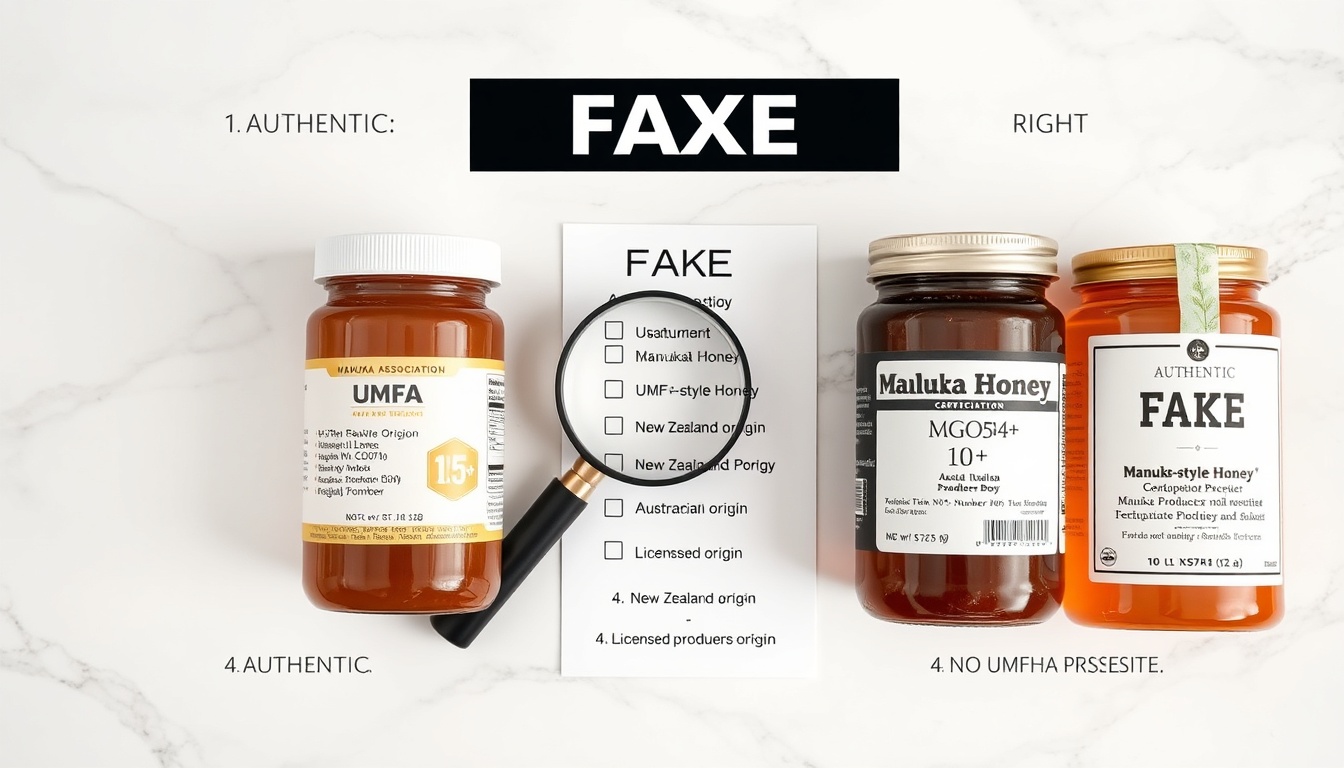
The Manuka honey market has a well-documented fraud problem. New Zealand produces approximately 1,700 tonnes of Manuka honey per year, but an estimated 10,000+ tonnes are sold globally labeled as "Manuka." That means a large portion of what is sold as Manuka is diluted, mislabeled, or entirely fake.
- Buy only from brands with a UMF or MGO certification number on the label — these are independently tested
- Check the UMF Honey Association website to verify the brand is a licensed member
- Look for a New Zealand fern mark or "Product of New Zealand" on the label
- Avoid vague claims like "Manuka blend" or "with Manuka honey" — these are often mostly regular honey with a small amount of Manuka added
- Be skeptical of cheap Manuka — genuine UMF 10+ should cost at least $25-30 for an 8.8 oz jar
- Look for batch numbers and traceability codes that allow you to verify authenticity
The Bottom Line
Raw honey and Manuka honey are not competitors — they serve different purposes. Think of raw honey as your everyday honey for kitchen, table, and general health use. Think of Manuka as a specialized product for targeted therapeutic applications where its unique MGO content provides a real advantage.
If you can only afford one, buy good raw honey from a local beekeeper. You will get excellent nutrition, great flavor, and support your local food system. If you have a specific health need that Manuka can address (wound care, persistent sore throats, digestive issues), add a jar of UMF 10+ or higher to your pantry for those purposes — our Manuka honey benefits guide covers the research in depth — but there is no need to use it on your morning toast.
For a deeper look at the clinical evidence behind honey for injuries, our honey wound healing guide covers Cochrane reviews and FDA-cleared products. If you are considering honey for skin conditions like eczema or dermatitis, the honey for eczema guide reviews the randomized controlled trials comparing manuka to conventional treatments — the results may surprise you.