Why Dermatologists Are Taking Honey Seriously
Honey has been used on skin for thousands of years, but it is only in the past two decades that clinical research has caught up to traditional practice. A growing body of peer-reviewed studies shows that certain honeys — particularly medical-grade manuka honey (UMF 10+ or higher) — have measurable effects on inflammatory skin conditions including eczema (atopic dermatitis), psoriasis, seborrheic dermatitis, and contact dermatitis.
This is not about replacing prescribed treatments. It is about understanding where honey fits as a complementary therapy, what the evidence actually supports, and how to use it safely. Some dermatologists now recommend honey-based preparations alongside conventional treatment, especially for patients looking to reduce steroid use.
How Honey Works on Inflamed Skin
Honey addresses skin inflammation through several well-documented mechanisms that work together. Understanding these helps explain why it can be effective where single-mechanism treatments sometimes fall short.
- Anti-inflammatory action: Honey suppresses the NF-κB inflammatory pathway and reduces pro-inflammatory cytokines (TNF-α, IL-1β, IL-6). A 2017 study in the Journal of Cosmetic Dermatology confirmed measurable reduction in skin inflammation markers after topical honey application
- Antimicrobial protection: Eczema-prone skin is frequently colonized by Staphylococcus aureus bacteria, which worsens flares. Honey's hydrogen peroxide production and low pH (3.2-4.5) inhibit staph growth without disrupting the broader skin microbiome
- Moisture barrier support: Honey is a natural humectant — it draws moisture from the air into the skin. Its high sugar concentration also creates an osmotic effect that reduces edema and promotes healing
- Wound healing acceleration: Honey promotes tissue regeneration by stimulating fibroblast growth and angiogenesis. This is particularly relevant for cracked, broken skin common in severe eczema
- pH normalization: Healthy skin is slightly acidic (pH 4.5-5.5). Eczema disrupts this acid mantle. Honey's natural acidity helps restore optimal skin pH
Get the Honey Buyer's Cheat Sheet (free PDF)
16 varieties on one page — color, flavor, best use and what a fair price looks like — from the 268 honeys we track.
Honey for Eczema (Atopic Dermatitis): The Evidence
Eczema affects roughly 10-15% of adults and up to 20% of children worldwide. The itch-scratch cycle, skin barrier dysfunction, and staph colonization make it notoriously difficult to manage. Several clinical studies have examined honey as a complementary treatment.
A 2017 randomized controlled trial published in Complementary Therapies in Medicine found that applying a manuka honey mixture to eczema lesions for 7 days significantly reduced eczema severity scores (SCORAD index) compared to the control group. Participants reported reduced itching and improved sleep — the two most impactful quality-of-life factors for eczema sufferers.
A 2003 study in Complementary Therapies in Medicine tested a honey-beeswax-olive oil mixture (1:1:1 ratio) on patients with eczema and psoriasis. After 2 weeks of twice-daily application, 80% of eczema patients showed significant improvement in redness, scaling, and itching.
Research published in the Journal of Drugs in Dermatology (2018) demonstrated that a medical-grade honey formulation reduced staph colonization on eczema skin by 77% after 7 days. Since staph colonization is a primary driver of eczema flares, this antimicrobial effect has real clinical significance.
Pro Tip
Honey works best as a complement to — not a replacement for — your dermatologist's treatment plan. Many patients find that adding honey allows them to reduce (not eliminate) topical steroid frequency.
Honey for Psoriasis: What Studies Show
Psoriasis is an autoimmune condition with different underlying biology than eczema, so results differ. The evidence is more limited but still promising.
The same 2003 honey-beeswax-olive oil study that showed eczema improvement also tested the mixture on psoriasis patients. After 2 weeks, 60% of psoriasis patients showed improvement, though the response was more variable than for eczema. Thick, plaque-type psoriasis responded better than guttate psoriasis.
A 2013 study in the Journal of Dermatological Treatment found that applying natural honey as an occlusive dressing on psoriatic plaques for 3 hours daily reduced plaque thickness and scaling after 2 weeks. The mechanism appears to be honey's ability to soften keratin buildup while reducing the underlying inflammation.
Scalp psoriasis and seborrheic dermatitis may respond particularly well to honey. A pilot study applying diluted raw honey (90% honey, 10% water) to the scalp for 3 hours, three times weekly, showed significant reduction in scaling, itching, and hair loss after 4 weeks. Five patients who had failed topical steroids showed complete response to honey treatment.
Seborrheic Dermatitis and Dandruff
Seborrheic dermatitis — the chronic, flaky, itchy condition that affects the scalp, face, and chest — may be one of the skin conditions most responsive to honey treatment.
A study published in the European Journal of Medical Research (2001) tested crude honey applied to the scalp and face of 30 patients with chronic seborrheic dermatitis. The honey was diluted with 10% warm water and applied for 3 hours before rinsing. After 4 weeks of every-other-day application, all patients showed significant improvement. Itching disappeared in all patients, scaling was eliminated within 2 weeks, and skin lesions healed completely in most participants.
Remarkably, patients who continued weekly honey application for 6 months had zero relapses, while the control group (who stopped treatment) saw symptoms return within 2-4 months. This suggests honey may address underlying causes (Malassezia yeast overgrowth) rather than just masking symptoms.
Which Honey Is Best for Skin Conditions?
Not all honeys are equal for dermatological use. The type of honey matters significantly for therapeutic outcomes.
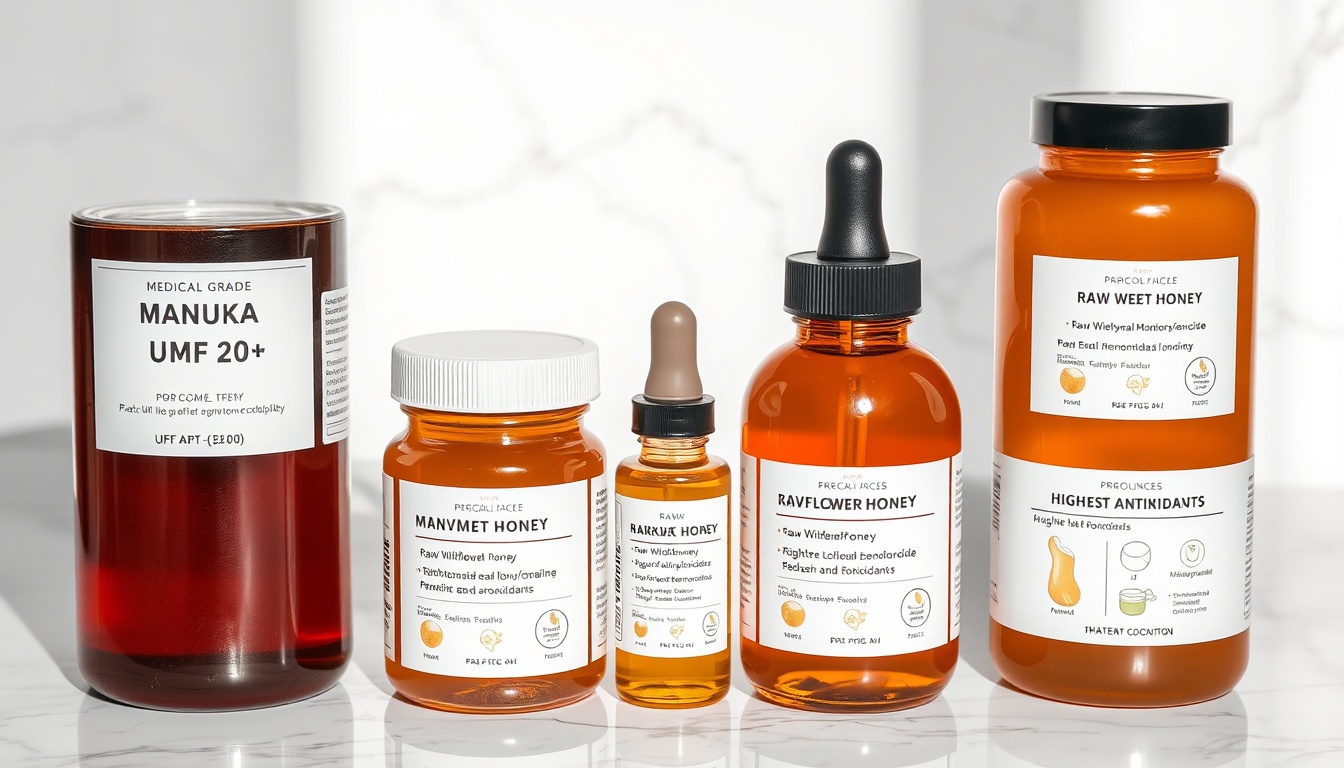
- Medical-grade manuka honey (UMF 10+ or MGO 263+, $35-60+): The gold standard for skin applications. Standardized antibacterial potency, gamma-irradiated for sterility, and the most studied variety for dermatological use. Medihoney and similar medical-grade products are FDA-cleared for wound care
- Raw manuka honey (UMF 15+, $45-80): Effective for cosmetic and non-wound applications like eczema and psoriasis maintenance. Higher UMF ratings provide stronger methylglyoxal activity. Look for verified UMF or MGO certification to ensure potency
- Raw buckwheat honey ($15-25): High antioxidant content (ORAC 16,000+) makes it a reasonable alternative when manuka is unavailable or too expensive. Less studied for skin specifically but strong anti-inflammatory profile from polyphenols
- Raw wildflower ($10-18) or clover honey ($8-15): Better than no treatment but significantly less potent than manuka for skin conditions. May still help with moisture barrier support and mild inflammation
- Processed, ultra-filtered, or blended commercial honey: Not recommended for therapeutic use. Processing destroys the enzymes and bioactive compounds responsible for honey's therapeutic effects
Pro Tip
For open, cracked, or weeping eczema skin, use only medical-grade honey (sterile, gamma-irradiated). For intact skin with redness and itching, raw manuka honey is appropriate. Budget-friendly alternatives include buckwheat honey ($15-25) for antioxidant support or wildflower honey ($10-18) for gentle moisture barrier repair.
How to Apply Honey for Skin Conditions
Proper application technique matters for getting results. Here are evidence-based methods used in clinical studies.
- Patch test first: Apply a small amount of honey to a non-affected area (inner wrist) and wait 24 hours. While honey allergy is rare, people allergic to bee stings or pollen should be cautious
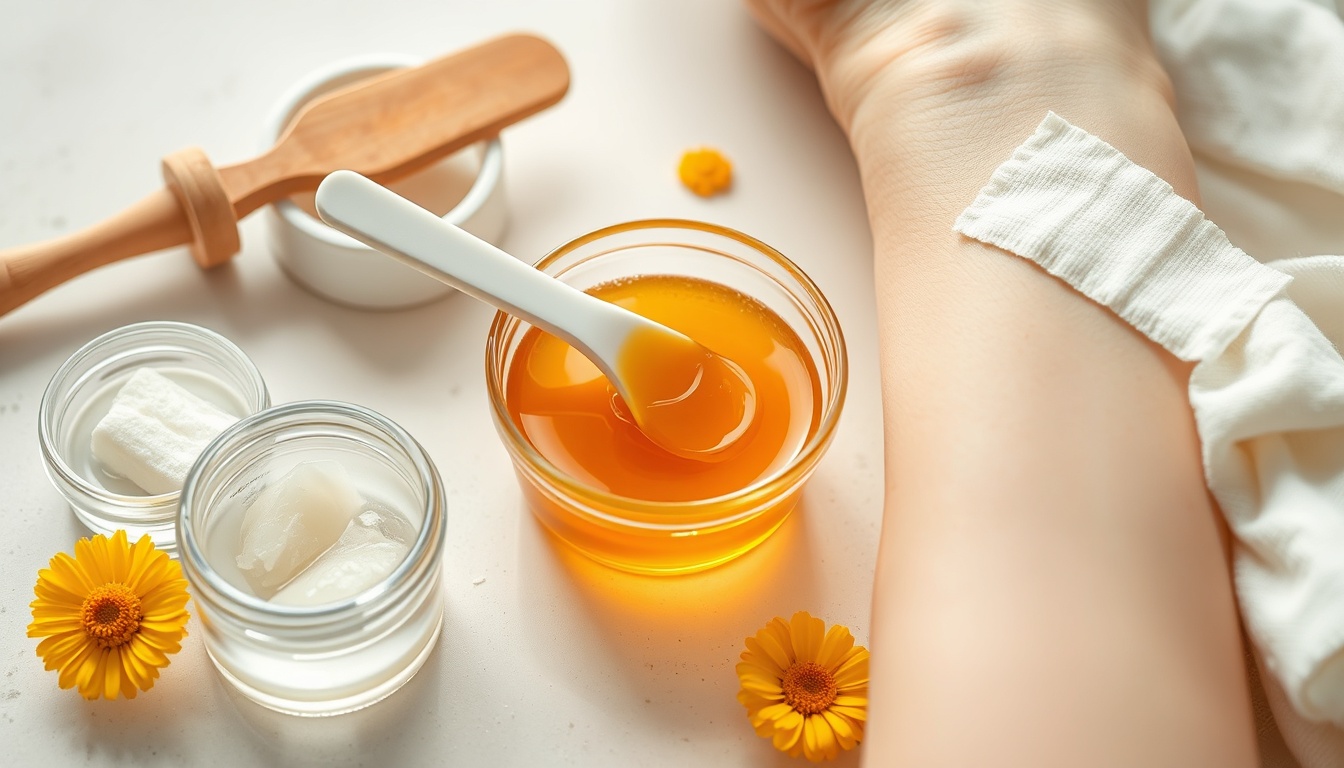
- Direct application for eczema: some spread a thin layer of raw manuka honey on clean, dry skin over the affected area, covering with gauze or a bandage if practical, then rinsing with lukewarm water after a while. Eczema is a medical condition — this should be discussed with a dermatologist rather than self-directed, especially for how often and how long to use it
- Honey-beeswax-olive oil mixture: Melt equal parts beeswax and olive oil, let cool slightly, then mix in an equal part of honey. This creates a more spreadable, longer-lasting preparation for affected areas — talk to a dermatologist about how often to apply it
- Scalp application for seborrheic dermatitis: this describes the method from a small clinical trial — diluted raw honey (90% honey, 10% warm water) massaged into the scalp, left on, then rinsed out. Seborrheic dermatitis is a medical condition — talk to a dermatologist about whether and how to try this rather than self-directing a multi-week schedule
- Honey bath soak: Add 2-3 tablespoons of raw honey to a lukewarm bath. Soak for 15-20 minutes. This is gentler and suitable for widespread eczema or children (over 1 year)
The Gut-Skin Axis: Why Oral Honey May Help Skin Conditions
Research increasingly shows that skin health starts in the gut. The "gut-skin axis" describes how intestinal microbiome imbalances drive systemic inflammation that manifests as skin conditions. A 2021 review in Frontiers in Microbiology found that eczema patients consistently show reduced gut Bifidobacterium and Lactobacillus populations — the same bacteria that raw honey's prebiotic oligosaccharides selectively promote.
This means that consuming honey for gut health may complement topical honey application for eczema management. The oral route addresses systemic inflammation through NF-κB suppression, gut barrier integrity improvement, and short-chain fatty acid production, while topical application targets local skin inflammation and staph colonization directly. Some integrative dermatologists now recommend this dual-pathway approach.
Other bee products extend this approach further. Propolis contains CAPE (caffeic acid phenethyl ester), one of the most potent natural anti-inflammatory compounds studied for skin conditions. A 2020 review in the Journal of Clinical Medicine found that oral propolis supplementation reduced atopic dermatitis severity scores in multiple trials. For scalp-specific conditions like psoriasis or seborrheic dermatitis, honey-based hair treatments can address both cosmetic and therapeutic needs simultaneously.
Safety Precautions and Who Should Avoid Honey on Skin
Topical honey is generally very safe, but there are important exceptions and precautions to keep in mind.
- Bee and pollen allergy: People with confirmed bee venom allergy should patch test before widespread application. True honey allergy is very rare (distinct from bee sting allergy), but cross-reactivity is possible
- Infants under 12 months: Do not apply honey to infant skin, particularly near the mouth or on broken skin. While infant botulism is primarily a concern with ingestion, the precautionary principle applies
- Deep wounds or infected skin: Use only sterile, medical-grade honey preparations, not food-grade honey. Consult your doctor before applying anything to infected wounds
- Stickiness and mess: Honey is sticky. Use gauze wraps, old shirts, or apply before showering to manage the practical challenges. The honey-beeswax-olive oil mixture is less messy than straight honey
- Sugar-feeding bacteria concern: Some dermatologists worry that honey's sugar content could feed certain bacteria. Clinical evidence does not support this concern — honey's osmotic effect and hydrogen peroxide production overwhelm any sugar-feeding effect — but mention it to your doctor if they raise it
- Not a replacement for medical treatment: If you have moderate-to-severe eczema, psoriasis, or any skin condition requiring prescription medication, use honey as a complement, not a substitute. Always consult your dermatologist before changing your treatment plan
What to Expect: Realistic Timelines
Honey is not a quick fix. Based on clinical study timelines, here is what to expect.
- Days 1-3: Some immediate soothing effect and moisture improvement. Itching may decrease, especially at night
- Days 4-7: Reduced redness and scaling in responsive cases. Staph colonization begins to decrease
- Weeks 2-4: Significant improvement in eczema/dermatitis severity scores seen in clinical trials. Psoriasis may take longer
- Weeks 4-8: Maximum benefit for most people. If you see no improvement by week 4, honey is unlikely to be effective for your particular condition
- Ongoing maintenance: Weekly application can help prevent flares once the condition is under control. The seborrheic dermatitis study showed zero relapses with weekly honey application over 6 months