What Is Propolis and Why Should You Care?
Propolis is a resinous substance that honey bees collect from tree buds, sap flows, and botanical sources, then mix with beeswax and enzymes to create a powerful protective compound. Bees use it to seal cracks in the hive, sterilize cells before the queen lays eggs, and embalm intruders too large to remove. The word "propolis" comes from the Greek pro (before) and polis (city) — literally "defender of the city."
What makes propolis remarkable is its chemistry. Researchers have identified over 300 bioactive compounds in propolis — making it one of the most complex bee products alongside bee pollen and royal jelly — including flavonoids (like chrysin, pinocembrin, and galangin), phenolic acids (caffeic acid phenethyl ester, or CAPE), terpenes, vitamins, and minerals. This complexity is why propolis has been used medicinally for thousands of years — the ancient Egyptians used it for embalming, Hippocrates prescribed it for ulcers, and soldiers in the Boer War applied it to wounds.
Modern science is now validating many of these traditional uses. Here are the most well-supported benefits of propolis, what the clinical evidence actually shows, and how to use it safely.
Pro Tip
🐝 **World Bee Day 2026 (May 20)**: Today marks global bee conservation awareness! Propolis represents the hive's natural defense system — bees use it to sterilize brood cells, seal cracks, and protect against pathogens. Supporting sustainable apiaries that produce quality propolis helps maintain bee health and colony strength. Learn more about World Bee Day.
1. Immune System Support
Propolis is one of the most studied natural immunomodulators. A 2019 systematic review in Evidence-Based Complementary and Alternative Medicine analyzed 15 clinical trials and found that propolis supplementation consistently enhanced immune markers, including increased antibody production, improved macrophage activity, and enhanced natural killer (NK) cell function. Many people combine propolis with therapeutic honey varieties for comprehensive immune support — Manuka honey provides additional antimicrobial activity through methylglyoxal, while buckwheat honey offers exceptional antioxidant density to complement propolis's flavonoid compounds.
A notable 2016 randomized controlled trial published in Phytotherapy Research gave 64 participants either 400 mg of propolis extract daily or a placebo during cold and flu season. The propolis group had 63% fewer upper respiratory infections and recovered 2.5 days faster when they did get sick. The researchers attributed this to propolis's ability to stimulate both innate and adaptive immune responses without the overstimulation seen with some other immune-boosting supplements. For daily immune maintenance, wildflower honey provides diverse polyphenols that work synergistically with propolis's bioactive compounds, while eucalyptus honey offers natural respiratory support through eucalyptol compounds.
Pro Tip
Clinical studies on immune support have tested doses in the 300-500 mg range of standardized propolis extract daily, often starting supplementation before cold and flu season rather than after symptoms appear.
Get the Honey Buyer's Cheat Sheet (free PDF)
16 varieties on one page — color, flavor, best use and what a fair price looks like — from the 268 honeys we track.
2. Powerful Antibacterial and Antiviral Properties
Propolis shows broad-spectrum antimicrobial activity against bacteria, viruses, and fungi. Its effectiveness against antibiotic-resistant bacteria is particularly promising. A 2020 study in Frontiers in Microbiology found that Brazilian green propolis inhibited methicillin-resistant Staphylococcus aureus (MRSA) by disrupting the bacterial cell membrane — a mechanism different from conventional antibiotics, which means resistance is less likely to develop. This antimicrobial action complements the hydrogen peroxide production found in honey varieties like clover honey and wildflower honey, creating synergistic antibacterial effects when used together.
On the antiviral front, propolis has shown activity against influenza, herpes simplex (HSV-1 and HSV-2), and respiratory syncytial virus (RSV). A 2020 study in Biomedicine & Pharmacotherapy found that Brazilian propolis reduced HSV-2 viral load by 99% in cell cultures. While cell studies don't always translate to human results, clinical trials on propolis for cold sores have shown faster healing times compared to acyclovir cream alone. For additional antiviral support, buckwheat honey provides powerful antioxidants that help cellular resistance to viral damage, while Manuka honey offers direct antiviral activity through its unique methylglyoxal compounds.
3. Wound Healing and Skin Repair
Propolis accelerates wound healing through multiple mechanisms: it's antibacterial (preventing infection), anti-inflammatory (reducing swelling), and promotes collagen synthesis and new tissue formation. Like honey in wound care, a 2015 clinical trial in the Journal of Alternative and Complementary Medicine found that propolis ointment healed diabetic foot ulcers significantly faster than conventional treatment. Medical-grade Manuka honey UMF 10+ combined with propolis creates particularly effective wound dressings, as Manuka's methylglyoxal antimicrobial activity complements propolis's anti-inflammatory flavonoids. For minor wounds, wildflower honey and clover honey provide gentler glucose oxidase hydrogen peroxide production alongside propolis's direct antimicrobial compounds.
For burns, a 2002 study comparing propolis to silver sulfadiazine (the standard burn treatment) found that propolis-treated burns showed less inflammation, faster epithelialization, and comparable infection rates. Propolis also appears to reduce scarring — a 2019 animal study in Burns found that propolis application during healing resulted in more organized collagen fibers and less scar tissue formation.
- Minor cuts and scrapes — Propolis tincture or a propolis-based wound balm is a common choice
- Burns (minor, first-degree) — Propolis ointment after initial cooling
- Acne — Propolis's antibacterial action against Propionibacterium acnes combined with anti-inflammatory effects makes it effective for breakouts
- Cold sores — Propolis lip balm or tincture is sometimes used at the first sign of a cold sore
- Eczema — Propolis creams can reduce flare frequency (see our guide on honey for eczema)
4. Oral Health and Dental Protection
Oral health may be propolis's most practical everyday application. Propolis fights the bacteria that cause cavities (Streptococcus mutans), gum disease (Porphyromonas gingivalis), and bad breath. A 2018 meta-analysis in BMC Oral Health reviewed 12 clinical trials and concluded that propolis mouthwash was as effective as chlorhexidine (the gold standard prescription mouthwash) at reducing plaque and gingivitis — without the staining and taste alteration side effects.
Several studies have also shown that propolis can reduce pain and speed healing after dental surgery, tooth extraction, and canker sores. A 2017 randomized trial found that patients who used propolis mouthwash after wisdom tooth extraction had 40% less pain at day 3 and significantly less socket inflammation compared to the control group.
Pro Tip
Look for propolis toothpaste or mouthwash with at least 2-3% propolis extract. Alternatively, some people dilute propolis tincture in water and use it as a mouth rinse.
5. Anti-Inflammatory Effects
Chronic inflammation underlies many modern diseases, from heart disease to diabetes to autoimmune conditions. Propolis contains several potent anti-inflammatory compounds, with CAPE (caffeic acid phenethyl ester) being the most studied. CAPE inhibits NF-κB, a master inflammatory signaling pathway, at concentrations comparable to pharmaceutical anti-inflammatories. Dark honey varieties provide complementary anti-inflammatory benefits — buckwheat honey contains 3-9× more antioxidant polyphenols than lighter varieties, while chestnut honey and heather honey offer additional phenolic compounds that work synergistically with propolis's flavonoids.
A 2019 clinical trial in Inflammopharmacology gave type 2 diabetics 900 mg of propolis daily for 12 weeks. The propolis group showed significant reductions in C-reactive protein (CRP), tumor necrosis factor-alpha (TNF-α), and interleukin-6 (IL-6) — three key inflammatory markers. The researchers concluded that propolis could serve as an adjunct anti-inflammatory therapy for metabolic conditions. For blood sugar management, combining propolis with low-glycemic honey varieties like acacia honey (GI ~32) or tupelo honey (GI ~45) may provide better metabolic outcomes than higher-GI options like clover honey or wildflower honey.
6. Blood Sugar Regulation
Multiple clinical trials suggest propolis may help manage blood sugar levels. A 2018 meta-analysis in the Journal of Integrative Medicine reviewed 6 RCTs involving 373 type 2 diabetics and found that propolis supplementation significantly reduced fasting blood glucose (average -16.8 mg/dL), HbA1c (average -0.52%), and insulin resistance (HOMA-IR).
The mechanisms appear to involve improved insulin sensitivity, protection of pancreatic beta cells from oxidative damage, and inhibition of alpha-glucosidase (an enzyme that breaks down carbohydrates). Brazilian green propolis and Chinese red propolis have shown the strongest effects in studies, likely due to their high flavonoid content.
Pro Tip
Propolis is not a substitute for diabetes medication. If you have diabetes, discuss propolis supplementation with your doctor — it may interact with blood sugar-lowering drugs and cause hypoglycemia.
7. Gut Health and Digestive Support
Propolis acts as a prebiotic, selectively promoting beneficial gut bacteria while inhibiting harmful ones. A 2019 study in Nutrients found that propolis extract increased Lactobacillus and Bifidobacterium populations while reducing Clostridium and Enterococcus in human gut microbiota cultures. This selective action is similar to what we see with raw honey but potentially more concentrated.
For gastrointestinal conditions, propolis has shown particular promise against H. pylori (the bacterium that causes most stomach ulcers). A 2015 clinical trial found that adding propolis to standard triple therapy for H. pylori eradication increased the success rate from 70% to 93%. Propolis also appears to protect the gastric mucosa from NSAID-induced damage, making it a potential companion supplement for people who take ibuprofen or aspirin regularly.
8. Cancer Research: Promising but Early
Propolis has shown anticancer effects in hundreds of laboratory studies, with CAPE and chrysin being the most studied compounds. These flavonoids have demonstrated the ability to induce apoptosis (programmed cell death) in cancer cells, inhibit angiogenesis (tumor blood vessel formation), and sensitize cancer cells to chemotherapy.
However, it's critical to note that most of this research is in cell cultures and animal models, not human clinical trials. A few small human studies exist — a 2016 trial found that propolis supplementation reduced the side effects of chemotherapy in colorectal cancer patients, and a 2019 pilot study showed propolis mouthwash reduced oral mucositis severity during head and neck radiation. These are supportive-care benefits, not cancer cures. Never use propolis as a replacement for conventional cancer treatment.
9. Respiratory Health
Propolis has a long traditional use for respiratory conditions, and modern research supports this. A 2020 systematic review in Phytotherapy Research analyzed 8 clinical trials on propolis for respiratory infections and found consistent benefits: fewer infections, shorter duration of symptoms, and reduced antibiotic use.
Propolis throat sprays are particularly popular and well-studied. A 2010 randomized trial found that propolis spray reduced sore throat pain by 75% within 48 hours, compared to 48% for placebo. The combination of antibacterial, antiviral, and anti-inflammatory effects makes propolis especially suited for throat and upper respiratory issues.
Pro Tip
For sore throats, propolis spray works fastest — it delivers the active compounds directly to the affected tissue. Look for sprays that combine propolis with honey for a synergistic soothing effect.
How to Take Propolis: Forms and Dosing
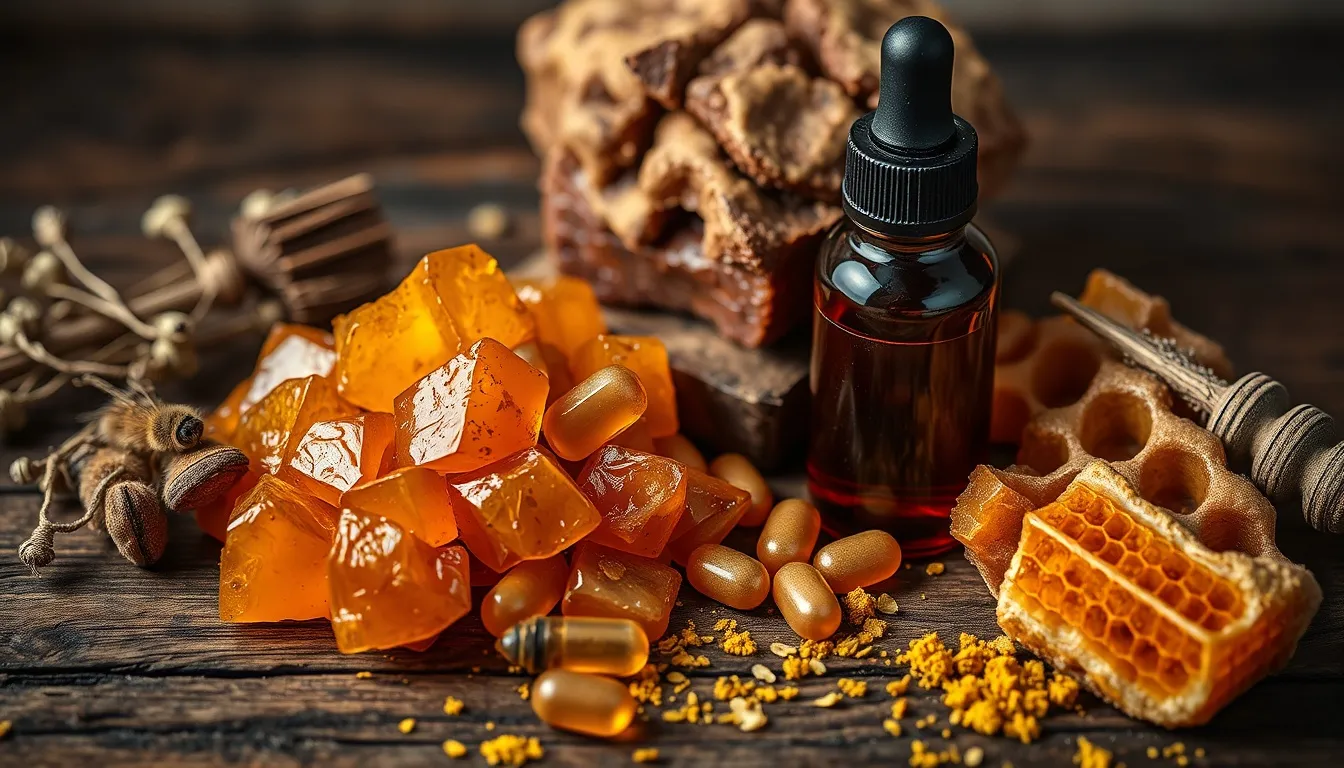
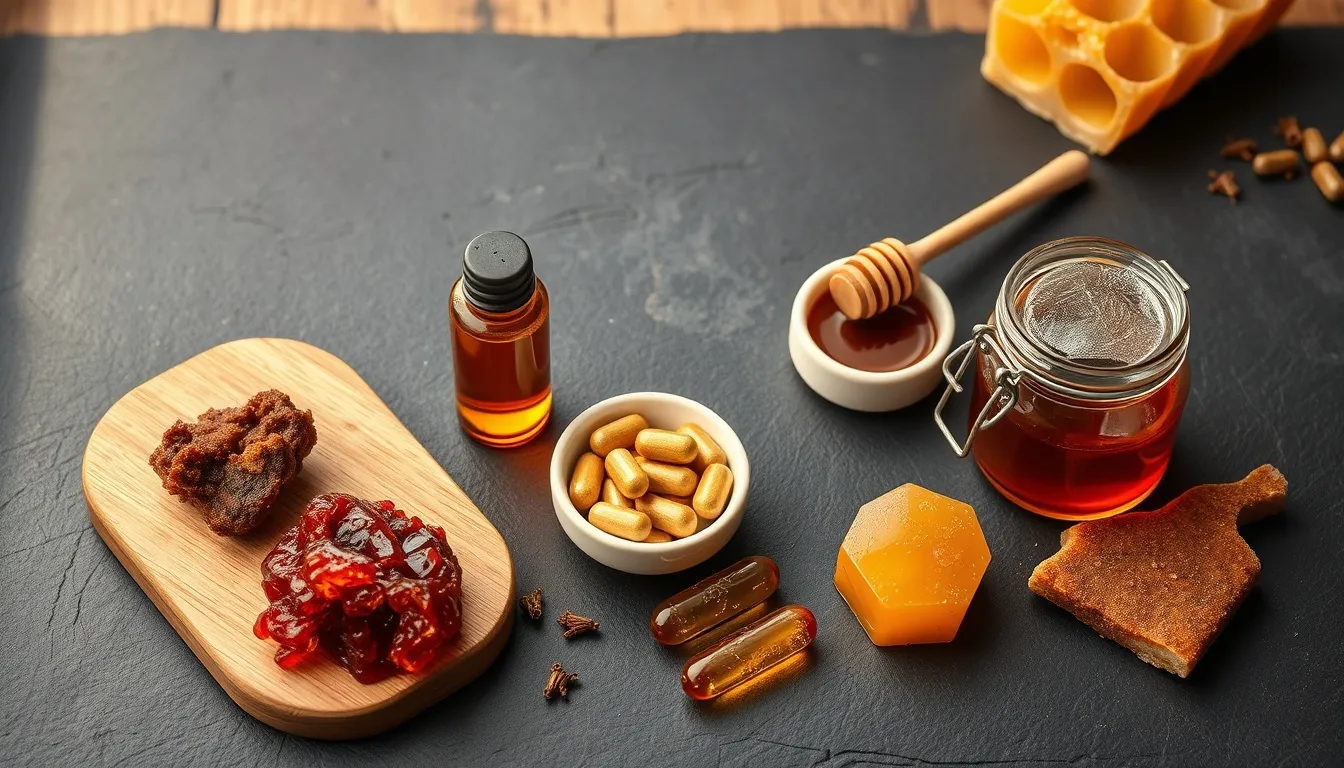
Propolis comes in several forms, each suited to different uses. Choosing the right form matters for getting the benefits you want. Many products combine propolis with therapeutic honey varieties — for example, propolis-infused Manuka honey creates dual antimicrobial action, while propolis with wildflower honey provides broader polyphenol diversity for comprehensive wellness support.
- Tincture (liquid extract) — The most versatile form, typically taken as drops in water or juice. Can also be applied topically to wounds, cold sores, or diluted as a mouthwash. Alcohol-based tinctures have better extraction of active compounds than glycerin-based versions.
- Capsules — Standardized extract. Best for immune support and systemic anti-inflammatory benefits. Easiest to dose consistently since each capsule delivers a fixed amount.
- Throat spray — Sprayed directly to the back of the throat. Best for sore throats, cold prevention, and oral health.
- Topical ointment or balm — 3-10% propolis concentration. Best for wounds, burns, acne, and skin conditions.
- Raw propolis — Chewed like gum. Traditional form but difficult to dose accurately and has a very strong, resinous taste. Not recommended for most people.
- Propolis toothpaste and mouthwash — For daily oral health maintenance. Look for products with at least 2% propolis extract.
Safety, Side Effects, and Who Should Avoid Propolis
Propolis is generally well-tolerated, but it's not for everyone. The most important safety concern is allergy. People allergic to bee stings, honey, or pollen have a higher risk of propolis allergy. Reactions can range from contact dermatitis (skin rash) to, rarely, anaphylaxis. Always do a patch test before using propolis topically — apply a small amount to your inner wrist and wait 24 hours.
- Bee allergy — If you're allergic to bee stings or bee products, avoid propolis entirely or consult an allergist first
- Blood thinning — Propolis may enhance the effects of anticoagulant medications (warfarin, aspirin). Consult your doctor if you take blood thinners
- Surgery — Stop propolis 2 weeks before scheduled surgery due to potential blood-thinning effects
- Pregnancy and breastfeeding — Limited safety data. Most experts recommend avoiding supplemental propolis during pregnancy, though small amounts in honey are unlikely to be harmful
- Asthma — Some case reports of propolis worsening asthma symptoms. Use with caution and discontinue if breathing issues occur
- Infants under 12 months — Avoid all bee products including propolis due to infant botulism risk
How to Choose Quality Propolis
Propolis quality varies dramatically depending on the geographic source, botanical origin, and extraction method. Brazilian green propolis (from Baccharis dracunculifolia) and European brown propolis (from poplar trees) are the most studied and generally considered the highest quality. Chinese propolis is also well-studied but has had contamination issues in the past.
- Look for standardized extracts — Products that specify flavonoid content (typically 10-20% flavonoids) are more reliable than raw propolis
- Check the source — Brazilian green propolis and European propolis have the most clinical evidence behind them
- Choose reputable brands — Third-party testing (USP, NSF, or ConsumerLab verification) is a good indicator of quality
- Alcohol vs glycerin extraction — Alcohol extracts more active compounds, but glycerin-based tinctures are alcohol-free if that's a concern
- Color and smell — Good propolis tincture should be dark amber to brown with a strong resinous smell. Very pale or odorless products may be diluted