The Short Answer: Bees Turn Flower Nectar into Honey
Honey is flower nectar that bees have collected, processed with enzymes, and dehydrated. A forager bee visits 50 to 100 flowers per trip, sucks up nectar with her proboscis (a straw-like tongue), stores it in a specialized honey stomach, flies home, and passes it to house bees. Those house bees chew and process the nectar for about 20 minutes, adding enzymes that break down complex sugars into simple ones, then deposit the liquid into wax cells and fan it with their wings until it thickens into honey.
The entire process — from flower to capped honeycomb — takes about 3 to 5 days. It is one of the most remarkable examples of food production in the natural world, and the result is a product that never spoils. The type of flower determines the variety: bees foraging clover fields produce light, mild honey ($8–15/jar), while those visiting buckwheat fields produce dark, malty honey ($15–25) with up to 9× more antioxidants.
Step 1: Forager Bees Collect Nectar from Flowers
The process begins when scout bees locate flowers producing nectar — which is why planting bee-friendly gardens makes such a difference. In spring, scouts may find orange blossom citrus groves ($12–20/jar) or wildflower meadows ($10–18); in summer, white clover fields ($8–15) or basswood (linden) trees. Scouts communicate the location back to the hive through the famous waggle dance — a figure-eight movement that encodes the direction and distance to the food source relative to the sun's position. Other forager bees decode the dance and fly out to collect.
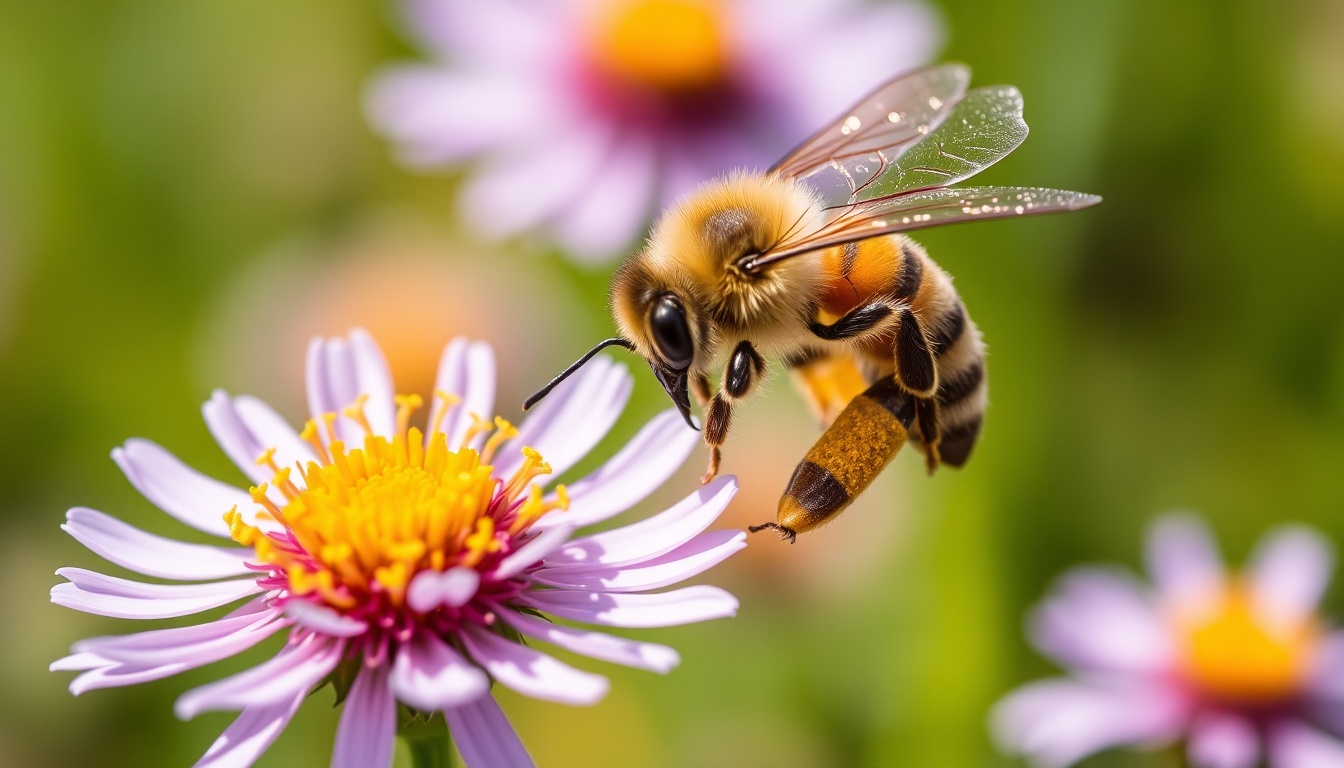
A forager bee lands on a flower and extends her proboscis — a long, flexible tongue — to reach the nectaries, the glands at the base of petals where nectar is produced. She sucks up the nectar and stores it in her honey stomach (proventriculus), a separate organ from her digestive stomach. The honey stomach can hold about 40 mg of nectar, which is almost the bee's own body weight.
To fill her honey stomach, a single forager visits 50 to 100 flowers per foraging trip. She may fly up to 3 miles from the hive. A strong colony sends out thousands of foragers daily, and over a bee's lifetime (about 6 weeks in summer), one worker bee produces roughly 1/12 of a teaspoon of honey.
Pro Tip
It takes nectar from approximately 2 million flower visits to produce a single pound of honey. A colony typically needs to fly a combined distance of about 55,000 miles — more than twice around the Earth — for one pound.
Get the Honey Buyer's Cheat Sheet (free PDF)
16 varieties on one page — color, flavor, best use and what a fair price looks like — from the 268 honeys we track.
Step 2: Enzymatic Processing Begins in the Honey Stomach
While the forager bee flies back to the hive, the nectar is already being transformed. The honey stomach contains the enzyme invertase (also called sucrase), which begins breaking down sucrose — the main sugar in nectar — into glucose and fructose, two simpler sugars.
This enzymatic conversion is critical. Raw nectar is about 70-80% water and 20-30% sucrose. The final product — honey — is about 17-20% water and contains primarily glucose and fructose. The enzyme does half the work; evaporation does the other half.
The honey stomach also adds small amounts of glucose oxidase, an enzyme that produces hydrogen peroxide when honey is diluted. This is one of the key reasons honey has natural antimicrobial properties — it creates a hostile environment for bacteria and yeast.
Step 3: Mouth-to-Mouth Transfer to House Bees
When the forager returns to the hive, she does not deposit nectar directly into cells. Instead, she regurgitates the nectar from her honey stomach and passes it mouth-to-mouth to a house bee (called trophallaxis). This receiving bee chews the nectar for about 15-30 minutes, repeatedly exposing it to enzymes and mixing it with additional invertase and glucose oxidase from her own glands.
The house bee may pass the nectar to another house bee, who processes it further. This chain of processing ensures thorough enzymatic conversion. By the time the nectar is deposited into a wax cell, a significant portion of the sucrose has been converted to glucose and fructose.
During this chewing and passing phase, some water also evaporates from the nectar. The mouth-to-mouth processing is effectively the first stage of dehydration, reducing the water content from about 70-80% down to roughly 50-60%.
Step 4: Deposition and Evaporation in Wax Cells
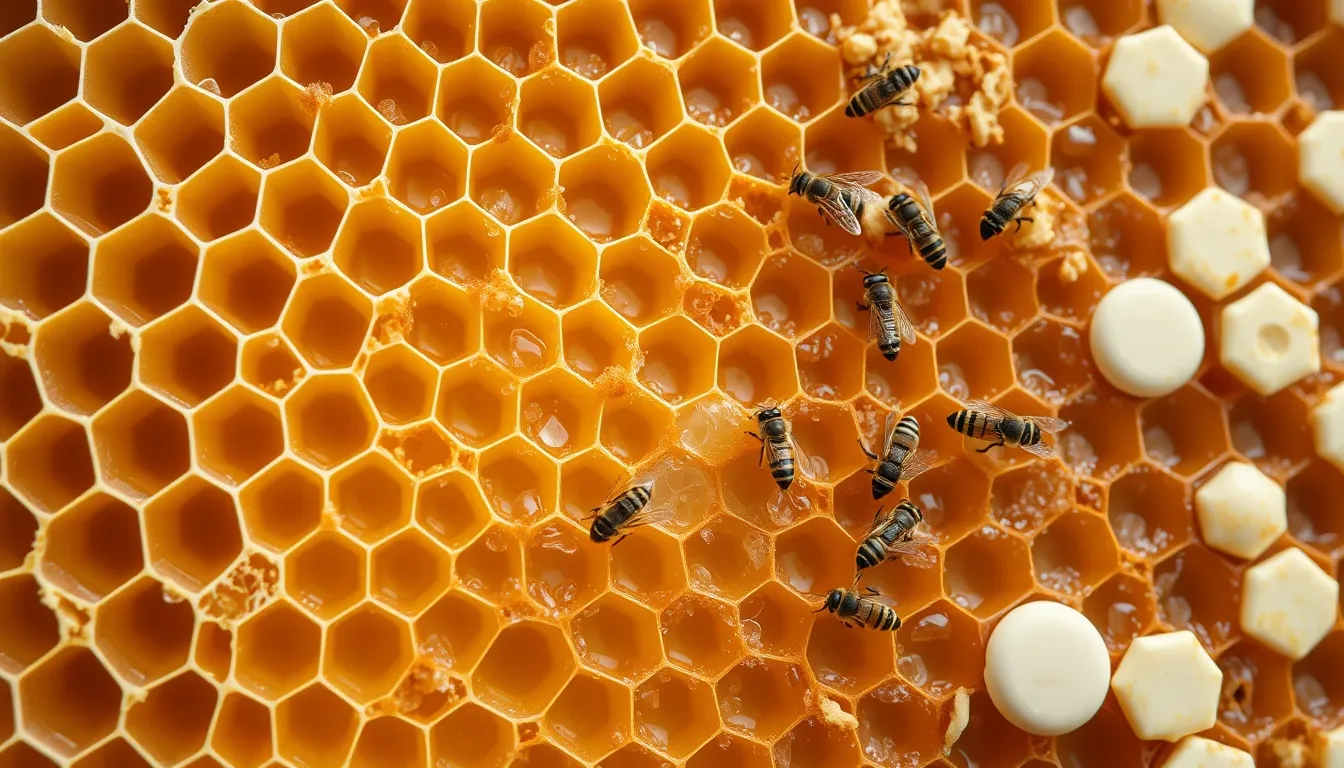
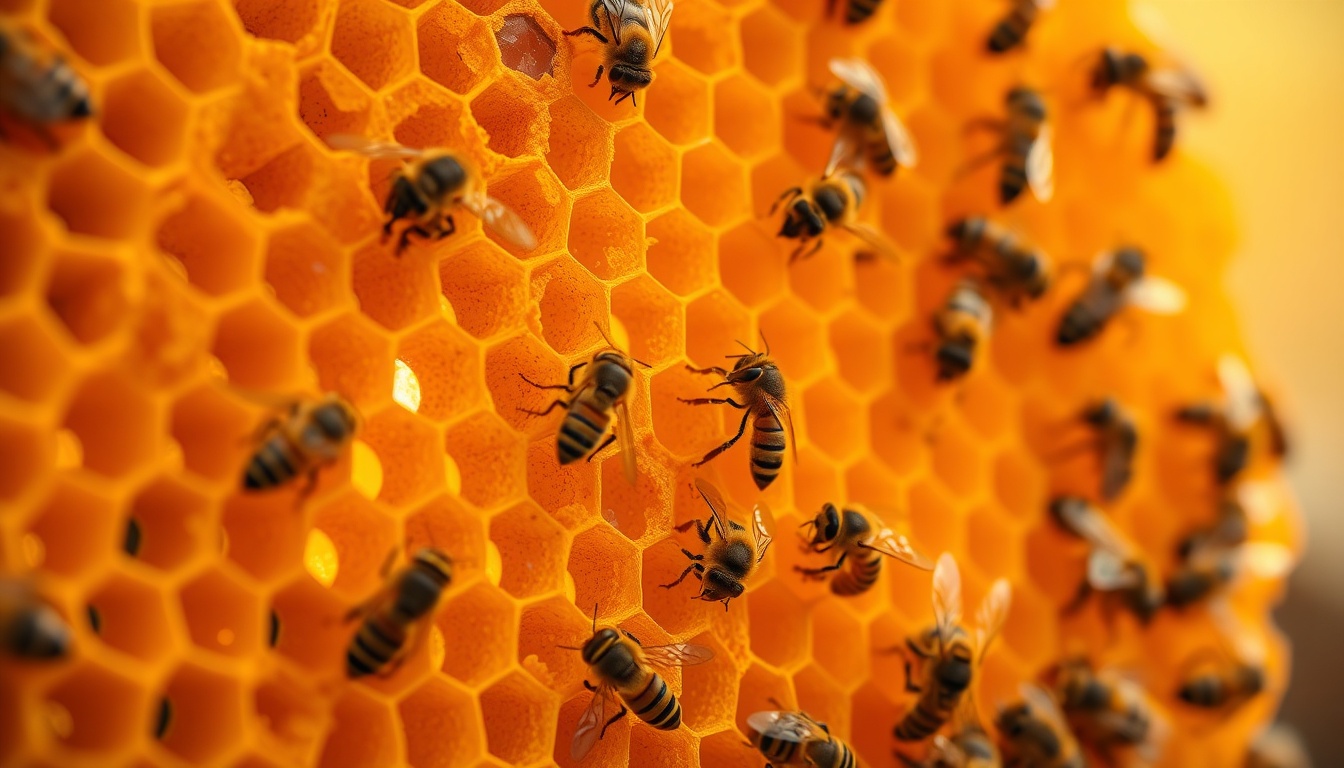
Once sufficiently processed, a house bee deposits the partially converted nectar into a hexagonal beeswax cell. She does not fill the cell completely — thin layers allow for faster evaporation. Multiple bees contribute nectar to the same cell over time.
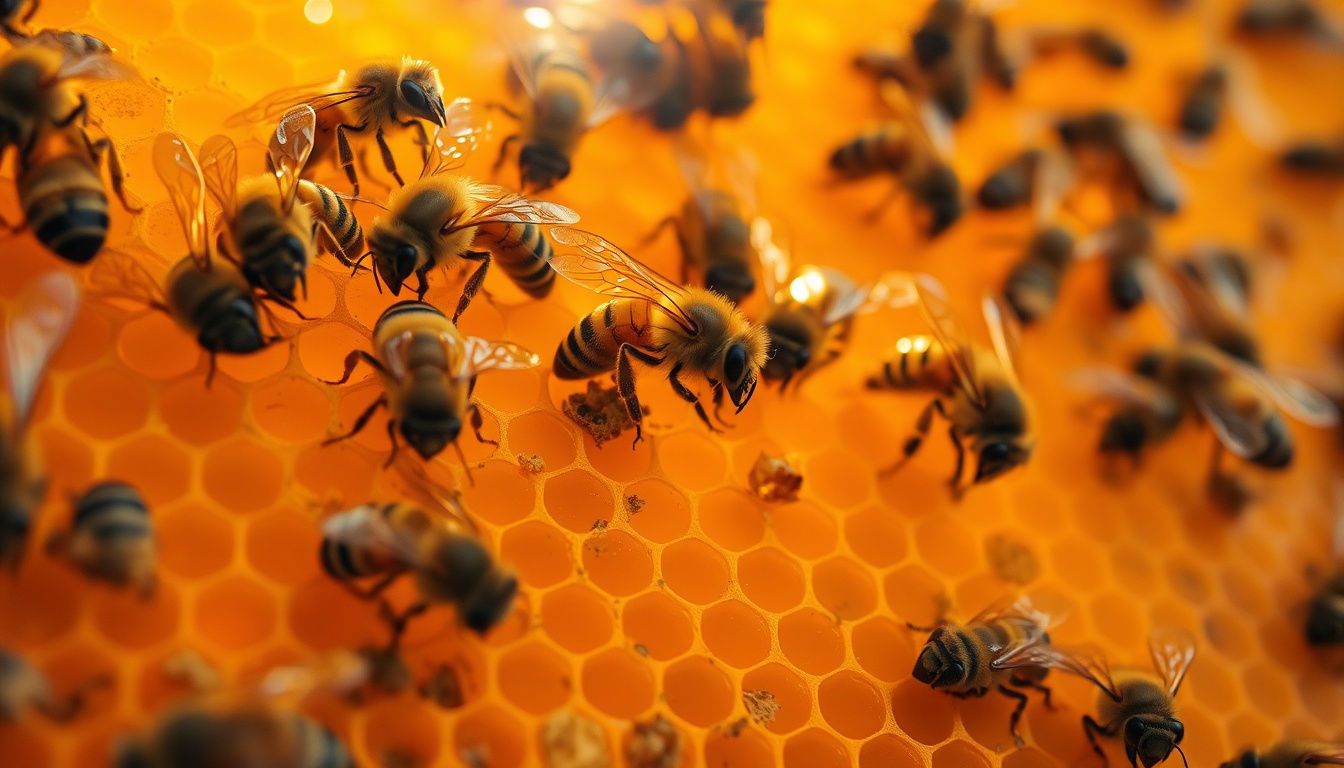
Now the colony undertakes a remarkable collective effort to reduce the water content further. Thousands of bees position themselves near the honeycomb and fan their wings at approximately 200 beats per second, creating air currents that accelerate evaporation. Some bees fan at the hive entrance to draw air through, creating a convection current. The hive essentially functions as a giant dehydrator.
This fanning continues day and night, and the temperature inside the hive stays around 95°F (35°C). Over 1 to 3 days, the water content drops from 50-60% to about 17-20%. At this concentration, the sugar-to-water ratio is high enough that bacteria and yeast cannot grow — giving honey its famous indefinite shelf life.
Pro Tip
The hexagonal shape of honeycomb cells is not arbitrary. Hexagons provide the maximum storage space with the minimum amount of wax. It is one of the most efficient structures in nature.
Step 5: Capping — The Honey Is Sealed
Bees know when the honey is ready. They test the moisture content by feel — when the honey in a cell reaches the right viscosity (approximately 17-18% water), worker bees seal the cell with a thin cap of fresh beeswax. This capping serves multiple purposes: it prevents the honey from reabsorbing moisture from the air, protects it from contamination, and marks it as finished product.
Capped honey is the colony's long-term food storage. An average colony stores 60 to 80 pounds of honey for winter, when flowers stop blooming and foraging is impossible. Beekeepers only harvest surplus honey above what the colony needs to survive.
When beekeepers inspect frames for harvest, they look for frames that are at least 80% capped. Uncapped honey has too much moisture and will ferment if extracted and stored.
Why Does Honey Never Spoil?
Chemical analysis of honey from Egyptian tombs over 3,000 years old confirmed its sugar composition and antimicrobial chemistry were fully intact. Honey resists spoilage due to a combination of chemical properties that make it hostile to microorganisms.
- Low water activity — At 17-20% moisture, honey does not contain enough free water for bacteria or yeast to grow. The concentrated sugar draws water out of microbial cells through osmosis, killing them
- Low pH — Honey is acidic, with a pH between 3.2 and 4.5. Most bacteria thrive in neutral pH (6.5-7.5) and cannot survive in this environment
- Hydrogen peroxide production — The enzyme glucose oxidase slowly produces hydrogen peroxide when honey absorbs small amounts of moisture, providing ongoing antimicrobial protection
- Bee defensin-1 — A protein produced by bees and found in honey that has antibacterial properties, particularly effective against certain pathogens
- Methylglyoxal (in Manuka honey) — Some honeys contain additional unique antibacterial compounds; Manuka honey's methylglyoxal (MGO) is the most studied, with UMF 10+ grades ($35–60+) showing clinically significant antibacterial activity
How Beekeepers Harvest Honey
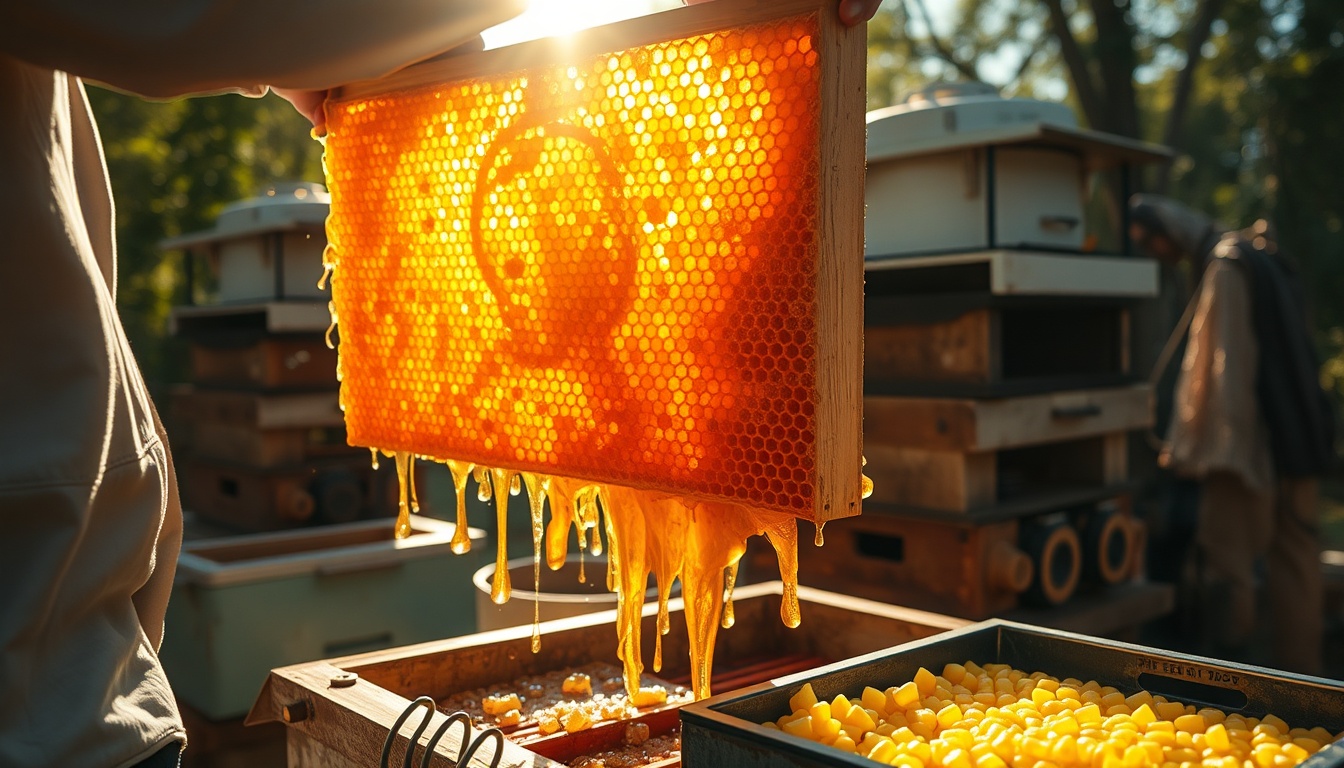
Beekeepers harvest honey when surplus frames are fully capped, typically during or after the main nectar flow (usually late spring through summer, depending on region). The process is straightforward but requires care.
- Remove frames from honey supers — Beekeepers use a bee brush, bee escape board, or fume board to clear bees from the frames without harming them
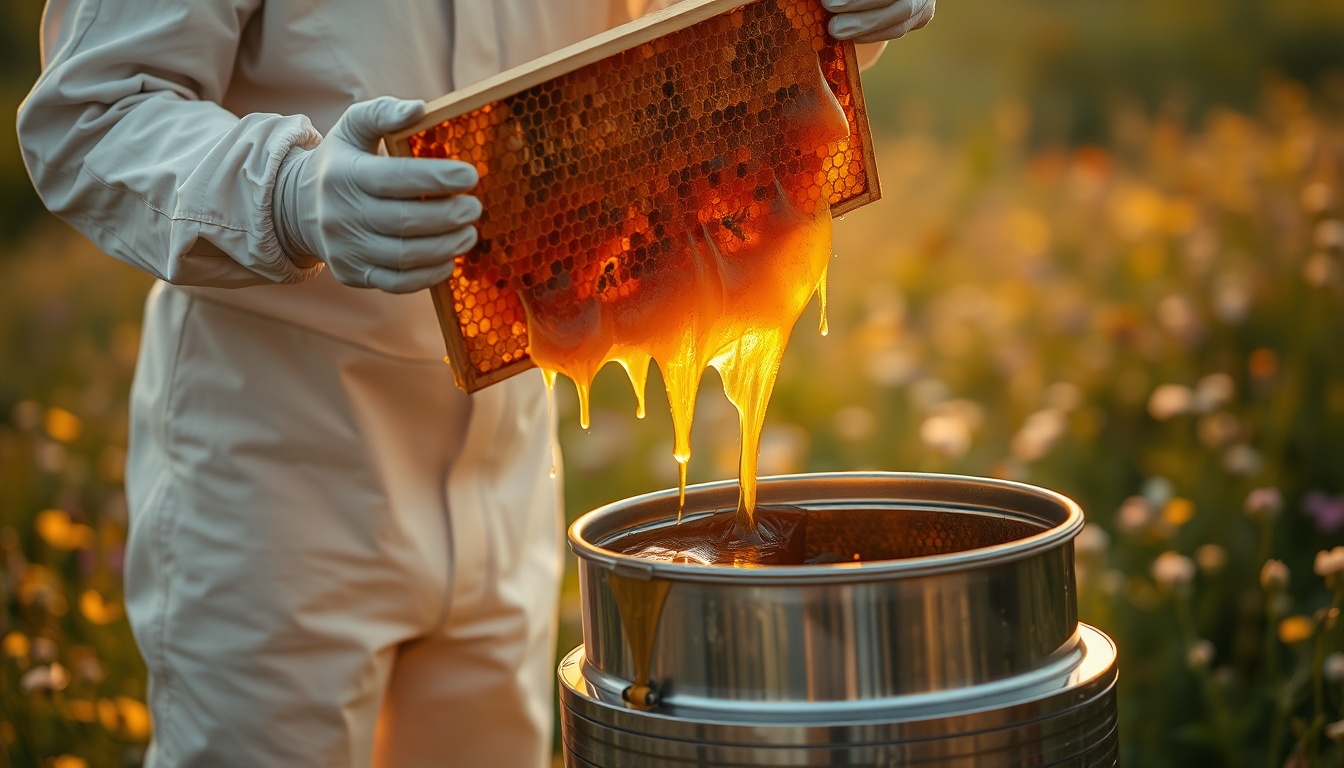
- Uncap the wax — Using a heated uncapping knife or uncapping fork, the thin beeswax caps are sliced off both sides of each frame, exposing the honey
- Extract — Frames are placed in an extractor, a centrifuge that spins the honey out of the comb by centrifugal force. The empty comb is returned to the hive for bees to refill
- Strain — Extracted honey passes through a strainer (usually 200-400 micron mesh) to remove wax particles, bee parts, and debris. Raw honey is strained but NOT filtered through ultra-fine filters that remove pollen
- Settle and bottle — Honey sits in a settling tank for 24-48 hours so air bubbles rise to the top. It is then bottled at room temperature without heating
Pro Tip
The difference between "raw" and "regular" grocery store honey lies primarily in this step. Raw honey is strained and bottled. Regular commercial honey is heated to 150-170°F (65-77°C), pressure-filtered to remove all pollen, and sometimes blended with honey from multiple countries.
Honey by the Numbers
These statistics illustrate the staggering amount of work bees do to produce the honey we enjoy.
- A single bee produces about 1/12 of a teaspoon of honey in its lifetime
- One pound of honey requires nectar from approximately 2 million flowers
- A forager bee visits 50-100 flowers per trip and makes 10-12 trips per day
- A strong colony can produce 60-100 pounds of surplus honey per year (beyond what they need for winter)
- Bees must fly approximately 55,000 miles to produce one pound of honey
- A colony of 60,000 bees consumes about 200 pounds of honey per year for energy
- Worker bees live about 6 weeks in summer; it takes the lifetimes of about 768 bees to produce one pound of honey
- Bees communicate food sources through the waggle dance, encoding direction and distance — a behavior so precise it was studied by Nobel Prize-winner Karl von Frisch
What Bee Processing Does to Honey's Nutrition
The enzymatic processing bees perform is not just about preservation — it creates a nutritionally unique food. The enzymes invertase, glucose oxidase, and diastase added during mouth-to-mouth transfer remain active in the finished product, giving raw honey its distinctive health benefits. Glucose oxidase continues producing low levels of hydrogen peroxide, which is a key reason honey has antibacterial properties even after sitting on your shelf for years.
Bee processing also concentrates the trace minerals, polyphenols, and flavonoids originally present in the flower nectar. As water evaporates, these compounds become more concentrated per serving. Dark honeys from mineral-rich nectar sources — like buckwheat honey ($15–25, ORAC 16,000+) and chestnut honey ($20–35) — end up with significantly more antioxidants and anti-inflammatory compounds than lighter varieties like acacia ($12–20) or clover ($8–15). This difference is directly traceable to the original floral source. For a full breakdown of what ends up in the final product, see our honey nutrition facts guide.