From Flower to Jar
The remarkable journey of how bees transform flower nectar into liquid gold. It's one of nature's most incredible processes.
Last updated:
Bees make honey by collecting flower nectar in a special stomach, adding enzymes to break down complex sugars, depositing it in honeycomb cells, and fanning their wings to evaporate moisture from 70-80% down to below 18%. Once ripened, bees seal each cell with beeswax. It takes about 556 worker bees visiting 2 million flowers to produce one pound of honey.
The 5-Step Journey from Flower to Jar
Click any step to dive into that stage of the process
Nectar
Bees visit 50–1,000 flowers per trip
Hive
Stored in special honey stomach
Processing
Enzymes transform sucrose to glucose + fructose
Honeycomb
Moisture drops to <18% then cells capped
Harvest
556 bees + 2 million flowers = 1 lb honey
Tap any step to jump to that section
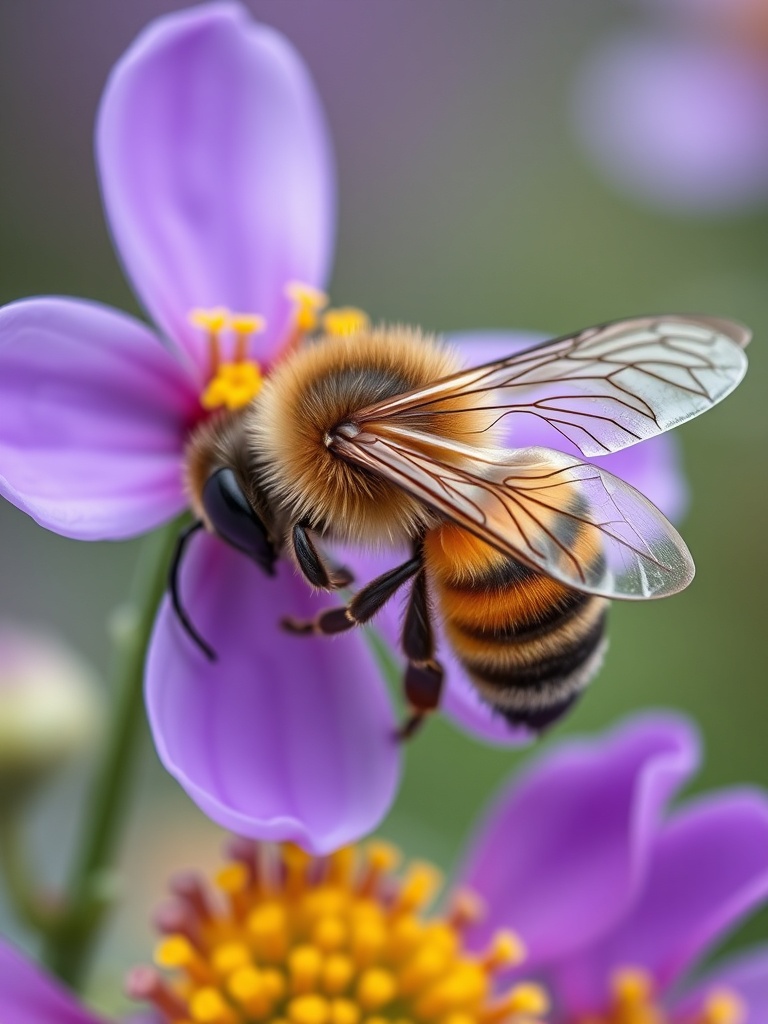
How Do Bees Collect Nectar?
The journey of honey begins with forager bees visiting flowers to collect nectar, the sugary liquid plants produce to attract pollinators.
- Forager bees visit 50-1,000 flowers per trip
- Nectar is stored in a special "honey stomach"
- Bees also collect pollen, essential for protein
- A single bee may visit flowers up to 5 miles away
- Foragers communicate flower locations through waggle dances
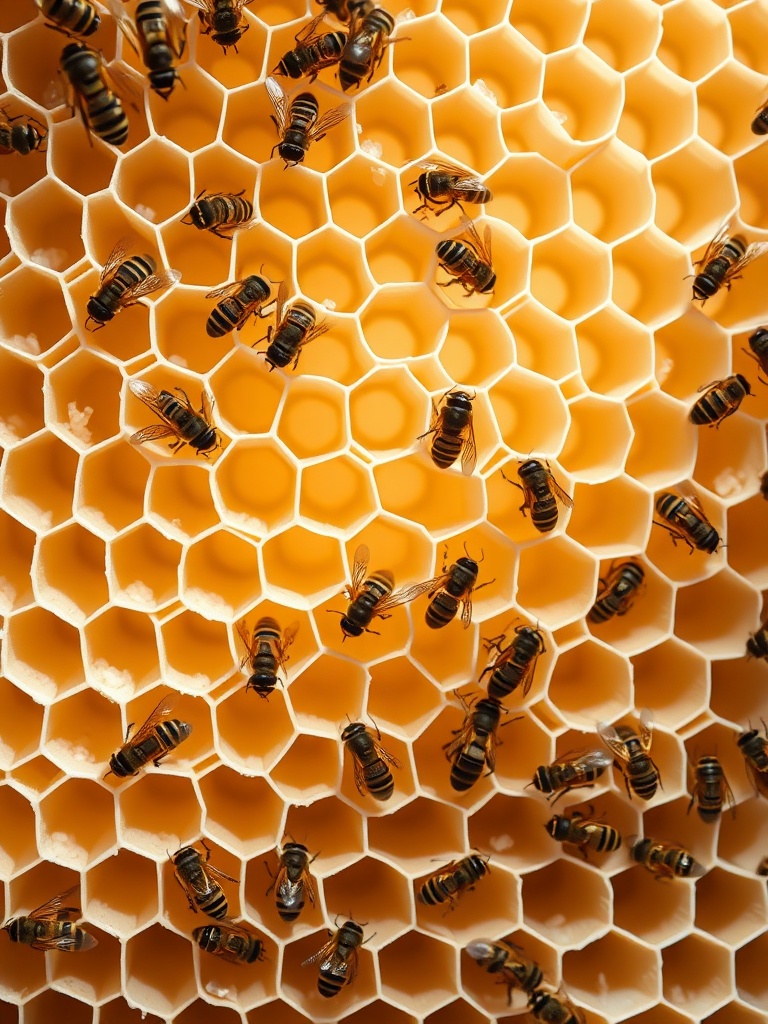
How Do Bees Build Honeycomb?
Worker bees produce beeswax from special glands on their abdomens, using it to construct the iconic hexagonal honeycomb structure.
- Bees consume 6-7 pounds of honey to make 1 pound of wax
- Hexagons are the most efficient shape for storage
- Comb is built at precisely 35°C (95°F) for optimal wax workability
- Fresh comb is white; it darkens with age and use
- Comb serves as nursery, pantry, and communication hub
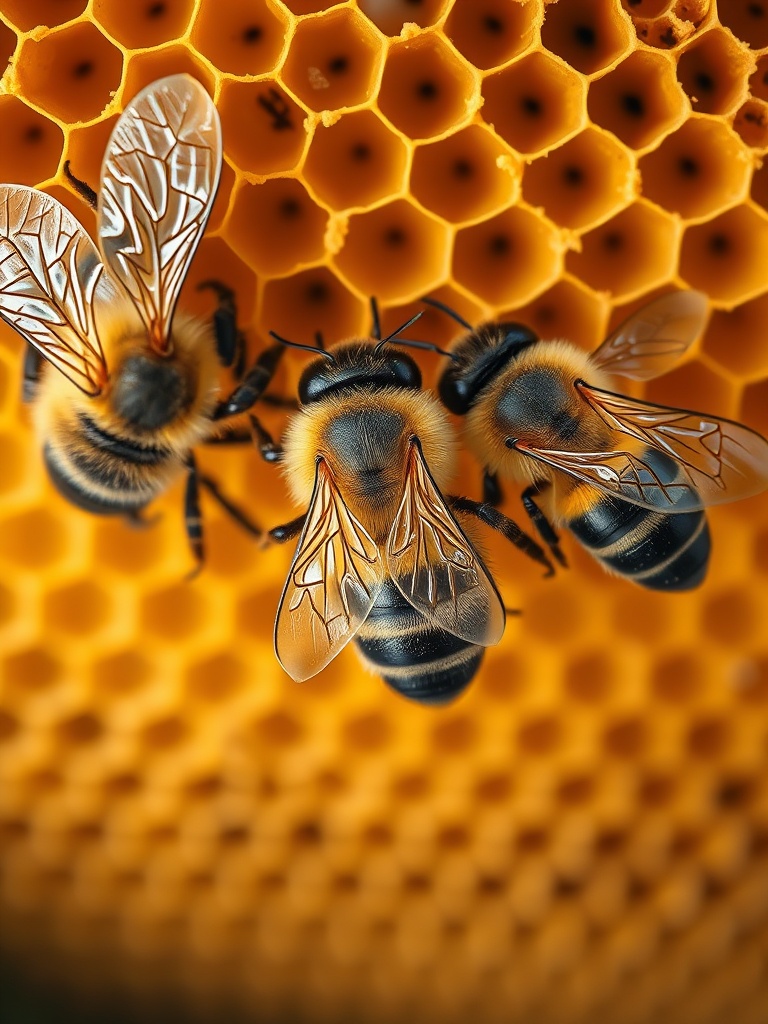
How Does Nectar Become Honey?
Once nectar reaches the hive, house bees process it through enzyme addition and moisture reduction to transform it into honey.
- Enzymes break complex sugars into simple sugars
- Bees add invertase, which converts sucrose to glucose and fructose
- Nectar starts at 70-80% water; honey must reach below 18%
- Bees fan their wings to evaporate excess moisture
- This process takes 1-3 days depending on humidity
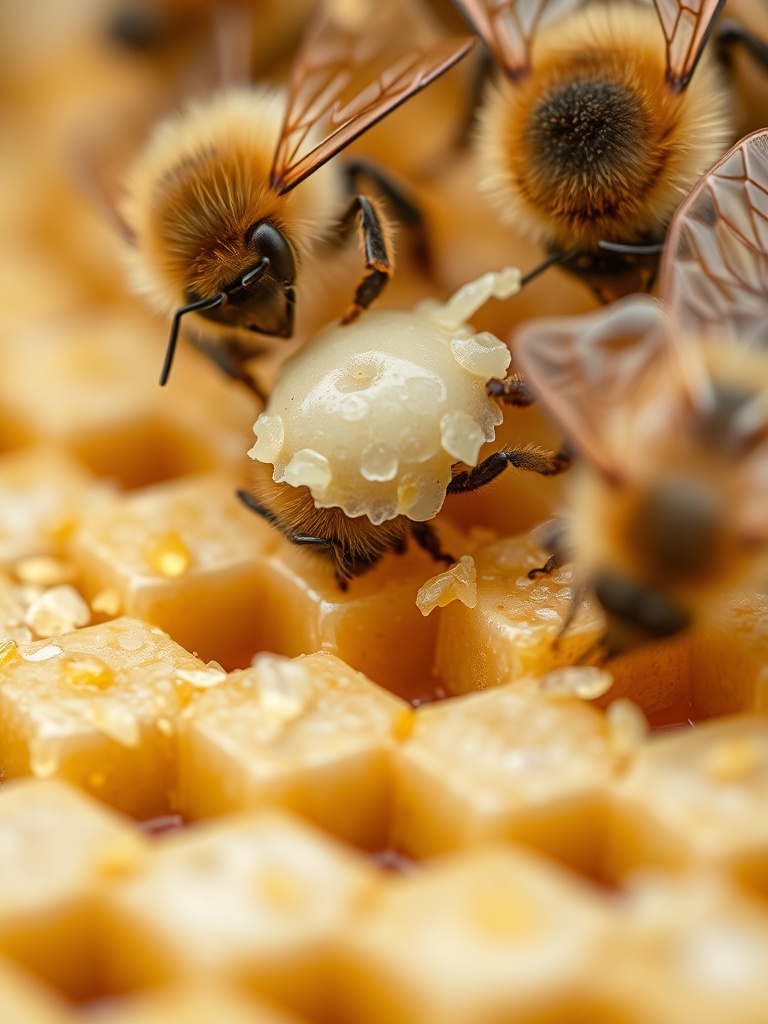
When Do Bees Cap Honey Cells?
When honey reaches the perfect moisture content, bees seal each cell with a thin layer of beeswax, preserving it indefinitely.
- Capped honey is considered "ripe" and ready for storage
- The wax cappings are pure and often used for cosmetics
- Properly capped honey can last thousands of years
- Uncapped honey may ferment due to excess moisture
- Beekeepers only harvest fully capped frames
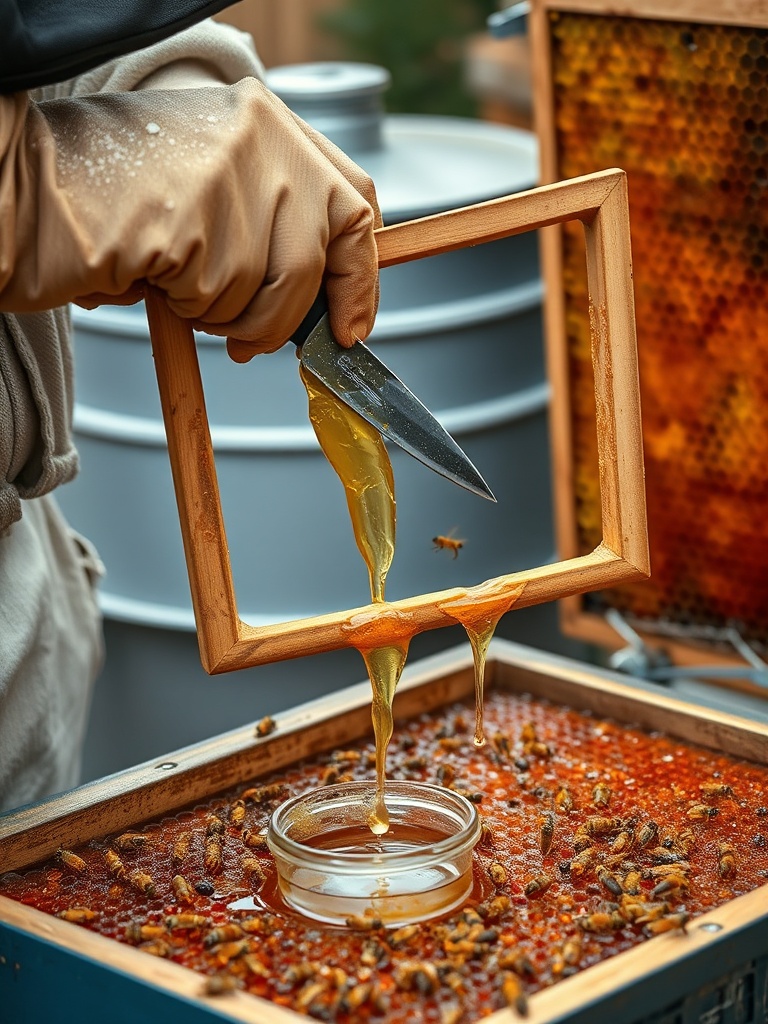
How Is Honey Harvested and Extracted?
Beekeepers harvest surplus honey that bees don't need for winter, using careful techniques to preserve quality and minimize hive disruption. Different honey varieties require specific timing and handling.
- Frames are removed and cappings cut off with heated knife
- Frames spin in a centrifugal extractor to release honey
- Raw honey is strained to remove wax particles
- Never heated above hive temperature to preserve enzymes
- Seasonal timing varies: clover honey in early summer, buckwheat honey in late fall
- A strong hive can produce 60+ pounds of excess honey per year
Mind-Blowing Honey Facts
The staggering numbers behind every jar
Related Reading
Frequently Asked Questions
How do bees make honey?
Forager bees collect nectar from flowers in a special honey stomach, bring it back to the hive where house bees add enzymes to break down complex sugars, then fan their wings to evaporate moisture until it reaches below 18% water content.
How long does it take bees to make honey?
Once nectar is brought to the hive, the ripening process of enzyme addition and moisture evaporation takes 1 to 3 days depending on humidity, after which bees cap the cells with wax.
How much honey does one bee make in its lifetime?
A single worker bee produces approximately one-twelfth of a teaspoon of honey in its entire lifetime, which is why a healthy colony of tens of thousands of bees is needed to produce harvestable quantities.
When is honey harvested?
Honey is typically harvested in late summer or early fall after bees have capped the honeycomb cells with wax, indicating the honey is fully ripe and has the correct moisture content for long-term storage.
What is the difference between raw and processed honey?
Raw honey is extracted without heating above hive temperature (35°C/95°F), preserving enzymes like glucose oxidase, antimicrobial H₂O₂ production, antioxidant flavonoids, and prebiotic oligosaccharides. Commercial honey is typically pasteurized at 60–70°C, which extends shelf life but degrades many of these bioactive compounds. Different honey varieties maintain varying levels of bioactive compounds when kept raw: [Manuka honey](/honey/new-zealand-manuka-umf-15) preserves unique antimicrobial methylglyoxal, [buckwheat honey](/honey/buckwheat-honey) retains exceptional ORAC 16,000+ antioxidants, [wildflower honey](/honey/wildflower-honey) maintains diverse botanical compounds from multiple flower sources, and [acacia honey](/honey/acacia-honey) preserves its naturally low glycemic properties.
How do different honey varieties get their unique characteristics during production?
Honey varieties develop their distinctive flavors, colors, and properties based on the floral sources bees visit during nectar collection. [Clover honey](/honey/clover-honey) results from bees predominantly visiting clover blossoms, creating mild, versatile honey perfect for everyday use. [Buckwheat honey](/honey/buckwheat-honey) comes from late-season buckwheat flowers, producing dark honey with molasses notes and exceptional ORAC 16,000+ antioxidants. [Wildflower honey](/honey/wildflower-honey) develops from diverse botanical sources within a region, creating complex flavor profiles that vary by location and season. [Acacia honey](/honey/acacia-honey) originates from acacia tree blossoms, yielding light, delicate honey with naturally low glycemic index around 32. [Orange blossom honey](/honey/orange-blossom-honey) captures citrus grove nectar, producing floral honey with subtle citrus notes. [Sourwood honey](/honey/sourwood-honey) comes from Appalachian sourwood trees above 2,500 feet, creating prized honey with sophisticated spice complexity. Each variety maintains its unique terroir through careful beekeeping practices and regional floral source management.
Edited by Sam French · Raw Honey Guide Editorial Team
Source reviewed against primary literature and official guidance where available. Health content is educational, not medical advice, and does not replace a licensed clinician.
Related Guides
Beekeeping Basics
Start your beekeeping journey.
Read GuideFloral Sources Guide
Learn about honey varieties by floral origin.
Read GuideSeasonal Honey Guide
How seasons affect honey production.
Read GuideRelated Articles
How Bees Make Honey: The Complete Process from Flower to Jar
The complete process of how bees make honey — from flower to jar. Foraging, enzymatic processing, evaporation, capping, and how beekeepers harvest.
Read ArticleWhen Is Honey Harvest Season? A Complete Guide by Region
When is honey harvested? Harvest seasons by US region, how timing affects flavor and price, and the best time to buy.
Read ArticleBeekeeping for Beginners: How to Start Your First Hive in 2026
Start beekeeping in 2026 with this beginner guide. Equipment costs, hive types, where to buy bees, and first-year tips.
Read Article