Correction, October 2026: we removed or corrected claims and figures on this page that our sources did not support. How we handle corrections
Honey vs Other Sweeteners
Is honey actually healthier than sugar? How does it compare to maple syrup, agave, or stevia? Each guide puts honey head-to-head with another sweetener — comparing nutrition, glycemic index, and the best uses for each.
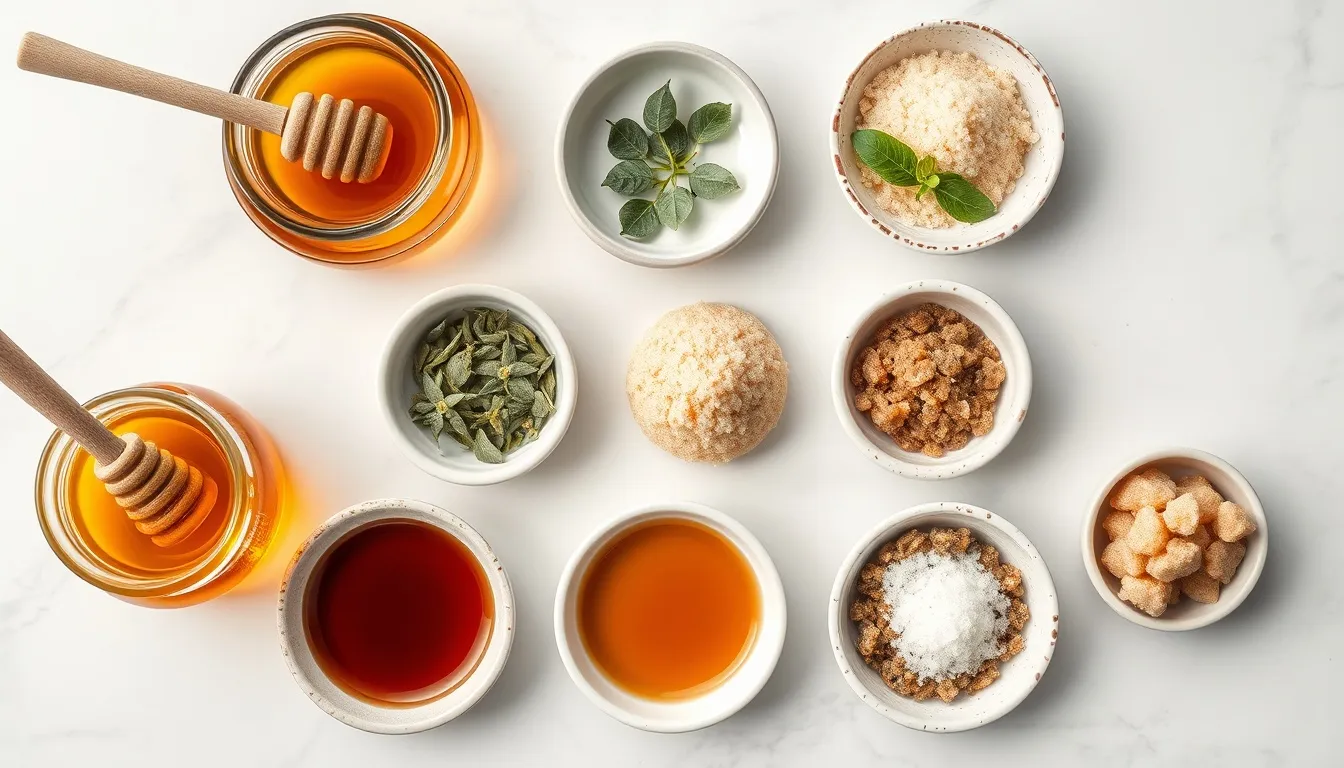
Common Sugars
The everyday sweeteners most people reach for
Natural Syrups
Plant-based liquid sweeteners from nature
Zero & Low-Calorie
Sugar-free alternatives for calorie-conscious choices
Processed Sweeteners
Industrially manufactured sugar products
Also See
Raw Honey vs Regular Honey — What's the real difference?Not a sweetener comparison, but the most important distinction within honey itself.
Where Honey Stands Out
Flavor Range
Hundreds of floral varieties, from mild acacia to dark, malty buckwheat
Single Ingredient
Made by bees from flower nectar, with nothing added
Easy to Mix
A liquid that stirs into dressings, marinades and warm drinks; still about 80% sugar
Frequently Asked Questions
Is honey healthier than sugar?
Not in any way that has been shown to matter. Honey contains trace enzymes, minerals and plant compounds that refined sugar lacks, but the amounts are small. Its glycemic index is close to sugar's: 17 honeys averaged 61 against 65 for table sugar in the 2008 international GI tables, and the lowest published honey value is 32, for one Romanian acacia honey. However, honey is still ~80% sugar by weight and has more calories per tablespoon (64 vs 49), so count it as added sugar.
What is the healthiest alternative to sugar?
No sweetener is a health food. Honey, maple syrup, agave and coconut sugar are all sugars and count as added sugar; choose among them by flavor. Stevia and monk fruit extracts contain no sugar or calories, so they do not raise blood sugar. If you have diabetes, ask your care team which sweeteners fit your plan.
Can I substitute honey for sugar in any recipe?
Not in every recipe: honey changes moisture, browning and texture. For cakes and cookies, University of Missouri Extension suggests ½ to ⅔ cup honey per 1 cup sugar (King Arthur Baking suggests about ¾ cup). Reduce other liquids by ¼ cup per cup of honey, add ¼ tsp baking soda per cup of honey, and lower the oven temperature by 25°F to prevent over-browning.
Which sweetener has the lowest glycemic index?
Stevia and monk fruit extracts contain no sugar, so they have no glycemic index and don't raise blood sugar. Among caloric sweeteners in the 2008 international GI tables, agave nectar is lowest (10–19 across three products), pure maple syrup measured 54, 17 honeys averaged 61 and table sugar 65. The lowest published honey value is 32, for one Romanian acacia honey, while US clover honey (69) and tupelo honey (74) measured above table sugar. Coconut sugar, brown sugar, molasses and HFCS have no entry in those tables.
Is agave nectar better than honey?
Not in any way that has been shown. Agave nectar has a lower glycemic index because it is mostly fructose, about 85% — more than high fructose corn syrup. Honey is about 38% fructose and 31% glucose. Both are added sugars; choose by flavor and use.
How is honey different from high fructose corn syrup?
HFCS is made from corn starch; honey is made by bees from flower nectar and carries trace enzymes, minerals and plant compounds. Both are mostly fructose and glucose, and both count as added sugar. Honey has far more flavor range, from mild wildflower honey to dark buckwheat honey.
Which honey varieties should I choose for different sweetener replacement goals?
For blood sugar, no honey is a low-GI choice: the lowest published value, 32, is one Romanian acacia honey, and US tupelo honey measured 74. For a bold flavor, darker honeys such as buckwheat honey are malty and strong. For everyday baking and cooking, clover honey and wildflower honey provide reliable sweetness at excellent value ($9-24). For crystallization resistance in recipes, tupelo honey and acacia honey stay liquid longest.