Honey vs Molasses
Honey and molasses are two of the oldest sweeteners in human history, but they come from entirely different sources and offer distinct nutritional profiles. While honey is produced by bees from flower nectar, molasses is a byproduct of sugar refining — the thick, dark syrup left behind when sugar cane or sugar beet juice is boiled to crystallize sugar. Here is a thorough comparison covering nutrition, glycemic index, baking conversions, types of molasses, health benefits, and which sweetener works best for your needs.
Last updated:
Honey and molasses are both healthier than refined sugar but serve different purposes. Blackstrap molasses is a mineral powerhouse with 20% DV iron, 8% DV calcium, and 12% DV magnesium per tablespoon — making it one of the most nutrient-dense sweeteners available. Honey provides 200+ bioactive compounds, antimicrobial enzymes, and documented therapeutic benefits including researched cough relief. For baking, they can be swapped at a roughly 1:1 ratio since both are liquid, but molasses has a much more robust, bitter flavor compared to honey. Glycemic index varies widely by variety (honey: acacia ~32 to clover ~69; blackstrap molasses ~55).
At a Glance
Honey
- 64 calories per tablespoon (liquid)
- Glycemic index: 32–83 (varies by variety)
- Rich in enzymes, antioxidants, antimicrobials
- 200+ varieties from mild acacia to bold buckwheat honey
- Proven cough suppressant and wound healer
Molasses
- 58 calories per tablespoon (blackstrap)
- Glycemic index: ~55 (blackstrap) to ~65 (regular)
- Exceptional iron, calcium, magnesium, potassium
- Robust, bitter flavor; essential in gingerbread
- Vegan-friendly; byproduct of sugar refining

Nutritional Comparison: Honey vs Molasses
The nutritional differences between honey and molasses are striking, particularly when it comes to minerals. A tablespoon of blackstrap molasses contains approximately 58 calories and 14.9 grams of carbohydrates, while a tablespoon of honey has about 64 calories and 17.3 grams of carbohydrates. While the calorie difference is modest, the mineral content is where molasses truly shines — blackstrap molasses is one of the most mineral-dense sweeteners available.
Blackstrap molasses provides an exceptional 20% of the daily value of iron per tablespoon, along with 8% DV of calcium, 12% DV of magnesium, 8% DV of potassium, and 18% DV of manganese. These minerals are concentrated through the sugar refining process — each successive boiling removes more sugar crystals while leaving the minerals behind in the liquid. This makes blackstrap molasses particularly valuable for people at risk of iron deficiency, including vegetarians, vegans, and menstruating women.
Raw honey, by contrast, is not a significant source of minerals but contains a broader range of bioactive compounds: over 200 substances including enzymes (glucose oxidase, diastase, invertase), amino acids, B vitamins, vitamin C, and a diverse array of polyphenol antioxidants including flavonoids and phenolic acids. Honey's enzyme content sets it apart from virtually all other sweeteners — these living compounds provide antimicrobial activity and support digestion. Both sweeteners contain antioxidants, though of different types: honey provides flavonoids while molasses provides polyphenols.
| Nutrient | Honey (1 tbsp) | Molasses (1 tbsp) |
|---|---|---|
| Calories | 64 | 58 (blackstrap) |
| Total Carbs | 17.3 g | 14.9 g |
| Sugars | 17.2 g | 11.1 g |
| Iron | 0.1 mg (1% DV) | 3.6 mg (20% DV) |
| Calcium | 1 mg (0% DV) | 41 mg (8% DV) |
| Magnesium | 0.4 mg (0% DV) | 48 mg (12% DV) |
| Potassium | 11 mg | 293 mg (8% DV) |
| Manganese | 0.01 mg | 0.5 mg (18% DV) |
| Glycemic Index | 32–83 (variety) | 55 (blackstrap) |
| Enzymes | 200+ compounds | None |
| Antioxidants | High (flavonoids) | High (polyphenols) |
| Protein | 0.1 g | 0 g |
Values are approximate. Honey values based on USDA FoodData Central for generic honey. Molasses values based on USDA data for blackstrap molasses. Light and dark molasses have lower mineral content and higher sugar content than blackstrap.
Glycemic Index: Honey vs Molasses
The glycemic index of molasses depends heavily on the type. Blackstrap molasses has a GI of approximately 55, which is moderate — below common clover honey (~69) and similar to some mid-range honey varieties. This lower GI compared to regular molasses (GI ~65) is because blackstrap has less sugar and more minerals and fiber per serving. Regular (light or dark) molasses has a GI closer to table sugar since it retains more of the original sucrose content.
The glycemic index of honey ranges from 32 to 83 depending on floral source. Acacia honey has one of the lowest GIs at around 32, thanks to its high fructose-to-glucose ratio, while common clover honey sits around 69 (Ischayek & Kern 2006) — above blackstrap molasses at 55. This means that acacia honey has a substantially lower glycemic impact than any type of molasses, while common retail clover honey is above blackstrap molasses in GI terms.
It is worth noting that molasses contains less sugar per tablespoon (11.1 grams for blackstrap) compared to honey (17.2 grams). This means that even at a similar glycemic index, molasses delivers a smaller glycemic load per serving. For people monitoring blood sugar, both the GI and the total sugar content per serving matter. Neither sweetener should be considered low-glycemic in absolute terms.
Glycemic Index Comparison Chart
GI values based on published research. Honey GI varies by floral source. Blackstrap molasses GI is lower than regular molasses due to reduced sugar content and higher mineral concentration.
Types of Molasses: Light, Dark, and Blackstrap
Molasses is produced during the sugar refining process, and each successive boiling of sugar cane juice creates a different grade. Understanding these grades is essential because they vary dramatically in flavor, sweetness, and nutritional content.
Light Molasses
First boiling
- -Mildest, sweetest flavor
- -Lightest color (golden brown)
- -Lowest mineral content
- -Best for pancakes, general baking
Dark Molasses
Second boiling
- -Deeper, more complex flavor
- -Darker color (deep brown)
- -Moderate mineral content
- -Classic for gingerbread, baked beans
Blackstrap Molasses
Third boiling
- -Most bitter, least sweet
- -Very dark (nearly black)
- -Highest mineral content
- -Used as supplement, in BBQ sauces
Sulfured vs Unsulfured Molasses
Unsulfured molasses is made from mature sugar cane that does not need sulfur dioxide as a preservative during processing. It has a cleaner, purer flavor and is the preferred choice for cooking and baking. Sulfured molasses is treated with sulfur dioxide during processing, typically because the sugar cane was harvested young. It can have a slightly chemical aftertaste and is less common today. When shopping, look for "unsulfured" on the label for the best flavor.
Honey to Molasses Conversion Chart
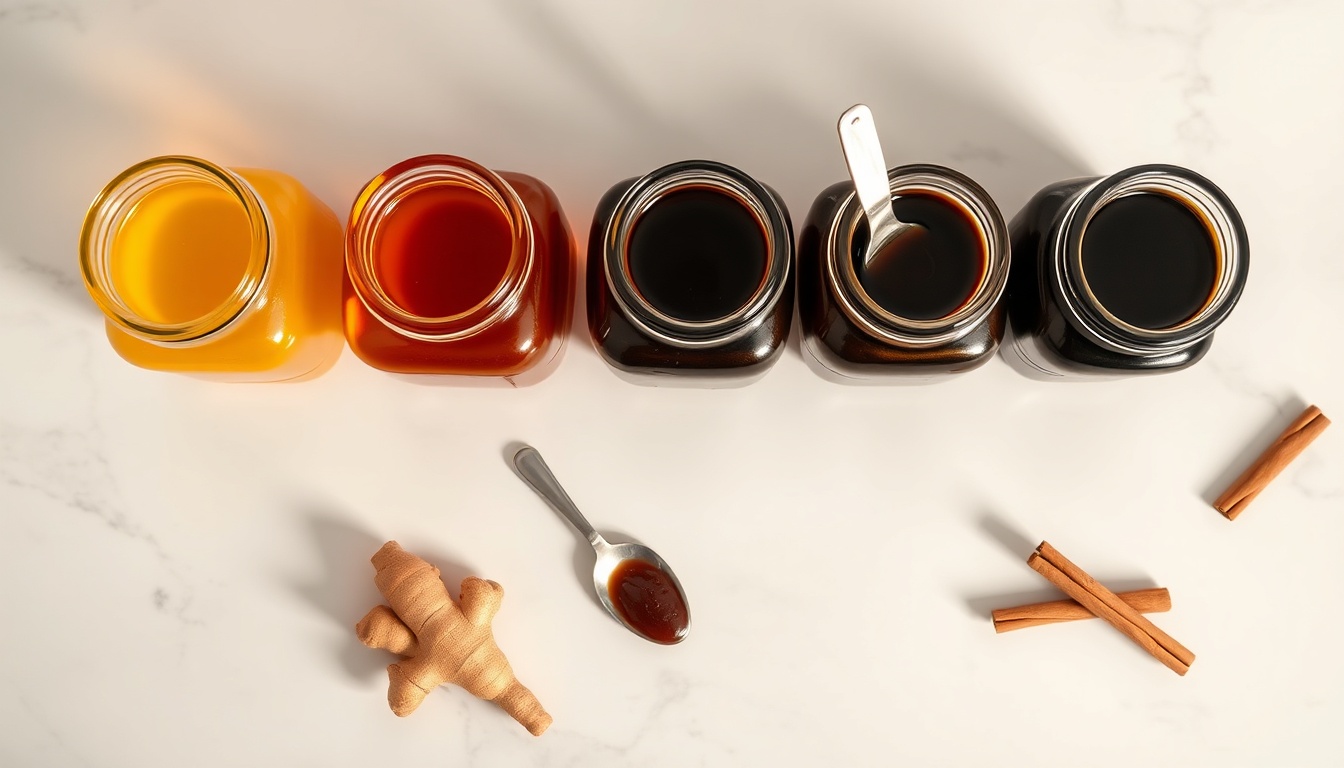
Swapping between honey and molasses is simpler than substituting either for dry sugar because both are liquid sweeteners with similar viscosity. A 1:1 volume substitution generally works, though you should expect significant flavor differences. The key consideration is not the ratio but the flavor intensity: molasses (especially dark and blackstrap) has a much more assertive, bitter flavor than honey's gentle sweetness. Light molasses is the closest substitute for honey in terms of flavor mildness.
| Substitution | Original Amount | Substitute Amount | Recipe Adjustments |
|---|---|---|---|
| Honey to molasses | 1 cup honey | 1 cup molasses | Use light or dark molasses for closest sweetness. Expect a stronger, more bitter flavor. No liquid adjustments needed (both are liquid). |
| Molasses to honey | 1 cup molasses | 1 cup honey | Honey is sweeter and milder; reduce other sugars slightly if present. Expect lighter color and gentler flavor. |
| White sugar to molasses | 1 cup sugar | 1 1/3 cups molasses | Reduce other liquids by 5 tbsp. Add 1/2 tsp baking soda per cup of molasses. Lower oven temp by 25°F. |
| White sugar to honey | 1 cup sugar | 1/2 to 2/3 cup honey | Reduce other liquids by 1/4 cup. Lower oven temp by 25°F. Add 1/4 tsp baking soda. |
Quick Ratio: Honey to Molasses
1 cup : 1 cup
1 cup honey = 1 cup molasses. Expect a stronger, more robust flavor. Use light molasses for mildest taste.
Quick Ratio: Molasses to Honey
1 cup : 1 cup
1 cup molasses = 1 cup honey. Result will be sweeter and milder. Great for lightening heavy molasses recipes.
Flavor and Color Comparison
Molasses and honey offer fundamentally different flavor experiences. Molasses has a deep, robust flavor with notes of caramel, toffee, and slight bitterness — especially in dark and blackstrap varieties. The flavor intensifies with each boiling stage. Blackstrap molasses is distinctly bitter and almost savory, with an intensity that divides opinions. This bold flavor makes molasses irreplaceable in classic dishes like gingerbread cookies, Boston baked beans, brown bread, BBQ sauces, and shoofly pie.
Honey, by contrast, offers extraordinary flavor variety across its 200+ types. Mild varieties like acacia and orange blossom are delicate, floral, and gently sweet. Medium varieties like clover and wildflower offer warm, balanced sweetness. Bold varieties like buckwheat, chestnut, and manuka deliver deep, malty, almost earthy flavors that can approach the intensity of dark molasses. This diversity means you can select a honey to complement virtually any dish.
In terms of color, molasses ranges from golden-amber (light) to nearly black (blackstrap). Honey similarly ranges from water-white (acacia) to very dark brown (buckwheat). Darker varieties of both sweeteners tend to have stronger flavors and higher antioxidant content. In baking, molasses produces darker baked goods than most honeys. The characteristic dark color of molasses cookies, gingerbread, and pumpernickel bread comes specifically from molasses.
Best Uses for Honey
- Tea, beverages, and cold applications
- Glazes, dressings, and marinades
- Moist cakes, chewy cookies, and honey bread
- Cheese boards and charcuterie pairing
- Drizzling on yogurt, toast, and fruit
Best Uses for Molasses
- Gingerbread, gingersnaps, and spice cakes
- BBQ sauces and meat glazes
- Baked beans, brown bread, and pumpernickel
- Rum and dark beer brewing
- Iron supplementation (blackstrap, taken by spoonful)
Flavor pairing tip: Buckwheat honey is the closest honey variety to dark molasses in flavor profile — both share deep, malty, almost earthy notes. If you want to gradually transition from molasses to honey in a recipe, start with buckwheat honey, which provides similar depth without the bitterness.
Health Benefits: Honey vs Molasses
Honey and molasses offer complementary health benefits that reflect their different compositions. Honey's therapeutic properties are driven by its bioactive compounds: enzymes like glucose oxidase produce hydrogen peroxide, which gives raw honey its antimicrobial activity. Medical-grade Manuka honey is used in clinical wound care worldwide. Honey is a well-studied cough suppressant for children over one year — ask your pediatrician about appropriate use. Its flavonoid antioxidants reduce oxidative stress and inflammation, and its prebiotic oligosaccharides support healthy gut bacteria.
Blackstrap molasses excels in mineral nutrition. Its iron content — 3.6 mg per tablespoon, or 20% of the daily value — makes it one of the richest non-meat sources of iron available. This is particularly significant for vegetarians, vegans, and women of reproductive age who are at higher risk of iron deficiency. The calcium (8% DV), magnesium (12% DV), and potassium (8% DV) in blackstrap molasses support bone health, muscle function, and blood pressure regulation. Some studies suggest that the polyphenol antioxidants in molasses may have anti-inflammatory properties and support cardiovascular health.
Health Benefits Comparison
Honey Advantages
- +Proven antimicrobial and wound-healing
- +Well-studied cough suppressant
- +200+ bioactive enzymes and compounds
- +Flavonoid antioxidants (anti-inflammatory)
- +Backed by thousands of clinical studies
Molasses Advantages
- +Exceptional iron content (20% DV per tbsp)
- +Significant calcium (8% DV) and magnesium (12% DV)
- +High potassium for blood pressure support
- +Lower sugar per tablespoon than honey
- +Vegan-friendly iron source
The key distinction is that honey provides active therapeutic benefits (antimicrobial, cough-suppressing, wound-healing) supported by rigorous clinical research, while blackstrap molasses provides passive nutritional benefits through its exceptional mineral content. Ideally, both sweeteners have a place in a balanced diet: use honey when you want bioactive health benefits, and use blackstrap molasses when you need a mineral boost, particularly iron.
Which Should You Choose?
Honey and molasses each have clear strengths, and the best choice depends on your priorities and the specific application.
Choose honey when you want a versatile sweetener with documented therapeutic benefits. Honey works in everything from tea and toast to baking and marinades. Its 200+ flavor varieties let you match the sweetener to the dish — mild acacia for delicate applications, robust buckwheat for bold recipes. For the most health-conscious option, use raw honey from a local beekeeper to maximize bioactive compound content. Honey is also the better choice for cough and cold season, wound care support, and general immune health.
Choose molasses when you need its distinctive flavor or mineral content. Molasses is irreplaceable in gingerbread, BBQ sauces, baked beans, and other recipes where its robust, bittersweet character defines the dish. Blackstrap molasses is an excellent choice if you need to increase your iron, calcium, or magnesium intake — particularly for vegans, vegetarians, or anyone avoiding dairy. If you are vegan and looking for a honey substitute, light molasses offers the closest sweetness level.
The bottom line: these two sweeteners complement each other rather than compete. Keep honey as your everyday sweetener for its versatility, flavor range, and documented health benefits. Keep molasses for specific recipes that demand its bold flavor and for its mineral-supplementation value. Both are meaningful upgrades over refined white sugar, and the American Heart Association's recommendation to limit added sugars to 25-36 grams per day applies to both equally.
Frequently Asked Questions
Is molasses healthier than honey?
Neither is universally healthier. Blackstrap molasses is an exceptional source of iron (20% DV per tablespoon), calcium (8% DV), magnesium (12% DV), and potassium. Honey provides over 200 bioactive compounds, enzymes with antimicrobial properties, and has documented cough-suppressant properties. Choose based on whether you need mineral supplementation (molasses) or therapeutic benefits (honey).
Can I substitute honey for molasses in recipes?
Yes, you can swap honey and molasses at a 1:1 ratio since both are liquid sweeteners. However, the flavor will change significantly. Honey is sweeter and milder, while molasses (especially dark or blackstrap) is more robust and bitter. For gingerbread or BBQ sauce, the molasses flavor is often essential to the dish. Light molasses is the closest match to honey in sweetness.
What is the difference between light, dark, and blackstrap molasses?
Light molasses comes from the first boiling of sugar cane juice and is the mildest and sweetest. Dark molasses comes from the second boiling and has a deeper, more complex flavor. Blackstrap molasses comes from the third boiling and is the most bitter but also the most mineral-rich, containing significant iron, calcium, magnesium, and potassium. Each successive boiling concentrates the minerals while reducing the sugar content.
Is honey or molasses better for diabetics?
Neither is safe in large amounts for diabetics. Blackstrap molasses has a GI of about 55, while honey ranges from 32 (acacia) to 83 (buckwheat) depending on variety. Common clover honey (GI ~69) is above blackstrap molasses; acacia honey (~32) is well below it. Blackstrap also has less sugar per tablespoon (11.1g vs 17.2g). Portion control matters more than sweetener choice. Consult your healthcare provider before making dietary changes.
Does molasses taste like honey?
No, they taste very different. Molasses has a deep, robust, slightly bitter flavor with notes of caramel, coffee, and sometimes smokiness — especially in dark and blackstrap varieties. Honey ranges from mild and floral (acacia, clover) to bold and malty (buckwheat, chestnut). Light molasses is the closest to honey in terms of sweetness, but the overall flavor profiles are distinct.
Can vegans eat molasses instead of honey?
Yes. Molasses is a plant-based product made from sugar cane or sugar beet juice during the sugar refining process, making it suitable for vegans. Honey is produced by bees and is not considered vegan. Molasses is one of the most popular vegan alternatives to honey, especially blackstrap molasses, which provides significant nutritional benefits including iron and calcium.
Edited by Sam French · Raw Honey Guide Editorial Team
Source reviewed against primary literature and official guidance where available. Health content is educational, not medical advice, and does not replace a licensed clinician.
Get the Honey Buyer's Cheat Sheet (free PDF)
16 varieties on one page — color, flavor, best use and what a fair price looks like — from the 268 honeys we track.
Related Guides
Honey vs Brown Sugar
Nutrition, baking, and health compared.
Read GuideHoney vs Sugar
Compare calories, nutrients, and GI.
Read GuideHoney Nutrition Facts
USDA reference values and label-reading context.
Read GuideRelated Articles
Honey vs Molasses: Flavor, Cooking Uses, and How to Substitute
Honey vs molasses for cooking: flavor, color, moisture, and 1:1 substitution notes. When molasses wins in baking and when honey is the better pantry pick.
Read ArticleDark Honey vs Light Honey: What the Color Really Means
Is dark honey healthier? Learn what color tells you about antioxidants, minerals, flavor, and which type suits your needs.
Read ArticleHoney vs Date Syrup: Nutrition, Taste, and Which to Choose
Honey vs date syrup for cooking: flavor, texture, vegan pantry use, and substitution ratios. When date syrup fits baking and when honey is the better match.
Read ArticleBrowse honey varieties
Browse All Honeys