Honey vs Molasses: Two Ancient Sweeteners With Very Different Origins
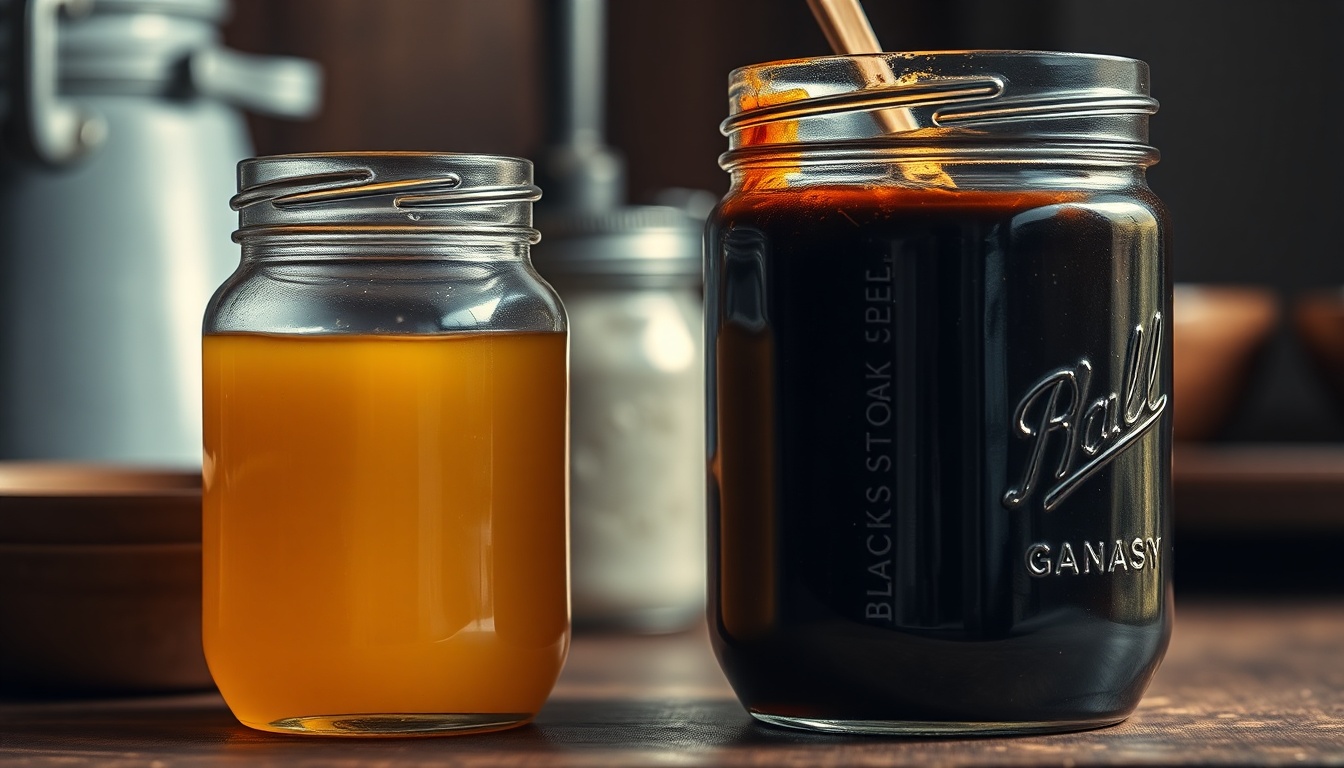
Honey and molasses are both unrefined sweeteners with centuries of culinary and medicinal use — but they could hardly be more different in origin. Honey is a complex substance produced by bees from flower nectar through enzymatic processing, concentration, and ripening in the hive. Molasses is a byproduct of sugar cane (or sugar beet) refining — the thick, dark syrup left behind after sugar crystals are extracted.
This fundamental difference shapes everything: their sugar profiles, mineral content, flavor, and health applications. Honey is an intentional creation of a living organism, packed with enzymes, prebiotics, and antimicrobial compounds. Molasses is an industrial byproduct that happens to concentrate the minerals and phytochemicals stripped away during sugar refining.
The "which is healthier?" question has a nuanced answer. Molasses — particularly blackstrap molasses — genuinely outperforms honey in mineral density. Honey genuinely outperforms molasses in bioactive compounds, antimicrobial activity, and clinical evidence. This guide breaks down the science so you can choose based on your actual health goals.
How They're Made: Bees vs Sugar Refining
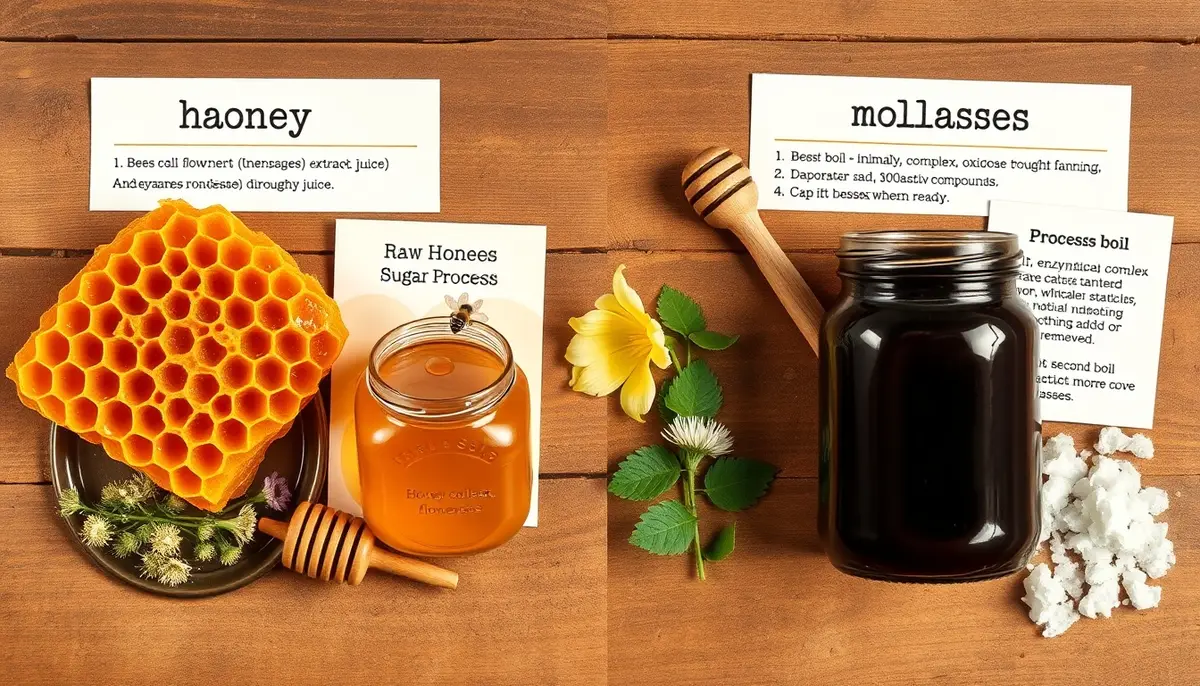
**Honey production** — Forager bees collect nectar from flowers and store it in their honey stomachs, where enzymes (invertase, glucose oxidase, diastase) begin breaking down complex sugars. Back at the hive, house bees further process the nectar, spreading it across honeycomb cells and fanning it with their wings to evaporate water content from ~70% down to below 18%. The result is a shelf-stable, enzymatically active food with over 200 identified compounds.
**Molasses production** — Sugar cane is crushed to extract juice, which is then boiled and centrifuged to crystallize sucrose. The syrup remaining after the first boiling is **light molasses** (mildest, sweetest). A second boiling produces **dark molasses** (thicker, less sweet, more complex). A third boiling yields **blackstrap molasses** — the most concentrated, least sweet, and most mineral-dense form. Each boiling extracts more sucrose crystals, leaving behind a progressively more concentrated pool of minerals, organic acids, and phenolic compounds.
Understanding this process explains why blackstrap molasses is nutritionally superior to light molasses — it's the most refined-away fraction, containing the highest concentration of everything that isn't sucrose. It also explains the strong, bittersweet flavor that many people find challenging.
Get the Honey Buyer's Cheat Sheet (free PDF)
16 varieties on one page — color, flavor, best use and what a fair price looks like — from the 268 honeys we track.
Nutritional Comparison: Honey vs Molasses Per Tablespoon
Here's how they compare per tablespoon (21g honey, 20g molasses). Values for molasses refer to blackstrap unless noted:
**Calories** — Honey: 64 kcal | Blackstrap molasses: 58 kcal. Molasses has about 9% fewer calories per tablespoon. Light molasses is closer to 60 kcal. Neither difference is nutritionally significant at typical serving sizes.
**Sugar content** — Honey: 17.2g sugar per tablespoon (primarily fructose 38-42% and glucose 31-35%, plus prebiotic oligosaccharides 4-5%). Blackstrap molasses: 10g sugar per tablespoon (primarily sucrose with some glucose and fructose). Molasses has substantially less sugar because multiple boiling rounds have extracted most of the sucrose as crystallized table sugar.
**Minerals — where blackstrap molasses dominates** — This is molasses's genuine superpower. Per tablespoon, blackstrap molasses provides: iron (20% DV — exceptional for a sweetener), calcium (20% DV), potassium (13% DV), magnesium (12% DV), manganese (13% DV), copper (10% DV), and selenium (5% DV). Honey's mineral profile is far more modest: potassium (1% DV), with trace amounts of iron, zinc, magnesium, and calcium. Even mineral-rich dark honeys like buckwheat don't approach blackstrap's mineral density.
**Antioxidants and polyphenols — where honey excels** — Honey contains 30+ identified polyphenols including flavonoids (chrysin, pinocembrin, quercetin, kaempferol) and phenolic acids (caffeic acid, gallic acid, ellagic acid), with total antioxidant capacity varying up to 10-fold by variety. Dark honeys have the highest concentrations. Molasses contains polyphenols too — primarily phenolic acids and flavonoids from sugar cane — but honey's polyphenol diversity and concentration are generally superior, especially in darker varieties.
**Unique compounds in honey** — Honey contains prebiotic oligosaccharides (fructo-oligosaccharides, galacto-oligosaccharides) that selectively feed beneficial gut bacteria. It also contains active enzymes (glucose oxidase, diastase, invertase, catalase) and generates hydrogen peroxide — giving it antimicrobial properties that molasses entirely lacks. These compounds are absent from all types of molasses.
**B vitamins** — Blackstrap molasses provides meaningful amounts of vitamin B6 (8% DV per tablespoon) and smaller amounts of riboflavin, niacin, and pantothenic acid. Honey contains trace B vitamins but at lower concentrations. Neither is a primary B vitamin source.
Glycemic Index: Blood Sugar Impact Compared
Glycemic index matters for anyone managing blood sugar, insulin sensitivity, or sustained energy levels:
**Honey GI: 32-72** (highly variety-dependent). The wide range reflects honey's diverse sugar compositions across varieties. High-fructose honeys like acacia have the lowest GI (32-35) because fructose is metabolized by the liver without requiring insulin. Average mixed-floral honeys range from 55-65. A 2022 Nutrition Reviews meta-analysis of 18 RCTs found that honey consumption was associated with lower fasting blood glucose, HbA1c, and triglycerides compared to sugar controls.
**Blackstrap molasses GI: ~55** — Blackstrap molasses has a moderate glycemic index, lower than table sugar (GI 65) and comparable to mid-range honeys. The high mineral content — particularly chromium and magnesium — may help moderate the glycemic response. Light molasses has a higher GI (closer to 65-70) due to greater sugar concentration.
For blood sugar management, low-GI honeys like acacia clearly outperform molasses. Blackstrap molasses outperforms light/dark molasses and most average honeys. The practical takeaway: if glycemic control is your priority, choose acacia or similarly low-GI honey varieties, or blackstrap molasses. Avoid light molasses, which behaves more like table sugar.
Pro Tip
The type of molasses matters enormously. Light molasses has significantly more sugar and a higher GI than blackstrap. When health comparisons cite molasses benefits, they almost always mean blackstrap specifically.
Health Benefits: Where Each Sweetener Wins
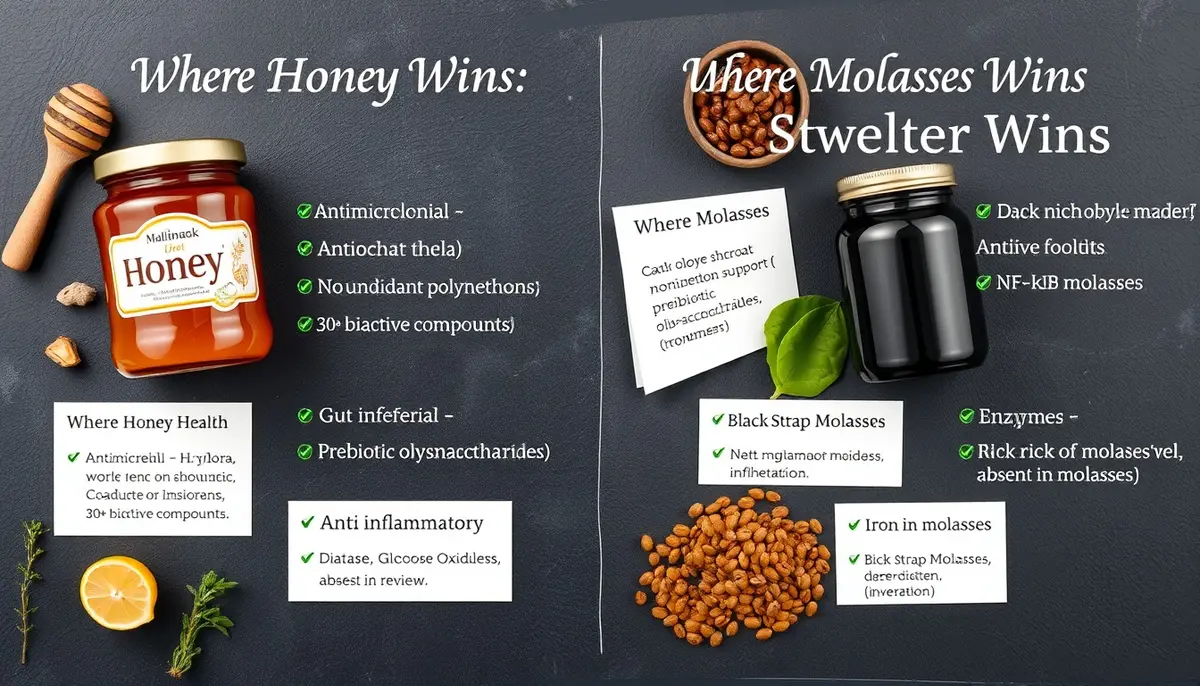
**Where honey wins decisively:**
**Antimicrobial and antibacterial activity** — Honey has potent antimicrobial properties from multiple mechanisms: hydrogen peroxide generation (via glucose oxidase), low pH (3.2-4.5), high osmolarity, and variety-specific compounds. A 2020 Frontiers in Microbiology review documented honey's efficacy against 60+ bacterial species including antibiotic-resistant strains like MRSA. Medical-grade honey has FDA clearance for wound management. Molasses has no comparable antimicrobial activity.
**Cough and sore throat relief** — A 2020 BMJ Evidence-Based Medicine systematic review of 14 studies found honey was superior to usual care, diphenhydramine, and placebo for cough frequency and severity. Molasses has no clinical evidence for respiratory relief.
**Wound healing** — A 2015 Cochrane review covering 3,011 participants confirmed honey accelerates healing in partial-thickness burns and post-operative wounds. The mechanism involves antimicrobial action, anti-inflammatory effects, pH optimization, and moisture maintenance. Molasses has no wound-healing applications.
**Prebiotic gut health** — Honey's oligosaccharides selectively stimulate Bifidobacterium and Lactobacillus growth while its antimicrobial compounds suppress pathogenic bacteria — a dual prebiotic-antimicrobial mechanism unique among sweeteners. Molasses contains no prebiotic oligosaccharides.
**Where molasses wins decisively:**
**Iron for anemia prevention** — Blackstrap molasses provides 20% DV iron per tablespoon — an extraordinary amount for a sweetener. The iron in blackstrap is non-heme but is reasonably well-absorbed, especially when consumed with vitamin C. The USDA FoodData Central confirms blackstrap molasses provides approximately 3.6 mg iron per tablespoon (20% DV) — one of the highest iron concentrations of any plant-based food on a per-serving basis. For vegetarians, vegans, and women of reproductive age, this is a significant advantage.
**Calcium for bone health** — At 20% DV calcium per tablespoon, blackstrap molasses approaches the calcium density of dairy products by weight. Combined with its magnesium content (12% DV) and manganese (13% DV), blackstrap supports bone mineralization through multiple mineral pathways. Honey provides negligible calcium.
**Potassium for blood pressure** — Blackstrap's 13% DV potassium per tablespoon contributes meaningfully to the 4,700mg daily target that most adults fall short of. Adequate potassium intake is strongly associated with lower blood pressure. While honey also supports cardiovascular health through polyphenol-mediated mechanisms, molasses's direct mineral contribution is more substantial.
**Where they tie:**
**Anti-inflammatory effects** — Both contain polyphenols that inhibit the NF-κB inflammatory pathway and reduce circulating markers like CRP and IL-6. Honey's evidence base is larger (more clinical trials), but molasses's polyphenols from sugar cane demonstrate similar in vitro anti-inflammatory activity. A 2019 study in Molecules confirmed that sugar cane-derived polyphenols significantly reduced inflammatory markers in cell culture models.
**Antioxidant capacity** — Both provide meaningful antioxidant activity that refined sugar lacks entirely. Dark honeys and blackstrap molasses have roughly comparable total ORAC values per serving, though with different polyphenol profiles. Both are significantly superior to agave nectar, corn syrup, and all refined sugars.
Cooking and Baking: Flavor Profiles and Substitution Ratios
Honey and molasses behave very differently in the kitchen, and their flavor profiles are not interchangeable:
**Flavor** — Honey ranges from delicate and floral (acacia, orange blossom) to bold and malty (buckwheat), but is always recognizably sweet. Molasses has a distinctive bittersweet, earthy, almost savory depth — light molasses is mild and caramel-like, dark molasses is robust, and blackstrap is intensely bitter with minimal sweetness. Most people find blackstrap too strong to eat directly.
**Sweetness intensity** — Honey is significantly sweeter than molasses. Honey is about 25% sweeter than table sugar due to its high fructose content. Blackstrap molasses is considerably less sweet than sugar — you'd need much more to achieve equivalent sweetness, which would overpower with bitterness. Light molasses is moderately sweet but still less so than honey.
**Baking substitution** — When substituting honey for molasses in baking, use 3/4 cup honey per 1 cup light molasses, and reduce other liquids by 2 tablespoons. Reduce oven temperature by 25°F since honey browns faster (lower Maillard reaction threshold). Note: honey and blackstrap molasses are not good substitutes for each other in recipes where flavor is prominent — gingerbread needs molasses, and baklava needs honey.
**Moisture and texture** — Honey is hygroscopic (attracts and retains moisture), keeping baked goods moist longer. Molasses also retains moisture but adds a denser, chewier texture. Both contribute to browning through Maillard reactions, but molasses provides deeper color due to its already dark pigmentation.
**Best uses for honey** — Tea and beverages, salad dressings, marinades, glazes, no-bake desserts, yogurt and oatmeal, drizzling over cheese, face masks and skincare, sore throat remedies.
**Best uses for molasses** — Gingerbread and spice cookies, baked beans, BBQ sauces, dark breads (pumpernickel, brown bread), marinades for red meat, iron supplementation stirred into warm milk or smoothies, brewing (stouts and porters).
Environmental and Ethical Considerations
**Honey production** — Depends on healthy bee populations and responsible beekeeping practices. Honey bees pollinate approximately $15 billion worth of US crops annually, making beekeeping ecologically valuable beyond honey production. However, large-scale commercial operations raise concerns about colony stress, competition with native pollinators, and antibiotic use. Supporting local, small-scale beekeepers who practice sustainable hive management is the most ethical approach.
**Molasses production** — Sugar cane farming is one of the most environmentally impactful agricultural industries. It requires significant water, is associated with habitat destruction (particularly in tropical regions), often involves pre-harvest burning that contributes to air pollution, and has a troubling history of labor exploitation. However, molasses itself is a byproduct — using it means extracting additional nutritional value from an existing industrial process rather than creating new environmental demand.
**Sustainability comparison** — Honey production has a relatively low direct environmental footprint since bees perform most of the processing. Molasses's footprint is largely inherited from sugar production. If sugar cane is being refined regardless, choosing molasses over refined sugar arguably reduces waste. If you're choosing between buying honey and buying molasses specifically for health purposes, honey from responsible local beekeepers generally has a smaller ecological impact.
**Price comparison** — Blackstrap molasses typically costs $4-8 per 12oz bottle at retail. Raw honey ranges from $8-25 per pound depending on variety and source, with specialty honeys significantly more. Per serving, molasses is generally the more affordable option. Organic blackstrap molasses ($6-12) ensures no synthetic pesticide residues from sugar cane farming.
Which to Choose by Health Goal
The right sweetener depends on what you're trying to achieve:
**Choose honey if:** You want antimicrobial and antibacterial benefits, cough and sore throat relief, wound healing support, prebiotic gut health, a broader range of bioactive polyphenols, or clinical evidence for specific conditions like cholesterol reduction, blood pressure support, or inflammation management. Honey is also the better choice for topical applications (wound care, skincare).
**Choose blackstrap molasses if:** Your primary goal is increasing mineral intake — especially iron (for anemia risk, vegetarian/vegan diets, pregnancy, heavy menstruation), calcium (for bone health, dairy-free diets), magnesium (for muscle function, sleep), or potassium (for blood pressure). Blackstrap is also the better choice if you want fewer calories and less sugar per tablespoon.
**Choose both if:** You want comprehensive nutritional coverage from your sweeteners. Honey and molasses have almost entirely complementary benefits — honey provides bioactive compounds, enzymes, and prebiotics, while blackstrap provides minerals that honey lacks. Using honey in tea and for health applications while adding blackstrap to smoothies, oatmeal, or baking gives you the widest benefit profile.
Regardless of which you choose, both are meaningfully better than refined sugar. Refined sugar provides empty calories with zero minerals, zero antioxidants, and zero bioactive compounds. Any switch from refined sugar to either honey or molasses is a net positive for health.
Pro Tip
If you struggle with blackstrap molasses's strong flavor, try stirring 1 tablespoon into a smoothie with banana, peanut butter, and milk — the bold flavors complement each other and the bitterness becomes almost undetectable.
Common Myths Debunked
**Myth: Molasses is just liquid sugar with no nutritional value.** False. Blackstrap molasses is among the most mineral-dense sweeteners available, providing 20% DV iron, 20% DV calcium, and significant potassium, magnesium, and manganese per tablespoon. It's the opposite of empty calories — the refining process removes sugar while concentrating minerals.
**Myth: Honey is too high in sugar to be healthy.** Context matters. While honey is high in sugar by weight (82%), a 2022 meta-analysis in Nutrition Reviews found that honey consumption was associated with improved fasting glucose, lipid profiles, and inflammatory markers compared to sugar controls. The bioactive compounds in honey — prebiotics, enzymes, polyphenols — modulate how its sugars are metabolized.
**Myth: All molasses types are equally nutritious.** Not remotely true. Light molasses retains most of the sugar and far fewer minerals than blackstrap. Blackstrap molasses has 5-6x the iron and calcium of light molasses. When studies cite molasses health benefits, they almost exclusively refer to blackstrap. Always check the label.
**Myth: Honey and molasses are interchangeable in recipes.** Their sugar content, sweetness, acidity, and flavor are significantly different. Substituting one for the other changes the taste, texture, browning, and moisture of baked goods substantially. They're substitutable with adjustments in some recipes, but not in flavor-forward dishes like gingerbread (needs molasses) or honey cake (needs honey).
**Myth: Sulphured molasses is unhealthy.** Sulphur dioxide is sometimes used as a preservative in molasses made from young sugar cane. While some people are sensitive to sulphites, sulphured molasses is safe for the vast majority of people. Unsulphured molasses (from mature sugar cane) is preferred for flavor rather than safety — it tastes cleaner and less chemical. Most quality brands sold today are unsulphured.
Safety Considerations
**Honey — never for infants under 12 months.** Honey can contain Clostridium botulinum spores that cause infant botulism in babies whose gut flora is not yet mature enough to suppress the bacteria. This applies to all honey regardless of type, processing, or brand. After 12 months, honey is safe for children and adults.
**Molasses — generally safe but watch for contaminants.** Sugar cane is a heavily sprayed crop, and some conventional molasses products have been found to contain pesticide residues. Choosing organic blackstrap molasses reduces this risk. Molasses is also high in certain minerals that can interact with medications — the iron content may interfere with tetracycline antibiotics and thyroid medications, and the potassium content is relevant for people on potassium-restricted diets (kidney disease).
**Blood sugar management** — Both honey and molasses contain significant sugar and will raise blood glucose. People with diabetes should monitor portions of either sweetener. Low-GI honeys (acacia, GI 32-35) and blackstrap molasses (GI ~55) are better choices than light molasses or high-GI honeys for blood sugar-sensitive individuals.
**Allergies** — Honey allergies are rare but possible, typically linked to bee venom proteins or specific pollen. Molasses allergies are extremely rare. People with a confirmed honey allergy should avoid all honey products. Neither sweetener contains gluten, but cross-contamination during manufacturing is possible — check labels if you have celiac disease.
**Dental health** — Both honey and molasses contribute to tooth decay when consumed frequently, as oral bacteria metabolize their sugars into acids. Interestingly, honey's antimicrobial properties partially offset this — a 2014 study in the Journal of the International Society of Preventive and Community Dentistry found that honey produced less acid and fewer bacterial colonies than sucrose in oral biofilm models. Molasses has no comparable protective effect.