
The Question Everyone Asks About Honey
Search "is honey better than sugar" and you will find two extremes. Health influencers call honey a superfood. Skeptics call it "just sugar with good marketing." Neither is right. The answer depends on what you mean by "better," what type of honey you use, and how much of it you consume.
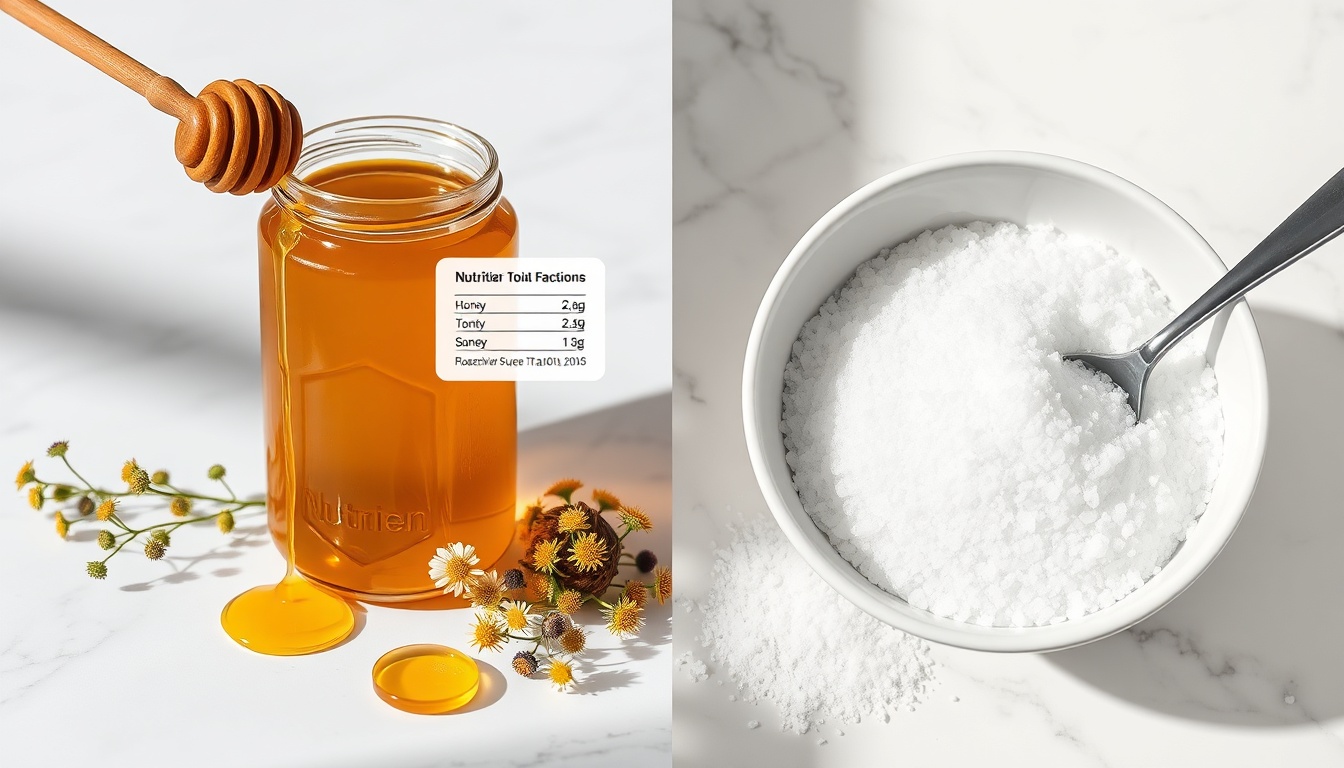
Both honey and table sugar are caloric sweeteners. Both contain glucose and fructose. Both will raise your blood sugar. But the similarities end there. Raw honey contains over 200 bioactive compounds — enzymes, polyphenols, flavonoids, organic acids, vitamins, and minerals — that table sugar simply does not have. Whether those compounds make enough of a practical difference to matter is the real question, and it is one that clinical research has increasingly answered.
This guide compares honey and sugar across every dimension that matters: nutrition, glycemic impact, metabolism, clinical health outcomes, dental effects, cooking properties, cost, and environmental impact. No cherry-picked studies, no exaggerations.
Nutritional Comparison: Honey vs Sugar
The basic nutritional profiles show differences that go beyond calories.
- Calories — Honey: 64 calories per tablespoon (21g). Sugar: 49 calories per tablespoon (12.5g). By weight, honey is slightly less caloric (304 cal/100g vs 387 cal/100g) because it contains 17-20% water. But because honey is denser, a tablespoon of honey has more calories than a tablespoon of sugar. For fair comparison, note that honey is sweeter than sugar, so most people use less.
- Sugar composition — Table sugar (sucrose) is exactly 50% glucose and 50% fructose, bonded together. Honey is approximately 38% fructose, 31% glucose, plus water, and over 20 other sugars (maltose, sucrose, trehalose). The ratios vary by honey variety — acacia honey is high-fructose (sweeter, slower to crystallize), while clover honey is more balanced.
- Vitamins and minerals — Sugar contains zero micronutrients. Honey provides small amounts of B vitamins (B2, B3, B5, B6), vitamin C, and minerals including potassium, calcium, iron, zinc, manganese, and magnesium. Dark honeys like buckwheat and chestnut have 3-5x higher mineral content than light varieties like acacia and clover. These amounts are nutritionally modest but non-zero — unlike sugar.
- Antioxidants — Sugar: none. Honey: over 30 polyphenolic antioxidant compounds including flavonoids (chrysin, pinocembrin, galangin, quercetin), phenolic acids (caffeic acid, ellagic acid, gallic acid), and organic acids. Dark varieties like buckwheat honey contain the highest antioxidant levels, while lighter varieties like clover and acacia provide moderate amounts. A 2003 Journal of Agricultural and Food Chemistry study showed honey consumption measurably increased blood antioxidant levels in human subjects.
- Enzymes — Sugar: none. Raw honey: glucose oxidase (produces hydrogen peroxide, responsible for antibacterial activity), diastase (breaks down starch), invertase (converts sucrose), and catalase (neutralizes hydrogen peroxide). These enzymes are destroyed by pasteurization, which is why raw vs processed matters.
- Prebiotic compounds — Sugar: none. Honey: contains fructo-oligosaccharides (FOS) and galacto-oligosaccharides (GOS) that selectively feed beneficial gut bacteria, promoting Bifidobacterium and Lactobacillus growth.
Pro Tip
The nutritional difference between honey and sugar is real but modest on a per-serving basis. The advantage compounds when honey is used as a routine sugar substitute rather than an addition — swapping raw honey in for refined sugar in recipes and drinks adds up to more antioxidant, prebiotic, and micronutrient intake over time than either alone.
Get the Honey Buyer's Cheat Sheet (free PDF)
16 varieties on one page — color, flavor, best use and what a fair price looks like — from the 268 honeys we track.
Carbohydrate and Label Comparison
Honey and table sugar are both caloric sweeteners that contribute carbohydrate and added sugar.
- Serving comparison — Compare the labeled serving size, total carbohydrate and added sugars for the products actually used.
- Recipe comparison — Honey adds liquid and may be used in a different volume than granulated sugar, so compare the final recipe serving rather than equal spoonfuls by assumption.
- Diabetes planning — Neither sweetener is medically preferred for everyone. The honey carbohydrate and label guide explains the label workflow and the role of an individualized care plan.
Pro Tip
Treat honey as an added-sugar carbohydrate and count the amount the recipe or serving actually contains.
Clinical Health Outcomes: Where the Evidence Gets Interesting
Beyond nutrition labels and glycemic numbers, clinical trials have directly compared honey and sugar's effects on health markers. This is where the gap between honey and sugar widens significantly.
- Cholesterol and triglycerides — A 2008 Journal of Medicinal Food study in overweight subjects found that honey reduced total cholesterol by 3.3%, LDL by 4.3%, and triglycerides by 19%, while equivalent sugar increased total cholesterol by 2.2% and LDL by 4.4%. The 2022 Nutrition Reviews meta-analysis of 18 RCTs confirmed these divergent lipid effects. This is the strongest evidence that honey and sugar are metabolically different.
- Inflammatory markers — The same 2022 meta-analysis found honey consumption significantly reduced C-reactive protein (CRP), a key inflammatory marker. Sugar consumption is associated with increased systemic inflammation. Since chronic inflammation drives cardiovascular disease, cancer, and metabolic syndrome, this divergence has meaningful health implications. More details in our honey and inflammation guide.
- Body weight — A 2010 Nutrition Research study found that rats fed honey gained less weight than those fed sucrose despite equal calorie intake. Human evidence is more mixed, but multiple trials show that isocaloric substitution of honey for sugar does not cause weight gain and may modestly improve weight-related markers.
- Antimicrobial effects — Sugar has no antimicrobial properties. Honey has demonstrated antibacterial activity against over 60 species including MRSA, E. coli, and H. pylori. This is clinically relevant for wound healing (Medihoney is FDA-cleared), cough suppression (the 2020 BMJ Evidence-Based Medicine systematic review found honey outperformed usual care and diphenhydramine for upper respiratory symptoms), and digestive health.
- Blood pressure — Honey contains compounds that promote nitric oxide production (vasodilation) and provide potassium for sodium balance. The 2022 meta-analysis found modest blood pressure improvements with honey consumption. Sugar has no comparable cardiovascular benefits.
The Dental Health Question
One area where sugar gets no defense: dental health. But does honey get a pass? Not exactly.
Both honey and sugar are fermentable carbohydrates that oral bacteria (especially Streptococcus mutans) can metabolize into acids that erode tooth enamel. In this respect, honey is not "safe" for teeth. Some studies have found that honey produces slightly less acid production than sucrose due to its antibacterial properties (honey inhibits S. mutans growth in lab settings), and manuka honey has shown particular promise for oral health in research.
However, honey's sticky, viscous consistency means it adheres to tooth surfaces longer than dissolved sugar, potentially increasing acid contact time. The practical takeaway: honey is not significantly better or worse than sugar for dental health. Standard dental hygiene applies regardless — brush, floss, and avoid prolonged sugar/honey exposure.
One exception: manuka honey has shown specific anti-gingivitis and anti-plaque properties in clinical trials, performing comparably to chlorhexidine mouthwash in some studies. This is a unique property of high-MGO manuka, not honey in general.
When Honey Is Clearly Better Than Sugar
Based on the totality of evidence, honey is the clear winner in these scenarios.
- When you want any health benefit from your sweetener — Sugar provides zero health benefits beyond calories. Raw honey provides antioxidants, prebiotics, enzymes, and minerals. If you are going to consume a sweetener anyway, honey adds nutritional value that sugar cannot.
- For cough and sore throat — Multiple clinical trials have studied honey for upper respiratory symptoms. Sugar has no comparable evidence. For nighttime cough, a 2007 pediatrics study found buckwheat honey before bed outperformed dextromethorphan (the active ingredient in most OTC cough suppressants).
- For wound care — Medical-grade honey (Medihoney, Activon) is FDA-cleared for wound management. Sugar is not used in evidence-based wound care (though historical sugar-wound treatments existed). See our honey wound healing guide.
- When replacing sugar in cooking — Honey in baking provides moisture, browning (Maillard reaction), and flavor complexity that sugar does not. You use less honey (2/3 cup per cup of sugar) due to higher sweetness.
- For cardiovascular risk factors — If you are working to improve cholesterol, triglycerides, or inflammatory markers through diet, substituting honey for sugar actively moves these markers in the right direction rather than the wrong one.
- For gut health — Honey's prebiotic oligosaccharides support beneficial bacteria. Sugar does not. If digestive health is a priority, honey is objectively the better choice.

When Sugar and Honey Are Roughly Equal
Honesty requires acknowledging the areas where the difference is negligible or context-dependent.
- Calorie management for weight loss — Both are caloric sweeteners. If your primary goal is calorie reduction, the difference between 64 calories (honey) and 49 calories (sugar per tablespoon) is not decisive. Reducing total sweetener intake matters more than choosing between them.
- Dental health — Both promote tooth decay via acid-producing oral bacteria. Neither is "tooth-friendly." Manuka honey is an exception with specific oral health benefits, but standard honey is not meaningfully better than sugar for teeth.
- Blood sugar management for diabetes — Honey has a modestly lower GI, but both require carbohydrate counting for diabetic patients. Neither is "safe" to consume freely with diabetes.
- High-heat cooking — When honey is heated above 160°F (70°C), heat-sensitive enzymes and some polyphenols degrade. In applications like high-heat baking or candy-making, the bioactive advantage of honey diminishes, and it functions more like a flavored sugar.
When Sugar Might Be Preferable
There are limited situations where sugar may be the more practical choice.
- For infants under 12 months — Honey is unsafe for babies due to infant botulism risk (Clostridium botulinum spores). Sugar does not carry this risk. This is a strict medical recommendation, not a preference.
- For precise baking chemistry — Some recipes (meringues, hard candy, certain cookie textures) require the specific crystalline properties of sucrose. Honey's water content and different sugar ratios make it a poor substitute in these applications.
- Budget constraints — Honey costs 3-10x more than sugar per serving. For people on tight budgets, the marginal health benefit of honey may not justify the cost difference, particularly for large-volume uses.
- Severe fructose malabsorption — Honey's high fructose content (38%) can cause digestive distress in people with fructose malabsorption. Table sugar (50% fructose as part of sucrose) is sometimes better tolerated because its fructose is glucose-bonded, which aids absorption.
The "Just Sugar" Myth and the "Superfood" Myth
Two common misconceptions deserve direct rebuttal.
The "honey is just sugar" claim ignores over 200 bioactive compounds, multiple clinical trials showing divergent metabolic effects, and measurable differences in inflammatory, lipid, and antimicrobial outcomes. Saying honey and sugar are the same is like saying an orange and a glucose tablet are the same because both contain sugar. The matrix of a whole food matters.
Conversely, calling honey a "superfood" overstates its impact. Honey is a sweetener with health-supporting properties, not a medicine. Its effects on cholesterol, blood pressure, and inflammation are real but modest. It cannot replace a poor diet, lack of exercise, or needed medications. The optimal amount of added sweetener in any form — including honey — is as little as practical.
The accurate statement: raw honey is a nutritionally superior alternative to table sugar that provides measurable health benefits when used as a 1:1 replacement in moderate amounts. It is not a health food to seek out in large quantities.
Making the Switch: Practical Tips
If you decide to replace sugar with honey, here is how to do it effectively.
- Start with beverages — The easiest swap. Replace sugar in coffee, tea, and honey water. Use slightly less honey than sugar (honey is 20-40% sweeter by weight). Light varieties like clover or acacia work best for neutral sweetening.
- Choose the right honey for each use — Light, mild honeys (acacia, clover) work best as neutral sugar replacements. Dark, robust honeys (buckwheat, chestnut) add flavor and higher antioxidants but change the taste profile.
- For baking, follow a tested recipe or substitution guide; a recipe quantity does not define an everyday food target.
- Buy raw, not processed — The health benefits of honey over sugar depend on the bioactive compounds in raw honey. Pasteurized, ultra-filtered honey has lost much of what makes it superior. Learn to identify real, quality honey.
- This comparison does not establish a recommended daily honey serving. Use the daily added-sugar guide to count honey with other added or free sugars.
Pro Tip
The single best thing you can do for health is reduce total added sweetener intake — whether from sugar, honey, agave, or any other source. Within your reduced sweetener budget, choosing raw honey over sugar provides additional benefits.