Why Honey in Coffee Is Having a Moment
For decades, coffee drinkers reached for white sugar, artificial sweeteners, or flavored syrups without thinking twice. But a quiet shift is happening in cafés and kitchens: more people are stirring honey into their morning cup instead. Google searches for "honey in coffee" have doubled in the past two years, and specialty coffee shops from Portland to Brooklyn now offer honey as a standard sweetener option.
The appeal is straightforward. Honey adds sweetness plus flavor complexity — floral, fruity, or earthy notes that sugar simply cannot provide. It also brings trace enzymes, antioxidants, and minerals that refined sugar strips away. And unlike artificial sweeteners, honey is a single-ingredient, minimally processed food that most people already have in their pantry.
But there is a right way and a wrong way to add honey to coffee. Get it wrong and you end up with a gloopy mess at the bottom of your mug, or a cloying sweetness that overwhelms the coffee. This guide covers everything: which honeys work best, proper technique, health considerations, and how to match honey varieties to different coffee styles.
Which Honey Is Best for Coffee?
Not all honeys work equally well in coffee. The key is matching the honey's flavor intensity to your coffee's roast level and brewing method. A delicate acacia honey would get lost in a dark French roast, while a bold buckwheat honey would overpower a light pour-over.
- Light roasts and pour-overs — Use mild, floral honeys: acacia ($12-20), clover ($8-15), or orange blossom ($12-20). These complement bright, fruity coffee notes without competing
- Medium roasts and drip coffee — Use versatile mid-range honeys: wildflower ($10-18), alfalfa, or sage ($15-25). These add warmth and body to balanced coffee profiles
- Dark roasts and espresso — Use bold, robust honeys: buckwheat ($15-25), chestnut ($20-35), or dark wildflower. These stand up to intense, smoky coffee flavors
- Cold brew — Use any honey you like, but dissolve it in a small amount of warm water first. Cold brew's smooth, low-acid profile pairs beautifully with tupelo ($25-45) or lavender honey ($15-25)
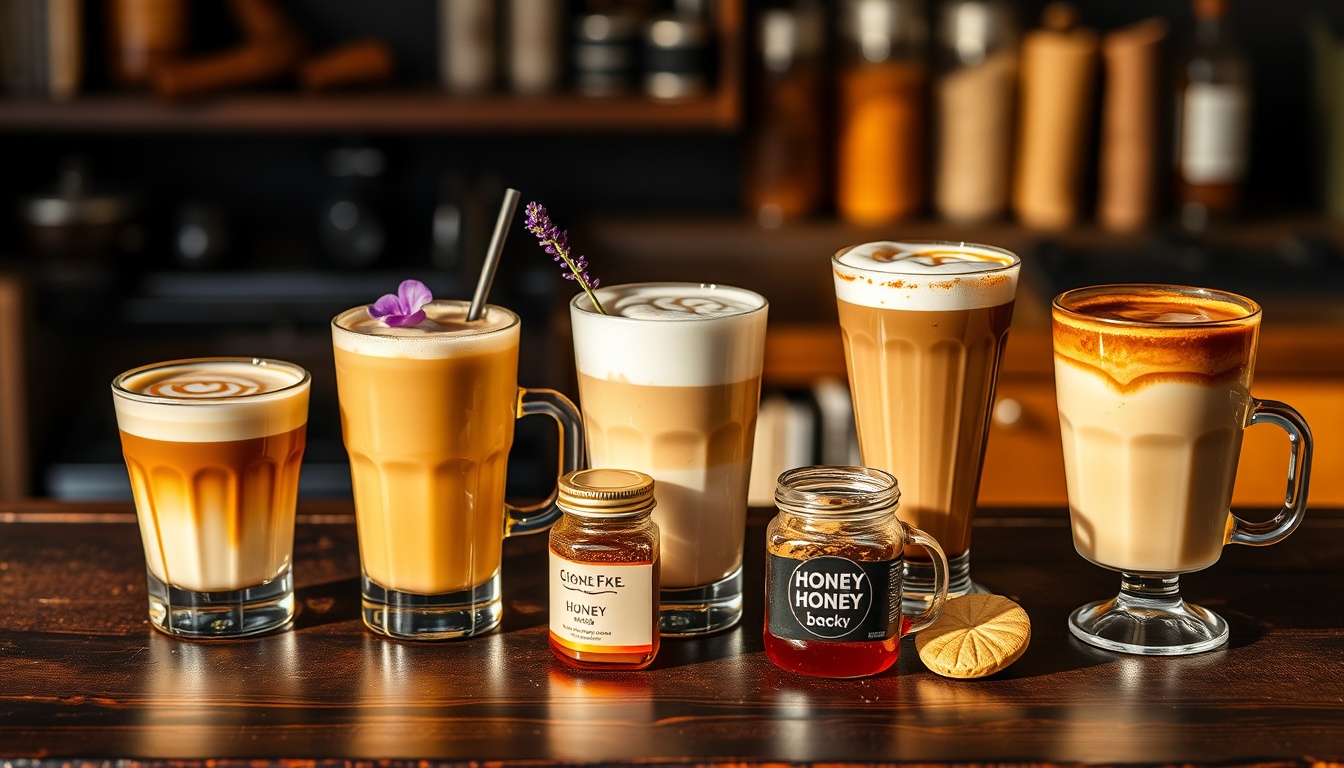
- Lattes and milk drinks — Creamed honey or whipped honey dissolves more easily and blends well with milk. Cinnamon-infused honey is excellent in a honey latte
Pro Tip
Start with clover honey if you are new to honey in coffee. It is affordable ($8-15), widely available, and mild enough to work with any roast level. Once you find your preference, branch out to single-origin or varietal honeys.

Get the Honey Buyer's Cheat Sheet (free PDF)
16 varieties on one page — color, flavor, best use and what a fair price looks like — from the 268 honeys we track.
How to Properly Add Honey to Coffee
The biggest complaint people have about honey in coffee is that it sinks to the bottom and does not dissolve. This happens because honey is much denser than water and its viscosity increases as it cools. The solution is simple: technique matters more than the honey itself.
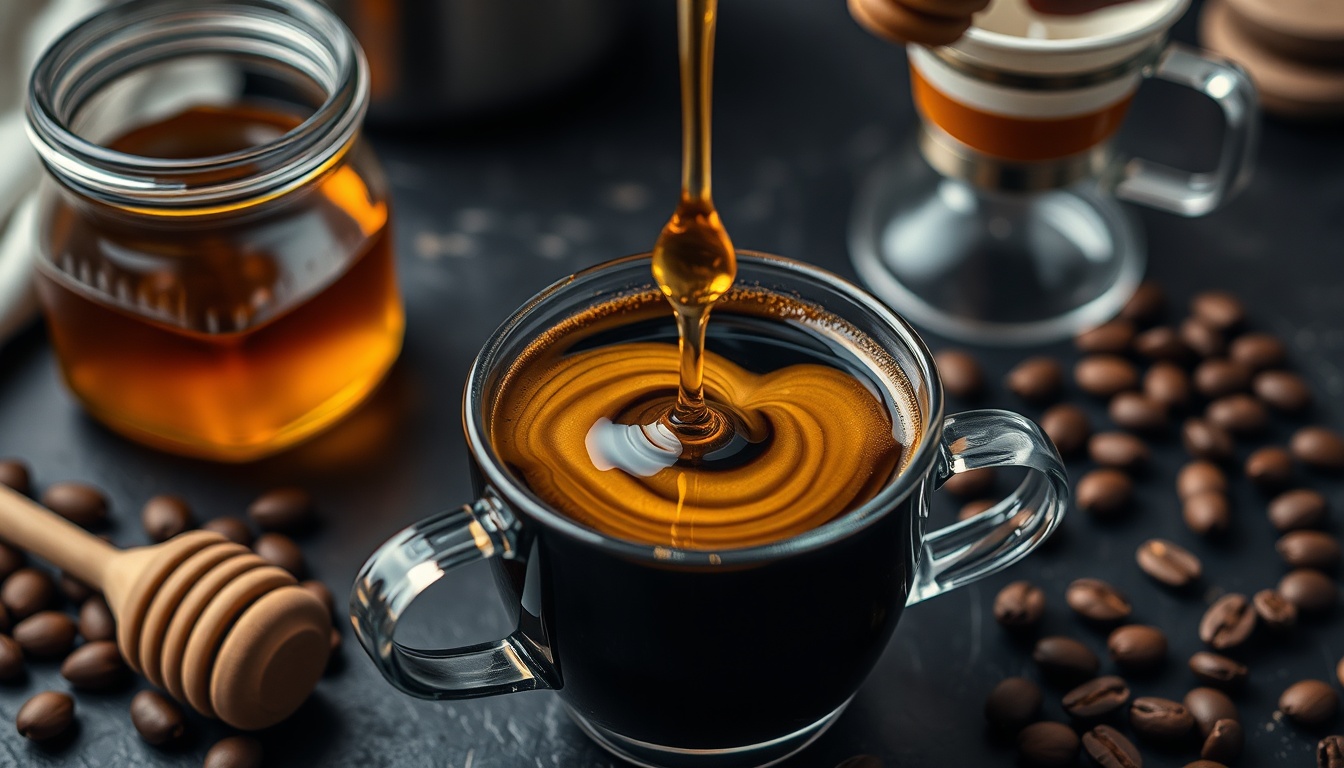
- Add honey to the empty mug first — Put 1-2 teaspoons of honey in your cup before pouring the coffee. The hot liquid melts and incorporates the honey as it fills the mug
- Stir immediately and thoroughly — Give it 15-20 seconds of vigorous stirring right after pouring. A small whisk works better than a spoon
- Use slightly cooled coffee (not boiling) — Ideal temperature is 140-160°F (60-70°C). This dissolves the honey easily while preserving more of its beneficial enzymes. If you care about the enzymatic benefits, let your coffee cool for 2-3 minutes before adding honey
- For iced coffee, make a honey syrup — Mix equal parts honey and warm water, stir until dissolved, and keep in a jar in the fridge. This "liquid honey" mixes into cold drinks instantly
- Use less than you think — Honey is 25-50% sweeter than sugar by volume. Start with 1 teaspoon where you would use 1.5-2 teaspoons of sugar, then adjust to taste
Honey vs Sugar in Coffee: A Nutritional Comparison
Let us be honest: honey is still a sweetener, and it still adds calories and sugar to your coffee. But the comparison with white sugar is not as simple as "both are just sugar." There are real nutritional differences worth understanding.
One teaspoon of honey contains about 21 calories and 6 grams of sugar, compared to 16 calories and 4 grams of sugar in a teaspoon of white sugar. But because honey is sweeter, you use less — most people need only two-thirds the amount of honey to achieve the same sweetness. That makes the calorie difference negligible in practice.
The real advantage of honey over sugar is what comes alongside the sweetness. Raw honey contains small amounts of vitamins B2, B3, B5, and B6, along with minerals like iron, manganese, potassium, and zinc. It also provides antioxidants (flavonoids and phenolic acids) and enzymes like glucose oxidase and diastase that white sugar completely lacks.
Honey's glycemic index varies by variety: acacia honey has a low GI of ~32, well below white sugar (GI 65), while common clover honey averages approximately 69 (Ischayek & Kern 2006), slightly above white sugar. Tupelo honey GI ~45 and sage honey GI ~48 fall in between. For people managing blood sugar, the variety you choose makes a significant difference.
Health Benefits of Honey in Coffee
Beyond basic nutrition, adding honey to coffee creates an interesting functional combination. Coffee and honey each have well-documented health properties, and some of these complement each other.
- Antioxidant stacking — Both coffee and honey are rich in antioxidants, but different kinds. Coffee provides chlorogenic acids; honey provides flavonoids and phenolic compounds. Together, you get a broader spectrum of antioxidant protection
- Sore throat and cough relief — The classic honey-and-warm-liquid combination soothes irritated throats. Coffee's warmth and honey's demulcent properties make this a functional morning drink when you are fighting a cold
- Sustained energy without crashes — Coffee provides caffeine stimulation; honey provides glucose and fructose in a balanced ratio. Some athletes and biohackers report smoother energy curves compared to coffee with sugar
- Prebiotic potential — Raw honey contains oligosaccharides that may support gut bacteria. While the amount in a teaspoon is small, it is a marginal benefit that sugar does not offer
- Reduced inflammation — Both coffee (in moderate amounts) and honey have anti-inflammatory properties in clinical research. Replacing processed sugar with honey removes a pro-inflammatory ingredient from your daily routine
Common Mistakes to Avoid
Switching from sugar to honey in coffee is easy, but a few common errors can ruin the experience or negate the benefits.
- Adding honey to boiling coffee — Temperatures above 185°F (85°C) destroy most of the enzymes and some antioxidants in raw honey. Wait a couple of minutes after brewing
- Using too much honey — Honey's flavor is more complex than sugar, so over-sweetening creates an unpleasant, cloying taste. Start small and work up
- Expecting honey to taste invisible — Unlike sugar, honey has flavor. That is the point. If you want sweetness without flavor, honey in coffee might not be for you
- Buying ultra-processed honey — Mass-market honey that has been heated and ultra-filtered has lost most of its beneficial compounds. Use raw, minimally processed honey for the best health benefits and flavor
- Ignoring the drip on the jar — Honey dripping down the outside of the jar and into your coffee area creates sticky messes. Use a honey dipper or squeeze bottle for clean dispensing
Honey Coffee Recipes to Try
Once you have mastered basic honey-in-coffee technique, try these popular variations that showcase what honey can do for your cup.
- Honey cinnamon latte — Dissolve 2 tsp clover honey and a pinch of cinnamon in a shot of espresso, then add steamed milk. The cinnamon amplifies the honey's warmth
- Iced honey lavender cold brew — Mix 1 tbsp lavender honey with 1 tbsp warm water. Pour over ice, add cold brew, top with oat milk
- Honey vanilla flat white — Stir 1 tsp vanilla-infused honey into a double espresso, add micro-foamed milk. The vanilla and honey create a naturally sweet, dessert-like drink
- Buckwheat honey mocha — Combine 1 tsp buckwheat honey with 1 tsp cocoa powder in a mug. Add hot espresso, stir, top with steamed milk. The buckwheat honey's molasses notes pair perfectly with chocolate
- Honey ginger Americano — Steep a coin of fresh ginger in hot water for 3 minutes, remove, add 1 tsp raw wildflower honey, then pour in a shot of espresso. Excellent for mornings when you feel a cold coming on
Pro Tip
When making honey coffee drinks for guests, always ask about allergies first. Honey can cause allergic reactions in people sensitive to bee products, and it must never be given to children under 12 months old.
Honey in Coffee and Long-Term Health
The daily habit of honey in coffee compounds over time. Both coffee and raw honey independently reduce systemic inflammation — coffee through chlorogenic acids and honey through polyphenols that inhibit the NF-κB pathway. A 2022 meta-analysis found that raw honey consumption significantly reduced C-reactive protein, a key inflammation marker linked to heart disease and metabolic syndrome. Paired with coffee's documented cardiovascular benefits, this makes honey coffee a functional daily drink.
For those tracking nutritional intake, a teaspoon of raw honey adds roughly 64 calories but also delivers measurable antioxidants, trace minerals (potassium, iron, zinc), and prebiotic oligosaccharides that refined sugar completely lacks. Adding cinnamon to your honey coffee further amplifies the blood-sugar-stabilizing effect — cinnamon improves insulin sensitivity while honey provides fructose that is metabolized more slowly than glucose. Understanding the different types of honey available helps you choose varieties that complement specific roast profiles while maximizing nutritional benefits.
The Bottom Line: Is Honey in Coffee Worth It?
If you drink coffee daily and currently use sugar, switching to honey is one of the easiest upgrades you can make. You get more flavor complexity, a modest nutritional advantage, and the satisfaction of replacing a highly processed ingredient with a minimally processed one.
The health benefits of honey in coffee are real but modest — this is not a miracle health hack. The biggest practical benefit is flavor. A good varietal honey transforms a mediocre cup of coffee into something genuinely interesting. Once you experience a light-roast Ethiopian pour-over sweetened with orange blossom honey, or a dark Italian espresso with a touch of chestnut honey, plain sugar starts to feel one-dimensional.
Start with a jar of quality raw honey and your usual coffee. Experiment with amounts, timing, and varieties. (If tea is more your thing, see our best honey for tea pairing guide.) Within a week, most people find their preferred combination — and many never go back to sugar.