Why Does Honey Come in So Many Different Colors?
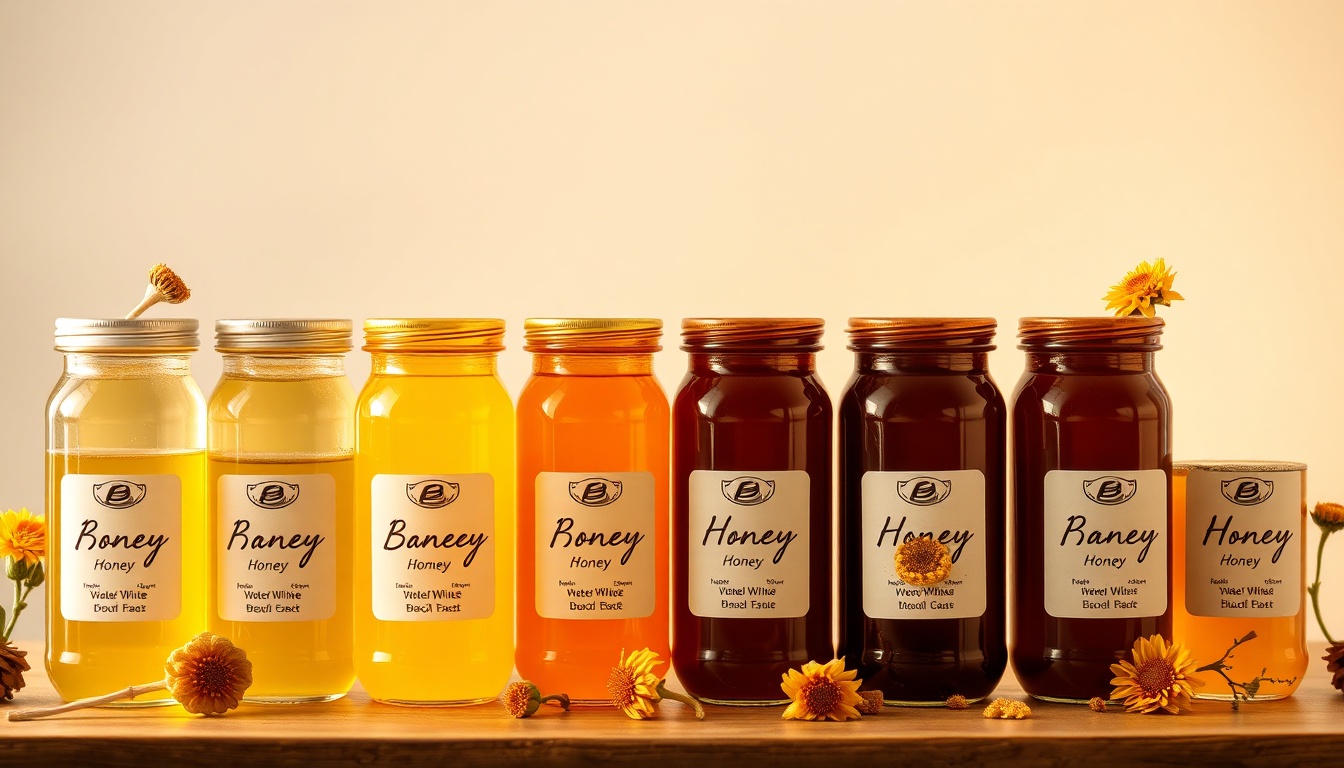
Walk down any honey aisle and you will see colors ranging from nearly transparent to almost black. This is not a difference in quality or processing — it is a direct result of the flowers bees visited. Every floral source produces nectar with a distinct chemical profile, and those chemicals determine the color, flavor, and nutritional content of the finished honey.
The USDA classifies honey into seven color grades using an optical tool called a Pfund scale: water white, extra white, white, extra light amber, light amber, amber, and dark amber. Understanding what these colors mean helps you choose the right honey for your needs, whether that is a delicate drizzle for yogurt or a powerhouse for natural remedies.
What Makes Honey Dark or Light?
Honey color is primarily determined by three factors: the floral source of the nectar, the mineral content, and the age of the honey.
Floral source is the biggest factor. Nectar from clover, acacia, and alfalfa produces pale, mild honeys. Nectar from buckwheat, chestnut, avocado, and forest honeydew produces dark, intensely flavored honeys. The plant pigments, polyphenols, and minerals in the nectar carry through into the final product.
Mineral content directly correlates with color. Dark honeys contain significantly more iron, potassium, manganese, and other trace minerals than light honeys. A 2018 study in the Journal of Food Composition and Analysis found that dark honeys had 3-5 times higher mineral content on average.
Age and storage also play a role. All honey darkens over time through a process called the Maillard reaction — the same chemistry that browns bread and caramelizes sugar. Heat exposure accelerates this. A light honey stored in a warm garage for two years will be noticeably darker than the same honey stored in a cool pantry.
Get the Honey Buyer's Cheat Sheet (free PDF)
16 varieties on one page — color, flavor, best use and what a fair price looks like — from the 268 honeys we track.
The Antioxidant Advantage of Dark Honey
The most significant health difference between dark and light honey is antioxidant content. Multiple peer-reviewed studies have confirmed that dark honeys consistently contain higher levels of phenolic compounds and flavonoids — the antioxidants responsible for fighting oxidative stress.
A landmark 2004 study in the Journal of Agricultural and Food Chemistry found that the antioxidant capacity of honey correlates directly with color: buckwheat honey (ORAC 16,000+, $15-25) had 8-9 times the antioxidant activity of acacia honey ($12-20). The researchers tested 19 honey samples and found that the Pfund color reading predicted antioxidant content almost perfectly.
A University of Illinois study showed that substituting dark honey for processed sugar in the diet increased blood antioxidant levels, while light honey produced a smaller (but still measurable) increase. Both outperformed sugar and corn syrup.
Pro Tip
If antioxidants are your priority, reach for the darkest honey you can find. Buckwheat, manuka, chestnut, and avocado honey top the charts.
Flavor Profiles: Light vs Dark
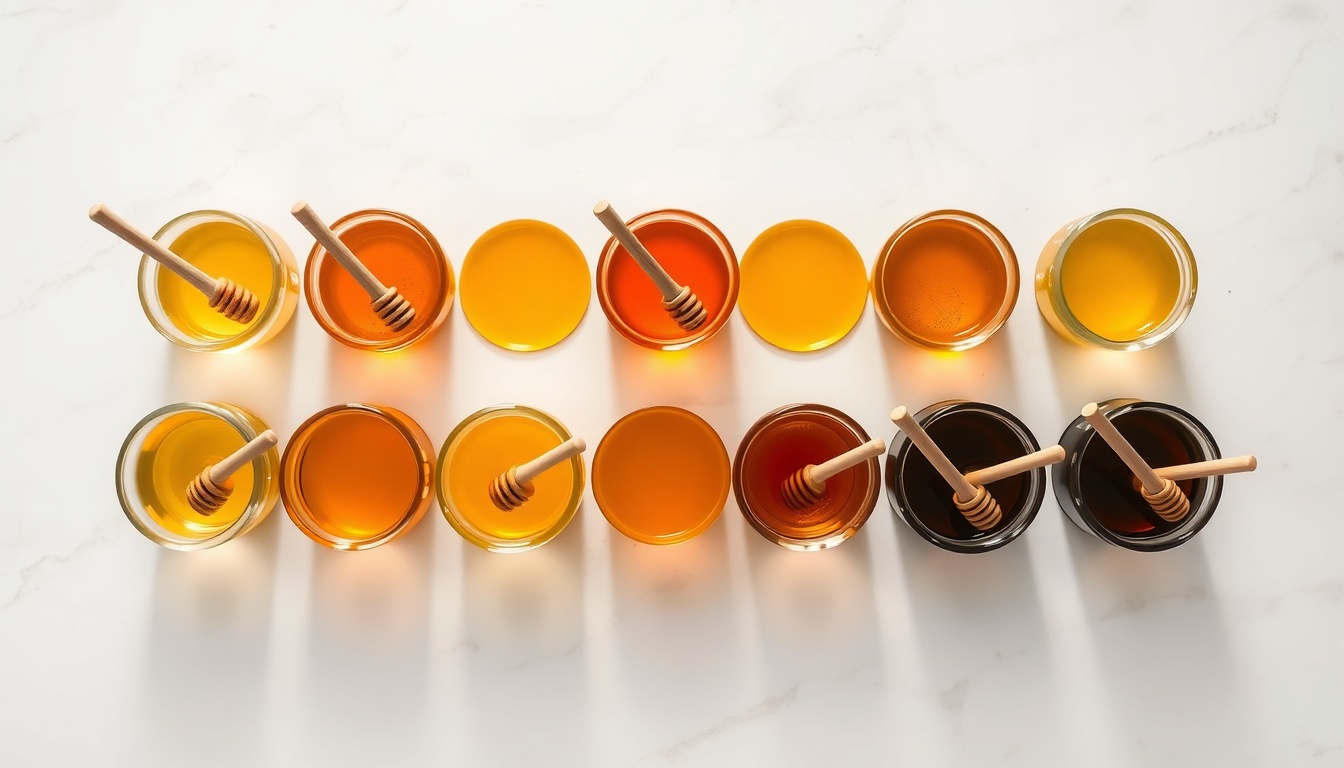
Color is a reliable predictor of flavor intensity. Light honeys tend to be mild, floral, and sweet with delicate notes. Dark honeys are bold, complex, and often carry earthy, malty, or molasses-like undertones.
- Water white to extra light amber (acacia $12-20, clover $8-15, orange blossom $12-20): Mild sweetness, floral aroma, clean finish. Best for tea, yogurt, salad dressings, and anywhere you want sweetness without strong honey flavor
- Light amber to amber (wildflower $10-18, sage $15-25, tupelo $25-45): Moderate honey flavor with balanced sweetness. Versatile all-purpose honeys for cooking, baking, and everyday use
- Dark amber to nearly black (buckwheat $15-25, chestnut $20-35, avocado, forest honeydew): Strong, assertive flavor with notes of molasses, caramel, or malt. Best for marinades, BBQ sauces, hearty baking, cheese boards, and medicinal use
Nutritional Comparison: Dark vs Light Honey
Calorie and sugar content is virtually identical between dark and light honey — about 60 calories and 17 grams of sugar per tablespoon. The differences are in micronutrients and bioactive compounds.
- Antioxidants: Dark honey has 3-9 times more phenolic compounds and flavonoids than light honey
- Minerals: Dark honey averages 3-5 times more iron, potassium, manganese, copper, and zinc
- Vitamins: Slightly more B vitamins in dark honey, though both are minor dietary sources
- Antibacterial activity: Dark honeys generally show stronger antibacterial properties in lab studies
- Prebiotic oligosaccharides: Both types contain similar levels of fructooligosaccharides that support gut health
- Enzymes: Both raw dark and raw light honeys contain similar levels of beneficial enzymes (diastase, invertase, glucose oxidase), as long as neither has been heat-processed
Best Uses for Light Honey
Light honey shines in situations where you want sweetness without overpowering other flavors. Its neutral profile makes it the most versatile category for everyday use.
- Sweetening tea and coffee — dissolves cleanly without changing the drink's character
- Drizzling over yogurt, oatmeal, or fresh fruit
- Salad dressings and light vinaigrettes
- Delicate baked goods like madeleines, angel food cake, or honey cookies
- Face masks and skincare — milder honeys are gentler on sensitive skin
- Feeding to children (over 1 year) who are new to honey — the mild flavor is more appealing
Best Uses for Dark Honey
Dark honey is your go-to when you want honey to be the star of the dish, or when you are using honey for its health benefits.
- Marinades, glazes, and BBQ sauces — the bold flavor holds up to strong spices and grilled meats
- Hearty baking like gingerbread, pumpernickel, and whole-grain breads
- Cheese and charcuterie boards — pairs beautifully with sharp cheeses like aged cheddar, Manchego, and blue cheese
- Sore throat and cough relief — buckwheat honey outperformed dextromethorphan in a Penn State study
- Traditional cough remedy for children over 1 year — ask your pediatrician about appropriate use
- Stirring into strong black tea, coffee, or warm milk before bed
- Fermentation projects like mead — dark honey produces complex, flavorful meads
Common Dark and Light Honey Varieties
Here is a quick reference for where popular honey varieties fall on the color spectrum.
- Lightest: Acacia, white clover, fireweed, locust, cotton
- Light-medium: Orange blossom, sage, tupelo, alfalfa, star thistle
- Medium: Wildflower (varies), linden, raspberry, blueberry
- Medium-dark: Manuka, sourwood, palmetto, goldenrod, sunflower
- Darkest: Buckwheat, chestnut, avocado, forest honeydew, sidr, meadow honey
Pro Tip
Wildflower honey is the chameleon — its color depends entirely on the local flowers. Spring wildflower tends to be lighter; fall wildflower is usually darker because it contains goldenrod and aster nectar.
Does Dark Honey Mean Higher Quality?
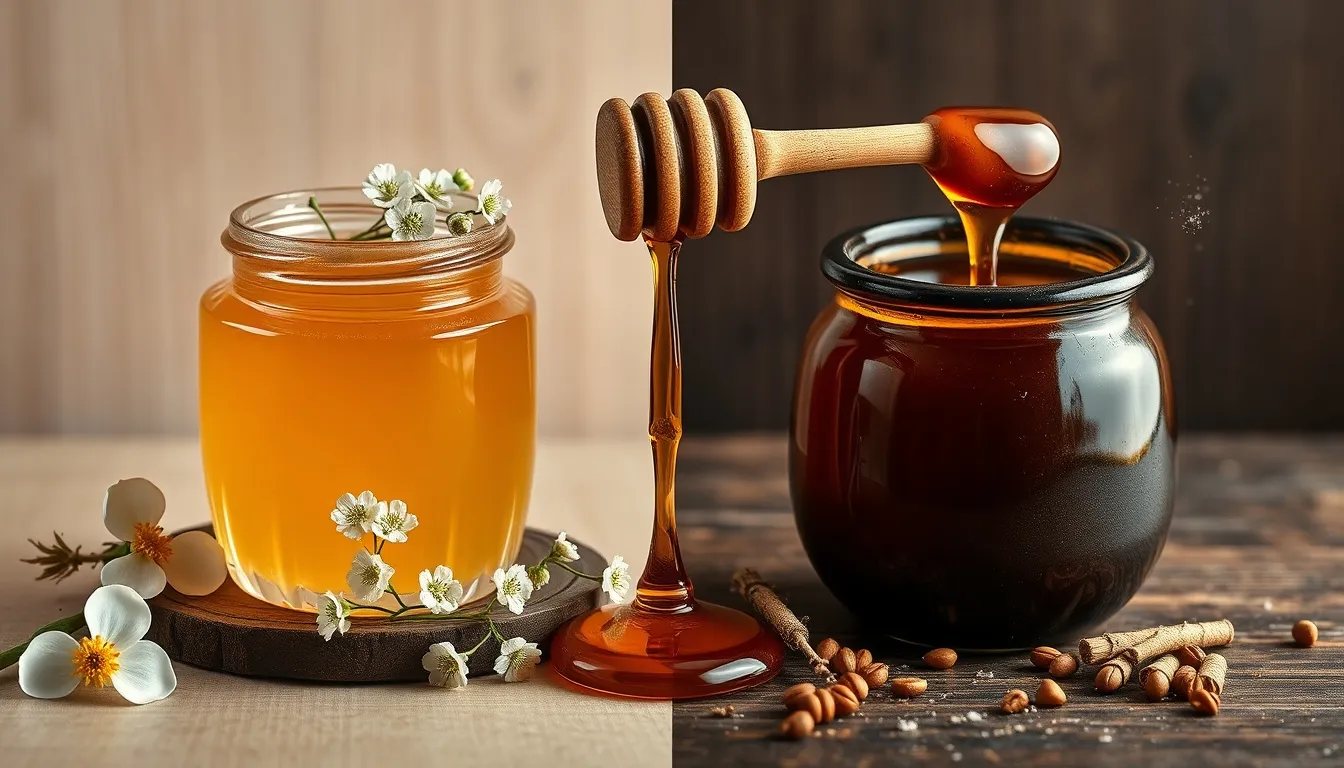
No. Color is not a quality indicator. A perfectly pure, raw acacia honey is just as high-quality as a dark buckwheat honey — they are simply different products with different strengths.
Quality in honey is about authenticity (no adulteration), processing (raw and unfiltered is best), freshness, and proper storage. You can find excellent and terrible honey in every color category. A cheap, ultra-filtered, imported dark honey is far lower quality than a fresh, raw, local light honey from a trusted beekeeper.
The best approach is to keep both light and dark honeys in your kitchen and use them for their respective strengths. Many honey enthusiasts maintain a light acacia or clover for everyday sweetening and a dark buckwheat or manuka for cooking and health applications.
Dark Honeys and Specific Health Applications
Recent research has highlighted dark honeys for specific health applications where their higher antioxidant and mineral content makes a measurable difference. A 2022 meta-analysis of 18 randomized controlled trials looked at honey and cardiometabolic markers (fasting glucose and blood lipids); it did not measure systemic inflammation and did not rank varieties, so it does not show that darker honeys do more. Lab studies find buckwheat and manuka honey rich in polyphenols, which is a difference in composition, not a proven health effect.
Dark honeys' higher potassium content is also relevant for cardiovascular health and blood pressure. Potassium helps counterbalance sodium's effect on blood vessels, and dark honeys can contain 3-5 times more potassium per tablespoon than light varieties. For those interested in honey's therapeutic applications, wound healing research has similarly favored darker, high-activity honeys like manuka (UMF 15+) for clinical use. Heather honey ($30-50) and chestnut honey ($20-35) are also notable dark honeys with exceptional phenolic profiles.