Buckwheat Honey Benefits: Antioxidants, Cough Relief & Dark Honey Guide
Evidence-based guide to buckwheat honey — why this dark, robust honey has 8-20x more antioxidants than lighter varieties, its documented cough-suppressing effects (Penn State 2007), cardiovascular benefits, athletic performance uses, and how to choose quality buckwheat honey.
Last updated:
Buckwheat honey is one of the most antioxidant-rich foods in nature, with ORAC values exceeding 16,000 μmol TE/100g — 8-20x higher than lighter honeys like clover or acacia. A 2007 Penn State study showed it outperformed the common cough suppressant dextromethorphan for nighttime cough relief in children. Its high polyphenol content (100-200 mg GAE/100g) protects cardiovascular health by inhibiting LDL oxidation, and athletes value it for both fuel and recovery. The bold, malty flavor pairs well with strong cheeses, dark breads, and barbecue. Look for raw, unfiltered buckwheat honey from northern US or Canadian sources — expect to pay $8-15 per pound.


What Makes Buckwheat Honey Different from Other Honeys?
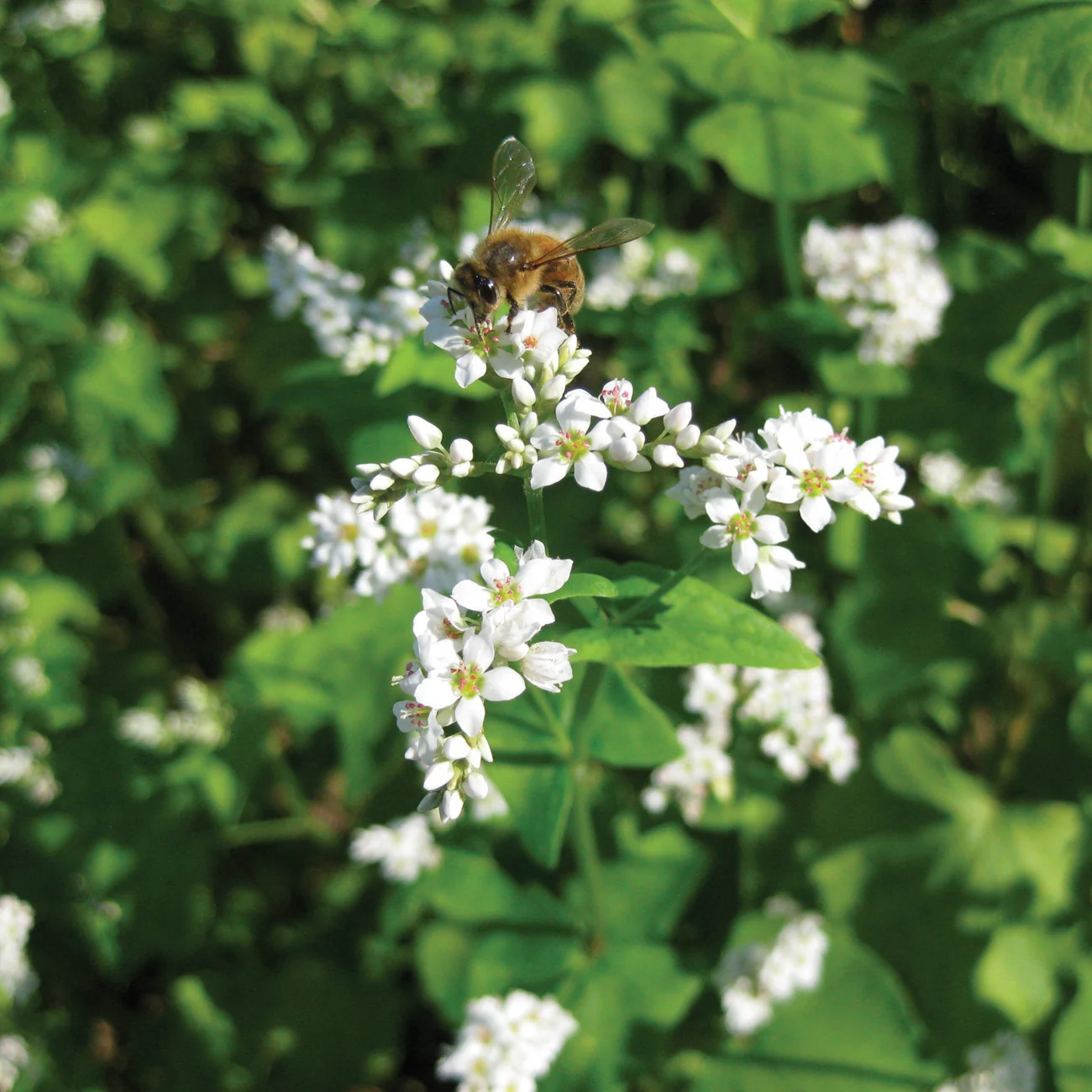
Buckwheat honey is a dark, robust monofloral honey produced by bees foraging on buckwheat (Fagopyrum esculentum) blossoms. Despite its name, buckwheat is not a cereal grain — it's a pseudocereal related to rhubarb and sorrel, which explains the honey's distinctly malty, molasses-like flavor with earthy undertones that set it apart from milder varieties like [clover honey](/honey/clover-honey) or [acacia honey](/honey/acacia-honey). The dark color — ranging from deep amber to nearly black — is not cosmetic; it directly reflects the honey's exceptional concentration of phenolic compounds and antioxidants. A landmark 2002 study by Gheldof and Engeseth published in the Journal of Agricultural and Food Chemistry found that buckwheat honey contained 8-20x the antioxidant activity of lighter-colored honeys like [clover honey](/honey/clover-honey), with an ORAC (Oxygen Radical Absorbance Capacity) value exceeding 16,000 μmol TE/100g — comparable to many fruits and vegetables. Buckwheat is primarily grown in the northern United States (New York, Pennsylvania, Ohio, Minnesota), Canada, Russia, and China. The honey has a short harvest window of about 3-4 weeks in late summer (August-September) when buckwheat blooms, making it relatively seasonal. Its bold flavor polarizes tasters — those who appreciate malt, dark chocolate, and earthy flavors tend to love it, while those expecting the light sweetness of [clover honey](/honey/clover-honey) may find it overwhelming. Buckwheat honey is also notably higher in minerals than lighter varieties: it contains measurable amounts of iron, manganese, copper, and zinc, all of which contribute to its color and health profile.
Key Takeaways
- Dark amber to nearly black color — directly reflects high phenolic and antioxidant content
- ORAC value exceeding 16,000 μmol TE/100g — 8-20x the antioxidant activity of lighter honeys (Gheldof & Engeseth, 2002)
- Buckwheat is a pseudocereal related to rhubarb, not a true grain — naturally gluten-free
- Bold malty, molasses-like flavor with earthy notes — distinct from mild clover or acacia
- Short harvest window of 3-4 weeks in late summer (August-September)
- Higher mineral content than lighter honeys — measurable iron, manganese, copper, and zinc
What Are the Evidence-Based Health Benefits of Buckwheat Honey?
Buckwheat honey's health benefits are among the most well-researched of any honey variety, largely due to its exceptional antioxidant profile. The 2002 Journal of Agricultural and Food Chemistry study demonstrated that consuming buckwheat honey (1.5g/kg body weight) significantly increased plasma antioxidant capacity in healthy adults — the first human trial to show honey could measurably boost blood antioxidant levels. A 2007 study published in Archives of Pediatrics & Adolescent Medicine by Dr. Ian Paul at Penn State found that a single dose of buckwheat honey before bedtime was significantly more effective than dextromethorphan (DM) — the active ingredient in most OTC cough suppressants — at reducing nocturnal cough frequency and severity in children aged 2–18. The study enrolled 105 children and found buckwheat honey outperformed both DM and no treatment. Buckwheat honey's cardiovascular benefits stem from its high concentration of polyphenols, which inhibit LDL oxidation — the process that turns cholesterol into artery-clogging plaque. A 2022 Nutrition Reviews meta-analysis of 18 clinical trials found that raw, monofloral honeys (including dark varieties like buckwheat) were most effective at reducing total cholesterol (−7.7 mg/dL), LDL (−5.5 mg/dL), and triglycerides (−11.5 mg/dL). The honey's anti-inflammatory properties are also notable: its phenolic acids (gallic acid, caffeic acid, p-coumaric acid) and flavonoids (rutin, quercetin, galangin) modulate inflammatory pathways including NF-κB and COX-2, which are implicated in chronic diseases from arthritis to cardiovascular disease.
Key Takeaways
- Human trial showed buckwheat honey significantly increased plasma antioxidant capacity (2002, JAFC)
- 2007 Penn State study: buckwheat honey outperformed dextromethorphan (DM) for nighttime cough in children
- A 2007 Penn State study found it outperformed dextromethorphan for nighttime cough in children over 12 months
- High polyphenols inhibit LDL oxidation — protects against arterial plaque formation
- Dark monofloral honeys most effective at reducing cholesterol and triglycerides per 2022 meta-analysis
- Anti-inflammatory phenolic acids (gallic, caffeic, p-coumaric) modulate NF-κB and COX-2 pathways
How Does Buckwheat Honey Compare to Other Honeys Nutritionally?
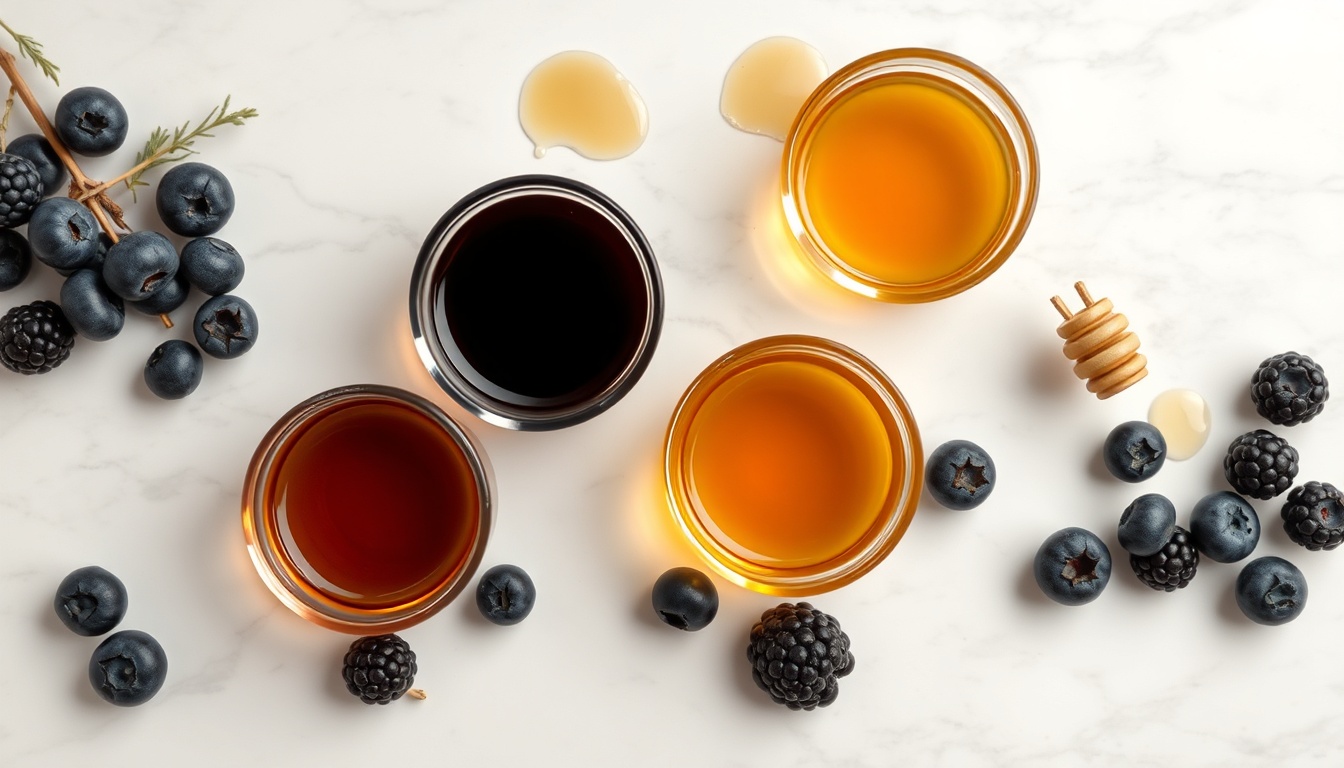
While all honeys share a similar macronutrient profile (roughly 80% sugars, 17% water, 3% other compounds), buckwheat honey stands apart in its micronutrient and bioactive compound concentrations. Per 100g, buckwheat honey provides approximately 304 calories, 82g carbohydrates, and 0.3g protein — similar to other honeys. However, its mineral content is notably higher: iron at 0.5-1.0 mg/100g (vs 0.1-0.4 for lighter honeys), potassium at 200-350 mg/100g, manganese at 0.3-0.6 mg/100g, and zinc at 0.3-0.8 mg/100g. Its total phenolic content ranges from 100-200 mg gallic acid equivalents (GAE) per 100g — versus 20-50 mg GAE/100g for [clover honey](/honey/clover-honey). Rutin, a flavonoid glycoside named after the rue plant, is particularly abundant in buckwheat honey and has been studied for its vasoprotective, anti-inflammatory, and antiplatelet properties. Compared to [Manuka honey](/honey/new-zealand-manuka-umf-15), buckwheat honey has higher antioxidant capacity but lacks the unique methylglyoxal (MGO) antibacterial compound that gives Manuka its wound-healing reputation. Compared to [acacia honey](/honey/acacia-honey), buckwheat has roughly 10x the phenolic content but a higher measured glycemic index (~73-83 per Arcot & Brand-Miller 2005) — higher than lighter honeys like [clover honey](/honey/clover-honey) (~69) despite being fructose-dominant (F/G ~1.11, White 1975). Buckwheat's unique oligosaccharide fraction and total sugar profile drive its elevated glycemic response, not its glucose content. Its fructose-dominant ratio does explain why it crystallizes more slowly than many other varieties. For comparison: buckwheat honey's ORAC exceeds 16,000 μmol TE/100g, while [clover honey](/honey/clover-honey) typically scores 1,000-3,000 and [Manuka honey](/honey/new-zealand-manuka-umf-15) ranges from 5,000-12,000.
Key Takeaways
- Total phenolics: 100-200 mg GAE/100g — 4-10x higher than [clover honey](/honey/clover-honey) (20-50 mg GAE/100g)
- ORAC scores: buckwheat 16,000+ vs [Manuka honey](/honey/new-zealand-manuka-umf-15) 5,000-12,000 vs [wildflower honey](/honey/wildflower-honey) 2,000-5,000 vs [clover honey](/honey/clover-honey) 1,000-3,000 μmol TE/100g
- Higher mineral content: iron 0.5-1.0 mg, potassium 200-350 mg, zinc 0.3-0.8 mg per 100g
- Rich in rutin — a flavonoid with vasoprotective, anti-inflammatory, and antiplatelet properties
- GI approximately 73-83 (Arcot & Brand-Miller 2005) — fructose-dominant (F/G ~1.11) yet higher GI than lighter honeys due to buckwheat's unique oligosaccharide fraction
- Crystallizes more slowly than most honeys thanks to its sugar composition
What Are the Best Ways to Use Buckwheat Honey for Athletic Performance?
Buckwheat honey has gained a following among athletes and fitness enthusiasts for combining natural fuel with recovery-supporting antioxidants. A 2004 study by Dr. Richard Kreider at Baylor University published in the Journal of Strength and Conditioning Research found that honey was as effective as commercial glucose gels for maintaining blood sugar and improving cycling time-trial performance. While that study used general honey blends, buckwheat honey offers an advantage over lighter varieties for recovery due to its exceptional antioxidant load — exercise generates reactive oxygen species (ROS) that cause oxidative stress, muscle damage, and delayed-onset muscle soreness (DOMS). The polyphenols in buckwheat honey (quercetin, rutin, gallic acid) are potent ROS scavengers that may help mitigate this exercise-induced oxidative damage. For pre-workout fueling, take 1-2 tablespoons (21-42g) of buckwheat honey 15-30 minutes before exercise to top off glycogen stores — each tablespoon provides approximately 17g of easily digestible carbohydrates with a moderate glycemic index. During endurance activities exceeding 60 minutes, 1 tablespoon every 30-45 minutes can replace commercial gels. Post-workout, combine 2 tablespoons of buckwheat honey with 20-30g of protein (whey shake, Greek yogurt, or milk) within 30 minutes of exercise — the 2:1 to 3:1 carb-to-protein ratio accelerates glycogen replenishment and muscle protein synthesis. A popular athlete recovery drink: 2 tablespoons buckwheat honey + 8oz whole milk + pinch of sea salt for electrolytes. The bold malty flavor of buckwheat honey pairs particularly well with chocolate protein shakes and banana smoothies.
Key Takeaways
- Natural sports fuel: 17g carbs per tablespoon with moderate-high GI (~73-83) — rapid energy release matches commercial glucose gels in performance
- Superior for recovery: ORAC 16,000+ helps scavenge exercise-induced reactive oxygen species (ROS)
- Pre-workout: 1-2 tbsp 15-30 min before exercise to top off glycogen stores
- During endurance: 1 tbsp every 30-45 min replaces commercial energy gels
- Post-workout: combine 2 tbsp with 20-30g protein for optimal glycogen replenishment
- Bold malty flavor pairs well with chocolate protein shakes and banana smoothies

How Is Buckwheat Honey Used for Coughs, Wounds, and Skin Care?
Beyond general antioxidant protection, buckwheat honey has been studied for a few specific uses. For cough relief, the 2007 Penn State study established buckwheat honey as the gold standard among honeys for suppressing nighttime cough — its thick, viscous consistency coats the throat more effectively than thinner honeys, and its high phenolic content provides additional anti-inflammatory and demulcent effects. Honey should never be given to children under 12 months old due to botulism risk; talk to a pediatrician about appropriate use for older children. For wound care, while Manuka honey dominates the medical literature due to its unique MGO content, buckwheat honey's high antioxidant and anti-inflammatory properties have drawn research interest for minor wound management. A 2010 review in the journal Wounds noted that dark honeys with high phenolic content accelerate wound healing through multiple mechanisms: osmotic dehydration of bacteria, acidic pH (3.2-4.5) creating an inhospitable environment for pathogens, hydrogen peroxide generation via glucose oxidase, and anti-inflammatory modulation that reduces edema. For skincare, buckwheat honey's antioxidant concentration makes it particularly effective in face masks — the polyphenols help neutralize free radicals that contribute to skin aging, while its natural humectant properties draw moisture into the skin. A simple buckwheat honey face mask: apply a thin layer of raw buckwheat honey to clean skin, leave for 15-20 minutes, rinse with warm water. The darker color will rinse away completely. Note that buckwheat honey's strong flavor is irrelevant for topical use — the skin absorbs the beneficial compounds regardless of taste.
Key Takeaways
- Gold standard for cough suppression — Penn State study specifically used buckwheat honey in its protocol
- Never give honey to children under 12 months old — talk to a pediatrician about appropriate use for older kids
- Wound healing via osmotic dehydration, acidic pH 3.2-4.5, hydrogen peroxide generation, and anti-inflammatory action
- High phenolic content accelerates tissue repair — viable option for minor wound care
- Effective face mask: polyphenols neutralize free radicals while humectant properties hydrate skin
- Dark color rinses away completely — flavor is irrelevant for topical applications
What Are the Safety Precautions for Buckwheat Honey?
Buckwheat honey shares the same general safety considerations as other honeys, with a few variety-specific notes. Never give buckwheat honey (or any honey) to infants under 12 months — the risk of infant botulism from Clostridium botulinum spores is the same regardless of honey color or variety. While cases are rare (fewer than 200 per year in the US), infant botulism can be life-threatening. After 12 months, the gut microbiome is mature enough to handle spores safely. Calorie awareness: like all honeys, buckwheat honey contains approximately 64 calories per tablespoon. Consuming 2-3 tablespoons daily adds 128-192 calories — factor this into your total intake if managing weight. Buckwheat honey has a relatively high measured glycemic index (~73-83 per Arcot & Brand-Miller 2005) — higher than lighter honeys like clover (~69). People with diabetes should talk to their doctor about how honey fits their diet. A variety-specific consideration: buckwheat is a common allergen in parts of Asia and, less commonly, in North America. People with known buckwheat allergy may potentially react to buckwheat honey — although pollen-mediated reactions to honey are rare, they have been documented in case reports. If you have a buckwheat allergy, try a very small amount first or consult an allergist. Buckwheat honey's dark color can stain light fabrics and surfaces — keep this in mind during cooking and face mask applications. When purchasing buckwheat honey, look for raw, unfiltered varieties from reputable sources — "buckwheat honey" blends may contain only a small percentage of actual buckwheat honey mixed with cheaper varieties. Learning to identify authentic buckwheat honey ensures you get the therapeutic antioxidant benefits you're seeking. True Source Certification and single-origin labeling are good quality indicators. Store at room temperature in a sealed container away from direct sunlight — buckwheat honey crystallizes more slowly than most varieties but will eventually granulate, which is natural and doesn't affect quality.
Key Takeaways
- Never give to infants under 12 months — botulism risk is the same regardless of honey color or variety
- Calorie awareness: 64 cal/tbsp — 2-3 tbsp daily adds 128-192 calories
- GI ~73-83 — higher than lighter honeys; people with diabetes should talk to their doctor about how it fits their diet
- Buckwheat allergy caution: people allergic to buckwheat may rarely react — try a small amount first
- Dark color can stain light fabrics — be careful during cooking and face mask applications
- Buy raw, unfiltered from reputable sources — some "buckwheat honey" blends contain cheaper filler honeys
Frequently Asked Questions
What is buckwheat honey good for?
Buckwheat honey is best known for its exceptional antioxidant content (ORAC 16,000+ — 8-20x higher than lighter honeys), documented cough relief (a 2007 Penn State RCT showed it outperformed dextromethorphan for nighttime cough in children), cardiovascular protection (polyphenols inhibit LDL oxidation), athletic recovery (high antioxidants help combat exercise-induced oxidative stress), and skincare (polyphenol-rich face masks). It's also higher in minerals like iron, manganese, and zinc than lighter varieties.
Why is buckwheat honey so dark?
Buckwheat honey's dark amber to nearly black color directly reflects its high concentration of phenolic compounds and antioxidants. A 2002 study in the Journal of Agricultural and Food Chemistry established that darker honeys contain significantly more antioxidants than lighter varieties. The color comes from polyphenols (gallic acid, caffeic acid, rutin, quercetin), flavonoids, and higher mineral content (iron, manganese, copper).
Is buckwheat honey better than Manuka honey?
They excel in different areas. Buckwheat honey has higher overall antioxidant capacity (ORAC 16,000+ vs [Manuka honey](/honey/new-zealand-manuka-umf-15)'s 5,000-12,000) and is the most clinically studied honey for cough relief — a 2007 Penn State study found it outperformed dextromethorphan in children. [Manuka honey](/honey/new-zealand-manuka-umf-15) has unique methylglyoxal (MGO) antibacterial activity that makes it superior for wound healing and skin infections. Buckwheat is also significantly more affordable ($8-15/lb vs $30-80+ for quality Manuka). Choose based on your primary health goal.
What does buckwheat honey taste like?
Buckwheat honey has a bold, malty flavor with notes of molasses, dark chocolate, and earthy undertones — very different from mild [clover honey](/honey/clover-honey) or [acacia honey](/honey/acacia-honey). It polarizes tasters: those who enjoy dark chocolate, stout beer, or robust flavors tend to love it, while those expecting light sweetness may find it overpowering. It pairs well with strong cheeses, dark bread, barbecue glazes, and chocolate-based recipes.
Is buckwheat honey good for coughs?
Yes — buckwheat honey is the most clinically studied honey for cough relief. A 2007 study at Penn State involving 105 children found that a single dose of buckwheat honey before bedtime was significantly more effective than dextromethorphan (the active ingredient in most OTC cough suppressants) at reducing nighttime cough frequency and severity. Ask your pediatrician about appropriate use for children over 12 months. While any honey can soothe cough, darker honeys like buckwheat and [wildflower honey](/honey/wildflower-honey) may be more effective than lighter varieties like [clover honey](/honey/clover-honey) due to higher antioxidant and phenolic content.
Does buckwheat honey have more antioxidants than regular honey?
Significantly more. A landmark 2002 study found buckwheat honey contains 8-20x the antioxidant activity of lighter honeys like [clover honey](/honey/clover-honey) or [acacia honey](/honey/acacia-honey). Its ORAC value exceeds 16,000 μmol TE/100g, compared to 1,000-3,000 for [clover honey](/honey/clover-honey) and 5,000-12,000 for [Manuka honey](/honey/new-zealand-manuka-umf-15). Its total phenolic content is 100-200 mg GAE/100g versus 20-50 for lighter honeys. The same study showed consuming buckwheat honey measurably increased plasma antioxidant capacity in healthy adults.
Which honey varieties should I choose for different health goals?
Choose based on your primary health goal: [Buckwheat honey](/honey/buckwheat-honey) for maximum antioxidants (ORAC 16,000+) and documented cough relief — ideal for immune support and recovery. [Manuka honey](/honey/new-zealand-manuka-umf-15) UMF 10+ for antibacterial activity and wound healing — best for skin infections and digestive issues. [Acacia honey](/honey/acacia-honey) for blood sugar management (GI ~32) — excellent for diabetics and weight control. [Clover honey](/honey/clover-honey) for everyday reliability and affordability — perfect for general sweetening and children. [Wildflower honey](/honey/wildflower-honey) for diverse botanical benefits at moderate cost — good all-purpose option with regional variety. [Tupelo honey](/honey/tupelo-honey) for premium flavor and crystallization resistance — ideal for culinary applications. Each variety offers unique therapeutic and culinary advantages.
Edited by Sam French · Raw Honey Guide Editorial Team
Source reviewed against primary literature and official guidance where available. Health content is educational, not medical advice, and does not replace a licensed clinician.
Get the Honey Buyer's Cheat Sheet (free PDF)
16 varieties on one page — color, flavor, best use and what a fair price looks like — from the 268 honeys we track.
Related Guides
Honey for Cardiovascular Health
Heart disease prevention, cholesterol reduction, and blood pressure support protocols.
Read GuideHeather Honey Guide
Scotland's thixotropic honey — unique gel-like texture, ORAC 18,000+, bold floral-earthy flavor, Scottish culinary tradition.
Read GuideChestnut Honey Guide
Bold dark Italian honey — 8–20× more antioxidants than clover, unique bitter-tannic flavor, cheese pairings.
Read GuideRelated Articles
Buckwheat Honey Benefits: Why This Dark Honey Is Worth Trying
Buckwheat honey has 3-9x more antioxidants than lighter honeys. Learn its benefits for coughs, heart health, and more.
Read ArticleChestnut Honey: Taste, Colour, Origins and Price
Chestnut honey is dark, tannic and slow to set. Compare Italian, French, Greek, Spanish and Turkish jars, typical catalog prices, and how to spot a blend.
Read ArticleHoney for Inflammation: What the Science Actually Shows
Can honey reduce inflammation? Clinical evidence on polyphenols, NF-kB inhibition, and which honey types work best.
Read ArticleReady to try buckwheat honey?