Why Honey Is Getting Serious Attention as an Anti-Inflammatory
Chronic low-grade inflammation is now recognized as a driver behind heart disease, type 2 diabetes, Alzheimer's, arthritis, and even some cancers. The World Health Organization estimates that chronic inflammatory diseases are the most significant cause of death worldwide, responsible for more than 50% of all deaths globally.
While anti-inflammatory drugs (NSAIDs like ibuprofen) work well short-term, long-term use carries risks including gastrointestinal bleeding, kidney damage, and cardiovascular complications. This has fueled interest in dietary anti-inflammatories — and raw honey has emerged as one of the most studied natural options.
Unlike many folk remedies, honey's anti-inflammatory properties have genuine scientific support. Over 200 peer-reviewed studies have examined honey's effects on inflammation markers, and the results are promising — though the picture is more nuanced than supplement marketers suggest. Here's what the evidence actually shows.
The Science: How Honey Fights Inflammation
Honey attacks inflammation through at least five distinct biochemical mechanisms. This multi-pathway approach is part of what makes it interesting to researchers — synthetic drugs typically target only one pathway.
- NF-κB pathway inhibition — Nuclear factor kappa-B is the master switch for inflammatory gene expression. When activated, NF-κB triggers production of pro-inflammatory cytokines (TNF-α, IL-1β, IL-6), enzymes (COX-2, iNOS), and adhesion molecules. Multiple studies, including a 2018 review in Pharmacognosy Research, confirm that honey's polyphenols (chrysin, quercetin, kaempferol, galangin) suppress NF-κB activation, effectively turning down the inflammatory cascade at its source.
- Cyclooxygenase (COX-2) suppression — COX-2 is the same enzyme that NSAIDs like ibuprofen target. Honey's flavonoids, particularly chrysin and pinocembrin, inhibit COX-2 activity, reducing prostaglandin production (the chemicals that cause pain, swelling, and redness). A 2019 study in Molecules found that certain honey polyphenols showed COX-2 inhibition comparable to low-dose NSAIDs in cell models. Wildflower honey ($10-18/lb) and buckwheat honey ($15-25/lb) showed the strongest COX-2 inhibitory activity.
- Reactive oxygen species (ROS) scavenging — Oxidative stress and inflammation feed each other in a vicious cycle. Honey's antioxidants (phenolic acids, flavonoids, ascorbic acid, catalase) neutralize free radicals, breaking this cycle. Dark honeys like buckwheat ($15-25/lb), chestnut ($20-35/lb), and heather honey ($30-50/lb) contain 3-9x more antioxidants than light honeys like clover ($8-15/lb) and acacia ($12-20/lb), per a 2004 Journal of Agricultural and Food Chemistry study.
- Gut microbiome modulation — Roughly 70% of the immune system resides in the gut, and gut dysbiosis drives systemic inflammation. Honey's prebiotic oligosaccharides (fructo-oligosaccharides, galacto-oligosaccharides) selectively feed anti-inflammatory bacteria like Bifidobacterium and Lactobacillus, which produce short-chain fatty acids (butyrate, propionate) that suppress inflammatory signaling. See our detailed guide on honey and gut health.
- Nitric oxide regulation — Honey modulates inducible nitric oxide synthase (iNOS), reducing excessive nitric oxide production that contributes to tissue damage in chronic inflammation while preserving the beneficial vasodilatory effects of constitutive nitric oxide.
Get the Honey Buyer's Cheat Sheet (free PDF)
16 varieties on one page — color, flavor, best use and what a fair price looks like — from the 268 honeys we track.
Clinical Evidence: What Human Studies Show
Laboratory mechanisms are promising, but what matters is whether honey reduces inflammation in actual people. Here's a balanced assessment of the human clinical evidence.
- 2022 Nutrition Reviews meta-analysis (18 clinical trials, 1,100+ participants) — Found that honey consumption significantly reduced fasting blood glucose, total cholesterol, LDL cholesterol, triglycerides, and C-reactive protein (CRP), a key inflammation marker. The CRP reduction was most pronounced with raw and monofloral honeys. This is the strongest collective evidence to date.
- 2019 Clinical Nutrition ESPEN (randomized trial, 60 patients with type 2 diabetes) — 8 weeks of daily honey consumption (50g/day) significantly reduced serum CRP levels compared to sucrose control. Also reduced TNF-α and IL-6, two major pro-inflammatory cytokines. Important because it showed benefits in a population with existing chronic inflammation.
- 2020 Food & Function (crossover trial, 40 healthy adults) — 4 weeks of daily honey intake (1.2g/kg body weight) reduced inflammatory markers including CRP and IL-6 while increasing antioxidant capacity. Raw honey showed stronger effects than processed honey, consistent with enzyme preservation in unheated honey.
- 2018 Journal of the American College of Nutrition (meta-analysis of 7 RCTs) — Honey supplementation significantly reduced CRP levels across trials. Effect was dose-dependent — larger daily amounts (≥70g) showed greater reductions than smaller amounts.
- 2021 Nutrients (systematic review, 30 studies) — Concluded that honey has demonstrable anti-inflammatory activity in humans, particularly for oral and gastrointestinal inflammation. Evidence was strongest for wound-related inflammation and moderate for systemic inflammation.
- 2017 Pharmacognosy Research (review) — Summarized that honey's anti-inflammatory effect depends on its polyphenol content, which varies widely by floral source. Manuka, buckwheat, tualang, and gelam honeys showed the strongest anti-inflammatory activity in studies.
Pro Tip
Most clinical trials used raw, unprocessed honey. Commercially processed (heated and ultra-filtered) honey loses significant polyphenol content and enzyme activity — the compounds primarily responsible for anti-inflammatory effects.
Best Honey Types for Inflammation
Not all honeys are equal when it comes to anti-inflammatory power. The polyphenol and antioxidant content varies dramatically by floral source, processing method, and geographic origin. Here are the types with the strongest evidence.
- Manuka honey ($35-60+/lb) — The most studied honey for inflammation. Contains methylglyoxal (MGO) plus unique polyphenols (leptosperin, methyl syringate). Look for UMF 10+ or MGO 263+ for therapeutic use. Multiple studies show superior anti-inflammatory activity compared to other honeys.
- Buckwheat honey ($15-25/lb) — Highest antioxidant content among common North American honeys (ORAC 16,000+). A 2004 JAFC study found buckwheat honey had 8x the antioxidant activity of clover honey. Its dark color indicates high polyphenol density. The best value for daily anti-inflammatory use.
- Tualang honey (Malaysian) — Extensively studied for anti-inflammatory properties. A 2012 study in BMC Complementary and Alternative Medicine showed significant reduction in inflammation markers in animal models. Rich in phenolic acids and flavonoids.
- Wildflower honey ($10-18/lb) — Multi-floral honeys contain a broader spectrum of polyphenols from diverse nectar sources. While each individual polyphenol may be present in lower concentrations, the variety of compounds may provide synergistic anti-inflammatory effects. A good middle-ground option for daily use.
- Acacia honey ($12-20/lb, GI ~32) — Lower on the antioxidant scale but has shown specific anti-inflammatory effects in intestinal cell models. Its high fructose-to-glucose ratio gives it the lowest glycemic index of any common honey, which itself reduces inflammatory signaling from blood sugar spikes.
- Chestnut honey ($20-35/lb) — Dark European honey with exceptional polyphenol density similar to buckwheat. Rich in antioxidants and phenolic acids, making it an excellent choice for anti-inflammatory protocols. Its robust, slightly bitter flavor indicates high bioactive compound content.
- Heather honey ($30-50/lb) — Scottish and Northern European specialty with unique thixotropic (gel-like) properties and high antioxidant content. Studies suggest heather honey's distinctive protein and polyphenol profile provides potent anti-inflammatory activity.
- Eucalyptus honey — Australian variety with demonstrated antibacterial and anti-inflammatory properties. Particularly effective for respiratory inflammation due to natural eucalyptus compounds that complement honey's polyphenol activity.
Honey for Specific Inflammatory Conditions
Research has examined honey's anti-inflammatory effects in several specific conditions. Here's what the evidence supports and where it falls short.
Joint Pain and Arthritis
Osteoarthritis and rheumatoid arthritis are fundamentally inflammatory conditions. Honey's COX-2 inhibition and NF-κB suppression target the same pathways as common arthritis medications.
A 2019 study in the International Journal of Rheumatic Diseases found that daily honey consumption (20g twice daily for 8 weeks) reduced joint pain scores and inflammatory markers in rheumatoid arthritis patients when combined with standard treatment. However, this was a small trial (40 patients), and larger studies are needed before recommending honey as an adjunct arthritis therapy.
Pro Tip
Honey should complement, not replace, prescribed arthritis medications. The evidence supports it as a dietary addition, not a standalone treatment.
Gut Inflammation (IBS, IBD, Ulcers)
The gut may be where honey's anti-inflammatory effects are most direct, since ingested honey contacts the gastrointestinal lining directly before being absorbed.
- Gastric ulcers — Manuka honey ($35-60+/lb) has demonstrated antibacterial activity against H. pylori in laboratory studies, and its anti-inflammatory properties have been studied in the context of gastric mucosal inflammation. Buckwheat honey ($15-25/lb) also shows anti-ulcer activity in research due to its high antioxidant content — a more affordable option for daily use.
- IBS — A 2020 pilot study found that daily honey consumption (1 tablespoon before meals) reduced bloating and abdominal pain scores in IBS patients, potentially through prebiotic effects on gut bacteria and direct anti-inflammatory action on gut epithelium. Acacia honey ($12-20/lb, GI ~32) may be particularly beneficial for IBS due to its lower glycemic impact and gentler effect on sensitive digestive systems, while wildflower honey ($10-18/lb) provides diverse prebiotic compounds from multiple floral sources.
- IBD (Crohn's, ulcerative colitis) — Animal studies show promising results for honey reducing colonic inflammation, but human clinical trials are limited. A 2021 review in World Journal of Gastroenterology noted that honey's ability to reduce NF-κB activation in gut tissue makes it a candidate for adjunct IBD therapy, but stressed that more research is needed.
- GERD — Honey's viscosity coats the esophageal lining, and its anti-inflammatory properties may reduce reflux-related inflammation. See our guide on honey for acid reflux.
Skin Inflammation (Eczema, Psoriasis, Dermatitis)
Topical honey application for inflammatory skin conditions has some of the strongest evidence in the anti-inflammatory research. When applied directly to skin, honey's concentrated polyphenols contact inflamed tissue without being diluted by digestion.
A 2017 randomized controlled trial found that manuka honey cream significantly improved eczema symptoms including redness, scaling, and itching. A 2003 study published in Complementary Therapies in Medicine showed a honey-beeswax-olive oil mixture improved symptoms in 80% of seborrheic dermatitis patients.
Respiratory Inflammation
Honey's anti-inflammatory effects in the respiratory tract are well-documented, which is why the World Health Organization and multiple medical societies recommend honey for cough and sore throat.
Beyond acute cough, honey may help with chronic respiratory inflammation. A 2020 BMJ Evidence-Based Medicine systematic review found that honey was superior to usual care for upper respiratory symptoms, likely through combined antibacterial, anti-inflammatory, and demulcent mechanisms. Eucalyptus honey may be particularly effective for respiratory inflammation due to natural eucalyptol compounds, while manuka honey ($35-60+/lb, UMF 10+) provides potent antibacterial activity against respiratory pathogens. For everyday respiratory support, buckwheat honey ($15-25/lb) offers the strongest cough-suppression evidence at a more accessible price point.
Honey and Inflammation: Evidence Boundaries
Based on the clinical evidence, here's a practical approach to incorporating honey into an anti-inflammatory routine.
- Amounts reported in the studies discussed here describe study protocols, not daily recommendations. Use the daily added-sugar guide to count honey with other added or free sugars.
- Food timing has not been shown to turn honey into systemic anti-inflammatory treatment.
- Temperature — Do not dissolve honey in boiling water. A 2010 study in the Journal of Medicinal Food found that heating honey above 140°F (60°C) degraded polyphenols and destroyed heat-sensitive enzymes (glucose oxidase, diastase). Warm water (below 104°F/40°C) is fine.
- Choose raw — Processed honey loses 30-50% of its polyphenol content during commercial heating and ultra-filtration. Raw, unfiltered honey preserves the full spectrum of anti-inflammatory compounds.
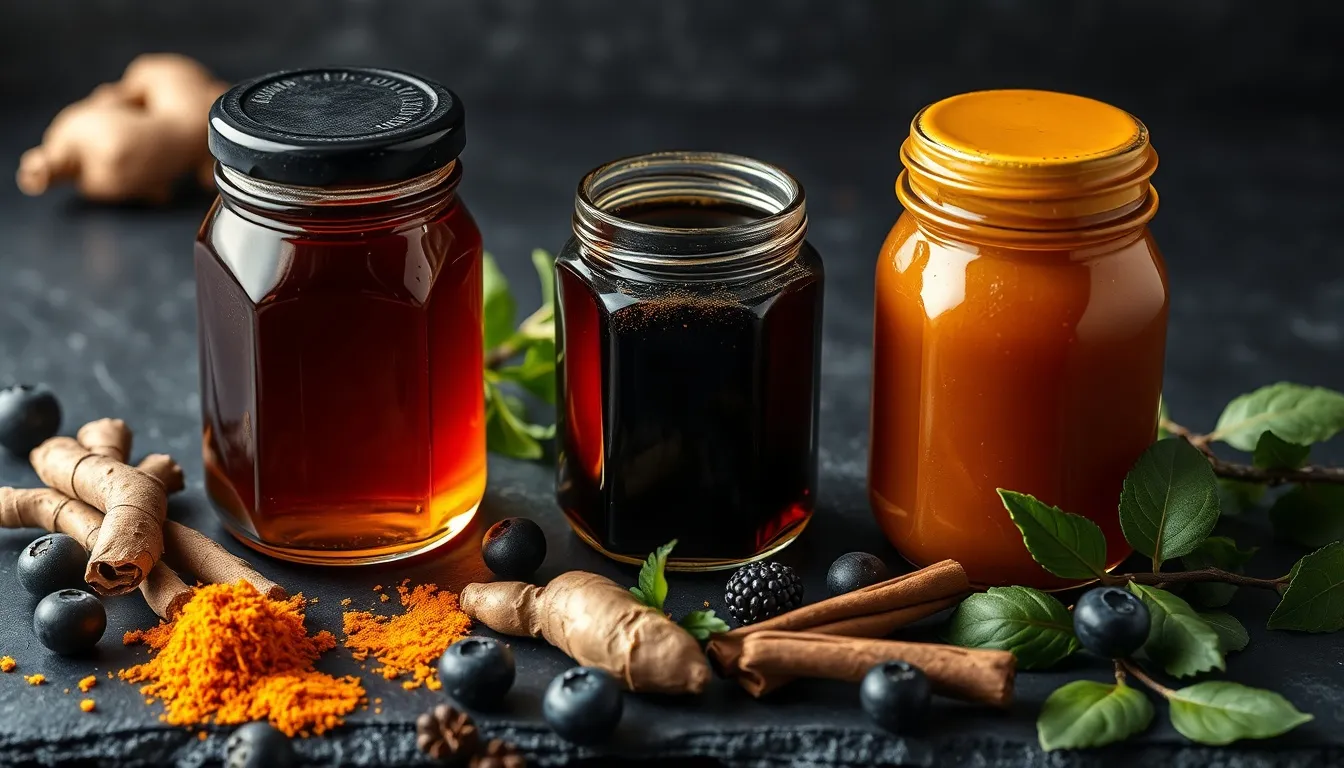
- Choose dark — Dark honeys (buckwheat $15-25/lb, manuka $35-60+/lb, chestnut $20-35/lb, heather $30-50/lb) contain 3-9x more antioxidants and polyphenols than light honeys (clover $8-15/lb, acacia $12-20/lb, orange blossom $12-20/lb). If you're specifically targeting inflammation, dark varieties give you more anti-inflammatory compounds per tablespoon. Buckwheat offers the best anti-inflammatory value at its price point.
- Combine strategically — Pair honey with other anti-inflammatory foods for synergistic effects: honey and turmeric (curcumin + honey polyphenols), honey and ginger (gingerols + flavonoids), honey and cinnamon (cinnamaldehyde + phenolic acids).
Honey vs Other Anti-Inflammatory Approaches
Where does honey fit compared to other anti-inflammatory strategies? Here's an honest assessment.
- NSAIDs (ibuprofen, naproxen) — Much stronger acute anti-inflammatory effect. Honey is not a replacement for NSAIDs when you need fast pain relief. But NSAIDs carry GI, kidney, and cardiovascular risks with long-term use. Honey is safer for daily dietary use.
- Turmeric/curcumin — Similar polyphenol-based mechanisms. Curcumin is a more potent NF-κB inhibitor gram-for-gram, but has poor bioavailability without piperine. Honey and turmeric together may be more effective than either alone.
- Omega-3 fatty acids (fish oil) — Work through different mechanisms (EPA/DHA competition with arachidonic acid). Complementary to honey rather than competing. Both can be taken daily.
- Mediterranean diet — The overall dietary pattern matters more than any single food. Honey fits naturally into an anti-inflammatory Mediterranean-style diet as a replacement for refined sugar.
- Exercise — Regular moderate exercise is the most powerful anti-inflammatory intervention available. Honey is a dietary addition, not a substitute for physical activity.
- Prescription anti-inflammatories (corticosteroids, biologics) — For serious inflammatory conditions (RA, IBD flares, lupus), prescription medications are necessary. Honey is a complementary dietary strategy, not an alternative to prescribed treatment.
Pro Tip
The most effective anti-inflammatory approach combines multiple strategies: regular exercise, an overall anti-inflammatory diet (rich in fruits, vegetables, whole grains, omega-3s), adequate sleep, stress management, and dietary additions like raw honey. No single food "cures" chronic inflammation.
What Honey Cannot Do for Inflammation
Being honest about limitations is essential. Exaggerated claims about honey as an anti-inflammatory cure-all aren't supported by evidence and can be harmful if they delay appropriate medical care.
- Honey cannot replace prescribed anti-inflammatory medications for conditions like rheumatoid arthritis, lupus, inflammatory bowel disease, or other autoimmune conditions
- Honey will not reverse years of chronic inflammation from an otherwise inflammatory diet, sedentary lifestyle, or chronic stress — it's one piece of a larger puzzle
- The anti-inflammatory effects are modest compared to pharmaceutical interventions — expect subtle, cumulative benefits over weeks to months, not dramatic overnight results
- Honey is still a sugar — excessive consumption (>3 tablespoons/day) can increase blood sugar and contribute to metabolic inflammation, negating the polyphenol benefits
- Not all honeys are anti-inflammatory — processed, heated, and ultra-filtered commercial honey may have lost most of its bioactive compounds
- Individual results vary widely depending on overall diet, gut health, genetic factors, and the specific inflammatory condition being addressed
Beyond Honey: Other Bee Products for Inflammation
Honey is not the only bee product with anti-inflammatory properties. Research increasingly shows that the entire bee product family — propolis, royal jelly, and bee pollen — offers complementary anti-inflammatory mechanisms that can enhance honey's effects.
Propolis, the resinous compound bees use to protect their hive, contains concentrated anti-inflammatory flavonoids including CAPE (caffeic acid phenethyl ester), which is one of the most potent natural NF-κB inhibitors identified. A 2020 meta-analysis found that propolis supplementation significantly reduced CRP and TNF-α in human trials. For respiratory inflammation specifically, propolis throat sprays combined with raw honey provide dual-pathway relief — propolis targeting upper airway inflammation while honey soothes and coats irritated tissue.
For wound-related inflammation, medical-grade manuka honey has demonstrated superior anti-inflammatory activity compared to oral consumption. Topical application delivers concentrated polyphenols directly to inflamed tissue, making it effective for surgical wounds, burns, and chronic ulcers. Similarly, honey applied to inflamed sinus passages via saline rinse has shown promising results in clinical trials for chronic sinusitis — a condition driven by persistent mucosal inflammation that standard antibiotics often fail to resolve.
Who Should Be Cautious
While honey is safe for most adults, certain groups should consult a healthcare provider before using honey specifically for anti-inflammatory purposes.
- Diabetes note — Honey is a fast-acting carbohydrate, and no honey variety is medically preferred. Use the honey carbohydrate and label guide to compare serving-size total carbohydrate and added sugars within an individualized care plan.
- Infants under 12 months — Never give honey to babies due to botulism risk. This applies regardless of any potential health benefit.
- People on blood-thinning medications — Some honey polyphenols have mild antiplatelet effects. While clinically insignificant for most people, those on warfarin or other anticoagulants should discuss with their doctor.
- This comparison does not establish a recommended daily honey serving. Use the daily added-sugar guide to count honey with other added or free sugars.
- Anyone with a bee product allergy — This is rare but serious. If you have known allergies to bee stings, pollen, or propolis, test honey cautiously.