Honey for Acid Reflux: The Complete Guide
Can honey help with GERD and heartburn? Evidence-based guide to how honey protects the esophagus, best honey types for reflux, when to take it, how it compares to antacids, and important safety precautions.
Last updated:
Honey may help soothe occasional acid reflux by coating the esophageal lining, though there's no clinically established dose or timing. Manuka honey (UMF 10+) is the most-studied variety for GI conditions, while raw wildflower honey is a cost-effective everyday option. Honey does not reduce acid production the way PPIs do. For mild or occasional reflux, honey may offer some relief; for moderate-to-severe GERD, talk to a doctor — honey should complement prescribed treatment, never replace it.

Can Honey Help with Acid Reflux and GERD?
Acid reflux occurs when stomach acid flows back into the esophagus, causing heartburn, regurgitation, and chest discomfort. When this happens more than twice a week, it is classified as gastroesophageal reflux disease (GERD), which affects an estimated 20% of adults in the United States — roughly 60 million people. Honey has been used as a folk remedy for heartburn and stomach ailments for thousands of years, and modern research is beginning to explain why it may help. Honey's thick, viscous texture can physically coat the esophageal lining, creating a temporary barrier between sensitive tissue and rising stomach acid. A 2017 study in the Indian Journal of Medical Research found that honey's mucilaginous properties help protect the gastric and esophageal mucosa in a manner similar to alginate-based antacid formulations. Honey also contains antioxidant compounds — including flavonoids, phenolic acids, and enzymes — that reduce inflammation in esophageal tissue damaged by repeated acid exposure. A 2006 study in the Indian Journal of Clinical Biochemistry demonstrated that honey reduced oxidative stress markers in the gastrointestinal tract. Additionally, honey's natural antibacterial properties may help address Helicobacter pylori infection, which is linked to increased acid production and worsened reflux symptoms in some patients. However, honey is not a cure for GERD and should complement, not replace, medical treatment.
Key Takeaways
- GERD affects ~20% of US adults — stomach acid repeatedly damages the esophageal lining
- Honey's viscous texture physically coats and protects esophageal tissue from acid exposure
- Antioxidants (flavonoids, phenolic acids) reduce inflammation in acid-damaged tissue
- May help address H. pylori infection, which can worsen acid production and reflux
- Acts similarly to alginate-based antacids by creating a physical barrier (Indian J Med Res, 2017)
- Not a cure for GERD — should complement medical treatment, not replace it
What Does the Research Say About Honey and Acid Reflux?
While large-scale clinical trials specifically on honey for GERD are limited, several studies support honey's gastroprotective mechanisms. A 2004 study published in the Saudi Journal of Biological Sciences demonstrated that honey protected gastric mucosa in animal models, reducing ethanol-induced ulcer formation by up to 75%. The authors attributed this to honey's ability to stimulate prostaglandin E2 production, which strengthens the protective mucus layer lining the stomach and esophagus. A 2016 review in the Journal of Functional Foods analyzed 7 studies and concluded that honey's gastroprotective effects stem from multiple mechanisms: stimulation of mucus and bicarbonate secretion, increased mucosal blood flow, promotion of epithelial cell regeneration, and direct antibacterial activity against H. pylori. For the esophagus specifically, a 2014 case study published in the British Medical Journal Case Reports described a patient with Barrett's esophagus (a precancerous condition caused by chronic GERD) who experienced significant symptom improvement after adding Manuka honey to their treatment regimen. A 2020 review in Evidence-Based Complementary and Alternative Medicine noted that honey's phenolic compounds, particularly caffeic acid and chrysin, inhibit inflammatory pathways (NF-κB and COX-2) that contribute to esophageal tissue damage from chronic acid exposure. The review also highlighted honey's potential to promote tissue repair through growth factor stimulation, which may help heal esophageal erosions caused by GERD. While these findings are promising, most studies were conducted in vitro or in animal models — more human clinical trials are needed to establish definitive dosing guidelines for GERD.
Key Takeaways
- Honey reduced ulcer formation by up to 75% by stimulating protective prostaglandin E2 production
- Multiple mechanisms: mucus secretion, mucosal blood flow, epithelial regeneration, H. pylori inhibition
- Phenolic compounds (caffeic acid, chrysin) inhibit NF-κB and COX-2 inflammatory pathways
- May promote tissue repair through growth factor stimulation — relevant for esophageal erosions
- Barrett's esophagus patient reported improvement after adding Manuka honey (BMJ Case Reports, 2014)
- Limitation: most evidence is from animal/in vitro studies — more human trials needed for GERD-specific dosing
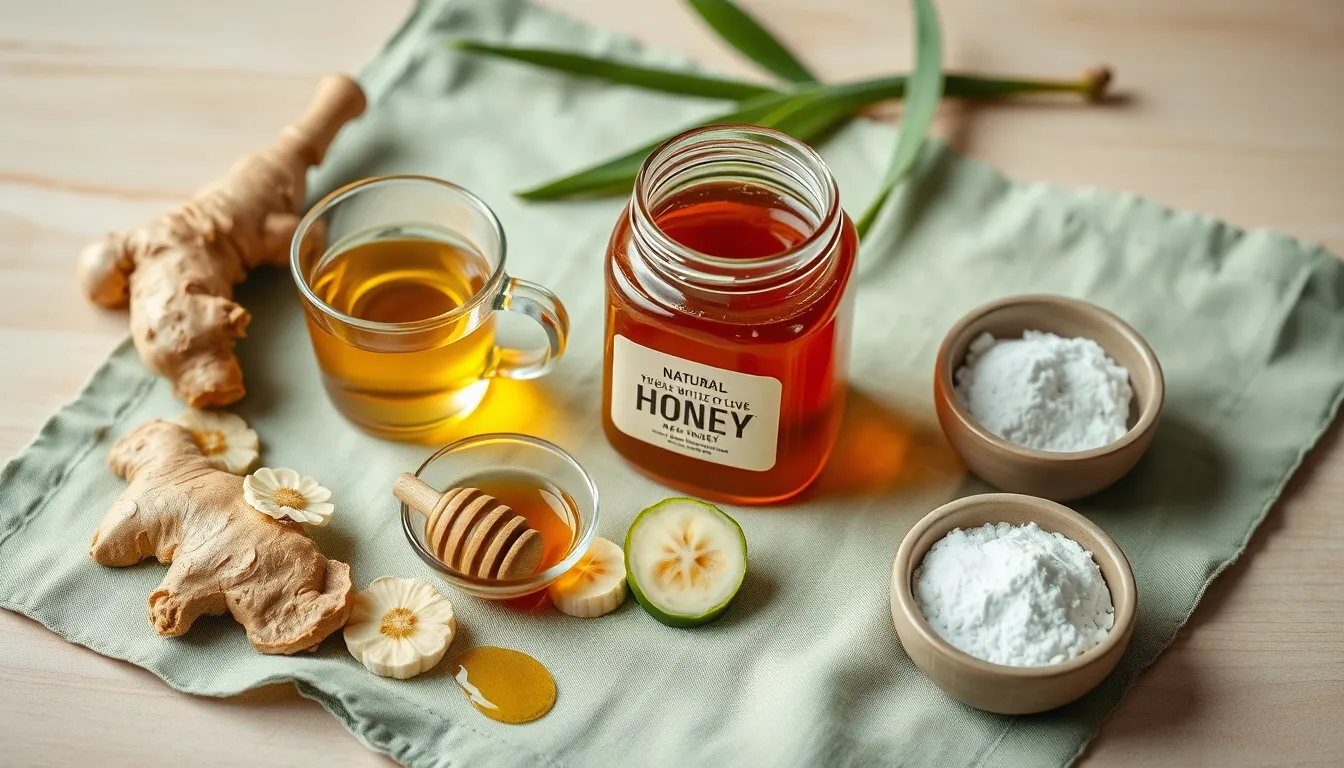
Which Types of Honey Are Best for Acid Reflux?
Not all honeys are equal for acid reflux relief. [Manuka honey](/honey/new-zealand-manuka-umf-15) (UMF 10+ / MGO 263+) is the most-studied variety for gastrointestinal conditions. Its unique methylglyoxal compound provides potent non-peroxide antibacterial activity that survives stomach acid, making it effective against H. pylori — a bacterium linked to increased acid production and worsened reflux in some patients. UMF 10+ is sufficient for general use; UMF 15+ provides stronger activity for active infections. However, Manuka is expensive ($30-80+/lb) and may not be necessary for simple heartburn relief. Raw [wildflower honey](/honey/wildflower-honey) ($8-15/lb) is a cost-effective everyday option. Its diverse polyphenol content from multiple floral sources provides broad anti-inflammatory and gastroprotective benefits. The key requirement is that it must be raw — pasteurization (heating above 160°F) destroys the heat-sensitive enzymes like glucose oxidase and the beneficial compounds that contribute to esophageal tissue protection. Darker honeys generally contain more antioxidants: [buckwheat honey](/honey/buckwheat-honey) has an ORAC score of 16,000+ compared to 1,000-3,000 for lighter honeys, providing stronger anti-inflammatory action for chronically irritated tissue. For people who also have blood sugar concerns, [acacia honey](/honey/acacia-honey) has the lowest glycemic index of any honey (GI ~32, compared to ~69 for common [clover honey](/honey/clover-honey) or ~65 for [wildflower blends](/honey/wildflower-honey)), making it the least likely to trigger the insulin spike that some researchers believe can worsen reflux. Avoid flavored or processed honeys — added ingredients like citrus flavoring, vinegar, or artificial additives can actively worsen acid reflux symptoms.
Key Takeaways
- [Manuka honey](/honey/new-zealand-manuka-umf-15) (UMF 10+): most studied for GI conditions — methylglyoxal kills H. pylori and survives stomach acid
- Raw [wildflower honey](/honey/wildflower-honey) ($8-15/lb): cost-effective everyday option with broad anti-inflammatory polyphenols
- [Buckwheat honey](/honey/buckwheat-honey): highest antioxidants (ORAC 16,000+) — strongest anti-inflammatory for irritated tissue
- [Acacia honey](/honey/acacia-honey): lowest GI (32) — best choice if blood sugar spikes are a concern alongside reflux
- Must be raw — pasteurization destroys glucose oxidase and gastroprotective compounds
- Avoid flavored or processed honeys — citrus additives, vinegar, or HFCS can worsen reflux
How and When to Take Honey for Acid Reflux Relief
There is no clinically established dosing or timing schedule for using honey to manage acid reflux. Some people find that a small amount of raw honey — dissolved slowly in the mouth or stirred into warm (not hot) water below 140°F (60°C) — is soothing, similar to other viscous home remedies, though individual responses vary considerably. Honey does not reduce stomach acid production the way medication does. Avoid combining honey with acidic foods like citrus juice, vinegar, or tomato-based foods, which some people find counteracts any soothing effect. If you take proton pump inhibitors (PPIs) or H2 blockers, don't change how or when you take your medication without talking to your doctor first.
Key Takeaways
- There is no established dosing or timing schedule for honey and acid reflux
- Some people find a small amount of raw honey, dissolved slowly, soothing during a flare-up
- Warm (not hot) honey water is a common way to take it — keep water below 140°F to preserve enzymes
- Avoid combining with citrus, vinegar, or tomato — acidic foods may counteract any soothing effect
- Large amounts of added sugar, including from honey, may worsen reflux for some people — moderation is wise
- If you take prescribed reflux medication, don't change your routine without talking to your doctor
Honey vs Common Acid Reflux Treatments: How They Compare
Understanding how honey compares to conventional GERD treatments helps set realistic expectations. Proton pump inhibitors (PPIs) like omeprazole and esomeprazole are the gold standard for GERD treatment, reducing stomach acid production by 90-95% by blocking the hydrogen-potassium ATPase enzyme. Honey does not reduce acid production — it protects tissue from acid damage through coating and anti-inflammatory mechanisms, making it a complementary approach rather than a replacement. H2 receptor blockers (ranitidine, famotidine) reduce acid production by 60-70% — again, a different mechanism than honey. Antacids (Tums, Mylanta, Gaviscon) neutralize existing stomach acid and provide rapid relief in 5-15 minutes. Honey works through a different pathway — physical coating and antioxidant protection — but may take longer and provide less dramatic relief. Alginate-based antacids like Gaviscon Advance form a physical "raft" that floats on stomach contents and blocks reflux, which is mechanistically similar to how honey's viscous texture coats the esophagus. Where honey offers unique advantages is in long-term tissue healing: its growth-factor-stimulating and anti-inflammatory properties may help repair esophageal tissue damaged by chronic acid exposure, something conventional antacids do not address. Honey is generally not associated with the drug interactions or side effects linked to long-term PPI use (vitamin B12 deficiency, magnesium depletion, increased fracture risk, C. difficile infection), though you should still tell your doctor about your diet when discussing GERD treatment. However, for moderate-to-severe GERD with complications like esophageal strictures, Barrett's esophagus, or esophagitis grade C/D, prescription medication under physician supervision is essential and honey should only serve as a complement.
Key Takeaways
- PPIs reduce acid by 90-95% — honey does NOT reduce acid production, it protects tissue from damage
- Honey's coating mechanism is similar to alginate-based antacids (Gaviscon) — physical barrier approach
- Unique advantage: honey may promote esophageal tissue repair through anti-inflammatory and growth factors
- Not linked to the drug interactions or long-term side effects associated with PPIs (B12 deficiency, magnesium depletion, fracture risk)
- For mild/occasional reflux: honey may provide adequate relief as a standalone approach
- For moderate-to-severe GERD or complications (Barrett's, esophagitis): honey complements, never replaces medication
Safety Precautions and When to See a Doctor
While honey is generally safe for acid reflux relief in most adults, several precautions are important. Never give honey to infants under 12 months — honey can contain Clostridium botulinum spores that cause infant botulism, a rare but potentially fatal condition. This applies to all honey types: raw, pasteurized, and baked. Calorie and sugar awareness matters: each tablespoon of honey contains approximately 64 calories and 17 grams of sugar. The American Heart Association recommends no more than 25 grams of added sugar daily for women and 36 grams for men. If you're managing GERD alongside diabetes or obesity (both risk factors for reflux), monitor your total sugar intake carefully. Some people find that any sweet food, including honey, worsens their reflux — individual responses vary significantly, so pay attention to how your body responds and adjust accordingly. If you experience worsened heartburn, bloating, or regurgitation after taking honey, discontinue use. See a doctor promptly if you experience: difficulty swallowing (dysphagia), pain when swallowing (odynophagia), unintentional weight loss, persistent vomiting, blood in vomit or stool (black tarry stools), chest pain that could be cardiac, or reflux symptoms that don't improve after 2 weeks of lifestyle changes. These may indicate complications like esophageal strictures, Barrett's esophagus, or esophageal cancer that require medical evaluation. Do not use honey as a reason to delay or stop prescribed GERD medication without consulting your doctor — abruptly stopping PPIs can cause rebound acid hypersecretion. If you are pregnant, honey is safe to consume but check with your healthcare provider about managing GERD, which affects 40-80% of pregnancies due to hormonal and anatomical changes.
Key Takeaways
- Never give honey to infants under 12 months — risk of infant botulism from C. botulinum spores
- Some people find any sweet food, including honey, worsens their reflux — pay attention to how you respond
- Sugar awareness: 1 tbsp = 64 calories, 17g sugar — important if managing GERD with diabetes or obesity
- See a doctor for: difficulty swallowing, blood in stool/vomit, weight loss, persistent vomiting, chest pain
- Do not stop prescribed GERD medication to try honey — PPI withdrawal causes rebound acid hypersecretion
- GERD in pregnancy (40-80%): honey is safe but consult your provider about overall GERD management
Frequently Asked Questions
Can honey help with acid reflux?
Honey may help relieve acid reflux through several mechanisms. Its thick, viscous texture physically coats the esophageal lining, creating a temporary barrier against rising stomach acid. Its antioxidants (flavonoids, phenolic acids) reduce inflammation in acid-damaged tissue. A study in the Indian Journal of Medical Research found that honey's properties help protect gastric and esophageal mucosa similarly to alginate-based antacids. However, honey does not reduce acid production like PPIs and should complement, not replace, medical treatment for GERD.
What is the best honey for acid reflux?
[Manuka honey](/honey/new-zealand-manuka-umf-15) (UMF 10+) is the most-studied variety for gastrointestinal conditions — its methylglyoxal survives stomach acid and kills H. pylori bacteria linked to increased acid production. Raw [wildflower honey](/honey/wildflower-honey) ($8-15/lb) is a cost-effective everyday option with broad anti-inflammatory polyphenols from diverse floral sources. [Buckwheat honey](/honey/buckwheat-honey) has the highest antioxidant content (ORAC 16,000+) for chronically irritated esophageal tissue. [Acacia honey](/honey/acacia-honey) has the lowest glycemic index (GI 32) if blood sugar spikes are also a concern alongside reflux. The honey must be raw — pasteurization destroys beneficial compounds essential for gastroprotective effects.
When should I take honey for acid reflux?
There is no clinically established timing. Some people find a small amount of raw honey soothing when dissolved slowly in the mouth during a flare-up, similar to other viscous remedies — but honey doesn't reduce acid production the way medication does. Avoid combining it with acidic foods like citrus or vinegar, and don't use it in place of your prescribed reflux medication.
Is honey better than antacids for acid reflux?
Honey and antacids work through different mechanisms. Antacids neutralize existing stomach acid for rapid 5-15 minute relief. PPIs reduce acid production by 90-95%. Honey does not reduce or neutralize acid — it may help protect tissue through physical coating and antioxidant activity. For mild reflux, honey may offer some relief; for moderate-to-severe GERD, medication is essential and honey should only complement treatment, never replace it.
Can honey make acid reflux worse?
Yes, in some cases. Individual responses vary — some people find that any sweet food, including honey, worsens their reflux by increasing intra-abdominal pressure or triggering acid production. Combining honey with acidic foods (citrus, vinegar, tomato) can counteract its soothing effect. Pay attention to how your body responds, and discontinue use if symptoms worsen.
Is honey safe during pregnancy for acid reflux?
Yes, honey is safe for pregnant women. Pregnancy-related GERD is common, affecting an estimated 40-80% of pregnancies due to hormonal changes and the growing uterus. Talk to your healthcare provider about managing GERD during pregnancy, especially if symptoms are severe or persistent — they may recommend treatments that are safe during pregnancy.
Which honey varieties should I choose for different acid reflux situations?
Choose honey varieties based on your specific needs: [Manuka honey](/honey/new-zealand-manuka-umf-15) UMF 10+ for H. pylori-associated reflux and strongest gastroprotective effects (though expensive at $30-80+/lb). [Wildflower honey](/honey/wildflower-honey) for cost-effective daily use with broad anti-inflammatory benefits from diverse floral sources ($8-15/lb). [Buckwheat honey](/honey/buckwheat-honey) for maximum antioxidant protection (ORAC 16,000+) when chronic inflammation is a concern, though its molasses flavor is strong. [Acacia honey](/honey/acacia-honey) for blood sugar-conscious individuals due to lowest glycemic index (GI 32) that won't trigger insulin spikes potentially worsening reflux. [Clover honey](/honey/clover-honey) for mild, reliable sweetness suitable for beginners or sensitive palates. All must be raw and unprocessed — pasteurization destroys the gastroprotective compounds essential for esophageal tissue protection.
Edited by Sam French · Raw Honey Guide Editorial Team
Source reviewed against primary literature and official guidance where available. Health content is educational, not medical advice, and does not replace a licensed clinician.
Get the Honey Buyer's Cheat Sheet (free PDF)
16 varieties on one page — color, flavor, best use and what a fair price looks like — from the 268 honeys we track.
Related Guides
Honey for Digestion
Evidence-based guide to honey for gut health — prebiotic benefits, IBS, gastritis, H. pylori, and best types.
Read GuideManuka Honey Benefits
UMF/MGO ratings and proven benefits.
Read GuideHealth Benefits
Nutritional and therapeutic benefits of honey.
Read GuideRelated Articles
Honey for Acid Reflux: Can It Help GERD and Heartburn?
Can honey help acid reflux and GERD? Review the evidence on mucosal coating, anti-inflammatory, and antimicrobial effects.
Read ArticleHoney for Stomach Ulcers: What Science Actually Shows
Can honey help stomach ulcers? Research on H. pylori, mucosal healing, and how manuka honey may support ulcer recovery.
Read ArticleHoney and Gut Health: How Raw Honey Supports Your Microbiome
How raw honey supports gut health: prebiotic oligosaccharides, antimicrobial action, and anti-inflammatory effects reviewed.
Read ArticleReady to find the best honey for digestive health?