The Short Answer: There Is No Required Daily Honey Dose
The FDA, current Dietary Guidelines for Americans, and WHO guidance cited below do not set a daily amount of honey that people need to eat. Honey is mainly sugar, so the practical question is not how to reach a honey target. It is how the amount you choose fits with the added or free sugars in everything else you eat and drink.
Start with your jar’s Nutrition Facts label. Then use the policy framework that matches your question: the FDA Daily Value helps interpret a U.S. food label, the current Dietary Guidelines for Americans address a healthy eating pattern, and the World Health Organization sets population guidance for total free sugars. Those are related, but they are not interchangeable personal prescriptions.
Start With the Jar Label, Not a Universal Spoonful
Read the serving size, calories, total carbohydrate, total sugars, and Added Sugars percent Daily Value on the specific jar. A serving size describes the amount commonly consumed; the FDA says it is not a recommendation for how much to eat.
Read the FDA explanation of serving sizes.
The FDA uses 50 grams as the Daily Value for added sugars on a 2,000-calorie diet. For single-ingredient honey, the label shows how a serving contributes to that Daily Value without implying that extra sugar was mixed into the product. Use your own label because serving sizes and declarations can differ. A Daily Value is a labeling reference, not a target or a personal prescription.
Read the FDA explanation of Added Sugars on the Nutrition Facts label.
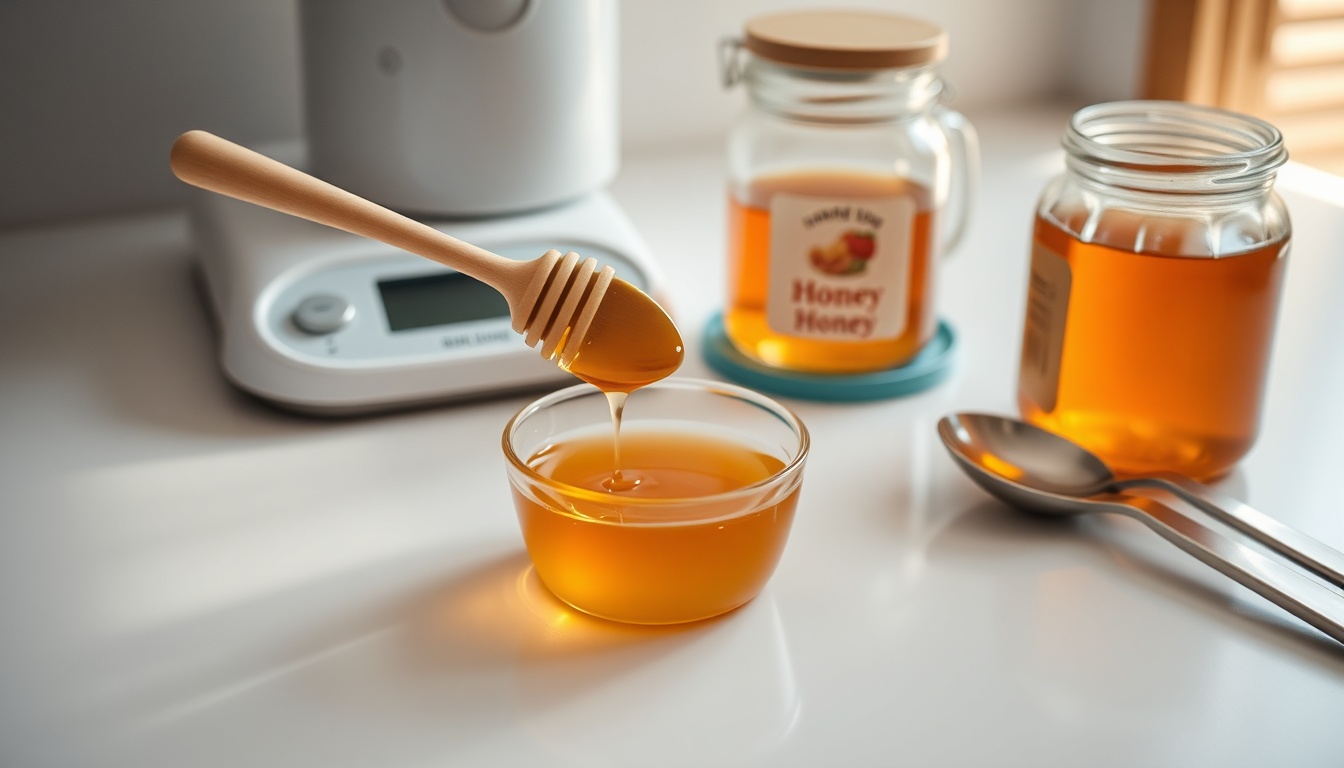
- Measure the amount you actually use rather than estimating a drizzle.
- Count honey alongside sweetened drinks, sauces, desserts, and other sources of added sugar.
- If you replace another sweetener with honey, compare the full recipe rather than treating honey as sugar-free.
Pro Tip
The label can help you compare portions. It cannot determine a medically appropriate amount for an individual.
Get the Honey Buyer's Cheat Sheet (free PDF)
16 varieties on one page — color, flavor, best use and what a fair price looks like — from the 268 honeys we track.
Three Official Frameworks Answer Different Questions
The current 2025–2030 Dietary Guidelines for Americans say that no amount of added sugars is recommended or considered part of a healthy or nutritious diet. The guidance calls for avoiding added sugars for children age four and under. It does not create a recommended honey allowance. Read the current HHS and USDA guidance summary.
The FDA Daily Value is a label-reading reference based on a 2,000-calorie diet. It is useful for comparing the contribution of one serving, but it is not a goal and does not replace individualized nutrition advice.
WHO counts sugars naturally present in honey as free sugars. It recommends reducing free sugars to less than 10% of total energy intake and suggests a further reduction below 5%. Those percentages cover the combined free sugars in the whole diet, not honey alone. Read the WHO free-sugars recommendation.
Children Need a Safety Rule, Not a Daily Honey Target
Never give honey to a child younger than 12 months. The CDC warns that honey can cause infant botulism and says not to add it to an infant’s food, water, formula, or pacifier.
For children age four and under, current U.S. dietary guidance says to avoid added sugars. For an older child, think of honey as a sweetener used in a small food portion rather than as a daily wellness routine. A pediatric clinician can advise about a child’s nutrition or persistent cough.
Diabetes and Prediabetes Require Individual Carbohydrate Planning
Honey contributes carbohydrate and can affect blood glucose. The American Diabetes Association lists honey among names for added sugars and recommends using total carbohydrate on the Nutrition Facts label. A universal teaspoon limit, a honey color, or a glycemic-index estimate cannot establish an individual serving.
Count honey with the carbohydrates in the meal and follow the plan made with your diabetes care team. Do not change medication or use honey as a treatment based on an online serving chart. Read the ADA carbohydrate guidance.
Cough Evidence Is Bounded and Is Not a Wellness Serving
The National Center for Complementary and Integrative Health says a small amount of research suggests honey may reduce nighttime coughing in children. It describes limited symptom-relief evidence, not a preventive benefit or a daily wellness amount.
Honey must never be given to an infant younger than 12 months. Seek urgent medical care for breathing difficulty. Seek clinical advice for a severe or persistent cough, fever, dehydration, or other concerning symptoms. Read the NCCIH evidence summary.
Honey Type Does Not Remove Its Sugar Contribution
Raw, filtered, varietal, local, and mānuka labels describe different product attributes. None changes the basic need to count the serving’s sugars and carbohydrates. Trace compounds do not turn honey into a required food or establish a larger daily amount.
Do not convert evidence about a non-food product or a specific clinical use into an oral serving recommendation.
A Practical Decision for Today
If you choose honey today, read the jar, measure the portion, and place it in the context of the whole meal and day. Reducing total added or free sugar matters more than finding a supposedly ideal honey amount.
Use honey as food, not as a substitute for diagnosis, medication, or individualized nutrition advice. The tools below help interpret nutrition information or convert a recipe; they do not set a medical dose.

Official Sources
HHS and USDA — Dietary Guidelines for Americans, 2025–2030 summary
FDA — Added Sugars on the Nutrition Facts Label
FDA — Serving Size on the Nutrition Facts Label
WHO — Reducing free sugars intake in adults
CDC — Foods and drinks to avoid or limit for infants and young children