The Short Answer: Yes, Honey Is Generally Safe During Pregnancy
If you are pregnant and wondering whether you can eat honey, the answer from major health organizations is yes — honey is generally safe for pregnant women to consume. The American College of Obstetricians and Gynecologists (ACOG), the NHS, and the World Health Organization do not list honey as a food to avoid during pregnancy.
The confusion stems from the well-known warning that infants under 12 months should never eat honey due to the risk of infant botulism. Many expecting mothers logically worry: if honey is dangerous for babies, could it harm the baby in the womb? The short answer is no, and this guide explains exactly why.
Why Honey Is Safe for Pregnant Women but Not Infants
The danger of honey for infants comes from Clostridium botulinum spores, which can occasionally be found in honey. In babies under 12 months, the immature gut flora cannot prevent these spores from germinating and producing botulinum toxin. This is what causes infant botulism.
In adults — including pregnant women — the mature gastrointestinal tract has sufficient acidity and beneficial bacteria to neutralize these spores before they can germinate. The spores are destroyed during normal digestion and do not cross the placental barrier. Your baby is not exposed to botulism risk from honey you eat during pregnancy.
Pro Tip
The botulism warning applies only after birth, when babies eat honey directly. During pregnancy, your digestive system handles the spores before they could ever reach your baby.
Get the Honey Buyer's Cheat Sheet (free PDF)
16 varieties on one page — color, flavor, best use and what a fair price looks like — from the 268 honeys we track.
Raw Honey vs Pasteurized Honey During Pregnancy
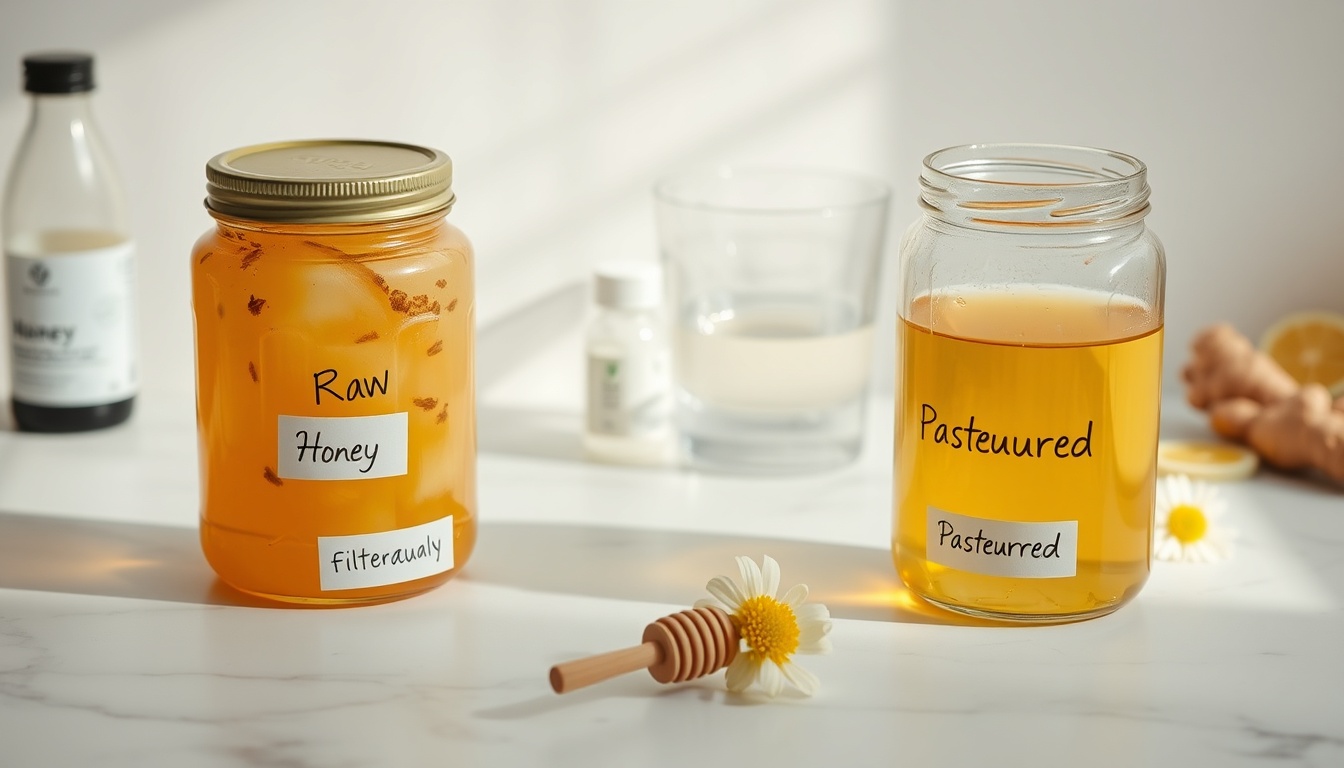
Unlike unpasteurized dairy or undercooked meat, raw honey does not carry the same category of pregnancy risk. Pasteurization of honey is primarily done to prevent crystallization and improve shelf life — not to eliminate dangerous pathogens.
Both raw and pasteurized honey are considered safe during pregnancy. Raw honey retains more beneficial enzymes, antioxidants, and trace nutrients that are destroyed by heat processing. If you were eating raw honey before pregnancy, there is no medical reason to switch to pasteurized.
- Pasteurized honey — Safe during pregnancy. Heated to 161°F (72°C) to delay crystallization. Some nutrient loss
- Raw honey — Safe during pregnancy. Retains full enzyme and antioxidant profile. Wildflower honey ($10-18) and clover honey ($8-15) are widely available raw options
- Manuka honey — Safe during pregnancy. Offers additional antibacterial properties (methylglyoxal). $35-60+ for UMF 10+
- Honeycomb — Safe during pregnancy. The beeswax is indigestible fiber and passes through harmlessly
Honey and Gestational Diabetes: What to Know
The main concern with honey during pregnancy is not botulism — it is sugar. Honey is approximately 80% sugar (primarily fructose and glucose), and excessive sugar intake can contribute to gestational diabetes or worsen it if already diagnosed.
Gestational diabetes affects 6-9% of pregnancies in the United States. If you have been diagnosed with gestational diabetes or are at high risk, you should treat honey the same way you treat other added sugars: limit intake and monitor blood glucose response.
- If you have gestational diabetes — Consult your OB-GYN or dietitian before including honey in your diet. Honey raises blood sugar; its GI varies by variety (acacia honey ~32 is well below sugar's 65, but common clover honey ~69 is slightly above sugar). Tupelo honey GI ~45 is another lower-GI option
- If your glucose tolerance test was normal — Moderate honey consumption is generally fine as part of a balanced diet
- During glucose screening prep — Avoid honey and other sugars in the hours before your glucose tolerance test, as they can affect results
Pro Tip
One tablespoon of honey contains about 64 calories and 17 grams of sugar. The American Heart Association recommends pregnant women limit added sugars to about 25 grams (about 6 teaspoons) per day — use this to gauge how honey fits into your overall added-sugar intake.
Benefits of Honey During Pregnancy
Beyond being a natural sweetener, honey offers several properties that may be particularly helpful during pregnancy.
- Sore throat and cough relief — Many cold medications are off-limits during pregnancy. Honey is one of the few evidence-backed natural cough suppressants considered safe. Buckwheat honey outperformed dextromethorphan in a Penn State study on nighttime cough (BMJ Evidence-Based Medicine, 2020)
- Immune support — Raw honey contains antioxidants (flavonoids, phenolic acids) that support immune function. Buckwheat honey has ORAC 16,000+ — up to 9x higher antioxidant density than lighter varieties. Pregnant women are immunocompromised and more susceptible to colds and infections
- Sleep aid — Honey before bed supports liver glycogen replenishment and may improve sleep quality, which many pregnant women struggle with, especially in the third trimester
- Wound healing — Medical-grade honey (Medihoney) is used in clinical settings for wound care under professional supervision
- Nausea management — Some women find that small amounts of honey in ginger tea helps manage morning sickness, though this is anecdotal rather than clinically proven
Honey as Food During Pregnancy
Pregnancy does not create a universal honey allowance. Use the daily added-sugar guide to count honey with other added or free sugars, and use the nutrition plan from your prenatal care team when glucose management is a concern.
- Use honey as a sweetener, not as a treatment for nausea, sleep problems, or another pregnancy symptom
- Gestational-diabetes screening and glucose-management instructions come from the prenatal care team; honey still contributes carbohydrate
- Seek clinical advice for persistent nausea, dehydration, sleep disruption, or other pregnancy concerns rather than increasing honey intake
Pro Tip
Count honey toward your daily added sugar total. If you are also eating fruit, juice, or other sweetened foods, adjust your honey intake accordingly.
Best Ways to Use Honey While Pregnant
Here are practical and pregnancy-friendly ways to incorporate honey into your diet.
- Honey-ginger tea for morning sickness — Steep fresh ginger slices in hot water, cool slightly, then stir in 1 teaspoon of honey
- Honey-lemon water for hydration — Mix 1 tablespoon honey and juice of half a lemon in warm water. Good for staying hydrated and easing nausea
- Honey in oatmeal or yogurt — A tablespoon of raw honey adds natural sweetness plus trace enzymes to your breakfast
- Honey for sore throat — Buckwheat honey or Manuka honey, straight or mixed into decaf tea, is a popular option when you cannot take cold medication
- Honey before bed for sleep — Honey before bed, alone or in warm milk, is a popular choice
- Honey as a sugar replacement in baking — Substitute honey for sugar at a 3:4 ratio (3/4 cup honey per 1 cup sugar) in pregnancy-safe recipes
When to Avoid Honey During Pregnancy
While honey is safe for most pregnant women, there are specific situations where you should limit or avoid it.
- Diagnosed gestational diabetes — Follow your healthcare provider's guidance on all sugars, including honey
- Honey allergy — Rare but possible. If you have a known allergy to bee products (pollen, propolis, royal jelly), be cautious with honey
- Excessive weight gain — If you are gaining more weight than recommended, reducing all added sugars, including honey, is advisable
- Unregulated imported honey — Buy from reputable sources. Some imported honeys have been found to contain antibiotics or heavy metals. Choose domestic, raw honey from known producers when possible
After Birth: When Can Your Baby Have Honey?
Once your baby is born, the botulism risk becomes relevant. Never give honey to infants under 12 months — not in food, pacifiers, or home remedies. This includes all types of honey: raw, pasteurized, Manuka, or baked into foods (baking temperatures may not reliably destroy botulinum spores).
After 12 months, a child's gut flora is typically mature enough to handle honey safely. Introduce it gradually, starting with small amounts mixed into foods. Honey is a useful natural sweetener for toddlers and can replace refined sugar in many recipes.
If your baby shows any signs of infant botulism (constipation, weak cry, poor feeding, floppiness), seek medical attention immediately. While rare (about 100 cases per year in the US), infant botulism is a medical emergency.
Honey, Gut Health, and Inflammation During Pregnancy
Emerging research highlights honey's role as a prebiotic that supports gut microbiome diversity — a factor that takes on special importance during pregnancy. The maternal microbiome undergoes significant shifts across trimesters, and a diverse, healthy gut flora is associated with reduced risk of gestational diabetes, preeclampsia, and preterm birth. Honey's fructooligosaccharides (FOS) selectively feed beneficial Bifidobacterium and Lactobacillus species without encouraging pathogenic bacteria.
Pregnancy is also an inherently pro-inflammatory state — the immune system upregulates certain inflammatory pathways to support placental development and fetal growth. While some inflammation is normal, excessive inflammation contributes to complications like preeclampsia and gestational hypertension. Honey's polyphenols modulate the NF-κB inflammatory pathway, offering a gentle anti-inflammatory effect that complements pregnancy-safe dietary strategies. A 2022 meta-analysis of 18 randomized controlled trials found that honey consumption reduced circulating C-reactive protein (CRP) levels — a marker of systemic inflammation — which is particularly relevant for pregnant women managing inflammation-related complications.
For pregnant women dealing with skin changes like melasma, acne flare-ups, or pregnancy-related eczema, topical honey face masks offer a chemical-free skincare option. Honey's antibacterial and anti-inflammatory properties address pregnancy acne without the retinoids and salicylic acid that are contraindicated during pregnancy.