Why Elite Athletes Are Turning to Honey
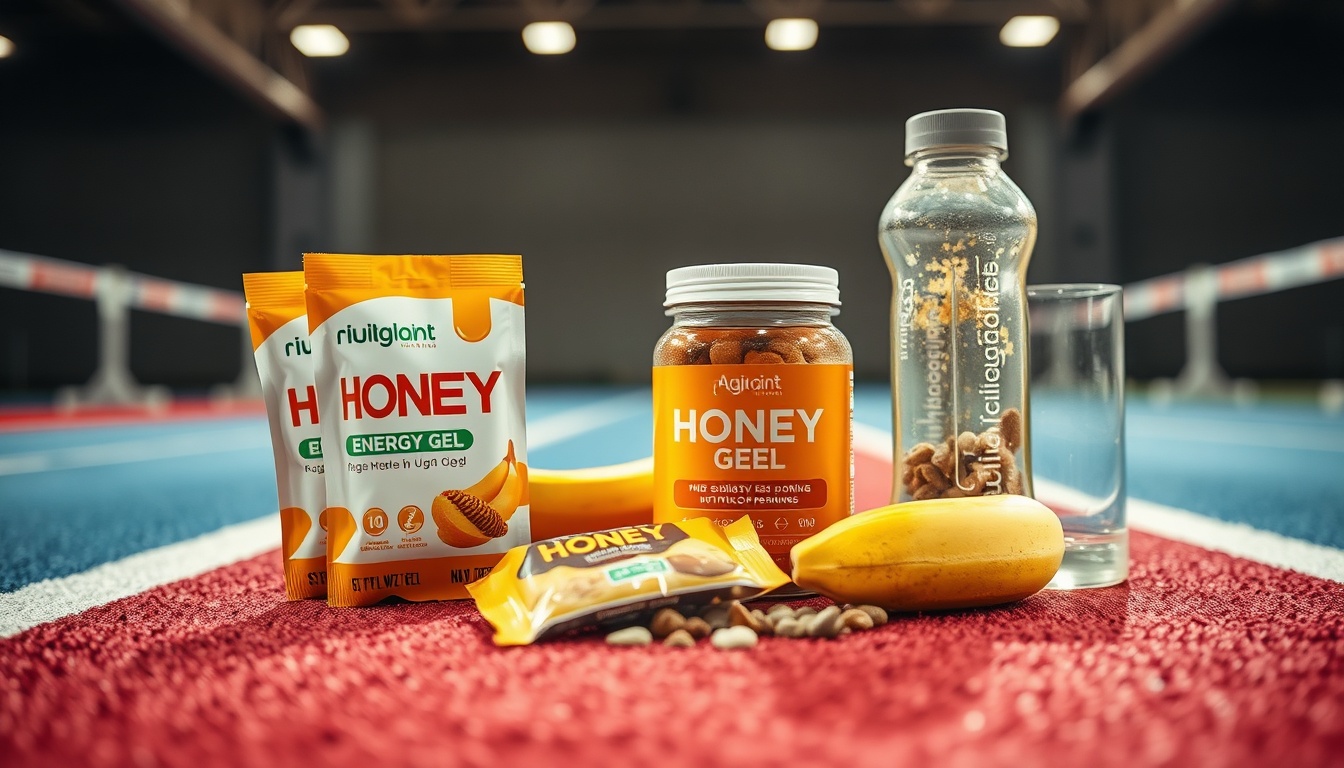
Honey has been an athlete's fuel source for thousands of years — ancient Greek Olympians ate honey and dried figs before competing. Modern sports science is confirming what they knew intuitively: honey is a highly effective natural energy source that can replace many commercial sports nutrition products.
The appeal is simple. Honey contains a nearly ideal ratio of glucose and fructose for athletic performance — glucose provides immediate energy while fructose is absorbed more slowly for sustained fuel. Unlike refined sugar or maltodextrin-based gels, honey also delivers trace minerals, antioxidants, and anti-inflammatory compounds that support recovery.
The Science: How Honey Fuels Exercise
Honey is approximately 80% carbohydrate by weight, with a roughly 1:1 ratio of fructose to glucose plus small amounts of maltose and sucrose. This composition is significant for athletes because the body absorbs glucose and fructose through different intestinal transporters.
Research from the University of Memphis Exercise and Sport Nutrition Laboratory found that honey performed as well as commercial glucose gels for sustaining blood sugar during endurance exercise. A 2004 study in the Journal of Strength and Conditioning Research showed that honey maintained power output during repeated cycling sprints just as effectively as dextrose.
The dual-sugar advantage means honey can deliver up to 90 grams of carbohydrate per hour (using both glucose and fructose pathways) versus 60 grams per hour from glucose alone. This is the same principle behind expensive commercial gels that blend multiple sugar sources — honey does it naturally.
Get the Honey Buyer's Cheat Sheet (free PDF)
16 varieties on one page — color, flavor, best use and what a fair price looks like — from the 268 honeys we track.
Pre-Workout: Fueling Up with Honey
- Endurance fueling depends on event duration, intensity, tolerance, and the athletes plan; honey is simply one carbohydrate source.
- Strength-training nutrition depends on the complete meal and training plan, not a special honey amount.
- Morning workouts: honey in warm water or tea provides fast fuel when you can't eat a full meal
- Race-day foods should be tested in training and chosen with a qualified sports-nutrition plan.
Pro Tip
Stick with lighter honeys (acacia, clover) before exercise. Dark honeys like buckwheat honey have higher antioxidant content but stronger flavors that some athletes find heavy on a working stomach.
During Exercise: Honey as Mid-Race Fuel
For exercise lasting longer than 60-90 minutes, consuming carbohydrates during activity maintains blood sugar and delays fatigue. The general guideline is 30-60 grams of carbohydrate per hour for moderate efforts, and up to 90 grams per hour for intense efforts lasting over 2.5 hours.
One tablespoon of honey provides about 17 grams of carbohydrate. Two tablespoons every 30-45 minutes during endurance exercise keeps your fuel topped up. Honey can be consumed straight from a squeeze bottle, mixed into water, or used in homemade energy gels.
- Carry honey in a small squeeze bottle or reusable gel flask
- Dilute honey 1:1 with warm water for easier consumption during high-intensity efforts
- Chase honey with water to aid absorption and prevent GI distress
- Practice your honey fueling strategy during training — never try something new on race day
Post-Workout: Recovery with Honey
The 30-60 minute window after exercise is when your muscles are most receptive to glycogen replenishment. Consuming carbohydrates with protein during this window accelerates recovery. Honey is an excellent recovery carbohydrate source because it replenishes both liver glycogen (via fructose) and muscle glycogen (via glucose).
Research published in the International Journal of Sport Nutrition and Exercise Metabolism found that a honey-protein combination was as effective as a maltodextrin-protein combination for post-exercise glycogen replenishment and muscle recovery.
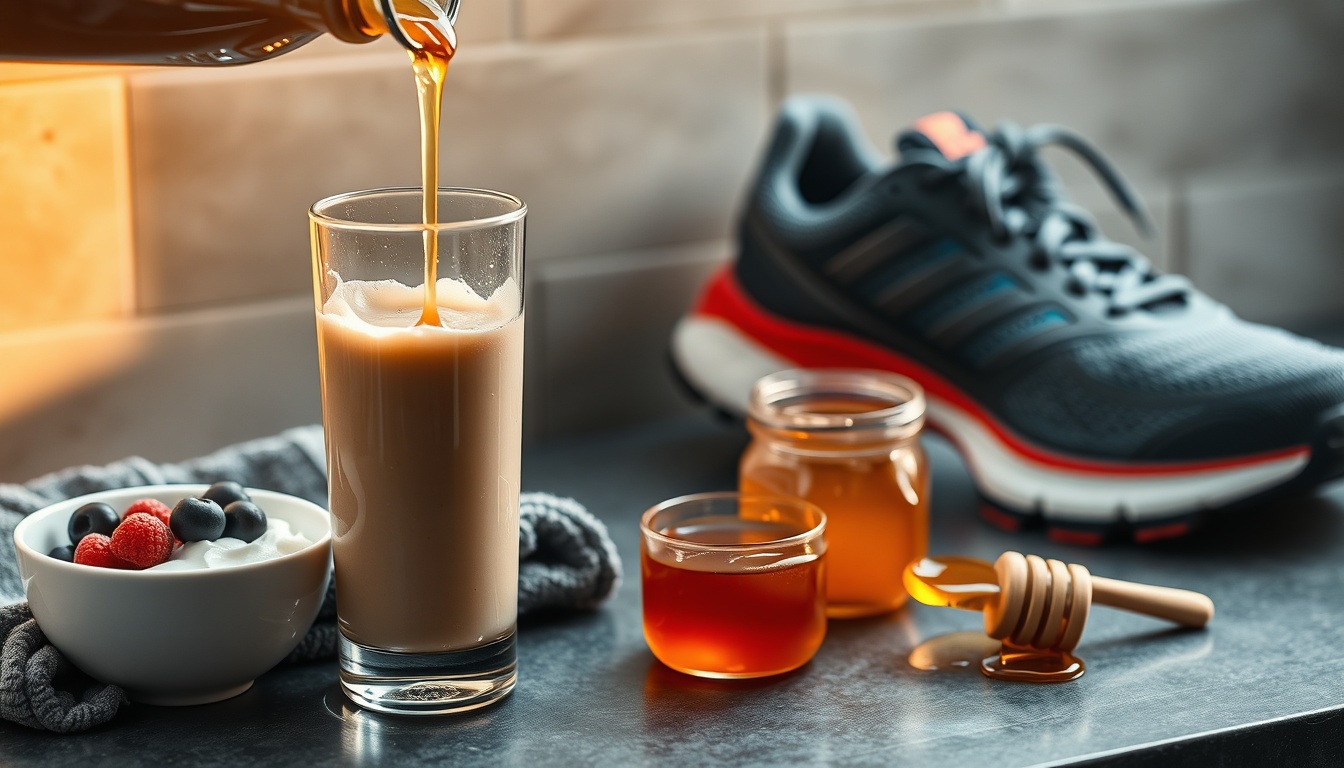
- Mix 2 tablespoons of wildflower honey into a protein shake or smoothie for complex carbohydrates and antioxidants
- Honey on toast with peanut butter provides carbs, protein, and healthy fats — clover honey offers mild sweetness that won't overpower
- Greek yogurt with orange blossom honey and berries is a nutrient-dense recovery snack with bright citrus notes
- Buckwheat honey in warm milk before bed supports overnight muscle recovery with highest antioxidant content
DIY Honey Energy Gel Recipes
Commercial energy gels cost $2-3 each. You can make effective honey-based gels at home for a fraction of the price. These recipes provide similar carbohydrate profiles to popular commercial gels.
Basic Honey Gel
Mix 3 tablespoons of honey with a pinch of sea salt (for sodium) and 1 teaspoon of lemon juice (for flavor and potassium). Fill a reusable gel flask. Each serving provides approximately 50 grams of carbohydrate — equivalent to 2 commercial gels. Use clover honey for neutral flavor or acacia honey for lowest glycemic impact.
Honey-Chia Endurance Gel
Combine 3 tablespoons of honey, 1 teaspoon of chia seeds, a pinch of sea salt, and 1 tablespoon of water. Let sit for 10 minutes until the chia absorbs the water and thickens. The chia adds omega-3 fatty acids and helps the gel sustain energy release. Best for longer, lower-intensity efforts where the thicker texture isn't an issue. Wildflower honey works well here for complex flavor, or acacia honey for sustained energy without crystallization.
Caffeinated Honey Gel
Dissolve ¼ teaspoon of instant espresso powder in 1 teaspoon of warm water. Mix with 3 tablespoons of honey and a pinch of salt. This provides roughly 30-40mg of caffeine per serving — similar to a caffeinated commercial gel. Use in the second half of long events when you need a mental and physical boost.
Pro Tip
Test all homemade gels during training first. Honey is generally well-tolerated, but the concentration of sugars can cause GI issues for some athletes at high intensities. Diluting with water helps.
Which Honey Variety Is Best for Athletes?
Not all honeys perform identically for athletic purposes. The key differences are glycemic index, flavor intensity, and practical factors like texture.
- Acacia honey ($12-20) — lowest GI (32-35), mildest flavor, stays liquid longest. Best overall choice for sports use and sustained energy
- Clover honey ($8-15) — moderate GI (~56), neutral flavor, widely available. Most cost-effective option for daily training fuel
- Orange blossom honey ($12-20) — moderate GI, pleasant citrus notes, pairs well with water or electrolyte drinks during summer training
- Wildflower honey ($10-18) — varies by region, typically moderate GI, good balance of flavor and function for recovery shakes
- Buckwheat honey ($15-25) — highest antioxidant content (ORAC 16,000+) but strong flavor and higher GI (~73). Better for recovery than mid-exercise fueling
- Manuka honey ($35-60+) — anti-inflammatory properties may aid recovery, but expensive for regular sports use. Reserve for targeted post-race recovery
Honey vs Commercial Sports Nutrition: How They Compare
A direct comparison shows honey holds its own against engineered products while offering advantages in cost, ingredient simplicity, and additional nutrients. Summer 2026 training season is an ideal time to switch — outdoor heat makes carrying a simple squeeze bottle of honey more practical than fumbling with gel packet wrappers.
A typical commercial gel provides 21-25g of carbohydrate from maltodextrin and fructose, costs $2-3 per serving, and contains artificial flavors and preservatives. A tablespoon of clover honey ($8-15 per jar) provides 17g of carbohydrate from natural glucose and fructose, costs $0.30-0.50 per serving, and contains antioxidants, enzymes, and trace minerals. The carbohydrate delivery is comparable; the cost and ingredient transparency favor honey. For those watching calorie intake, see our guide on honey for weight loss.
Where commercial products still have an edge: precise caffeine dosing, standardized electrolyte content, and packaging designed for on-the-go consumption during racing. For training, honey is a cost-effective and effective alternative. For racing, some athletes prefer the convenience of commercial products.