
The Honey and Weight Loss Question
Search "honey for weight loss" and you will find thousands of articles making bold claims: honey burns belly fat, honey water melts pounds away, the honey diet is the secret celebrities use. Most of these claims are exaggerated or completely fabricated.
But buried beneath the hype, there is real research suggesting that replacing refined sugar with honey may support weight management — not through any magical fat-burning property, but through concrete metabolic mechanisms. Understanding what honey can and cannot do for weight loss is the key to using it effectively.
What the Clinical Research Shows
Several controlled studies have examined honey's effects on body weight, body fat percentage, and metabolic markers. The results are nuanced — honey is not a weight loss supplement, but it may be a smarter sweetener choice for people trying to manage their weight.
A 2011 study published in the Journal of the American College of Nutrition compared honey to sucrose (table sugar) in 55 overweight or obese subjects over 30 days. The honey group showed a modest but statistically significant reduction in body weight (-1.3%), body fat percentage (-1.1%), and total cholesterol (-3.3%) compared to the sugar group, even though caloric intake was similar.
A systematic review published in Nutrition Reviews in 2022 analyzed 14 clinical trials involving over 1,100 participants and concluded that honey consumption was associated with lower fasting blood glucose, lower LDL cholesterol, and lower triglycerides compared to sugar and other sweeteners. The review also found modest reductions in body weight and BMI.
A 2018 randomized trial in the Journal of Obesity found that obese participants who replaced added sugars with an equivalent caloric amount of honey for 8 weeks lost more body weight and body fat than the control group. The researchers attributed this partly to improved insulin sensitivity and partly to honey's effect on appetite-regulating hormones.
Pro Tip
The key finding across studies: honey does not cause weight loss by itself. It performs better than refined sugar when used as a direct replacement, likely because of differences in how the body metabolizes honey versus sucrose.
Get the Honey Buyer's Cheat Sheet (free PDF)
16 varieties on one page — color, flavor, best use and what a fair price looks like — from the 268 honeys we track.
Why Honey Behaves Differently Than Sugar in Your Body
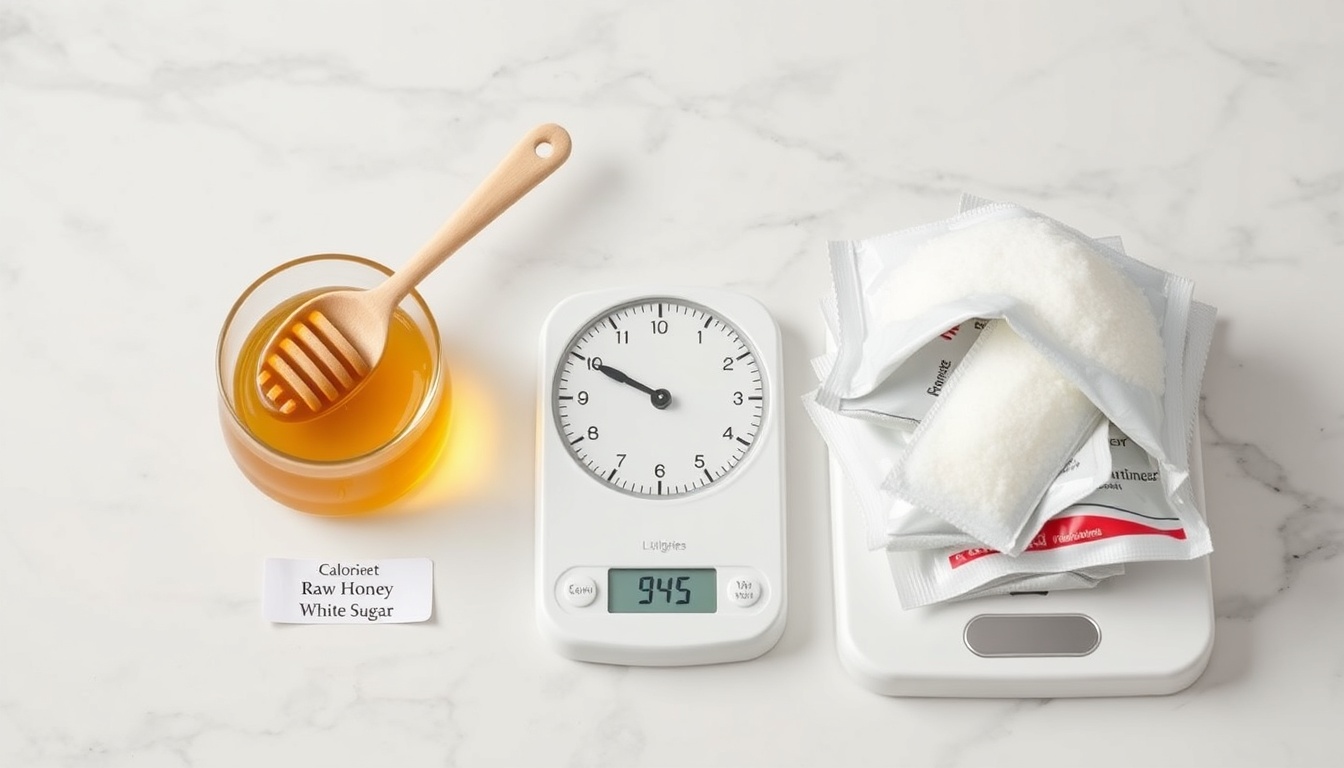
Honey and table sugar contain similar amounts of calories (64 vs 49 per tablespoon), and both are primarily composed of glucose and fructose. So why would your body respond differently to them?
First, the glucose-to-fructose ratio differs. Table sugar (sucrose) is exactly 50/50 glucose and fructose. Honey varies by floral source but typically contains 38-44% fructose and 31-35% glucose, plus small amounts of other sugars. This difference affects the glycemic response — honey has a glycemic index of 58 compared to sugar's 65.
Second, honey contains over 200 bioactive compounds that table sugar lacks entirely: antioxidants, enzymes, organic acids, minerals, and polyphenols. Some of these compounds have been shown in laboratory studies to improve insulin sensitivity, reduce inflammation, and modulate fat storage pathways. A 2019 study in the European Journal of Nutrition found that honey's polyphenols activated AMPK, an enzyme that plays a central role in metabolic regulation.
Third, honey contains prebiotics — oligosaccharides that feed beneficial gut bacteria. Emerging research connects gut microbiome health to weight management through pathways involving short-chain fatty acid production and appetite hormone regulation. A 2020 study in the journal Gut Microbes found that honey consumption increased Bifidobacteria and Lactobacillus populations within 7 days.
Honey vs Sugar vs Artificial Sweeteners for Weight Management
If your goal is weight management, understanding how honey compares to alternatives helps you make an informed choice.
Refined white sugar provides pure calories with zero nutritional benefit. It causes rapid blood glucose spikes followed by crashes that trigger hunger and cravings. It feeds harmful gut bacteria. When it comes to weight management, sugar is the worst option.
Artificial sweeteners (sucralose, aspartame, saccharin) have zero calories, which seems ideal for weight loss. However, large observational studies and a 2023 WHO advisory have raised concerns that artificial sweeteners may disrupt gut microbiome, increase sweet cravings, and paradoxically be associated with long-term weight gain. The evidence is debated, but the picture is no longer as simple as "zero calories equals weight loss."
Honey sits in the middle: it has real calories and real sugar, but it comes packaged with compounds that may offset some of sugar's metabolic downsides. For people who are going to consume sweeteners regardless, honey is likely the best option — but it is still a caloric sweetener that needs to be consumed in moderation.
How to Use Honey in a Weight Loss Plan
If you want to incorporate honey into a weight loss strategy, the approach matters. Simply adding honey on top of your current diet will add calories and work against you. The strategy is substitution, not addition.
- Replace, do not add — Swap refined sugar in your coffee, tea, oatmeal, and recipes with a smaller amount of honey. Because honey is sweeter than sugar by volume, you can use less. Acacia honey offers delicate sweetness perfect for subtle flavor enhancement, clover honey provides reliable mild sweetness for everyday use, while orange blossom honey adds citrus brightness to beverages and morning meals
- Measure your portions — Use measuring spoons, not free pours. One tablespoon of honey has 64 calories regardless of variety, though tupelo honey and acacia honey may satisfy with smaller portions due to intense sweetness, while clover honey offers reliable portion control with mild, familiar sweetness. Two tablespoons have 128 calories. It adds up quickly if you are not tracking
- Choose raw, unprocessed honey — Raw honey retains the enzymes, antioxidants, and prebiotics that contribute to its metabolic advantages over sugar. Clover honey provides clean, mild sweetness with reliable bioactive compounds, wildflower honey offers complex antioxidant profiles from diverse nectar sources, while buckwheat honey delivers exceptional antioxidant density comparable to berries. Processed honey has been stripped of many of these beneficial compounds
- Time it strategically — If you exercise, honey 30-60 minutes before a workout provides sustained energy. Wildflower honey offers complex carbohydrates for endurance activities, clover honey provides clean energy without flavor competition, while buckwheat honey delivers robust energy with higher mineral content for intense training. Post-workout, honey mixed with protein helps with glycogen recovery
- Use honey-lemon water wisely — Warm water with honey and lemon is a popular morning ritual. It provides modest hydration and metabolic benefits, but it is not a fat burner. Treat it as a healthy beverage swap for sugary drinks, not a weight loss tool
- Do not fall for "honey diets" — Programs that suggest eating large quantities of honey or replacing meals with honey are not supported by any clinical evidence and are nutritionally irresponsible
The Honey-Lemon Water Myth and Reality
Warm water with honey and lemon is one of the most searched weight loss remedies on the internet. Influencers claim it "detoxifies" your body, "melts belly fat," and "boosts metabolism by 30%." None of these claims are supported by evidence.
What honey-lemon water actually does: it provides mild hydration, a small amount of vitamin C from the lemon, and the metabolic benefits of honey's bioactive compounds. Drinking it instead of juice, soda, or a sugary coffee drink saves you significant calories. That caloric swap — not any magical property — is the only mechanism by which this drink supports weight loss.
A morning glass of warm honey-lemon water is a perfectly healthy habit. Just understand what it is (a low-calorie hydrating drink) and what it is not (a fat burner, detox, or metabolism booster).
Pro Tip
If you currently drink a 200-calorie sugary coffee drink every morning and switch to honey-lemon water (approximately 30 calories), you save about 1,190 calories per week — enough to lose about a third of a pound weekly from this single swap.

How Honey Fits a Weight-Loss Eating Pattern
Weight loss depends on a sustained energy deficit; honey does not create one and is not a fat-burning food. Use the daily added-sugar guide to count honey with other added or free sugars rather than treating a study amount as a target.
- Treat honey like any other caloric sweetener and include it in the food record or energy budget you already use
- Replacing another sweetener may avoid adding calories; adding honey on top of the current diet does not support a deficit
- Activity level does not turn honey into a free food or establish a universal serving
The Gut-Weight Connection: How Honey's Prebiotics May Help
One of the most exciting developments in weight loss research is the gut microbiome connection. The composition of your gut bacteria directly influences how your body extracts calories from food, regulates appetite hormones, and stores fat. Honey's role as a prebiotic adds a metabolic dimension beyond simple calorie math.
A 2023 review in Nature Reviews Endocrinology confirmed that gut bacteria produce short-chain fatty acids (SCFAs) — particularly butyrate and propionate — that regulate the appetite hormones GLP-1 and PYY. When honey's prebiotic oligosaccharides feed Bifidobacterium and Lactobacillus populations (as detailed in our guide on honey and gut health), these bacteria increase SCFA production, which signals satiety to the brain and reduces appetite independently of caloric content.
This helps explain the seemingly paradoxical finding in clinical trials: honey has more calories per tablespoon than sugar, yet people who replace sugar with honey tend to eat fewer total calories. The prebiotic effect on appetite regulation, combined with honey's lower glycemic response, may create a self-limiting feedback loop that processed sugar lacks entirely. Wildflower honey provides diverse prebiotic oligosaccharides from multiple nectar sources, acacia honey offers consistent prebiotic activity with low crystallization, and manuka honey delivers additional methylglyoxal compounds that support beneficial gut bacteria. For an enhanced gut-beneficial approach, fermented honey garlic combines honey's prebiotics with fermentation-derived probiotics and allicin's metabolic benefits.
Common Honey and Weight Loss Mistakes
Many people try to use honey for weight loss and end up gaining weight instead. These are the most common pitfalls.
- Adding honey without removing other sugars — This just increases total caloric intake
- Pouring without measuring — A generous pour can easily be 2-3 tablespoons (128-192 calories) when you think you're using 1
- Using honey as a free food — Some diet communities treat honey as a "healthy food" that doesn't count. It does. Every calorie counts when you're in a deficit
- Buying processed honey and expecting the same benefits — Ultra-filtered, pasteurized honey loses many of the bioactive compounds that differentiate it from sugar
- Believing honey "burns fat" — No food burns fat. Weight loss requires a caloric deficit. Honey may make maintaining that deficit slightly easier through better satiety and blood sugar stability, but it is not a fat burner
The Bottom Line: Is Honey Good for Weight Loss?
Honey is not a weight loss supplement, and no amount of honey will make you lose weight if you are in a caloric surplus. However, the clinical evidence does support two practical conclusions.
First, replacing refined sugar with honey appears to produce modest improvements in body weight, body fat, and metabolic markers. If you are going to use a sweetener, honey is likely the best choice for weight management.
Second, honey's effects on blood sugar stability, gut health, and satiety may make it slightly easier to maintain a caloric deficit without feeling deprived — which matters for long-term adherence, the single biggest predictor of weight loss success.
The most honest summary: honey is a better sweetener, not a weight loss tool. Use it to replace sugar, measure your portions, choose raw varieties, and focus your primary weight loss efforts on overall diet quality, caloric balance, and physical activity.