What Is Fermented Honey Garlic?
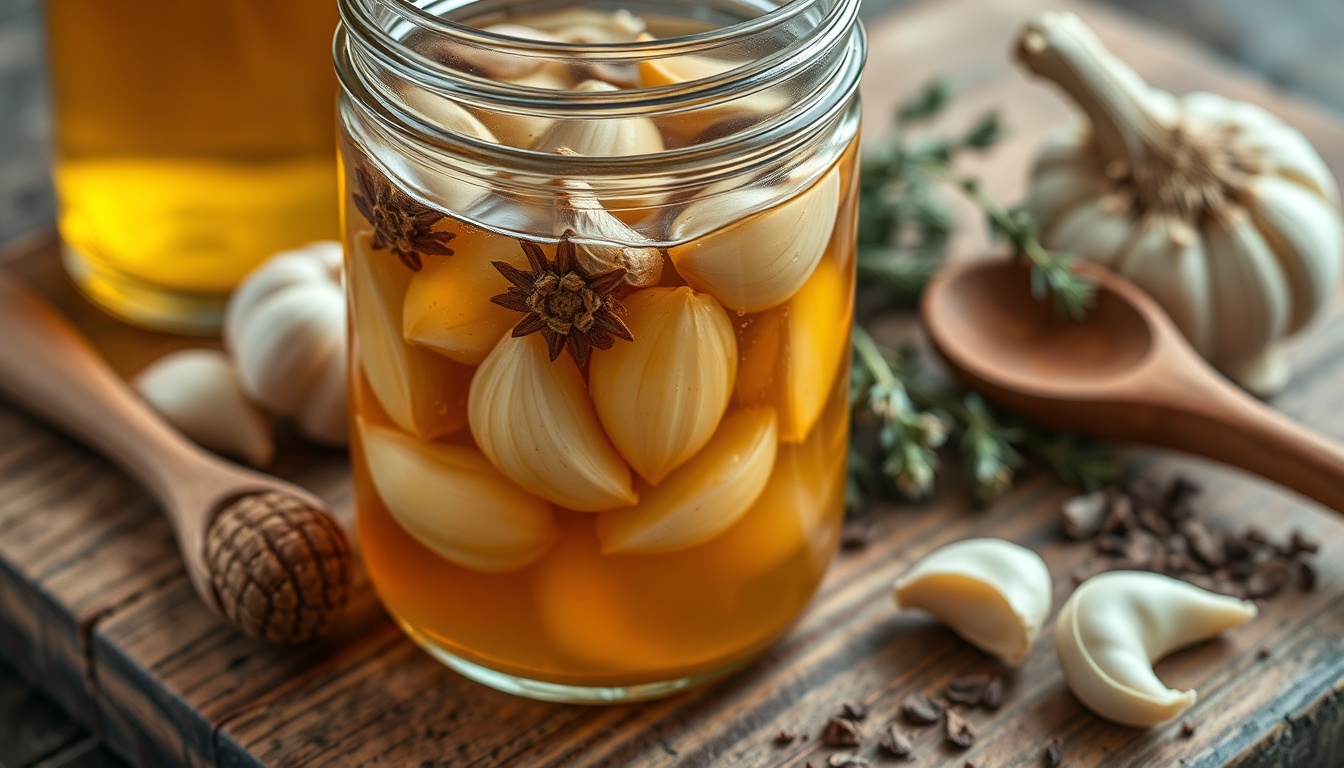
Fermented honey garlic is one of the simplest and most rewarding fermentation projects you can do at home. You submerge peeled garlic cloves in raw honey, and over the course of a few weeks, wild lactobacillus bacteria naturally present on the garlic kick off a slow lacto-fermentation. The garlic softens, the honey thins, and the result is a tangy-sweet condiment with deep umami flavor that works on everything from pizza to roasted vegetables.
This ancient preservation technique has exploded on social media in recent years, with millions of views on TikTok and YouTube. But fermented honey garlic is far more than an internet trend — it is a traditional food preservation method used for centuries across cultures. Korean, Eastern European, and Mediterranean cuisines all have versions of garlic preserved in honey.
The process is forgiving, requires no special equipment, and produces a living food rich in beneficial compounds from both the honey and the garlic. Here is everything you need to know to make it safely and successfully.
The Science Behind Honey Garlic Fermentation
Raw honey has a water activity of about 0.6 — too low for most microorganisms to grow, which is why honey effectively never spoils on its own. But when you add garlic, something interesting happens. Garlic cloves contain roughly 60% water by weight. This moisture slowly diffuses into the honey through osmosis, raising the water activity above 0.7 — the threshold where fermentation becomes possible.
Lactobacillus bacteria naturally present on the surface of garlic cloves begin converting the sugars in honey into lactic acid and carbon dioxide. This is the same type of fermentation that produces sauerkraut, kimchi, and sourdough bread. The lactic acid lowers the pH, creating an environment that inhibits harmful bacteria while favoring beneficial lactobacillus.
Meanwhile, the honey's natural hydrogen peroxide activity and the garlic's allicin (a powerful antimicrobial compound) provide additional layers of protection against unwanted microorganisms. This triple defense — low pH, hydrogen peroxide, and allicin — is why honey garlic fermentation has such a strong safety profile when done correctly.
Pro Tip
Only use raw, unpasteurized honey. Pasteurized honey has had its natural enzymes and beneficial bacteria destroyed by heat, which significantly slows or prevents proper fermentation.
Get the Honey Buyer's Cheat Sheet (free PDF)
16 varieties on one page — color, flavor, best use and what a fair price looks like — from the 268 honeys we track.
How to Make Fermented Honey Garlic: Step-by-Step
This recipe requires just two ingredients and about 10 minutes of active work. The fermentation does the rest over 3-4 weeks.
- Ingredients: 1 cup raw honey (about 12 oz by weight) + 8-10 heads of garlic (roughly 1 cup of peeled cloves). Clover honey ($8–15/lb) is the most popular starter for its mild, clean fermentation base. Wildflower honey ($10–18/lb) adds floral complexity, while buckwheat honey ($15–25/lb) creates an intensely bold ferment with deep molasses notes. Use fresh, firm garlic — avoid pre-peeled jars, which may contain preservatives that inhibit fermentation.
- Equipment: One clean pint-sized mason jar (16 oz) with a lid, a knife or garlic peeler, and optionally a fermentation weight or small piece of parchment paper.
- Step 1: Peel the garlic. Crush each clove lightly with the flat side of a knife to crack the skin, then peel. The slight crushing also releases moisture and allicin, jumpstarting fermentation. Do not mince or chop — whole or lightly crushed cloves are what you want.
- Step 2: Place the peeled cloves in the mason jar. They should fill the jar roughly halfway.
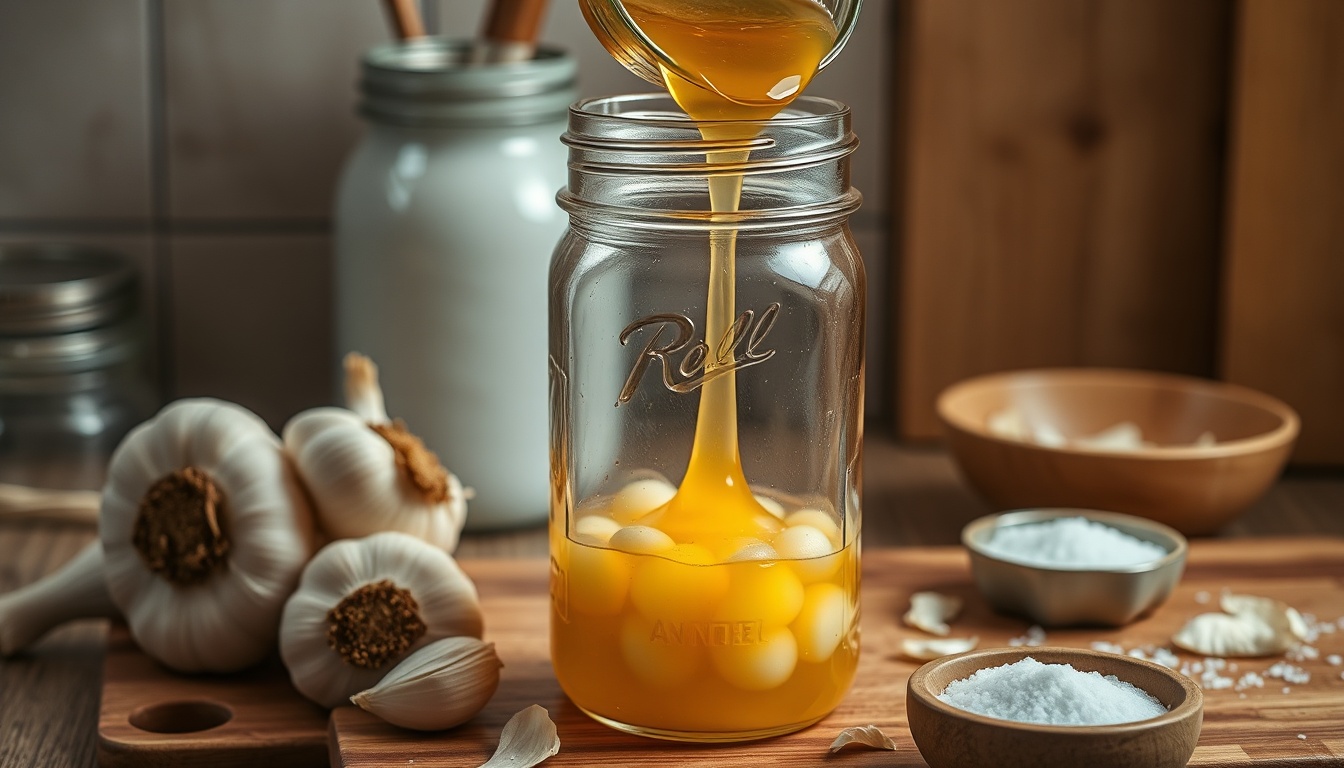
- Step 3: Pour raw honey over the garlic until the cloves are fully submerged. Leave about 1 inch of headspace at the top of the jar — fermentation produces CO2, and you need room for gas and expansion.
- Step 4: Place the lid on loosely. Do NOT seal it tight — CO2 needs to escape or pressure will build. Alternatively, use a fermentation lid with an airlock.
- Step 5: Set the jar in a cool, dark place (65-75°F / 18-24°C is ideal). A kitchen cupboard works perfectly. Avoid direct sunlight and heat sources.
- Step 6: For the first 2 weeks, flip or stir the jar once daily. The garlic will float to the surface — flipping ensures all cloves stay coated in honey, which prevents mold. After 2 weeks, you can reduce to every few days.
- Step 7: After 3-4 weeks, your fermented honey garlic is ready to use. The honey will be noticeably thinner (more liquid), the color darker, and small bubbles may appear when you stir. The garlic will be softer and slightly translucent.
Signs of Healthy Fermentation vs. Problems
Knowing what to expect during fermentation helps you distinguish normal activity from genuine problems.
- Normal: Small bubbles rising through the honey, especially in the first 1-2 weeks. This is CO2 from active fermentation.
- Normal: The honey becoming thinner and more liquid over time. Water from the garlic is diluting the honey — this is essential for fermentation.
- Normal: Garlic cloves floating to the top. This is why daily flipping is important in the early stages.
- Normal: A slight tangy or vinegary smell when you open the jar. Lactic acid produces this characteristic sour note.
- Normal: The honey darkening in color. Compounds from the garlic infuse into the honey over time.
- Problem: Visible mold (fuzzy spots, usually white, green, or black) on the surface. If you see mold, discard the entire batch. Mold means the pH did not drop fast enough or garlic was exposed to air too long. This is rare but can happen if you skip the daily flipping in the first weeks.
- Problem: A foul, rotten, or putrid smell (distinct from the pleasant tangy-sour smell of fermentation). Discard immediately.
- Problem: Garlic turning bright blue or green. This is actually harmless — it is a chemical reaction between sulfur compounds in garlic and trace copper, and it is safe to eat. But it can look alarming the first time.
Pro Tip
If you are nervous about your first batch, add 1 tablespoon of raw apple cider vinegar (with the mother) to the jar. The existing acetobacter culture helps kick-start fermentation and provides an extra safety margin by lowering pH faster.
Health Benefits of Fermented Honey Garlic
Fermented honey garlic combines the well-documented health properties of both raw honey and garlic, with additional benefits created by the fermentation process itself.
- Allicin and S-allyl cysteine — Raw garlic contains allicin, a compound with broad antimicrobial and anti-inflammatory activity. Fermentation converts some allicin into S-allyl cysteine (SAC), which research suggests is more bioavailable and has stronger antioxidant properties than allicin alone.
- Prebiotic and probiotic activity — The fermentation produces lactic acid bacteria (probiotics) while the honey's oligosaccharides act as prebiotics.
- Immune support — Both garlic and honey have immunomodulatory properties. A 2016 review in the Journal of Immunology Research found that garlic compounds stimulate immune cell activity, while raw honey's polyphenols support immune function through anti-inflammatory pathways.
- Heart health — Aged and fermented garlic preparations have been studied for cardiovascular benefits. A 2020 meta-analysis in Experimental and Therapeutic Medicine found that garlic supplementation reduced total cholesterol and LDL cholesterol, with aged garlic extracts (which share chemistry with fermented garlic) showing the strongest effects.
- Antioxidant activity — Fermentation increases the antioxidant capacity of both honey and garlic. A 2019 study in Food Chemistry found that fermented garlic had significantly higher total polyphenol content and DPPH radical scavenging activity than fresh garlic.
Important Safety Considerations
Fermented honey garlic is generally very safe, but there are a few important precautions to follow.
- Botulism risk — Clostridium botulinum spores can be present in both honey and soil on garlic. In a high-moisture, low-oxygen, neutral-pH environment, these spores can germinate and produce dangerous toxin. The good news: proper lacto-fermentation drops the pH below 4.6 (the safety threshold) within the first week, making botulism growth impossible. The key safety rule is to use enough garlic relative to honey so that fermentation starts promptly.
- pH testing — If you want extra assurance, use pH test strips to confirm the mixture reaches pH 4.6 or below within 5-7 days. If pH has not dropped below 4.6 within a week, discard and start over.
- Never seal the jar airtight — CO2 buildup can create dangerous pressure. Always use a loose lid, fermentation airlock, or burp the jar daily.
- Do not give fermented honey garlic to infants under 12 months — Raw honey carries a risk of infant botulism for babies whose digestive systems have not yet developed the ability to handle C. botulinum spores.
- Allergies — People allergic to bee products should avoid this preparation. People with garlic sensitivity or those on blood-thinning medications should consult their doctor, as garlic has natural anticoagulant properties.
- Storage — Fermented honey garlic keeps for months at room temperature and over a year in the refrigerator. Refrigeration slows fermentation but does not stop it entirely. There is no need to can or heat-process it.
Pro Tip
A good garlic-to-honey ratio for safe fermentation is roughly equal parts by volume. Too little garlic in too much honey will not provide enough moisture to start fermentation. Aim for the garlic to take up about half the jar's volume.
10 Ways to Use Fermented Honey Garlic
Both the garlic cloves and the infused honey are usable. The honey becomes a complex, tangy-sweet condiment, while the garlic cloves turn into soft, spreadable, mildly sweet morsels.
- Pizza drizzle — Drizzle the fermented honey over pizza after baking. A wildflower honey base adds floral complexity, while orange blossom honey ($12–20/lb) brightens the garlic with citrus notes. Extraordinary on margherita, pepperoni, or any pizza with spicy elements.
- Salad dressing base — Whisk fermented honey with olive oil, Dijon mustard, and a splash of vinegar for a probiotic vinaigrette.
- Marinade for meat — Mix with soy sauce and sesame oil for chicken, pork, or salmon marinades. Buckwheat honey ferments produce the richest glazes — its bold molasses depth and ORAC 16,000+ antioxidant density create exceptional caramelization. The garlic is already infused into the honey, saving a prep step.
- Toast and cheese — Spread a soft fermented garlic clove on toast with brie or goat cheese. The sweet-savory-tangy combination is addictive.
- Stir-fry glaze — Add a spoonful of fermented honey to stir-fries in the last minute of cooking for a complex glaze.
- Cold and flu season staple — Many people keep a jar of fermented garlic and honey on hand through cold and flu season. A ferment made with buckwheat honey layers antioxidant density on top of the garlic's allicin for a bold, savory combination.
- Roasted vegetables — Toss roasted carrots, sweet potatoes, or Brussels sprouts with a drizzle of fermented honey and a pinch of sea salt.
- Charcuterie boards — Add a small jar of fermented honey garlic to cheese and charcuterie boards as a conversation-starting condiment.
- Cocktails — Use the fermented honey as a sweetener in whiskey-based cocktails. Acacia honey ($12–20/lb) produces the cleanest, most mixologist-friendly ferment with its neutral clarity and low glycemic index (~32), while a buckwheat-based ferment adds bold depth to bourbon-forward drinks. It adds complexity that regular honey or simple syrup cannot match.
- Straight off the spoon — Many fermented foods enthusiasts eat a clove and a drizzle of honey daily as a probiotic supplement. The flavor mellows significantly with age.
Variations and Flavor Add-Ins
Once you have mastered the basic recipe, you can explore other infused honey techniques or experiment with these popular variations.
- Hot fermented honey garlic — Add 3-5 dried chili peppers (Thai chilies, chili de arbol, or red pepper flakes) to the jar. The capsaicin infuses into the honey alongside the garlic for a sweet-spicy-tangy result that rivals any commercial hot honey.
- Herb-infused — Add a sprig of fresh rosemary or thyme. The herbs contribute additional flavor compounds and antimicrobial properties. Remove after 2 weeks to prevent bitterness.
- Ginger honey garlic — Add 2-3 tablespoons of sliced fresh ginger. Ginger adds its own fermentation-friendly moisture and creates a warming, zingy variation excellent for cold-weather remedies.
- Black garlic honey — Use black garlic (already fermented through a Maillard reaction process) instead of raw garlic for a deeper, more complex flavor with notes of balsamic and molasses. Black garlic ferments differently since it is already processed, so the result is more of an infusion than a true lacto-fermentation.
- Turmeric honey garlic — Add 1 tablespoon of fresh grated turmeric root. The curcumin compounds in turmeric add anti-inflammatory benefits and give the honey a golden color.
Pro Tip
Start with the basic two-ingredient version before adding extras. Understanding how the base fermentation looks, smells, and tastes will help you troubleshoot more complex variations.