
Why People Are Turning to Honey for Sinus Relief
Chronic sinusitis affects roughly 30 million Americans annually, and acute sinus infections account for over 20 million doctor visits per year. With growing antibiotic resistance and the limited effectiveness of many over-the-counter sinus medications, it's not surprising that people are looking for alternatives.
Honey — particularly manuka honey — has attracted serious research attention for sinus conditions because of its well-documented antibacterial, anti-inflammatory, and biofilm-disrupting properties. Unlike many home remedies, there is actual clinical evidence behind honey for sinusitis, though the picture is nuanced. Here's what the science says, what works, what doesn't, and how to use honey safely for sinus issues.
The Science: How Honey Fights Sinus Infections
Honey attacks sinus infections through multiple mechanisms that conventional antibiotics don't. Understanding these mechanisms explains why researchers are investigating it as both a standalone treatment and an adjunct to standard care.
- Antibacterial activity — Honey's low pH (3.2-4.5), high osmolarity, and hydrogen peroxide production create a hostile environment for bacteria. Manuka honey adds methylglyoxal (MGO), a non-peroxide antibacterial compound that remains active even when hydrogen peroxide is neutralized by tissue enzymes.
- Biofilm disruption — This is arguably honey's most important advantage for sinusitis. The bacteria that cause chronic sinus infections (especially Staphylococcus aureus, Pseudomonas aeruginosa, and Haemophilus influenzae) form protective biofilms on sinus mucosa. A 2020 study in PLOS ONE found that manuka honey disrupted established Staphylococcus aureus biofilms at concentrations as low as 16% — antibiotics alone often cannot penetrate these biofilms.
- Anti-inflammatory effects — Honey modulates the NF-κB inflammatory pathway, reducing the swelling and mucus production that cause sinus pressure and congestion. A 2017 study in Pharmacognosy Research confirmed that honey downregulates pro-inflammatory cytokines (TNF-α, IL-1β, IL-6).
- Mucosal healing — Sinus infections damage the delicate mucous membrane lining the sinuses. Honey promotes epithelial cell regeneration and reduces oxidative stress, helping damaged sinus tissue recover faster. This same mechanism is why honey is effective for wound healing.
- Osmotic effect — Honey's high sugar concentration draws water out of bacterial cells through osmosis. In the sinus cavity, this also helps thin thick mucus, making it easier to drain.
Get the Honey Buyer's Cheat Sheet (free PDF)
16 varieties on one page — color, flavor, best use and what a fair price looks like — from the 268 honeys we track.
Clinical Evidence: What Studies Actually Show
The research on honey for sinusitis ranges from laboratory studies to small clinical trials. Here's a balanced assessment of what we know and what we don't.
- 2008 University of Ottawa study — Tested manuka and sidr honey against bacteria grown from chronic rhinosinusitis patients. Both honeys killed 100% of bacteria in planktonic (free-floating) form. Against biofilms, manuka killed 63-82% of organisms compared to conventional antibiotics which were far less effective. This lab study was the first to demonstrate honey's anti-biofilm potential for sinusitis.
- 2014 International Forum of Allergy & Rhinology — A randomized controlled trial of 34 patients with chronic rhinosinusitis compared manuka honey nasal irrigation to saline irrigation after endoscopic sinus surgery. Both groups showed improvement, with no statistically significant difference between honey and saline groups for symptom scores. However, the honey group showed better endoscopic appearance of sinus mucosa.
- 2017 American Journal of Rhinology & Allergy — An in vitro study found that manuka honey (UMF 12+) was effective against MRSA biofilms in a sinus mucosal model. The researchers noted that honey maintained antibacterial activity in the presence of sinus mucus, where many topical antibiotics lose effectiveness.
- 2021 Systematic Review (European Archives of Oto-Rhino-Laryngology) — Reviewed all available evidence on topical honey for chronic rhinosinusitis. Concluded that laboratory evidence is strong but clinical trial evidence remains limited. Recommended larger, well-designed randomized trials before honey can be recommended as a first-line treatment.
- 2022 International Journal of Pediatric Otorhinolaryngology — A study on honey nasal spray in children with acute rhinosinusitis found that honey-based nasal spray reduced symptoms significantly faster than saline spray alone, with improvement noted by day 5 vs day 10 in the control group.
Pro Tip
The evidence is stronger for honey as an adjunct to standard sinus treatment (saline rinses, nasal steroids) than as a standalone replacement. Don't stop prescribed sinus medications in favor of honey alone.
Manuka Honey: The Most Studied Honey for Sinusitis
Not all honeys are equal for sinus infections. Manuka honey ($35-60+/lb) dominates the sinusitis research for a specific reason: its MGO (methylglyoxal) content provides non-peroxide antibacterial activity that persists even after the hydrogen peroxide in other honeys is broken down by tissue catalase enzymes.
For sinus applications, look for manuka honey rated UMF 12+ or MGO 400+. Lower grades may not provide sufficient antibacterial activity for therapeutic use. Medical-grade manuka honey (sterilized by gamma irradiation to eliminate clostridium spores without damaging active compounds) is the safest option for any application involving mucous membranes.
- UMF 12+ (MGO 400+) — Minimum recommended grade for sinus applications
- UMF 15+ (MGO 550+) — Better for chronic or recurrent sinus infections
- UMF 20+ (MGO 850+) — Highest therapeutic grade, used in clinical studies but expensive
- Medical-grade manuka — Gamma-irradiated for sterility, the safest option for nasal use
- Regular honey — Has antibacterial properties from hydrogen peroxide but less potent than manuka for sinus biofilms
Practical Remedies: How to Use Honey for Sinus Issues
Based on the available evidence, here are the most practical ways to use honey for sinus congestion and infections. These methods range from simple comfort remedies to more targeted approaches used in clinical research.
Method 1: Honey-Enhanced Saline Nasal Rinse
This is the method closest to what's been studied in clinical trials. Saline irrigation is already a first-line recommendation for sinusitis from the American Academy of Otolaryngology. Adding honey provides additional antibacterial and anti-biofilm activity.
- Use a neti pot or squeeze bottle nasal irrigator with distilled or boiled-and-cooled water only — never tap water (risk of Naegleria fowleri amoeba)
- A standard saline solution is distilled water with non-iodized salt and baking soda — your pharmacist or doctor can advise on proportions and how to prepare it safely
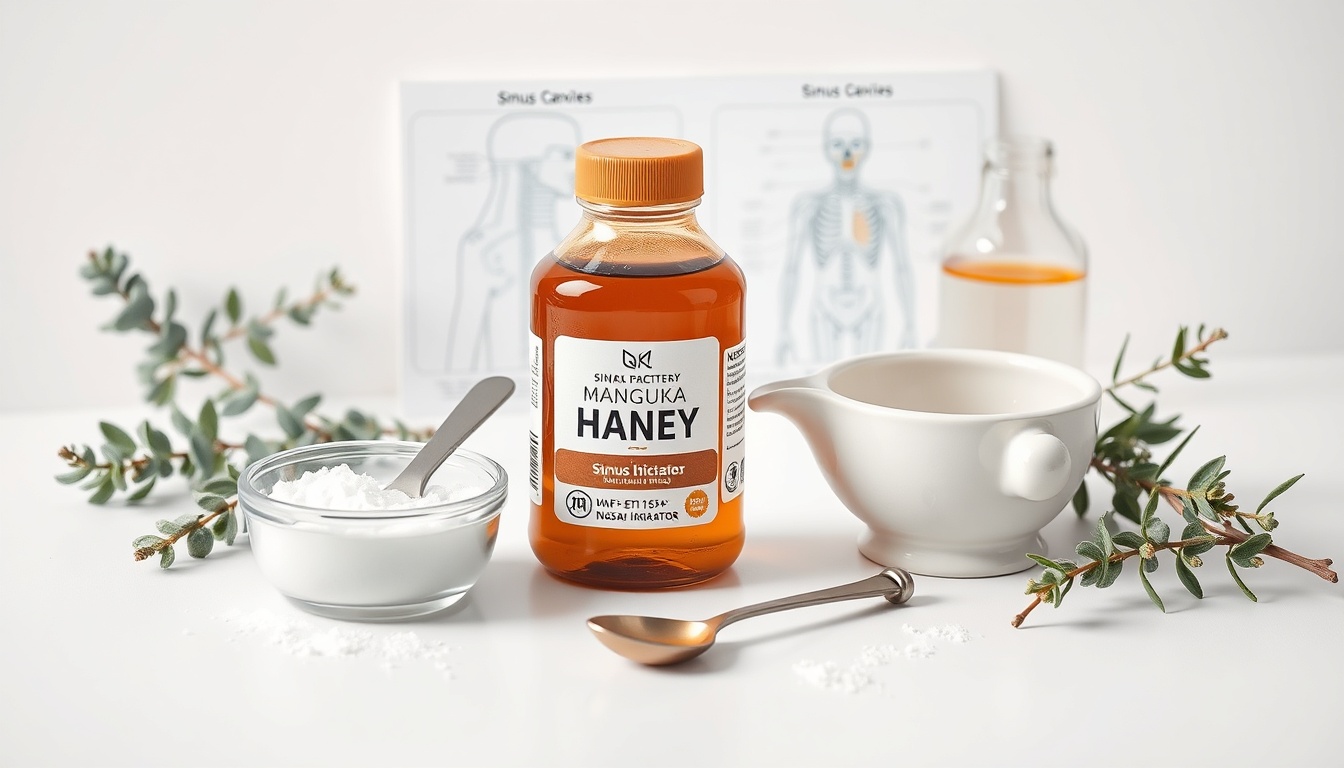
- Some people add a small amount of medical-grade manuka honey (UMF 12+, $35-60+/lb) to the fully-dissolved saline solution
- Irrigate each nostril gently, tilting head forward over a sink
- Talk to a healthcare provider about whether honey-enhanced nasal irrigation is appropriate for you, and about how often to use it
Pro Tip
SAFETY NOTE: Only use medical-grade (gamma-irradiated) manuka honey for nasal irrigation. Raw honey, even high-quality manuka, may contain bacterial spores that are safe when eaten (stomach acid destroys them) but could theoretically pose a risk when applied directly to sinus mucosa. Medical-grade honey is sterilized without losing its active compounds.
Method 2: Honey Steam Inhalation
Steam inhalation helps thin mucus and open congested sinuses. Adding honey to the steam may provide mild antibacterial benefit and soothing effects on inflamed nasal passages.
- Boil 4-6 cups of water and pour into a large heat-safe bowl
- Wait 1-2 minutes until steam is hot but not scalding
- Some add raw honey — eucalyptus honey for its natural eucalyptol compounds, or wildflower honey ($10-18/lb) for general use — and stir until dissolved
- Optional: add a few drops of eucalyptus or peppermint essential oil for additional decongestant effect
- Drape a towel over your head and lean over the bowl, keeping face 10-12 inches from the water
- Breathe deeply through your nose for several minutes, as often as feels helpful during congestion

Method 3: Honey and Warm Water Drink
The simplest approach — taking honey internally — won't directly treat a sinus infection, but provides systemic anti-inflammatory benefits and soothes the post-nasal drip and sore throat that often accompany sinusitis.
- Many people mix raw honey — clover honey ($8-15/lb) for mild sweetness or manuka honey ($35-60+/lb) for additional antimicrobial compounds — into warm (not hot) water
- Add fresh lemon juice (vitamin C) and/or fresh grated ginger (anti-inflammatory gingerols)
- The honey coats the throat, reducing irritation from post-nasal drip
- Systemic polyphenol intake from honey provides modest anti-inflammatory benefit
- This complements but does not replace topical sinus treatments
Pro Tip
For sore throat from post-nasal drip, honey is genuinely effective — the WHO and multiple studies confirm honey is as effective as dextromethorphan for cough and throat irritation. Use buckwheat honey ($15-25/lb, ORAC 16,000+) for the strongest cough-suppression effect, or wildflower honey ($10-18/lb) as a versatile everyday option.
What Honey Cannot Do for Sinus Problems
Being honest about limitations is important. Honey is not a cure-all for sinus conditions, and overreliance on it can delay appropriate medical care.
- Honey cannot replace antibiotics for severe bacterial sinusitis with high fever, facial swelling, or orbital symptoms — these require medical evaluation and possibly imaging
- Honey does not treat structural causes of chronic sinusitis (deviated septum, nasal polyps) — these may require surgical intervention
- Honey nasal rinses have not been proven superior to saline rinses in large clinical trials — they show promise but evidence is still emerging
- Honey cannot address allergic rhinitis (the most common cause of nasal congestion) — antihistamines and nasal corticosteroids are more effective for allergic sinus symptoms
- Eating honey does not deliver antibacterial compounds to the sinuses — topical application or nasal irrigation is required for direct sinus contact
- No form of honey treats viral sinus infections (common cold) — viruses resolve on their own in 7-10 days regardless of treatment
When to See a Doctor Instead
Honey is most appropriate for mild acute sinus congestion and as an adjunct to standard treatment for chronic sinusitis. Seek medical attention if you experience any of these warning signs:
- Fever above 101.3°F (38.5°C) persisting more than 3-4 days
- Severe facial pain or swelling, especially around the eyes
- Visual changes (double vision, reduced vision) — possible orbital complication
- Symptoms lasting more than 10-12 days without improvement
- Green/yellow nasal discharge for more than 10 days with facial pain
- Repeated sinus infections (4+ per year) — may indicate structural issues or immunodeficiency
- Blood in nasal discharge that isn't related to nose-blowing trauma
- Neck stiffness with sinus symptoms — rare but requires urgent evaluation
Pro Tip
Acute sinusitis usually resolves within 7-10 days. If you've been using home remedies including honey for more than 10 days without improvement, see a doctor. Delayed treatment of bacterial sinusitis can lead to complications.
Honey vs Standard Sinus Treatments: Honest Comparison
How does honey compare to treatments recommended by the American Academy of Otolaryngology? Here's a fair assessment:
- Saline irrigation: Gold standard for symptom relief, strong evidence — honey may enhance this but doesn't replace it
- Nasal corticosteroid sprays (Flonase, Nasacort): Strong evidence for reducing inflammation, especially for chronic sinusitis — honey has not been shown to be as effective
- Antibiotics (amoxicillin-clavulanate): Effective for confirmed bacterial sinusitis, but overprescribed — honey's role as an adjunct to reduce antibiotic dependence is actively being researched
- Decongestant sprays (Afrin): Quick relief but addictive (rhinitis medicamentosa after 3 days) — honey is safer for long-term use
- Antihistamines (Zyrtec, Claritin): Essential for allergic sinusitis — honey does not replace these for allergy-driven congestion, despite the persistent myth about local honey for allergies
- Surgery (FESS): Necessary for structural problems — honey is irrelevant for deviated septums or polyps
Long-Term Sinus Health: The Gut-Immune Connection
For people with recurrent sinus infections — 4 or more episodes per year — the question shifts from treating individual episodes to understanding why the immune system keeps allowing them. Emerging immunology research points to gut microbiome health as a critical factor. Approximately 70% of immune cells reside in gut-associated lymphoid tissue (GALT), and gut dysbiosis has been linked to impaired mucosal immunity throughout the body, including the sinus mucosa.
Honey's role here extends beyond its direct antibacterial effects. Consumed daily, raw honey's prebiotic oligosaccharides (FOS and GOS) support the Bifidobacterium and Lactobacillus populations that train and regulate immune T-cells. A well-balanced gut microbiome produces short-chain fatty acids (SCFAs) like butyrate, which enhance the production of secretory IgA — the primary antibody defending all mucosal surfaces, including the sinuses. In other words, feeding your gut bacteria with honey prebiotics may help build the mucosal immune defense that prevents sinus infections from recurring in the first place.
Combining honey-enhanced nasal irrigation (direct sinus treatment) with daily oral raw honey (gut immune support), warm honey and cinnamon drinks (cinnamon's cinnamaldehyde has respiratory antimicrobial properties), and anti-inflammatory honey intake creates a multi-layered sinus health strategy. For pregnant women dealing with sinus congestion — when most decongestants are contraindicated — this honey-based approach is particularly valuable as a pregnancy-safe alternative.