Honey for Immunity: The Complete Guide
How honey supports your immune system — evidence-based mechanisms, best types for immune health, daily practices, the truth about honey and allergies, and important safety precautions.
Last updated:
Honey may support immune function through several mechanisms: bee defensin-1 kills antibiotic-resistant bacteria, glucose oxidase produces antimicrobial hydrogen peroxide, flavonoids stimulate immune cell cytokine production, and prebiotic oligosaccharides support the gut microbiome (70% of immunity). A 2020 BMJ Evidence-Based Medicine meta-analysis found honey superior to usual care for respiratory infections. There's no clinically established honey dose for immune support: Manuka (UMF 10+) has the most research behind it for illness, buckwheat is the antioxidant leader, and raw wildflower is a popular everyday choice.


How Does Honey Support the Immune System?
Honey has been used as an immune-supporting remedy for over 4,000 years, from ancient Egyptian medical papyri to traditional Ayurvedic and Chinese medicine. Modern research has begun to validate these practices by identifying the specific mechanisms through which honey modulates immune function. Honey contains over 200 bioactive compounds — including flavonoids (chrysin, pinocembrin, galangin, quercetin), phenolic acids (caffeic acid, ellagic acid), enzymes (glucose oxidase, defensin-1), and oligosaccharides — that collectively influence both innate and adaptive immunity. The innate immune system benefits from honey's direct antimicrobial action: glucose oxidase produces hydrogen peroxide when honey is diluted, creating a sustained low-level antimicrobial environment. Bee defensin-1, a peptide identified in honey by researchers at the University of Amsterdam in 2010, directly kills bacteria including antibiotic-resistant strains like MRSA. For adaptive immunity, a 2012 study published in the International Archives of Allergy and Immunology found that honey stimulated monocytes to release cytokines (TNF-alpha, IL-1beta, IL-6), which are critical signaling molecules that coordinate immune responses. A separate 2018 study in Nutrients demonstrated that honey increased the proliferation of B-lymphocytes and T-lymphocytes by 4-fold and 2-fold respectively in vitro. The prebiotic oligosaccharides in honey also support immune function indirectly by feeding beneficial gut bacteria — and since approximately 70% of the immune system resides in gut-associated lymphoid tissue (GALT), a healthy gut microbiome is foundational to strong immunity. Raw, unfiltered honey retains the full complement of immune-active compounds, while pasteurization (heating above 161°F / 72°C) destroys heat-sensitive enzymes like glucose oxidase and degrades defensin-1.
Key Takeaways
- Contains 200+ bioactive compounds: flavonoids, phenolic acids, enzymes, and oligosaccharides
- Glucose oxidase produces hydrogen peroxide — a natural antimicrobial when honey is diluted
- Bee defensin-1 kills antibiotic-resistant bacteria including MRSA (University of Amsterdam, 2010)
- Stimulates cytokine release (TNF-alpha, IL-1beta, IL-6) to coordinate immune responses
- Prebiotic oligosaccharides support gut health — 70% of the immune system is in the gut
- Raw, unfiltered honey retains full immune-active compounds; pasteurization destroys key enzymes
What Does the Research Say About Honey and Immune Health?
Clinical evidence for honey's immune benefits is strongest in the area of upper respiratory infections. A landmark 2020 systematic review and meta-analysis published in BMJ Evidence-Based Medicine analyzed 14 studies involving over 1,700 participants and concluded that honey was superior to usual care (including antibiotics and over-the-counter medications) for improving symptoms of upper respiratory tract infections — particularly cough frequency, cough severity, and infection duration. The review found honey reduced cough frequency by 36% and cough severity by 44% compared to controls. For sore throat specifically, honey's osmotic properties (drawing moisture from inflamed tissue to reduce swelling) and antimicrobial activity make it an effective demulcent. Common OTC cough medications have been shown to be no more effective than placebo in children, which is part of why researchers have studied honey as an alternative — talk to your pediatrician about appropriate use for children over 12 months. A 2012 study in Pediatrics found that a single nighttime dose of 10g of honey improved cough and sleep quality better than dextromethorphan in children aged 1-5. Beyond respiratory infections, a 2019 Frontiers in Microbiology review documented honey's antibacterial activity against over 60 species of bacteria, including E. coli, Pseudomonas aeruginosa, Staphylococcus aureus, and Helicobacter pylori. Manuka honey showed the broadest spectrum of activity due to its unique methylglyoxal (MGO) compound, which provides non-peroxide antibacterial activity that remains effective even when hydrogen peroxide is neutralized. For wound healing — another immune-mediated process — a 2015 Cochrane systematic review of 26 trials found honey accelerated healing of partial-thickness burns by an average of 4.68 days compared to conventional dressings, with lower infection rates.
Key Takeaways
- BMJ Evidence-Based Medicine 2020 systematic review (14 studies, 1,700+ participants): honey superior to usual care for respiratory infections
- Reduced cough frequency by 36% and cough severity by 44% compared to controls
- A 2020 BMJ review found honey outperformed usual care for cough in children over 12 months
- Active against 60+ bacterial species including MRSA, E. coli, and H. pylori
- Manuka honey's methylglyoxal (MGO) provides unique non-peroxide antibacterial activity
- Cochrane review: honey accelerated burn healing by 4.68 days with lower infection rates
Which Types of Honey Are Best for Immunity?
Not all honeys offer equal immune support — the type, processing method, and floral source significantly affect potency. Manuka honey (UMF 10+ / MGO 263+) is the gold standard for immune support due to its unique methylglyoxal compound, which provides potent non-peroxide antibacterial activity. A 2019 study in Frontiers in Microbiology found Manuka honey effective against biofilms — structured bacterial communities that are 1,000 times more resistant to antibiotics than free-floating bacteria. For daily immune maintenance, UMF 10-15 (MGO 263-514) is sufficient; for acute illness, UMF 15-20+ (MGO 514-829+) provides stronger antibacterial action. However, Manuka honey is expensive ($30-80+ per pound), so it's best reserved for when you're sick or as a targeted supplement. Given the high price and prevalence of counterfeit products, learning to identify authentic Manuka honey is crucial for getting the therapeutic benefits you're paying for. Buckwheat honey is the antioxidant powerhouse of the honey world. Research published in the Journal of Agricultural and Food Chemistry found that buckwheat honey contains up to 20 times more antioxidants than lighter honeys, with an ORAC (Oxygen Radical Absorbance Capacity) value of 16,000+ — comparable to vitamin C on a per-gram basis. Its high polyphenol content (100-200 mg GAE/100g vs 20-50 for clover honey) scavenges free radicals that damage immune cells. A 2007 Penn State study found buckwheat honey outperformed dextromethorphan for nighttime cough relief in children. Raw wildflower honey provides a broad spectrum of immune-supporting compounds from multiple floral sources and offers the best daily value at $8-15 per pound. The diverse pollen content means a wider range of flavonoids and phenolic acids. Tualang honey from Southeast Asia has shown particular promise for immune modulation — a 2011 study found it increased natural killer cell activity and T-helper cell counts. For any immune benefit, the honey must be raw (unfiltered, unpasteurized) — pasteurization destroys glucose oxidase, defensin-1, and up to 50% of antioxidant content.
Key Takeaways
- Manuka honey (UMF 10+): strongest antibacterial — effective against biofilms 1,000x more resistant than free bacteria
- Buckwheat honey: 20x more antioxidants than light honeys — ORAC 16,000+, comparable to vitamin C
- Raw wildflower honey: best daily value ($8-15/lb) with broad-spectrum immune compounds from diverse pollen
- Tualang honey: increased natural killer cell activity and T-helper cell counts in clinical study
- Must be raw and unfiltered — pasteurization destroys glucose oxidase, defensin-1, and up to 50% of antioxidants
- For illness: UMF 15-20+ Manuka; for daily maintenance: raw wildflower or buckwheat honey
How to Use Honey for Immune Support: Daily Practices
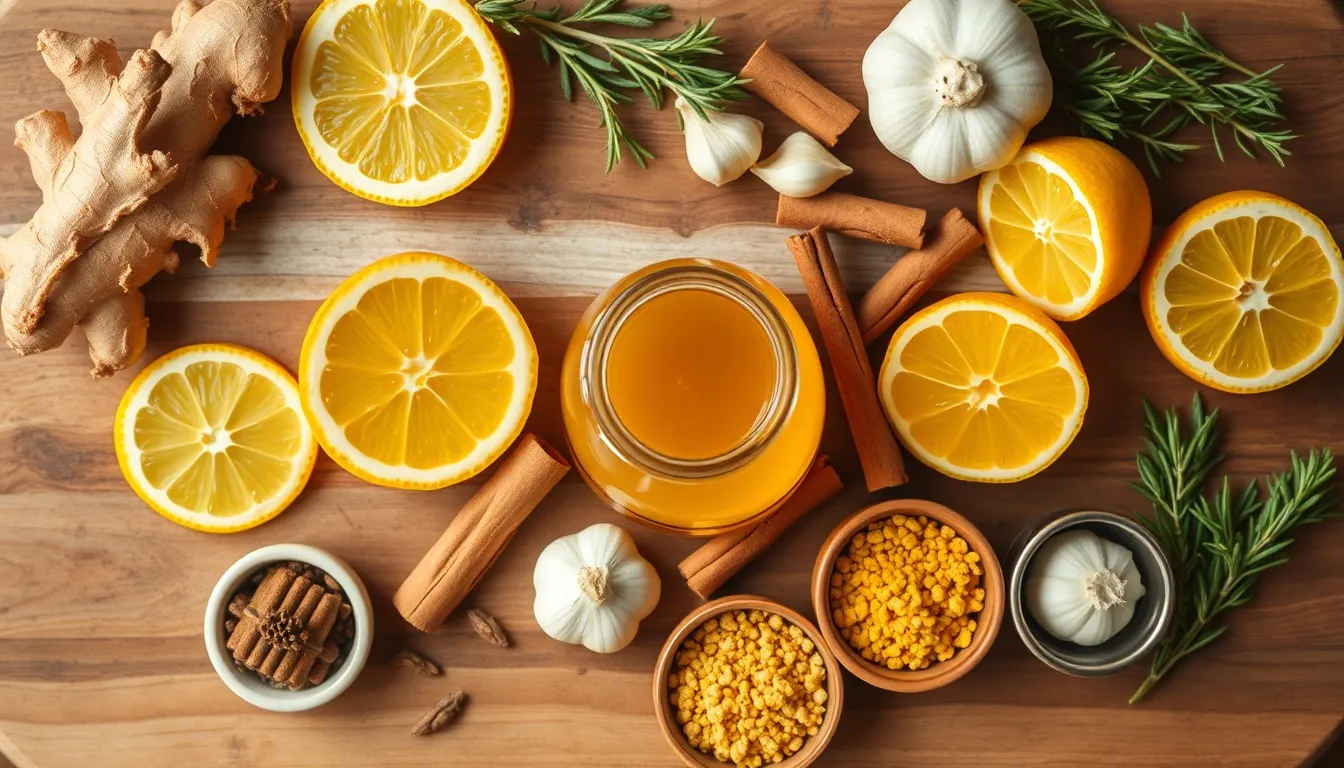
Some people include raw honey in their daily routine — for example, dissolved in warm water (kept below 140°F to preserve heat-sensitive compounds) on an empty stomach. Honey and ginger tea is a popular pairing during cold and flu season: steep fresh ginger in hot water, cool it below 140°F, then stir in raw honey. A 2013 Journal of Ethnopharmacology study found that fresh ginger inhibited human respiratory syncytial virus (HRSV) in laboratory conditions. Honey with turmeric ("golden honey") is another popular combination — a pinch of black pepper is traditionally added because piperine increases curcumin absorption. There is no clinically established dose, timing, or frequency of honey for immune support, so treat these as food preferences rather than a treatment plan. When sourcing honey for immune support, choosing reputable brands with quality verification ensures you get the compounds you're seeking.
Key Takeaways
- Some people dissolve raw honey in warm water (below 140°F) on an empty stomach as a daily habit
- Honey ginger tea is a popular pairing during cold and flu season
- Golden honey (honey + turmeric + black pepper) is a popular anti-inflammatory-themed combination
- There is no clinically established dose, timing, or frequency of honey for immune support
- Treat these as food preferences, not a treatment plan — talk to your doctor about illness-specific care

Can Honey Help with Seasonal Allergies and Chronic Inflammation?
The popular claim that local honey prevents seasonal allergies through gradual pollen desensitization is appealing but only partially supported by research. The theory is sound: local honey contains small amounts of local pollen, and consuming it regularly could work similarly to allergen immunotherapy (allergy shots). However, most research has been inconclusive. A 2011 Finnish study published in the International Archives of Allergy and Immunology found that subjects consuming birch pollen honey (specifically pollen-enriched, not regular commercial honey) experienced 60% lower allergy symptom scores and twice as many symptom-free days compared to controls. Regular honey without added pollen showed no significant benefit. A 2013 study in the Annals of Saudi Medicine found that high-dose honey (1g/kg body weight daily) improved allergic rhinitis symptoms over 4 weeks, but the mechanism was attributed to honey's general anti-inflammatory properties rather than pollen desensitization. The challenge is that regular honey contains primarily wind-pollinated plant pollen (which bees encounter incidentally), while most seasonal allergies are triggered by specific wind-dispersed pollens (grasses, ragweed, trees) that may or may not be present in local honey in meaningful quantities. For chronic inflammation — which undermines immune function over time — honey's evidence is stronger. Honey's flavonoids (particularly chrysin and quercetin) inhibit NF-κB and COX-2 inflammatory pathways. A 2022 meta-analysis published in Nutrition Reviews analyzing 18 clinical trials found that honey consumption significantly reduced C-reactive protein (CRP), a key inflammatory biomarker, by an average of 0.67 mg/L. Regular honey consumption was also associated with improved LDL cholesterol (−5.5 mg/dL) and triglycerides (−11.5 mg/dL), both markers of chronic inflammation. For allergy support specifically, Manuka honey's anti-inflammatory properties may provide more consistent relief than the uncertain pollen desensitization effect of local honeys.
Key Takeaways
- Local honey for allergies: appealing theory but only partially supported — pollen-enriched honey showed 60% lower symptoms in Finnish study
- Regular honey without added pollen showed no significant allergy benefit in most studies
- High-dose honey (1g/kg/day) improved rhinitis symptoms, likely through anti-inflammatory action not pollen exposure
- Honey's flavonoids (chrysin, quercetin) inhibit NF-κB and COX-2 inflammatory pathways
- Nutrition Reviews meta-analysis (18 trials): honey reduced CRP inflammatory marker by 0.67 mg/L
- For allergy sufferers: Manuka's anti-inflammatory action may be more reliable than local honey pollen theory
Are There Risks of Using Honey for Immune Support?
While honey is a safe immune-supporting food for most people, several important precautions apply. The most critical: never give honey to infants under 12 months old. Honey can harbor Clostridium botulinum spores that cause infant botulism — a rare but potentially life-threatening condition. Infants' immature gut flora cannot neutralize these spores the way older children and adults can. This applies to all forms of honey including raw, pasteurized, and baked goods containing honey. Sugar content is a legitimate concern when using honey for immunity. Each tablespoon of honey contains approximately 17 grams of sugar (64 calories). Excessive sugar consumption actually suppresses immune function — a 1973 Loma Linda University study and subsequent research found that consuming 75-100 grams of sugar significantly reduced the ability of white blood cells to engulf bacteria for up to 5 hours after consumption. The American Heart Association recommends no more than 25 grams of added sugar daily for women and 36 grams for men — be mindful of total daily sugar intake from honey and all other sources. People with diabetes should monitor blood glucose when adding honey to their routine — while honey GI varies by variety (~69 for common clover, similar to or above table sugar at 65; ~32 for acacia), it still raises blood sugar significantly. Consult your healthcare provider, especially if you take diabetes medications. Honey should not replace medical treatment for serious infections or immune conditions. It is a complement to, not a substitute for, antibiotics when prescribed for bacterial infections, flu antivirals, or immunosuppressive therapies. People with compromised immune systems (HIV/AIDS, cancer chemotherapy, organ transplant recipients on immunosuppressants) should consult their healthcare team before using raw, unpasteurized honey, as there is a theoretical risk from environmental microorganisms in unprocessed products. Finally, rare honey allergies exist — typically triggered by pollen proteins in raw honey. If you have severe pollen allergies, start with a small amount (½ teaspoon) of raw honey and monitor for reactions before increasing your dose.
Key Takeaways
- Never give honey to infants under 12 months — risk of potentially fatal infant botulism
- Sugar awareness: 1 tbsp = 17g sugar — excessive sugar actually suppresses white blood cell function for hours
- Be mindful of total sugar intake from honey and other sources to stay within AHA added sugar guidelines
- Diabetics should monitor blood sugar — common honey (clover ~69) is near or above table sugar; acacia (~32) is the lowest-GI choice
- Not a substitute for medical treatment — complements but does not replace antibiotics or antivirals
- Immunocompromised individuals should consult their doctor before consuming raw, unpasteurized honey
Frequently Asked Questions
Can honey support immune function?
Honey has demonstrated antimicrobial activity through several mechanisms: bee defensin-1 (active against MRSA), glucose oxidase (generates hydrogen peroxide on contact), flavonoids that may modulate cytokine signaling, and prebiotic oligosaccharides supporting gut microbiota. A 2020 BMJ Evidence-Based Medicine meta-analysis of 14 studies found honey superior to usual care for upper respiratory infections. The strongest clinical evidence is for upper respiratory symptom relief — broad "immune-boosting" claims in healthy adults are not well supported by current human trials.
What is the best honey for immune support?
For fighting infections, [Manuka honey](/honey/new-zealand-manuka-umf-15) (UMF 10+/MGO 263+) is the strongest due to its unique methylglyoxal antibacterial compound. [Buckwheat honey](/honey/buckwheat-honey) has 20 times more antioxidants than lighter honeys (ORAC 16,000+) for immune cell protection. [Raw wildflower honey](/honey/wildflower-honey) is the best daily option at $8-15/lb with broad-spectrum immune compounds from diverse pollen sources. [Acacia honey](/honey/acacia-honey) is gentle and diabetic-friendly with GI ~32. All honey must be raw and unfiltered — pasteurization destroys key immune-active enzymes.
How much honey should I take daily for immunity?
There's no clinically established dose of honey for immune support. If you enjoy honey, stay mindful of total added sugar from all sources (the AHA recommends no more than 25g daily for women, 36g for men) rather than aiming for a specific 'immune-boosting' amount.
Can honey help with seasonal allergies?
The evidence is mixed. A Finnish study found pollen-enriched honey reduced allergy symptoms by 60%, but regular honey showed no significant benefit. High-dose honey (1g/kg/day) improved rhinitis symptoms, likely through anti-inflammatory action rather than pollen desensitization. For allergy relief, [Manuka honey](/honey/new-zealand-manuka-umf-15)'s anti-inflammatory properties may be more reliable than the local honey pollen theory. [Wildflower honey](/honey/wildflower-honey) from your region may provide the most diverse local pollen exposure if pursuing the desensitization approach.
Is honey safe for people with weakened immune systems?
People with compromised immune systems (HIV/AIDS, chemotherapy, transplant recipients) should consult their healthcare team before using raw, unpasteurized honey, as there is a theoretical risk from environmental microorganisms. Pasteurized honey is safer for immunocompromised individuals but has reduced immune-supporting properties. Honey should complement, not replace, prescribed medical treatments.
Can babies have honey for immunity?
Never give honey to infants under 12 months old. Honey can harbor Clostridium botulinum spores that cause infant botulism — a rare but potentially fatal condition. This applies to all forms including raw, pasteurized, and baked goods containing honey. For children over 12 months, talk to your pediatrician about whether and how much honey is appropriate.
Which honey varieties should I choose for different immune support goals?
For maximum infection-fighting power: [Manuka honey](/honey/new-zealand-manuka-umf-15) UMF 15-20+ with unique methylglyoxal antibacterial activity against biofilms and MRSA. For daily antioxidant support: [buckwheat honey](/honey/buckwheat-honey) with ORAC 16,000+ — 20x more antioxidants than [clover honey](/honey/clover-honey) for immune cell protection. For everyday affordability: [wildflower honey](/honey/wildflower-honey) provides broad-spectrum immune compounds from diverse pollen at $8-15/lb. For blood sugar management: [acacia honey](/honey/acacia-honey) with GI ~32 is diabetic-friendly while maintaining immune benefits. For respiratory support: [eucalyptus honey](/honey/eucalyptus-honey) adds mild decongestant properties. For digestive immunity: [wildflower honey](/honey/wildflower-honey) and [clover honey](/honey/clover-honey) provide prebiotic oligosaccharides supporting gut microbiome and GALT (70% of immune system).
Edited by Sam French · Raw Honey Guide Editorial Team
Source reviewed against primary literature and official guidance where available. Health content is educational, not medical advice, and does not replace a licensed clinician.
Get the Honey Buyer's Cheat Sheet (free PDF)
16 varieties on one page — color, flavor, best use and what a fair price looks like — from the 268 honeys we track.
Related Guides
Health Benefits
Nutritional and therapeutic benefits of honey.
Read GuideManuka Honey Benefits
UMF/MGO ratings and proven benefits.
Read GuideHoney for Sore Throat
Evidence-based sore throat relief.
Read GuideRelated Articles
Honey for Immune System: How It Strengthens Your Defenses
How honey supports immunity: antimicrobial action, cytokine modulation, gut health, and prebiotic effects. Science review.
Read ArticleHoney for Colds and Flu: Your Complete Natural Remedy Guide
Honey for colds and flu: cough suppression, sore throat relief, immune support. Best types, 5 remedies, and usage guide.
Read ArticleHoney and Black Seed: Benefits, Evidence, and How to Use It
How to mix honey with black seed, how ground seeds differ from oil, and what human studies actually show about the benefits.
Read ArticleHoney for Ear Infections: Can It Help? What Research Shows
Can honey help ear infections? Review the evidence on antimicrobial properties, safe application, and when antibiotics win.
Read ArticleReady to find the best honey for immune support?