How Honey Supports Your Immune System
Honey has been used as a medicinal food for thousands of years, with ancient Egyptian, Greek, and Ayurvedic physicians prescribing it for infections, wounds, and general vitality. Modern immunology research has identified specific mechanisms behind these traditional uses — and the results are more nuanced than simple "immune boosting."
Raw honey supports immune function through at least five distinct pathways: direct antimicrobial activity, cytokine modulation, gut-associated immune support via prebiotics, antioxidant protection of immune cells, and wound-related immune signaling. Importantly, honey appears to modulate rather than simply stimulate the immune system — promoting appropriate responses while helping to control excessive inflammation.
This guide covers what the clinical evidence actually supports, which honey types are most effective for immune health, and how to incorporate honey into an evidence-based immune support strategy.
1. Direct Antimicrobial Defense
Honey's most well-documented immune contribution is its direct ability to kill or inhibit pathogens — effectively acting as a first line of defense alongside your immune system.
Honey generates hydrogen peroxide through the enzyme glucose oxidase, which becomes active when honey is diluted (as happens when applied to wounds or consumed with water). This sustained, low-level H₂O₂ production creates an antimicrobial environment that kills bacteria without the tissue damage caused by concentrated antiseptics.
Research published in the Journal of Applied Microbiology has documented honey's effectiveness against over 60 species of bacteria, including antibiotic-resistant strains like methicillin-resistant Staphylococcus aureus (MRSA) and vancomycin-resistant Enterococci (VRE). A 2011 study in the European Journal of Clinical Microbiology & Infectious Diseases found that manuka honey disrupted bacterial biofilms — structured bacterial communities that are notoriously resistant to both antibiotics and immune attack.
Beyond hydrogen peroxide, honey's antimicrobial arsenal includes its acidic pH (3.2-4.5), high osmolarity that dehydrates bacteria, bee defensin-1 (an antimicrobial peptide), and in manuka honey, methylglyoxal (MGO) which provides non-peroxide antibacterial activity that persists even when hydrogen peroxide is neutralized.
Get the Honey Buyer's Cheat Sheet (free PDF)
16 varieties on one page — color, flavor, best use and what a fair price looks like — from the 268 honeys we track.
2. Cytokine and Immune Cell Modulation
Beyond directly killing pathogens, honey communicates with your immune system at the cellular level — and this is where the concept of immune modulation (rather than simple boosting) becomes important.
A 2003 study in the Journal of Leukocyte Biology found that honey stimulated monocytes and macrophages to release TNF-α, IL-1β, and IL-6 — pro-inflammatory cytokines that coordinate the immune response to infection. This is beneficial during acute infection when the body needs to mount a defense.
However, honey also demonstrates anti-inflammatory properties through its polyphenols. Chrysin, pinocembrin, and caffeic acid phenethyl ester (CAPE) inhibit the NF-κB pathway — the master regulator of inflammatory gene expression. A 2022 review in Nutrients found that honey's polyphenols suppress COX-2 and iNOS expression, reducing chronic inflammation.
This dual action — stimulating immune responses when needed while controlling excessive inflammation — is what researchers call immunomodulation. It's more valuable than simple immune stimulation because an overactive immune system causes autoimmune conditions, while an underactive one leaves you vulnerable to infection. Honey appears to help the system find appropriate balance.
Pro Tip
Raw, unprocessed honey retains the full spectrum of immunomodulatory compounds. Pasteurized commercial honey has lost most of its enzyme activity and many heat-sensitive polyphenols that drive immune modulation.
3. Gut Immunity: The 70% Connection
An estimated 70-80% of your immune cells reside in gut-associated lymphoid tissue (GALT). This makes gut health arguably the most important factor in overall immune function — and honey has significant effects on the gut immune axis.
Honey's prebiotic oligosaccharides — fructo-oligosaccharides (FOS) and gluco-oligosaccharides (GOS) — selectively feed beneficial Bifidobacterium and Lactobacillus species. These bacteria produce short-chain fatty acids (SCFAs), particularly butyrate, which strengthens the intestinal barrier, modulates regulatory T cells, and supports secretory IgA production — your mucosal immune system's primary antibody defense.
A 2020 study in the Journal of Functional Foods found that raw honey consumption increased Bifidobacterium populations and SCFA production in human subjects. Butyrate specifically enhances the differentiation of regulatory T cells (Tregs), which are critical for preventing autoimmune reactions while maintaining pathogen vigilance.
Honey also demonstrates selective antimicrobial activity in the gut — inhibiting pathogenic species like H. pylori, C. difficile, and E. coli while preserving beneficial bacteria. This selective action helps maintain the microbial diversity that underpins healthy immune function.
4. Antioxidant Protection for Immune Cells
Immune cells generate reactive oxygen species (ROS) as weapons against pathogens — but this oxidative burst can also damage the immune cells themselves. Honey's antioxidants help protect immune cells from their own friendly fire.
Honey contains over 30 polyphenol compounds including flavonoids (chrysin, pinocembrin, galangin, quercetin) and phenolic acids (caffeic acid, ferulic acid, ellagic acid). A 2018 review in Pharmacognosy Research found that honey's antioxidant activity is comparable to many fruits and vegetables on a per-gram basis.
Dark honeys contain 3-9 times more antioxidants than light honeys. A 2004 study in the Journal of Agricultural and Food Chemistry found that buckwheat honey had antioxidant levels similar to some fruits, measured by ORAC (Oxygen Radical Absorbance Capacity). For comparison, pure clover honey USA - America's most popular variety - provides moderate antioxidant protection (ORAC ~1,500) with clean, mild sweetness that enhances compliance for daily immune support routines.
These antioxidants protect lymphocytes, neutrophils, and macrophages from oxidative damage during immune responses - helping your immune cells survive and function during prolonged infections. The antioxidants also activate the Nrf2 pathway, which upregulates your body's own antioxidant enzyme production (superoxide dismutase, catalase, glutathione peroxidase).
5. Respiratory Immune Support
Some of the strongest clinical evidence for honey's immune benefits comes from respiratory health studies — which makes sense given that the respiratory tract is a primary site of pathogen entry.
A 2020 systematic review and meta-analysis in BMJ Evidence-Based Medicine analyzed 14 studies and found that honey was superior to usual care for improving upper respiratory infection symptoms, including cough frequency, cough severity, and infection duration. This wasn't just symptom masking — honey reduced the duration of illness, suggesting genuine immune support.
Honey's mechanism in respiratory infections involves multiple pathways: antimicrobial activity against respiratory pathogens (S. pneumoniae, H. influenzae, S. aureus), anti-inflammatory effects on swollen airway mucosa, mucus-thinning properties that improve pathogen clearance, and throat-coating that protects damaged epithelium while it heals.
For sinus infections, research has shown that honey — particularly manuka honey — disrupts the biofilms that allow chronic sinus infections to persist. A 2008 University of Ottawa study found honey effective against all common sinus pathogens tested, including MRSA strains.
6. Wound Healing and Tissue Immunity
Honey's role in wound healing represents one of its most clinically validated immune applications. The 2015 Cochrane systematic review analyzed 26 trials involving 3,011 participants and found honey effective for healing partial-thickness burns and post-surgical wound infections.
Wounds require precisely coordinated immune responses: initial inflammation to clear pathogens, followed by controlled resolution to enable tissue repair. Honey facilitates both phases. During the inflammatory phase, honey's antimicrobial properties reduce bacterial burden while its hydrogen peroxide generation activates macrophages for debris clearance.
During the resolution phase, honey's anti-inflammatory polyphenols help transition from inflammation to proliferation. Honey also stimulates fibroblast proliferation and collagen synthesis — essential for tissue repair. The acidic pH of honey promotes angiogenesis (new blood vessel formation) needed to supply healing tissue.
This is why medical-grade honey products like Medihoney and Activon Tube are FDA-cleared wound care treatments used in hospitals worldwide. The immune support is localized and precisely calibrated to the wound healing timeline.
Best Honey Types for Immune Support
Not all honeys are equal for immune support. Here's how different varieties compare.
- Manuka honey New Zealand - The most studied honey for immune applications. MGO provides non-peroxide antimicrobial activity that persists even when diluted. UMF 10+ (MGO 263+) for general immune support, UMF 15+ (MGO 514+) for active infections. Premium New Zealand manuka ($40-80/250g) represents the gold standard for therapeutic immune applications with extensive clinical validation.
- New York buckwheat honey - Highest antioxidant content among common varieties (ORAC 16,000+ μmol TE/100g, 3-9x more than clover). Bold molasses-like flavor from glacial till soil minerality. Best for respiratory immune support and antioxidant protection of immune cells during oxidative burst. More affordable than manuka ($20-35/lb) with strong immune-relevant research.
- Texas wildflower honey - Diverse polyphenol profile from mesquite-huajillo-bluebonnet botanical signatures across four climate zones. Good all-purpose immune support with moderate antioxidant levels (3,000-8,000 ORAC). Contains local pollen that some believe supports allergy-season immune adaptation with authentic regional terroir impossible to replicate elsewhere.
- Italian acacia honey - Mildest flavor and highest fructose ratio (F/G 1.47) creating lowest glycemic impact (GI ~32 vs ~69 clover). Water-white clarity with delicate vanilla undertones. Lower antioxidant content but still provides enzymatic and prebiotic benefits. Premium European terroir ($12-25/lb) makes it ideal for daily immune support, particularly for those monitoring blood sugar.
- Tualang honey - Malaysian rainforest honey studied extensively for immune modulation. Research shows strong antioxidant and anti-inflammatory properties. Less readily available outside Southeast Asia.
How to Use Honey for Immune Support
Practical approaches for incorporating honey into your immune health routine.
- Daily maintenance — Raw honey taken directly, in warm (not hot) water, or with warm milk before bed provides a baseline of prebiotic, antioxidant, and antimicrobial compounds for combined sleep and immune benefits.
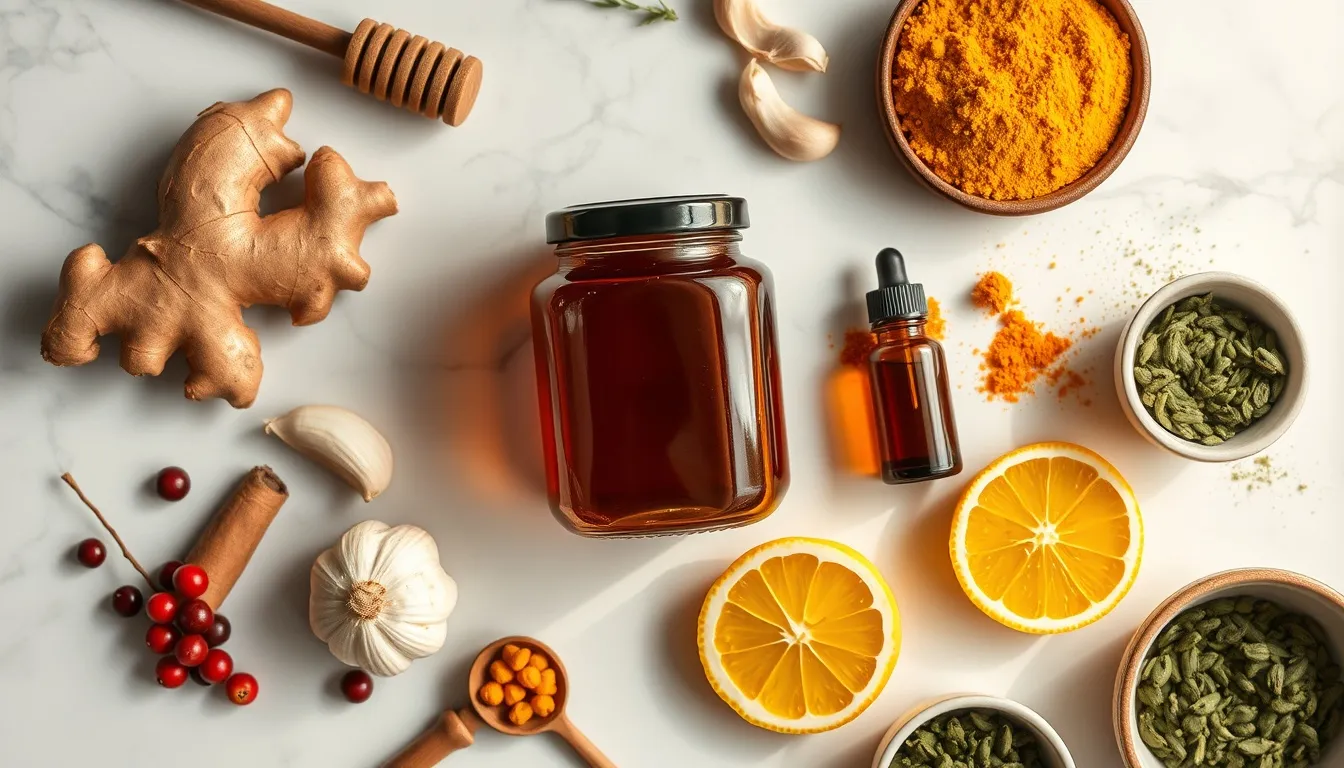
- During illness — For coughs and sore throats, some people take buckwheat or manuka honey straight, letting it coat the throat slowly. Combine with ginger or garlic for synergistic antimicrobial effects.
- Immune-supporting combinations — Honey and turmeric golden milk combines honey's immunomodulatory effects with curcumin's anti-inflammatory properties. Honey and cinnamon tea provides antimicrobial synergy. Honey-lemon-ginger tea is a classic respiratory immune support drink.
- Gut immune support — Take honey with probiotic-rich foods (yogurt, kefir) to combine prebiotic fuel with live beneficial bacteria. This dual approach maximizes gut-associated immune function.
- Temperature matters — Never add honey to boiling liquids. Temperatures above 118°F (48°C) destroy glucose oxidase and reduce polyphenol content. Let beverages cool to drinking temperature before stirring in honey.

What Honey Cannot Do: Immune Myths
It's important to separate evidence-based benefits from exaggerated claims about honey and immunity.
- Myth: Honey "boosts" your immune system — The immune system doesn't have a simple dial to turn up. Honey modulates immune function — supporting appropriate responses rather than indiscriminately increasing immune activity. An overactive immune system causes autoimmune disease; what you want is balanced immune function.
- Myth: Honey can replace vaccines or medications — Honey is a supportive food, not a pharmaceutical. It does not provide specific immunity against diseases. No amount of honey substitutes for evidence-based preventive medicine or prescribed treatments for serious infections.
- Myth: Honey detoxes your immune system — There is no scientific basis for "immune detox." The liver and kidneys handle waste removal. Honey supports immune function through nutrition and bioactive compounds, not through detoxification mechanisms.
- Myth: Eating more honey means stronger immunity — There are diminishing returns well beyond typical daily amounts. Excessive honey consumption adds unnecessary sugar (64 calories per tablespoon) without proportional immune benefits. Quality matters more than quantity — raw, unprocessed honey in moderate amounts is the evidence-based approach.
- Myth: Local honey prevents all allergies — The local honey allergy theory has limited clinical support. Most seasonal allergies are caused by wind-borne grass and tree pollen, not the flower pollen bees collect. Honey may help with allergy symptoms through anti-inflammatory effects, not immunotherapy.
Who Should Be Cautious
Honey is safe for most people but certain populations need extra care.
- Infants under 12 months — Never give honey to babies due to infant botulism risk. Their immature gut flora cannot suppress Clostridium botulinum spores that honey may contain.
- Immunocompromised individuals — People undergoing chemotherapy, organ transplant recipients on immunosuppressive drugs, or those with advanced HIV should consult their physician before using raw honey therapeutically. While honey's antimicrobial properties may be beneficial, raw products carry theoretical infection risks for severely immunocompromised patients.
- Diabetes note — Honey is a fast-acting carbohydrate, and no honey variety is medically preferred. Use the honey carbohydrate and label guide to compare serving-size total carbohydrate and added sugars within an individualized care plan.
- Bee allergy sufferers — Honey allergy is rare but distinct from bee sting allergy. If you have a documented allergy to bee products (pollen, propolis, royal jelly), start with a tiny amount of any new honey and watch for reactions.
The Bottom Line
Honey supports immune function through multiple evidence-based mechanisms: direct antimicrobial activity against 60+ pathogen species, immunomodulatory cytokine signaling, gut-associated immune support via prebiotic effects, antioxidant protection of immune cells, and clinically validated respiratory and wound healing benefits.
The strongest evidence supports using raw honey — particularly dark varieties like buckwheat or manuka — as part of a balanced immune health strategy, providing meaningful prebiotic, antioxidant, and antimicrobial support. During illness, honey (especially for cough and sore throat) has clinical evidence comparable to or better than over-the-counter remedies.
Think of honey as an immune modulator, not a magic bullet. It works best as one component of an overall approach that includes adequate sleep, regular exercise, stress management, and a nutrient-dense diet.