Why the Honey-Diabetes Question Matters
Honey is a natural sweetener, but it is still primarily sugar — about 82% by weight. For the 38.4 million Americans with diabetes and 97.6 million with prediabetes (CDC National Diabetes Statistics Report, 2022), every carbohydrate choice matters. The question of whether honey is safe, beneficial, or harmful for people managing blood sugar deserves a careful, evidence-based answer.
The short answer: honey is not off-limits for most diabetics, but it requires the same carbohydrate counting and portion control as any other sugar source. What makes honey interesting is that clinical research consistently shows it behaves differently than equivalent amounts of table sugar or glucose — producing smaller blood sugar spikes and, in some studies, actually improving metabolic markers over time.
This does not make honey a "diabetes cure" or a free food. It means that when diabetics choose to use a sweetener, raw honey may be a more metabolically favorable option than refined sugar, artificial sweeteners, or high-fructose corn syrup — within strict portion limits.
What Clinical Studies Show About Honey and Blood Sugar
Multiple clinical trials have directly measured honey's effects on blood glucose in diabetic and healthy subjects.
- 2018 Nutrition & Metabolism systematic review — Analyzed 12 clinical trials on honey and diabetes. Found that honey consistently produced lower postprandial (after-meal) blood glucose responses compared to sucrose and glucose. In type 2 diabetics specifically, honey caused significantly lower blood sugar spikes than equivalent carbohydrate loads from other sugars.
- 2022 Nutrition Reviews meta-analysis of 18 RCTs — This large meta-analysis found that honey consumption reduced fasting blood glucose by a mean of 2.88 mg/dL compared to control diets. While modest, this effect was statistically significant and occurred alongside improvements in cholesterol, inflammatory markers, and triglycerides.
- 2004 Journal of Medicinal Food study — Compared honey, sucrose, and glucose in type 2 diabetics and healthy subjects. Honey produced significantly lower blood glucose peaks than sucrose or glucose in both groups. In diabetics, honey raised blood sugar by 28% less than sucrose at the 60-minute mark.
- 2009 International Journal of Biological Sciences — Found that 8 weeks of daily honey consumption in type 2 diabetics produced a statistically significant reduction in HbA1c (the 3-month average blood sugar marker) compared to baseline — a clinically meaningful outcome given that each 0.5 percentage-point absolute reduction in HbA1c is associated with measurable decreases in long-term diabetes complications.
- 2012 Diabetes, Obesity and Metabolism review — Concluded that honey's average GI (~58 across varieties) is lower than table sugar (GI 65), glucose (GI 100), and most commercial sweeteners. The review noted that honey's fructose-to-glucose ratio and bioactive compounds likely explain the attenuated glycemic response. Note: this average masks wide variety differences — acacia honey has a GI as low as ~32, while common clover honey measures approximately 69 (Ischayek & Kern 2006), slightly above table sugar.
Pro Tip
Important: these studies used raw, unprocessed honey. Processed commercial honey (pasteurized, ultra-filtered) has different properties and may not produce the same metabolic effects.
Why Honey Affects Blood Sugar Differently Than Table Sugar
Honey and table sugar have similar calorie counts (64 vs 49 calories per tablespoon), so why does honey produce different blood glucose responses? Several mechanisms have been identified.
- Fructose-to-glucose ratio — Honey is approximately 40% fructose and 30% glucose, while sucrose is 50/50. Fructose has a very low GI (19) compared to glucose (100) because it is primarily metabolized by the liver rather than causing direct blood glucose elevation. Honey's higher fructose proportion contributes to its lower glycemic impact.
- Bioactive compound modulation — Honey contains over 200 compounds including polyphenols, flavonoids, and organic acids that independently affect glucose metabolism. Chrysin and quercetin have been shown in vitro to enhance insulin sensitivity and promote glucose uptake by muscle cells.
- Oligosaccharide prebiotic effects — Honey's prebiotic fibers (fructo-oligosaccharides and galacto-oligosaccharides) slow carbohydrate absorption and feed beneficial gut bacteria that produce short-chain fatty acids. SCFAs improve insulin sensitivity via the GPR41/GPR43 receptor pathway.
- Incretin hormone stimulation — Early laboratory studies suggest honey may stimulate GLP-1 (glucagon-like peptide-1) release more than pure sugar. GLP-1 enhances insulin secretion, suppresses glucagon, and slows gastric emptying — mechanisms that blunt postprandial glucose spikes. Human clinical confirmation of this pathway at dietary honey doses remains limited; it should not be compared to pharmaceutical GLP-1 agonists.
- Mineral cofactors — Honey provides chromium, zinc, and magnesium — trace minerals that serve as cofactors for insulin signaling. While the amounts per tablespoon are small, they contribute to honey's overall metabolic profile compared to nutrient-free refined sugar.
Honey Guidelines by Diabetes Type
Different forms of diabetes require different approaches to honey consumption.
- Type 2 diabetes (well-controlled, A1c under 7%) — Most evidence supports cautious honey use in this group. Replace existing sugar intake with honey rather than adding it. Limit to 1 tablespoon (17g carbohydrates) per day. Count it as part of your carbohydrate budget. Monitor blood glucose before and 2 hours after consumption to assess your individual response. Acacia honey (GI ~32) or dark honeys like buckwheat may be preferable for their low GI or high polyphenol content respectively.
- Type 2 diabetes (poorly controlled, A1c above 8%) — Exercise extra caution. Any added sugar — including honey — can worsen glycemic control when blood sugar is already elevated. Work with your endocrinologist to improve baseline control before incorporating honey. If approved, start with 1 teaspoon and monitor closely.
- Type 1 diabetes — Honey requires the same insulin dosing as other carbohydrates. Count 1 tablespoon as approximately 17g of carbohydrates. Because honey has a lower GI than glucose, its absorption may be slightly slower, potentially requiring insulin timing adjustments. Always consult your diabetes care team before modifying sweetener choices.
- Prediabetes (A1c 5.7-6.4%) — This is arguably where honey substitution may have the most benefit. Replacing refined sugar with raw honey reduces the glycemic load of existing sweetener use. Combined with diet and exercise, this is a reasonable metabolic optimization. Limit to 1-2 tablespoons daily as a sugar replacement.
- Gestational diabetes — Honey is generally safe during pregnancy, but gestational diabetes requires strict carbohydrate management. Treat honey as any other carbohydrate and count it toward meal totals. Consult your OB/GYN or maternal-fetal medicine specialist. Important: honey must never be given directly to infants under 12 months of age — Clostridium botulinum spores naturally present in all honey can cause infant botulism in the immature infant gut (CDC primary dietary source), regardless of honey quality or processing method.
Best Honey Types for Diabetics
Not all honeys are metabolically equivalent. The type of honey affects its glycemic impact.
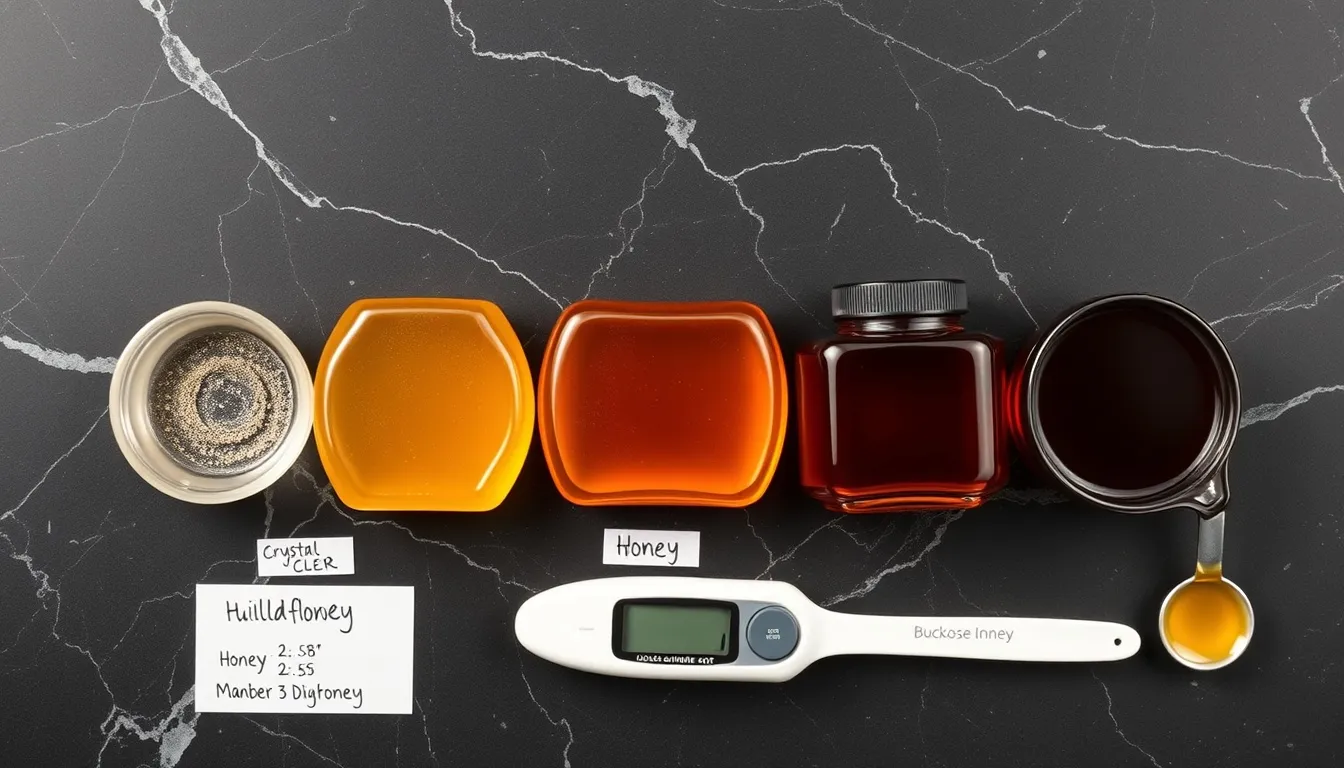
- Acacia honey ($12-20/lb) — Has the highest fructose-to-glucose ratio of common honeys (roughly 44% fructose, 27% glucose), giving it the lowest GI among honey varieties (GI ~32, well below table sugar at 65). This makes acacia honey the best choice for blood sugar management. Its mild, neutral flavor works in any application without overpowering.
- Raw, unfiltered honey — Retains all bioactive compounds (polyphenols, enzymes, prebiotics) that modulate glucose metabolism. The clinical studies showing metabolic benefits consistently used raw honey, not processed varieties. Browse raw varieties or find a local beekeeper for the freshest options.
- Dark honeys — Buckwheat honey ($15-25/lb, ORAC 16,000+, GI ~83) and chestnut honey ($20-35/lb) contain 3-9x more polyphenols than light varieties. Higher polyphenol content correlates with greater antioxidant and anti-inflammatory activity, which may improve insulin sensitivity over time. Note: buckwheat has a higher GI than acacia, so pair with protein/fat to blunt the spike.
- Manuka honey (UMF 10+ $35-60+) — Contains unique methylglyoxal (MGO) compounds. While manuka has specific antibacterial benefits, its glycemic impact is similar to other raw honeys and it is significantly more expensive. For blood sugar management specifically, acacia or buckwheat may be better choices.
- Budget-friendly options — Clover honey ($8-15/lb, GI ~69) and wildflower honey ($10-18/lb, GI 50-65) are widely available and affordable. While their GI is higher than acacia, they still provide polyphenols and prebiotics absent from refined sugar. Wildflower's lower GI range makes it the better budget pick for diabetics.
- Avoid: processed commercial honey — Pasteurized, ultra-filtered honey in squeeze bottles has lost most bioactive compounds. It behaves more like liquid sugar than raw honey and provides less metabolic benefit. Also avoid honey "syrups" or "blends" that may contain corn syrup or rice syrup.
Pro Tip
The glycemic index of honey varies from ~32 (acacia) to 87 (processed clover). Choosing the right variety can make a meaningful difference for diabetics. Ask your local beekeeper about their floral source.
How to Use Honey Safely with Diabetes
If you and your healthcare provider decide honey is appropriate, follow these practical guidelines.
- Measure precisely — Use actual measuring spoons, not eyeball estimates. 1 tablespoon of honey = 64 calories, 17g carbohydrates, 17g sugar. This is the equivalent of roughly one "carb exchange" in diabetes meal planning.
- Replace, never add — Swap honey for existing sugar in tea, coffee, oatmeal, or cooking. Adding honey on top of current sugar intake adds carbohydrates and calories with no net metabolic benefit.
- Pair with protein or fat — Consuming honey with protein (Greek yogurt, nuts) or healthy fat (avocado, olive oil) slows glucose absorption and reduces blood sugar spikes. Never consume honey in isolation on an empty stomach if you have diabetes.
- Test your individual response — Use a glucometer to test blood sugar before eating honey and 2 hours after. If the 2-hour reading is above 180 mg/dL, reduce the amount or avoid honey. Individual responses vary significantly based on insulin sensitivity, medication, and overall diet.
- Time it strategically — Honey before bed may help with liver glycogen replenishment, but diabetics should be cautious about nighttime carbohydrates. Morning or early afternoon consumption allows for better monitoring and insulin action.
- Track carbohydrates — Log honey in your food diary or carb-counting app just like any other carbohydrate source. Do not treat it as a "free food" or health supplement that does not count.
Honey and Diabetes Medications: Interactions to Know
Honey can interact with diabetes medications in ways that require awareness.
- Metformin — No direct interaction, but metformin works best when carbohydrate intake is consistent. Adding or removing honey sporadically can affect blood sugar patterns. Maintain a consistent daily amount.
- Sulfonylureas (glipizide, glimepiride, glyburide) — These medications stimulate insulin release regardless of blood sugar level. Adding honey carbohydrates on top of sulfonylurea-induced insulin can cause hypoglycemia (low blood sugar) if the total carbohydrate intake exceeds what the insulin can handle. Be especially careful with timing.
- Insulin (rapid-acting, long-acting, mixed) — Count honey carbohydrates and dose insulin accordingly. Because honey has a lower GI than glucose, rapid-acting insulin may peak before honey's glucose is fully absorbed, potentially causing early hypoglycemia followed by late hyperglycemia. Consider splitting the dose or adjusting timing.
- GLP-1 receptor agonists (semaglutide, liraglutide, tirzepatide) — These medications slow gastric emptying, which further delays honey absorption. The combined effect may produce a longer, flatter glucose curve. Monitor for delayed hyperglycemia (check at 3-4 hours instead of 2 hours).
- SGLT2 inhibitors (empagliflozin, dapagliflozin) — These medications cause glucose excretion through urine. Consuming honey while on SGLT2 inhibitors is generally safe, but be aware that the glucose-lowering effect of the medication may mask the full glycemic impact of honey in finger-stick readings.
Pro Tip
Never adjust diabetes medication doses based on honey consumption without consulting your endocrinologist or diabetes educator. Medication adjustments require professional guidance.
What Honey Cannot Do for Diabetes
Honest expectations are essential. Here is what the evidence does not support.
- Cure or reverse diabetes — No amount of honey will cure type 1 or type 2 diabetes. Claims that honey "reverses diabetes" are dangerous misinformation. Diabetes management requires medical supervision, lifestyle modification, and usually medication.
- Replace diabetes medication — Honey's glycemic advantages in clinical trials are modest: typical absolute HbA1c reductions are 0.3–0.5 percentage points — well below the 1–1.5 percentage points from metformin, 2–3.5 from insulin, and 1–2 from GLP-1 agonists. Honey is a dietary optimization, not a treatment.
- Be consumed freely — Honey is still 82% sugar. Even with a lower GI, excessive consumption will raise blood sugar. The "natural" label does not exempt honey from carbohydrate counting.
- Work equally for everyone — Individual glycemic responses to honey vary dramatically based on genetics, gut microbiome composition, insulin sensitivity, medication regimen, and overall diet. What works for one diabetic may not work for another.
- Counteract a poor diet — Adding honey to an otherwise high-carbohydrate, high-processed-food diet will not improve metabolic health. Honey's benefits are observed in the context of overall dietary improvement.
The Bottom Line: Honey as Part of Diabetes Management
The clinical evidence supports a nuanced position: raw honey is not harmful for most diabetics when consumed in controlled amounts as a replacement for other sugars, and it may offer modest metabolic advantages over table sugar, including lower glycemic response, reduced inflammation, improved cholesterol markers, and prebiotic support for gut health.
However, honey is not a diabetes treatment, and it must be managed within your overall carbohydrate budget. The best approach is to discuss honey with your diabetes care team, start with small amounts (1 teaspoon), monitor your blood sugar response, and adjust based on your individual results.
If you currently use refined sugar and are looking for a slightly better alternative, raw honey — particularly acacia or dark varieties — is a reasonable choice. If you are already well-controlled without any added sweeteners, there is no clinical reason to start consuming honey for its metabolic effects.