Why This Comparison Confuses So Many Honey Buyers
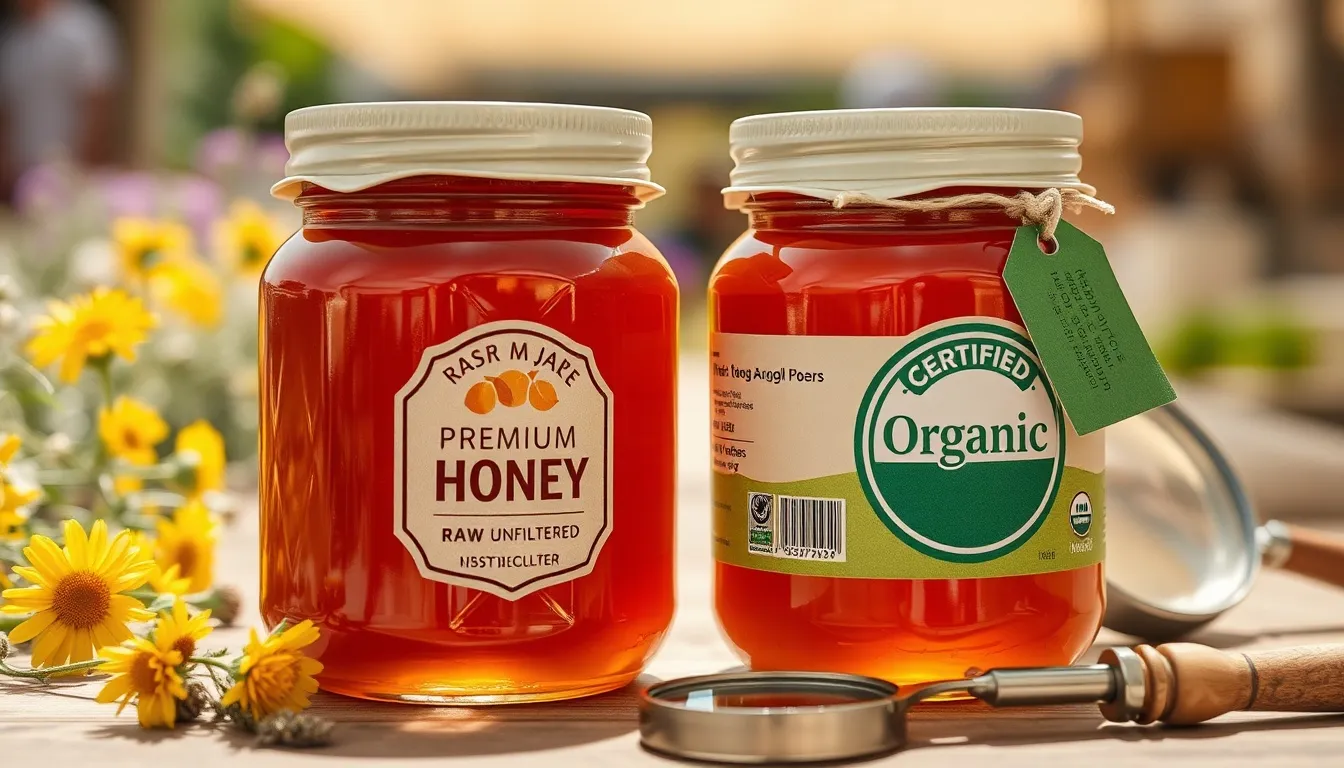
"Raw" and "organic" sound like they should mean the same thing — natural, unprocessed, healthy. But they describe completely different aspects of honey production. Raw refers to how honey is processed after harvest. Organic refers to how bees are managed and where they forage. You can have raw honey that isn't organic, organic honey that isn't raw, both, or neither.
This confusion costs consumers money and leads to buying decisions based on assumptions rather than facts. With World Environment Day 2026 (June 5) highlighting land restoration and drought resilience, understanding how your honey purchasing decisions connect to environmental stewardship matters more than ever — organic certification supports pesticide-free habitat, while buying raw local honey funds the beekeepers who maintain pollinator populations. If you've ever wondered whether organic honey is worth the premium, or whether raw honey is automatically better, this guide breaks down exactly what each label means and when each one matters more.
What "Raw" Actually Means
Raw honey has not been heated above natural hive temperatures (approximately 95°F / 35°C) and has not been ultra-filtered. That's the core definition. There is no legal standard from the FDA defining "raw" — it's an industry convention. Most honey labeled raw has been lightly strained to remove large wax particles and bee parts, but retains its pollen, enzymes, and propolis traces.
The key enzymes preserved in raw honey include glucose oxidase (which produces hydrogen peroxide, giving honey its antibacterial properties), diastase (which breaks down starch), and invertase (which converts sucrose to glucose and fructose). These enzymes are denatured — permanently destroyed — when honey is heated above 140°F (60°C), which is standard in commercial pasteurization.
- Not heated above ~95°F (35°C) during processing
- Not ultra-filtered — retains pollen grains, propolis traces, and wax particles
- Enzymes (glucose oxidase, diastase, invertase) remain active
- May crystallize faster because pollen grains act as nucleation seeds
- No FDA-regulated definition — relies on producer honesty
- Color and flavor reflect the actual floral source without heat degradation
Pro Tip
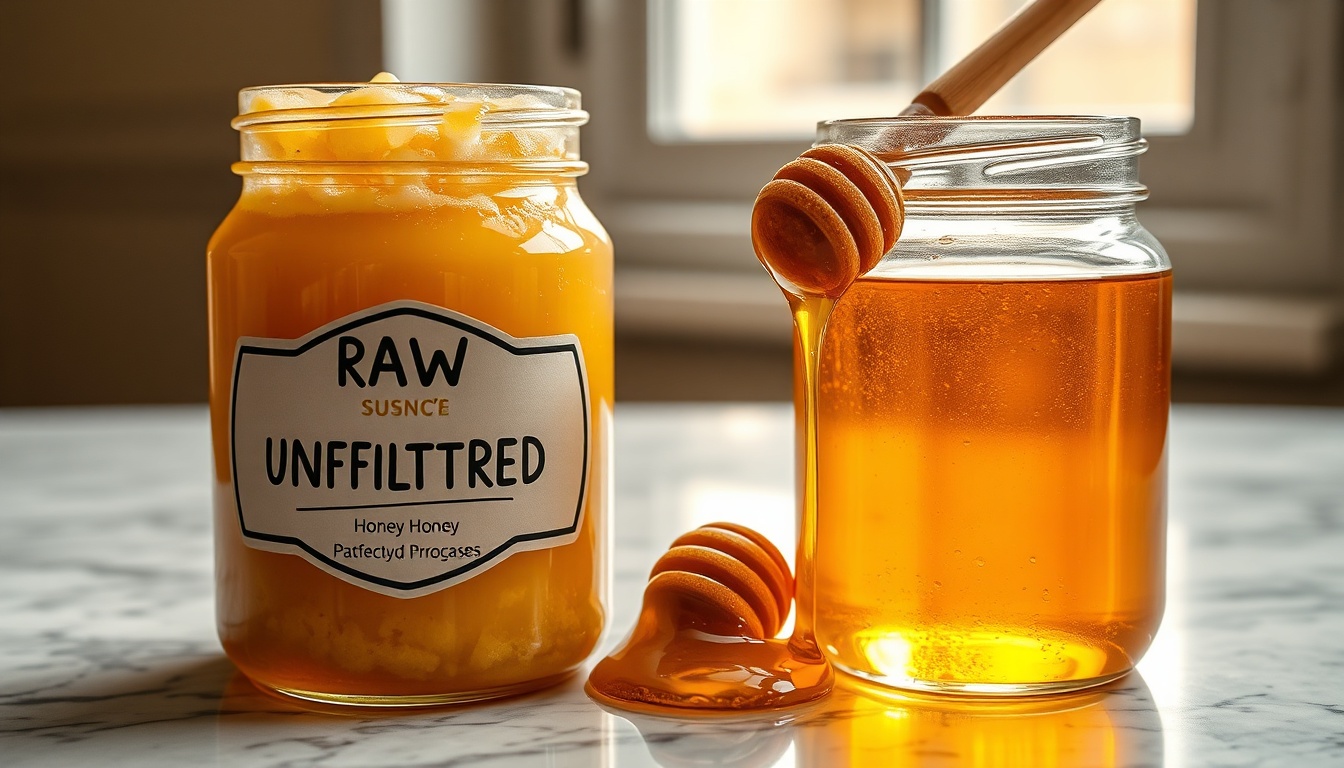
The easiest way to verify raw honey is the crystallization test. Raw honey almost always crystallizes within a few months. If your honey has been in the pantry for a year and is still perfectly liquid, it was almost certainly heat-treated. Learn more about why honey crystallizes.
Get the Honey Buyer's Cheat Sheet (free PDF)
16 varieties on one page — color, flavor, best use and what a fair price looks like — from the 268 honeys we track.
What "Organic" Actually Means
Organic honey is certified under USDA National Organic Program (NOP) standards — or equivalent standards from the EU, Canada, or Brazil. The certification addresses the entire beekeeping operation: where bees forage, how they're treated for diseases, what the hives are made of, and how honey is processed after extraction.
Organic certification for honey is extraordinarily difficult in the United States because bees forage in a 2-4 mile radius from their hive. Every acre within that radius must be free of synthetic pesticides, GMO crops, and prohibited substances. In practice, most organic honey sold in the US is imported from Brazil, Mexico, or remote regions of Canada and New Zealand where vast pesticide-free foraging areas exist.
- Bees must forage in areas free of synthetic pesticides and GMO crops within a ~2-4 mile radius
- No synthetic chemicals for hive pest or disease management (no synthetic miticides like fluvalinate)
- Hives must be made from natural materials — no paint or coatings with prohibited substances
- Sugar feeding is restricted — organic bees must primarily forage for their own food
- Processing must avoid synthetic additives, though heat treatment is allowed within organic standards
- Annual inspections and full record-keeping required for certification
- USDA organic seal requires accredited third-party certification
Pro Tip
Most US-produced honey cannot achieve organic certification because of the foraging radius requirement. American beekeepers in agricultural areas are typically within bee-flight distance of conventionally farmed crops. If you see "organic" honey from a US producer, verify their certification — the claim should include the name of the certifying agency.
The Critical Difference: Processing vs Sourcing
Here's the fundamental distinction that clears up the confusion:
- Raw = a processing standard — how honey is handled AFTER it leaves the hive. No heat, no ultra-filtration.
- Organic = a sourcing and management standard — how bees are kept and where they forage BEFORE honey is harvested.
- They are independent axes. A honey can be raw but not organic (beekeeper doesn't heat-treat but bees forage near conventional farms).
- A honey can be organic but not raw (bees forage in pristine areas but the processor heats and filters the honey for a clear, shelf-stable product).
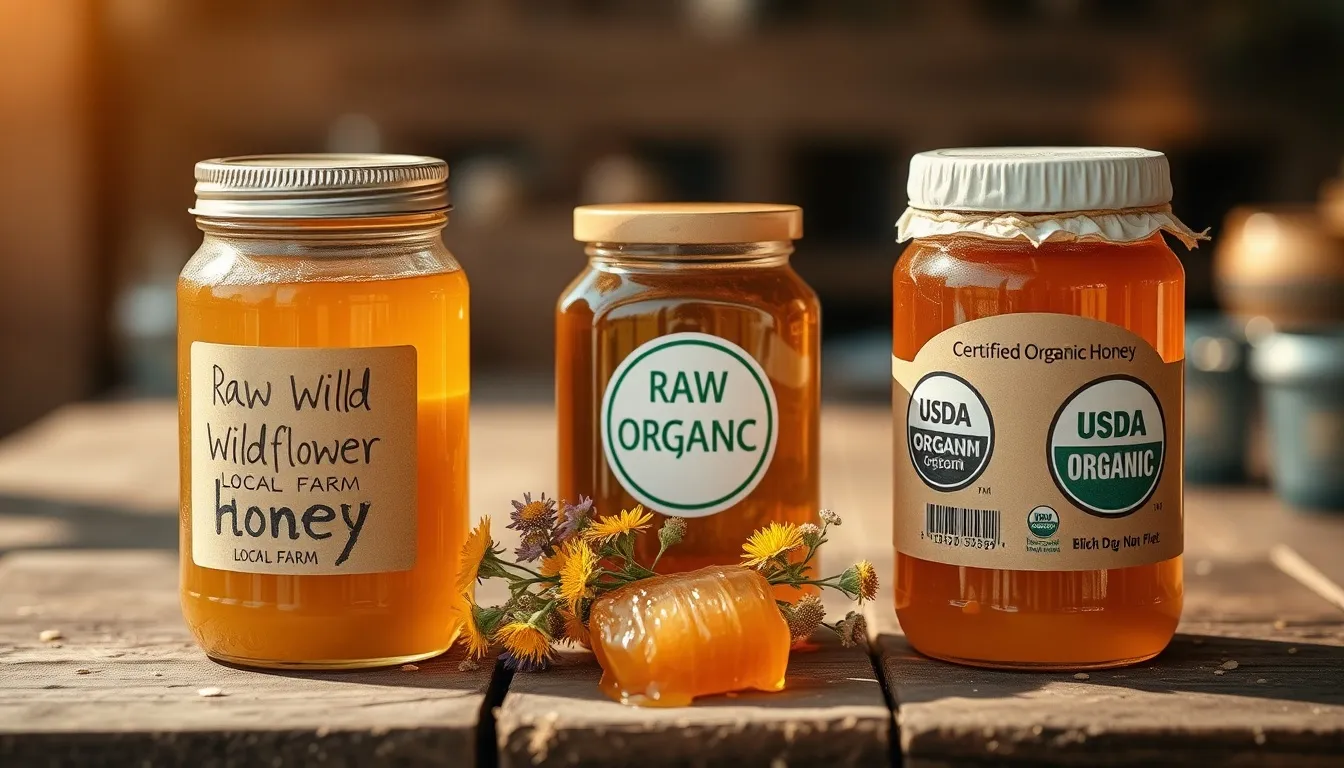
- The gold standard is raw organic honey — unprocessed honey from certified organic beekeeping operations. This is the most expensive and hardest to find.
Nutritional and Health Comparison
From a nutritional standpoint, raw vs organic affects different things. Raw preservation matters more for enzyme activity and heat-sensitive compounds. Organic certification matters more for pesticide residue and chemical exposure.
A 2023 systematic review in Food Chemistry found that heating honey above 140°F reduced glucose oxidase activity by 40-100% depending on temperature and duration. The same study found diastase numbers dropped below the Codex Alimentarius minimum (8 DN) after prolonged heating. This means raw honey has measurably more enzymatic activity than heat-processed honey, regardless of whether it's organic.
On the pesticide front, a 2019 study in Science of the Total Environment tested 198 honey samples globally and found neonicotinoid residues in 75% of samples. Organic-certified honeys had significantly lower pesticide concentrations, though trace contamination from environmental drift was still detectable in some organic samples. If minimizing pesticide exposure is your priority, organic certification provides the strongest assurance.
- Enzyme activity (glucose oxidase, diastase): Raw wins — heat destroys enzymes regardless of organic status
- Pollen content: Raw wins — ultra-filtration removes pollen, and some organic honey is ultra-filtered
- Pesticide residues: Organic wins — certification requires pesticide-free foraging zones
- Antioxidant levels: Roughly equal — antioxidant content is primarily determined by floral source and color, not processing or certification
- Mineral content: Roughly equal — minerals are heat-stable and not affected by processing
- Caloric content: Identical — about 64 calories per tablespoon regardless of raw or organic status
Price Comparison and Value Analysis
Price is often the deciding factor. Here's what you can expect to pay per pound at retail in the US (2026 prices):
- Conventional (not raw, not organic): $8-12/lb — mass-produced, blended, heat-processed for shelf clarity
- Raw (not organic): $12-20/lb — locally produced, minimally processed, retains enzymes and pollen. Clover honey ($8-15) and wildflower honey ($10-18) are the most common raw varieties at this price point
- Organic (not raw): $15-25/lb — certified sourcing from pesticide-free areas, but may be heat-processed. Acacia honey ($12-20, GI ~32) from European organic operations is a popular choice
- Raw organic: $20-35/lb — the premium option combining both standards. Tupelo honey ($25-45, never crystallizes) and sourwood honey ($20-35) from remote Appalachian and Gulf Coast regions often qualify naturally
- Manuka honey (raw, organic UMF 15+): $35-60+/lb — specialized medicinal honey from New Zealand with MGO antibacterial activity
Pro Tip
For most consumers, raw local honey from a trusted beekeeper at a farmers market offers the best value. You get fresh, enzyme-rich honey with full pollen content, plus the ability to ask the beekeeper directly about their practices — even if they can't afford formal organic certification.
Anti-Inflammatory and Cardiovascular Benefits: Raw vs Organic
One question consumers frequently ask is whether raw or organic honey performs better for specific health goals like reducing inflammation or supporting cardiovascular health. The answer depends on the mechanism. For anti-inflammatory benefits, raw matters more — the polyphenols and enzymes that inhibit the NF-κB inflammatory pathway are heat-sensitive compounds destroyed during pasteurization. A 2022 meta-analysis of 18 clinical trials found that raw, monofloral honeys produced significant reductions in inflammatory markers, while processed honeys showed weaker effects.
For cardiovascular benefits specifically, both raw processing and floral source matter more than organic certification. The same meta-analysis found that raw honey reduced LDL cholesterol, triglycerides, and fasting blood glucose — effects driven by polyphenol content rather than pesticide residue levels. If heart health or inflammation is your primary concern, prioritizing raw honey over organic is the evidence-based choice. For a full breakdown of what honey provides nutritionally, see our honey nutrition facts guide.
Which Should You Buy? A Decision Framework
The right choice depends on what matters most to you. Use this framework to decide:
- If you want maximum health benefits (enzymes, pollen): Choose RAW. Buckwheat honey ($15-25, ORAC 16,000+) delivers the highest antioxidant content among common raw varieties, while clover honey ($8-15) provides reliable daily enzymatic benefits at the best value.
- If you want to minimize pesticide exposure: Choose ORGANIC. This is the only label that addresses chemical contamination at the foraging level. For World Environment Day 2026, organic purchases directly support pesticide-free habitat preservation.
- If you want both: Choose RAW ORGANIC — but expect to pay a premium and import from Brazil, New Zealand, or remote Canadian regions.
- If you're on a budget: Choose local raw wildflower honey ($10-18). You get enzymatic benefits, support local beekeepers who maintain pollinator populations, and can verify practices by asking the producer directly. See our honey price comparison tool for current pricing.
- If you're using honey medicinally (wounds, burns): Choose medical-grade manuka honey ($35-60+ UMF 10+) — the UMF/MGO grading system is more relevant than raw or organic labels for therapeutic use.
- If honey is just a sweetener for you: Conventional honey is fine. The nutritional differences between raw/organic and conventional are real but modest — we're talking about a condiment, not a medicine.
- If environmental impact is your priority: For World Environment Day and beyond, choose raw local honey from beekeepers near you. Every purchase supports the managed pollinator populations that maintain habitat biodiversity and pollinate $15 billion in US crops annually. Sage honey ($15-25) supports drought-resistant native plant communities, while sourwood honey ($20-35) preserves Appalachian forest ecosystems. National Pollinator Week (June 22-28) celebrates the pollinators behind these ecosystems — your honey choice is one of the most direct ways to participate.
Common Misconceptions Debunked
Several persistent myths make this comparison harder than it needs to be.
- Myth: "Organic honey is always raw" — False. Organic standards allow heating and filtration. Many organic honeys are pasteurized for shelf stability.
- Myth: "Raw honey is pesticide-free" — False. Raw refers only to processing. Bees from raw honey operations can forage on pesticide-treated crops.
- Myth: "Local honey is better than organic" — It depends. Local honey supports your community and may help with seasonal allergies (though evidence is limited), but local beekeepers near farms may have higher pesticide exposure than certified organic operations.
- Myth: "If it crystallizes, it's raw" — Mostly true but not guaranteed. Crystallization strongly suggests minimal processing, but some raw honeys (like acacia honey, $12-20) resist crystallization naturally due to their exceptional fructose-to-glucose ratio (F/G ~1.47). Tupelo honey ($25-45) also remains liquid indefinitely.
- Myth: "Organic certification guarantees no pesticides" — Not quite. Organic honey has significantly lower pesticide residues, but environmental drift means trace contamination is sometimes still detectable. Certification reduces exposure, it doesn't eliminate it completely.