Organic Honey: What It Means, Certification Standards & Is It Worth It?
Everything you need to know about organic honey — what certification actually requires, why most organic honey is imported, how standards differ worldwide, whether it's worth the premium, and how to spot misleading labels.
Last updated:
World Environment Day — June 5, 2026
Organic beekeeping directly supports environmental goals: pesticide-free foraging zones protect pollinator habitat, organic hive management reduces chemical runoff, and demand for organic honey incentivizes conservation of wild meadows and forests. Learn how honey variety choices connect to bee conservation and pollinator-friendly gardening.
Organic honey is certified to be produced by bees foraging primarily on pesticide-free flowers within a 2-5 mile radius of the hive, with no synthetic chemicals used in hive management. The USDA has no honey-specific organic standard — certifiers adapt general livestock rules. Most organic honey is imported from Brazil, Mexico, and other countries with vast wild land because the US landscape is too intensively farmed. Organic honey has fewer pesticide residues than conventional (25% vs 60% detection rate) but costs 30-100% more. For most consumers, raw honey from a trusted local beekeeper offers the best balance of quality, transparency, and value.
What Does "Organic Honey" Actually Mean?
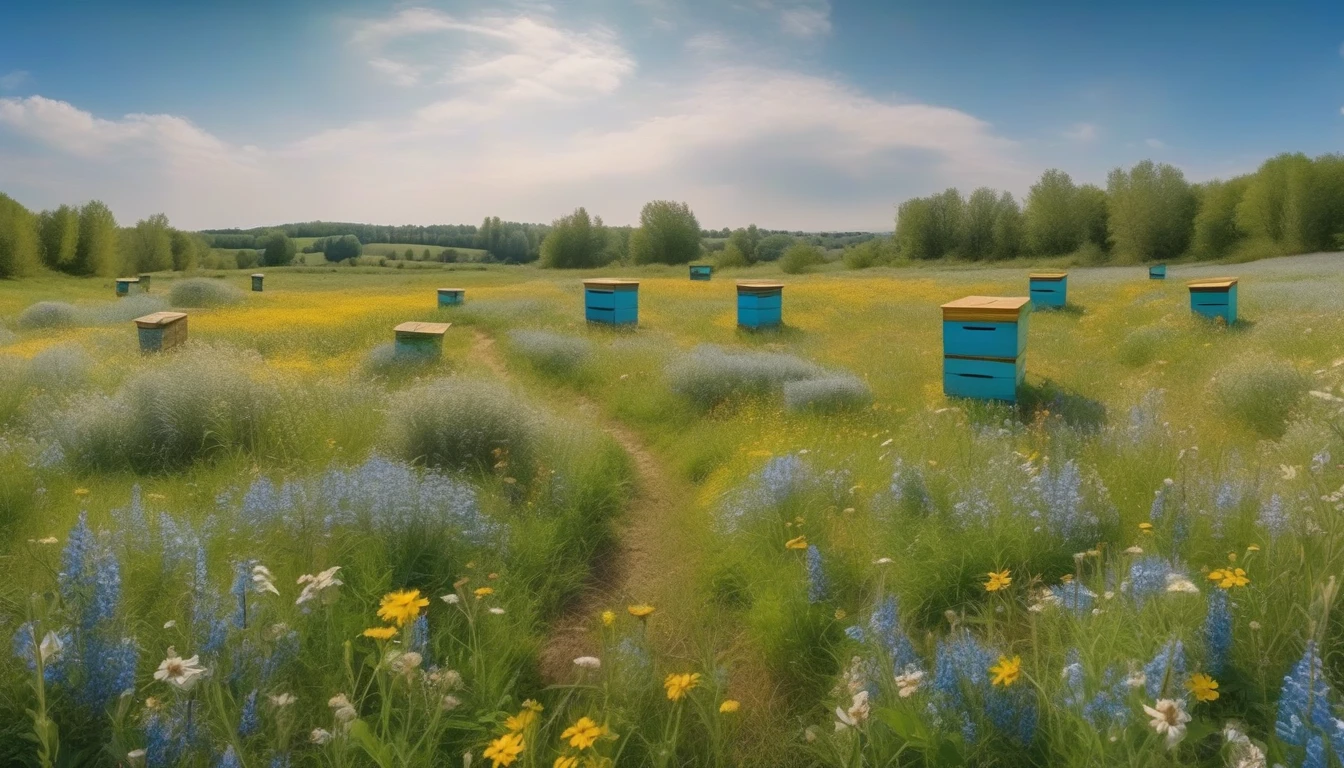
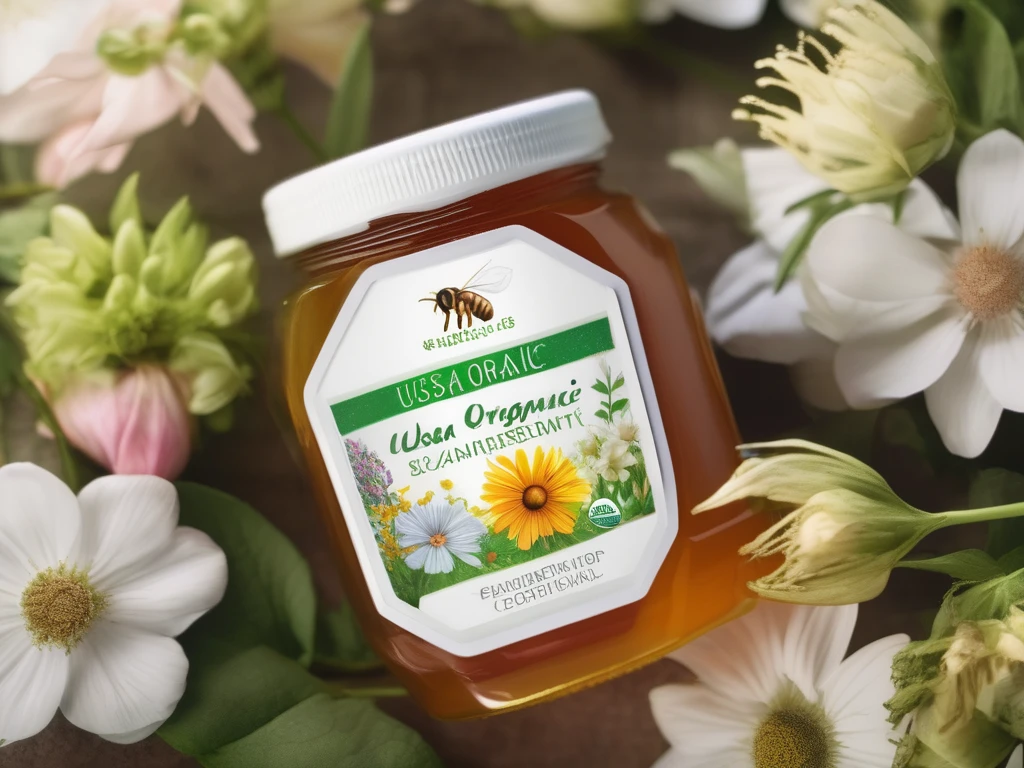
Organic honey is honey produced by bees whose hives, foraging areas, and management practices meet strict organic certification standards set by government agencies such as the USDA (United States), the EU Commission, or Canada's CFIA. The core requirement is that bees must forage primarily on flowers that have not been treated with synthetic pesticides, herbicides, or genetically modified organisms within a defined radius of the hive — typically 2 to 5 miles (3-8 km) depending on the certifying body. This is the single most challenging aspect of organic honey certification because beekeepers cannot control where their bees fly. In addition to foraging requirements, organic certification covers hive management: beekeepers cannot use synthetic miticides, antibiotics, or chemical treatments to control pests like Varroa mites. Hive materials must be free of paints or coatings containing synthetic chemicals, and beeswax foundation cannot be contaminated with pesticide residues. During honey extraction and processing, no synthetic chemicals, heat treatments above certain thresholds, or non-organic additives may be used. The honey must be traceable from hive to jar, with documentation of foraging area land use, treatment records, and processing methods. Organic honey is not the same as "raw" honey — raw refers to minimal processing (no heating above 118°F), while organic refers to how the bees and their environment are managed. Honey can be raw but not organic, organic but not raw, both, or neither.
Key Takeaways
- Bees must forage primarily on pesticide-free flowers within a 2-5 mile radius of the hive
- No synthetic miticides, antibiotics, or chemical treatments allowed in hive management
- Hive materials must be free of synthetic paints, coatings, and contaminated beeswax
- Full traceability required from hive to jar with land use and treatment documentation
- "Organic" and "raw" are different certifications — one refers to farming practices, the other to processing
- Certification bodies include USDA (US), EU Commission (Europe), and CFIA (Canada)
Can Honey Really Be Organic? The Foraging Radius Challenge
This is the most debated question in the honey industry: can honey truly be organic when bees fly up to 5 miles from their hive and beekeepers cannot control where they forage? The answer is nuanced. In the United States, the USDA has never published a specific federal standard for organic honey — there is no "USDA Organic Honey" regulation equivalent to what exists for produce, dairy, or meat. Instead, USDA-accredited certifying agents (third-party organizations like Oregon Tilth or QAI) apply general USDA organic livestock standards to beekeeping, using guidance from international standards like the EU organic regulation and Codex Alimentarius. This means organic honey sold in the US with the USDA Organic seal is technically certified, but under adapted rather than honey-specific rules. The EU has more explicit organic honey standards (Commission Regulation EC 889/2008), requiring hives to be placed in areas where nectar and pollen sources within a 3 km radius consist "essentially" of organic crops or wild vegetation. The word "essentially" acknowledges that 100% purity is impossible — some incidental exposure to conventional agriculture is tolerated. In practice, most organic honey sold worldwide comes from regions with vast tracts of wild, unfarmed land: Brazil's Amazon and Atlantic Forest regions, remote areas of Mexico and Argentina, Canadian boreal forests, Zambian miombo woodlands, and isolated mountain regions of Eastern Europe. Very little US-produced honey can meet organic foraging requirements because the country's agricultural landscape is so intensively farmed — most "organic honey" on US shelves is imported. Critics argue that calling any honey "organic" is misleading because pollen analysis consistently shows that even hives in remote locations contain some pollen from non-organic sources. Supporters counter that organic certification is about best practices and minimizing exposure, not guaranteeing zero contamination — the same standard applied to organic produce, which allows small thresholds of incidental pesticide residue.
Key Takeaways
- The USDA has no specific federal standard for organic honey — certifiers adapt general organic livestock rules
- EU regulations require nectar sources within 3 km to be "essentially" organic or wild vegetation
- Most organic honey comes from remote regions: Brazil, Mexico, Argentina, Canadian boreal forests
- Very little US-produced honey qualifies as organic due to intensive agricultural landscape
- Pollen analysis shows even remote hives contain some non-organic pollen — 100% purity is impossible
- Organic certification represents best practices and minimized exposure, not zero contamination
USDA, EU, and International Organic Honey Standards Compared
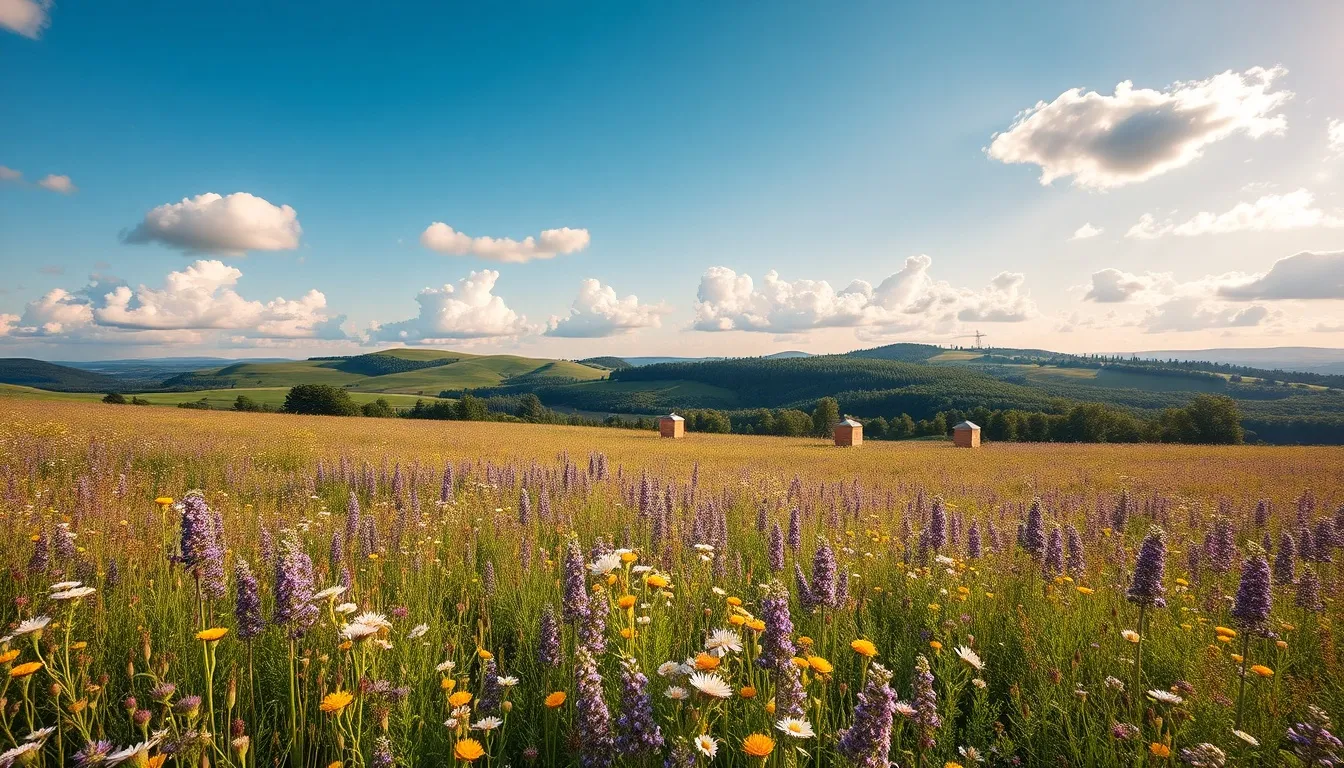
Organic honey standards vary significantly between countries, which creates confusion for consumers. In the United States, the USDA National Organic Program (NOP) has no published honey-specific standard as of 2026. Certifying agents apply 7 CFR Part 205 (organic livestock standards) by analogy, focusing on: organic foraging area, no prohibited substances for pest/disease control, organic processing, and record-keeping. USDA organic honey must display the certifying agent's name and may use the USDA Organic seal. The European Union has the most detailed standards under Commission Regulation (EC) No 889/2008, Annex III: hive location within 3 km radius of essentially organic/wild flora, only organic beeswax for new foundation, permitted treatments limited to organic acids (formic, oxalic, lactic acid) and essential oils (thymol) for Varroa control, no wing clipping of queens, specific rules on feeding bees (only organic honey or organic sugar syrup, and only between the last harvest and 15 days before the next nectar flow). Canada's CFIA standard (CAN/CGSB-32.311) largely mirrors EU rules but with a 3 km foraging radius measured from the "outer perimeter" of the apiary. Brazil's MAPA standards require a 3 km pesticide-free radius and have driven the country to become the world's largest organic honey exporter by volume, producing an estimated 2,500-3,000 metric tons annually. New Zealand's AsureQuality certification requires a 5 km foraging radius — the strictest in the world — which is why very little NZ honey (including Manuka) carries organic certification despite being produced in relatively wild environments. When buying imported organic honey, look for both the exporting country's organic seal and the USDA Organic or EU organic logo, which indicates the product meets the importing country's equivalent standards.
Key Takeaways
- USDA has no honey-specific organic standard — certifiers adapt general livestock regulations
- EU requires 3 km organic/wild foraging radius, organic beeswax, and only organic acid Varroa treatments
- Canada mirrors EU with 3 km radius measured from apiary perimeter
- Brazil is the world's largest organic honey exporter (~2,500-3,000 metric tons/year)
- New Zealand requires the strictest 5 km radius — very little NZ honey qualifies as organic
- Look for both the origin country's seal and the USDA/EU organic logo on imported honey
Is Organic Honey Worth the Extra Cost?
Organic honey typically costs 30-100% more than conventional honey of the same variety, with prices ranging from $12-30 per pound compared to $8-15 for non-organic equivalents. Whether this premium is justified depends on what you value. From a pesticide residue perspective, the evidence is mixed. A 2019 study in Science found neonicotinoid residues in 75% of honey samples worldwide, but concentrations were generally below levels considered harmful to humans (though harmful to bees). Organic honey tends to have lower pesticide residues, but "lower" does not mean "zero" — a 2020 analysis in the Journal of Agricultural and Food Chemistry found detectable pesticide traces in 25% of organic honey samples versus 60% of conventional samples. From a nutritional standpoint, organic certification does not guarantee higher nutritional value. The antioxidant content, enzyme activity, and mineral profile of honey are primarily determined by floral source, not organic status — a conventional buckwheat honey will have significantly more antioxidants (ORAC 16,000+) than an organic clover honey (ORAC 1,000-3,000). Where organic certification does make a clear difference is in environmental and bee welfare practices: organic beekeepers cannot use synthetic miticides like fluvalinate or coumaphos (which accumulate in beeswax and may weaken colonies), cannot use antibiotics prophylactically, and must maintain hives in areas with diverse, pesticide-free forage — all practices associated with healthier bee populations. If your primary concern is supporting sustainable beekeeping and reducing your household's pesticide footprint, organic honey is worth the premium. If your primary concern is nutritional quality, choosing the right floral source (dark honeys, raw processing) matters more than organic certification. If your primary concern is purity and authenticity, buying directly from a local beekeeper you trust may provide better assurance than an organic label on imported honey from thousands of miles away.
Key Takeaways
- Organic honey costs 30-100% more: $12-30/lb vs $8-15/lb for conventional
- Organic honey has fewer pesticide residues (25% vs 60% detection rate) but not zero
- Nutritional value depends on floral source, not organic status — dark honeys beat organic clover
- Organic certification prohibits synthetic miticides and prophylactic antibiotics — better for bees
- For environmental impact and bee welfare, organic is worth the premium
- For purity and authenticity, buying local from a trusted beekeeper may be more reliable
How to Buy Genuine Organic Honey and Spot Misleading Labels
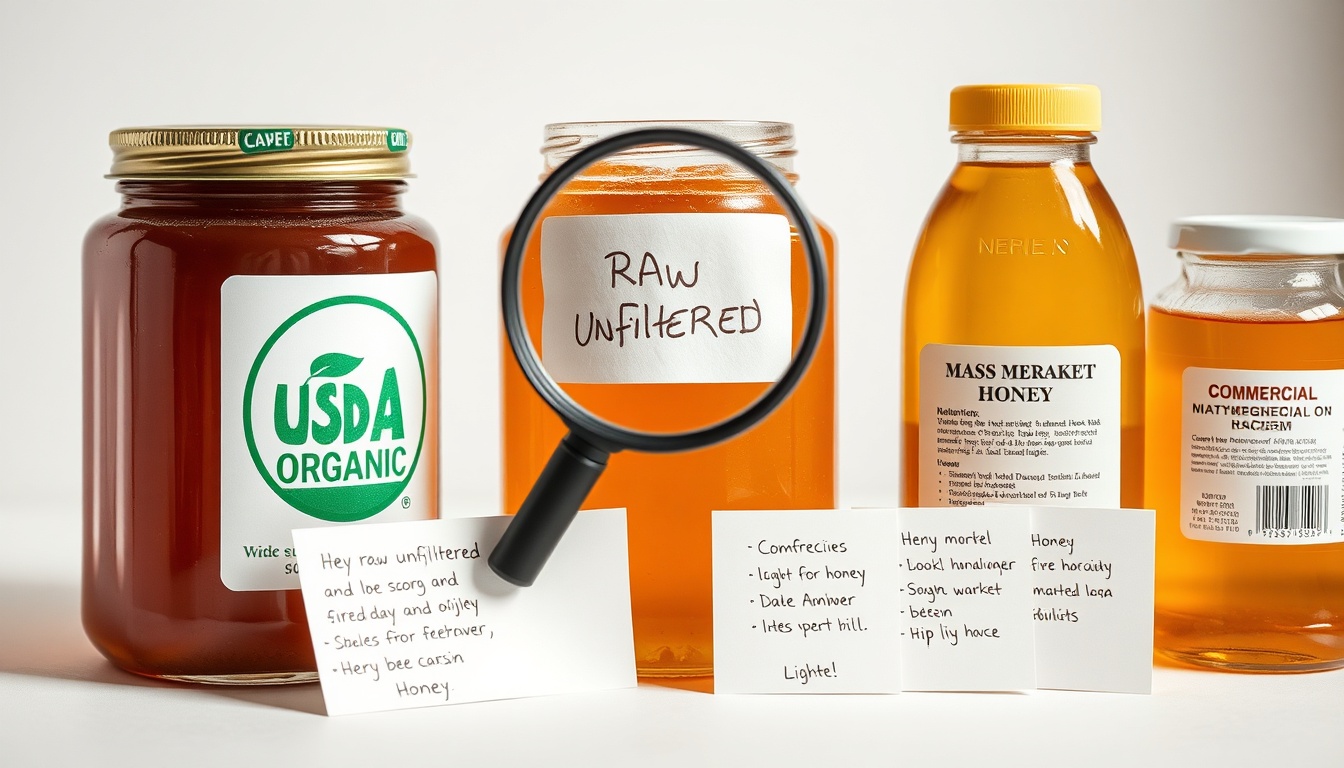
The organic honey market is rife with misleading labels, and understanding what to look for can save you from paying premium prices for conventional honey. The most reliable indicator is the USDA Organic seal (a green and white circle) or the EU organic logo (a green leaf made of stars) — these require third-party certification and annual audits. Always check for the name of the certifying agent on the label (e.g., "Certified Organic by Oregon Tilth" or "Certified by QAI"). Claims like "all-natural," "pure," "unprocessed," "pesticide-free," or "bee-friendly" have no legal certification behind them and do not mean organic. "Made with organic honey" means only 70% of ingredients need to be organic. Some imported honey labeled organic may come from countries with weaker enforcement — the USDA Foreign Supplier Verification Program requires importers to verify organic integrity, but fraud does occur. In 2023, the USDA decertified multiple operations for fraudulent organic claims. The best sources for genuine organic honey are: established brands with transparent sourcing (look for country of origin and certifying agent), specialty health food stores that vet their suppliers, direct purchase from certified organic beekeepers (search the USDA Organic Integrity Database at organic.ams.usda.gov to verify any producer's certification status), and co-ops that maintain relationships with organic apiaries. Be cautious of suspiciously cheap organic honey — if organic honey is priced at or below conventional honey prices, it may not be genuinely organic. Brazilian, Mexican, and Zambian organic honeys tend to offer the best value because production costs are lower in those regions, while Canadian and European organic honeys command the highest premiums.
Key Takeaways
- Look for the USDA Organic seal or EU organic logo — these require third-party certification
- Check for the certifying agent name on the label (Oregon Tilth, QAI, etc.)
- "Natural," "pure," "pesticide-free," and "bee-friendly" are NOT organic certifications
- Verify producers in the USDA Organic Integrity Database at organic.ams.usda.gov
- Be cautious of cheap organic honey — if it's priced like conventional, it may not be genuine
- Best value organic: Brazil, Mexico, Zambia; highest premium: Canada, Europe, New Zealand
Organic vs Raw vs Local: Which Should You Choose?
Consumers often face a choice between organic, raw, and local honey — and the best option depends on your priorities. Organic honey prioritizes environmental practices: pesticide-free foraging, no synthetic hive chemicals, and sustainable beekeeping. It is the best choice if reducing pesticide exposure and supporting bee-friendly farming practices are your top concerns. However, most organic honey is imported from remote regions, so it travels thousands of miles and you cannot meet the beekeeper. Raw honey prioritizes nutritional preservation: no heating above 118°F (48°C) means all enzymes (diastase, invertase, glucose oxidase), heat-sensitive antioxidants, and natural yeasts remain intact. Research consistently shows that pasteurization reduces honey's antioxidant capacity by up to 30% — flavonoid content is most affected, as heat denatures heat-sensitive polyphenols and drives off aromatic volatile compounds. Raw is the best choice if maximizing health benefits is your priority. Note that raw and organic are not mutually exclusive — raw organic honey exists, though it is more expensive and harder to find. Local honey prioritizes freshness, traceability, and community: you can visit the apiary, meet the beekeeper, and ask about their practices directly. Local honey is typically the freshest (harvested the same season), contains local pollen relevant to your region's allergens, and your purchase directly supports a local small business. Local beekeepers who follow natural practices may be organic in everything but certification — many small-scale beekeepers cannot afford the $2,000-5,000 annual organic certification cost. The ideal honey combines all three: raw, organic, and local. When that is not available, choose based on your priority: environmental practices (organic), nutritional quality (raw), or community and freshness (local). For most consumers, buying raw honey from a trusted local beekeeper provides the best balance of quality, transparency, and value — even without an organic label.
Key Takeaways
- Organic = environmental practices (pesticide-free foraging, no synthetic hive chemicals)
- Raw = nutritional preservation (enzymes, antioxidants, yeasts retained; up to 30% more flavonoids vs pasteurized)
- Local = freshness, traceability, and community support (meet the beekeeper, seasonal harvest)
- Raw organic honey exists but is more expensive and harder to find
- Many local beekeepers follow organic practices but cannot afford $2,000-5,000 annual certification
- Best balance for most consumers: raw honey from a trusted local beekeeper
Honey Varieties and Organic Certification
Organic certification availability varies significantly by variety. Here are the most commonly available organic options and what to expect:
Widely Available Organic
- Wildflower honey ($10–18) — most organic honey is wildflower from remote Brazilian or Mexican apiaries
- Clover honey ($8–15) — organic clover is rare from US sources; most comes from Canadian boreal regions
- Acacia honey ($12–20, GI ~32) — organic acacia from Eastern European forests; lowest glycemic impact of any honey
Premium Organic Varieties
- Buckwheat honey ($15–25, ORAC 16,000+) — organic buckwheat has 9× more antioxidants than organic clover
- Orange blossom honey ($12–20) — organic orange blossom is scarce; citrus orchards are often sprayed
- Lavender honey ($15–25) — organic French and Spanish lavender from low-pesticide Mediterranean highlands
Rarely Certified Organic
- Manuka honey ($35–60+) — New Zealand's strict 5 km foraging radius means very little Manuka qualifies as organic
- Sourwood honey ($20–35) and tupelo honey ($25–45) — Appalachian and Gulf Coast US regions rarely meet organic foraging requirements
Remember: organic certification does not determine nutritional quality. A conventional raw buckwheat honey has far more antioxidants than a pasteurized organic clover honey. Browse all 210+ varieties or find local beekeepers near you.
Edited by Sam French · Raw Honey Guide Editorial Team
Source reviewed against primary literature and official guidance where available. Health content is educational, not medical advice, and does not replace a licensed clinician.
Get the Honey Buyer's Cheat Sheet (free PDF)
16 varieties on one page — color, flavor, best use and what a fair price looks like — from the 268 honeys we track.
Related Guides
Best Honey Brands
Compare labels, traceability, certification, testing evidence, and value without relying on a ranking.
Read GuideQuality & Grading
Identify quality honey and spot fakes.
Read GuideRaw Honey vs Regular
Processing, nutrition, and how to choose.
Read GuideRelated Articles
Raw Honey vs Organic Honey: Understanding the Key Differences
Raw vs organic honey — what's the real difference? Compare processing, certification, nutrition, and pick the right one.
Read ArticleHow to Read a Honey Label: What Every Buyer Should Know
Decode honey labels: raw, organic, unfiltered, UMF, MGO, True Source Certified. Spot marketing claims and buy smarter.
Read ArticleRaw Honey vs Regular Honey: What's Actually Different?
Raw vs regular honey: compare nutrition, enzymes, antioxidants, processing methods, and which one is better for your health.
Read ArticleWant to explore honey varieties and find trusted sources?