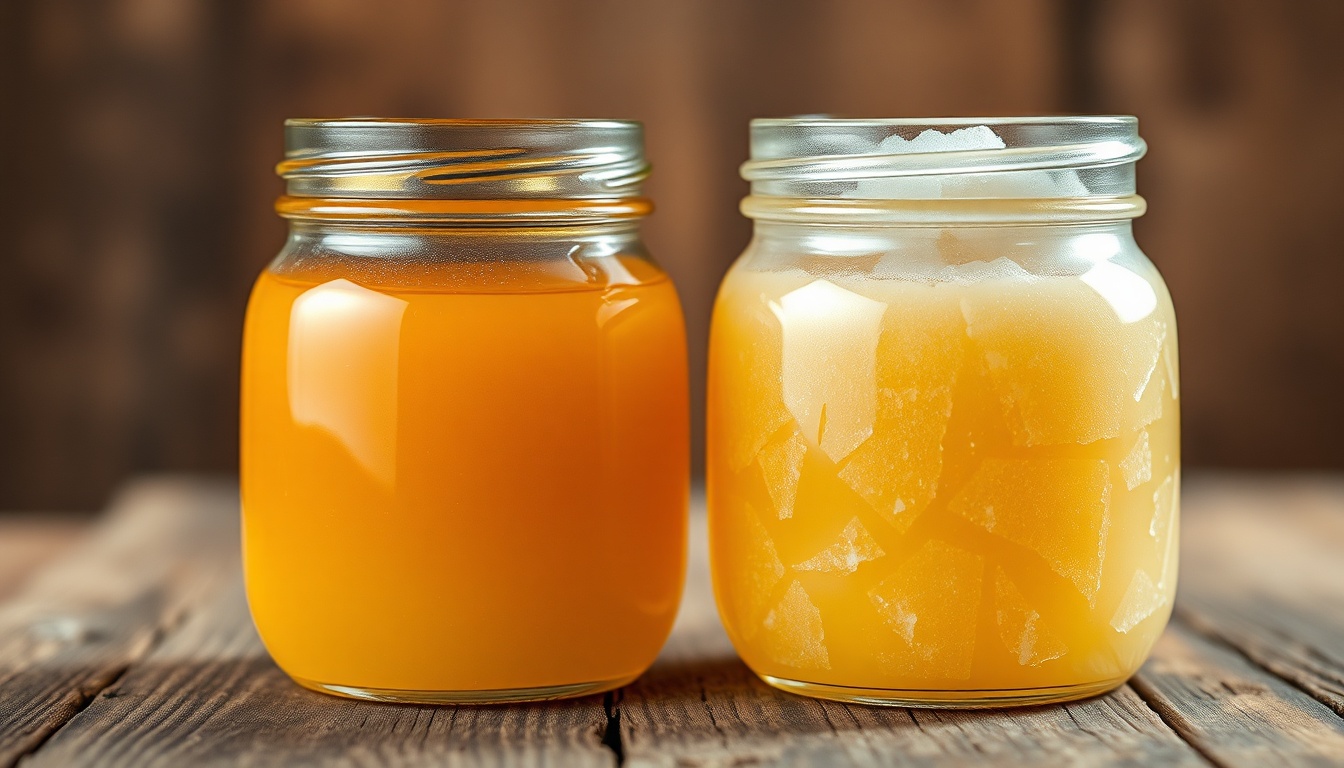
Crystallized Honey Is Not Spoiled Honey
If your honey has turned cloudy, grainy, or solid, there's nothing wrong with it. Crystallization is a natural process that happens to virtually all real honey over time. In fact, crystallization is one of the best indicators that your honey is genuine — heavily processed or adulterated honey often resists crystallization because it lacks the natural glucose and pollen particles that trigger the process.
Crystallized honey is perfectly safe to eat, retains all its nutritional properties, and many people actually prefer the spreadable texture. It certainly does not mean your honey has expired. But if you want your honey liquid again, there are safe ways to reverse it without damaging the beneficial enzymes and compounds that make raw honey valuable.
The Science Behind Honey Crystallization
Honey is a supersaturated sugar solution — it contains more sugar (primarily glucose and fructose) than water can normally hold in a dissolved state. This makes it inherently unstable, and over time, the excess glucose molecules begin to separate from the water and form solid crystals.
The process starts when glucose molecules attach to a nucleation point — a tiny particle like a pollen grain, beeswax fragment, or air bubble. Once the first crystals form, they act as seeds for more crystallization, and the process accelerates. Eventually, enough glucose crystallizes that the honey becomes thick, grainy, or completely solid.
Temperature plays a major role. Crystallization happens fastest between 50-59°F (10-15°C). Below that range, honey becomes too viscous for crystals to form easily. Above 77°F (25°C), the glucose stays dissolved. Your kitchen counter is usually in the sweet spot for crystallization, which is why pantry honey tends to crystallize within months.
Get the Honey Buyer's Cheat Sheet (free PDF)
16 varieties on one page — color, flavor, best use and what a fair price looks like — from the 268 honeys we track.
Why Some Honeys Crystallize Faster Than Others
The speed of crystallization depends primarily on the glucose-to-fructose ratio. Honeys with more glucose crystallize faster; honeys with more fructose stay liquid longer. This ratio varies by floral source — the flowers the bees visited determine the sugar composition of the honey.
- Fast crystallizers (high glucose): clover, canola/rapeseed, cotton, dandelion, lavender, sunflower — these can crystallize within weeks
- Medium crystallizers: wildflower, buckwheat, orange blossom, eucalyptus — typically 3-6 months
- Slow crystallizers (high fructose): acacia, tupelo, sage, black locust — can stay liquid for 1-2 years or more
- Manuka honey: crystallizes at a moderate rate but forms a distinctive smooth, creamy texture
Pro Tip
If you prefer liquid honey, acacia and tupelo are your best bets — their naturally high fructose content means they stay liquid for a year or longer without any processing.
Other Factors That Speed Up Crystallization
Beyond sugar ratios, several other factors influence how quickly honey crystallizes.
- Pollen and particles: Raw, unfiltered honey contains pollen grains and tiny beeswax particles that serve as nucleation points. This is why raw honey crystallizes faster than filtered honey — more seeds for crystals to form around
- Storage temperature: Keeping honey between 50-59°F accelerates crystallization. A cool pantry or basement is the fastest route to solid honey
- Previous crystallization: Once honey has crystallized and been reliquified, it tends to crystallize again faster because microscopic crystal seeds remain
- Container movement: Stirring or frequently moving the jar introduces air bubbles that serve as nucleation points
- Water content: Honey with lower moisture content is more supersaturated and crystallizes faster
Method 1: Warm Water Bath (Best Method)
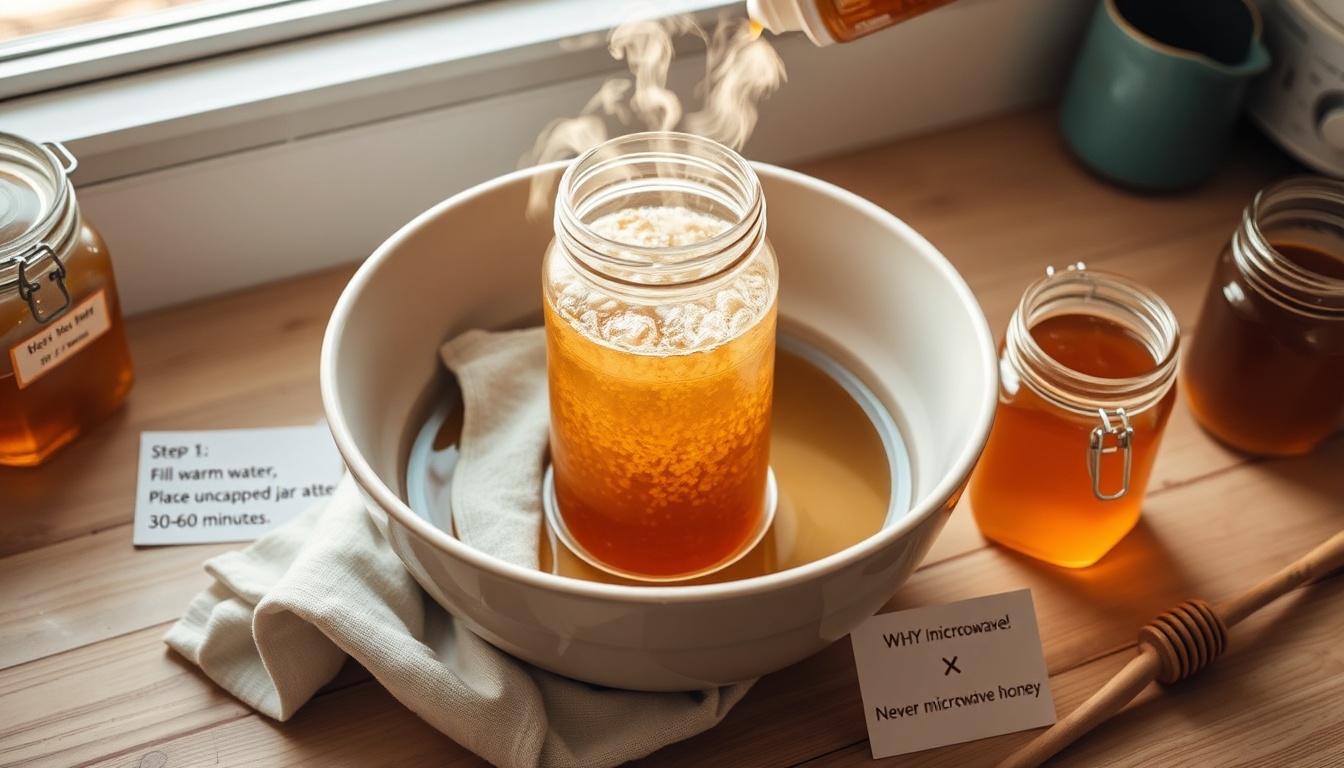
The warm water bath is the safest and most effective way to decrystallize honey. Place your honey jar in a pot or bowl of warm water — aim for 95-110°F (35-43°C). This is warm to the touch but not hot. Let the jar sit for 20-30 minutes, stirring occasionally as the crystals dissolve. Repeat if needed.
The key is patience and low temperature. Water above 110°F starts to degrade honey's beneficial enzymes (like diastase and invertase) and heat-sensitive compounds. Water above 140°F (60°C) can damage honey significantly. Think of it as a gentle warm-up, not a meltdown.
Pro Tip
If your honey is in a glass jar, you can set it in a sunny window for a few hours. The gentle warmth from sunlight is often enough to slowly reliquify partially crystallized honey.
Method 2: Slow Cooker on Warm
If you have a slow cooker with a "warm" setting (not "low" or "high"), fill it partway with water and place your open honey jar inside. The "warm" setting on most slow cookers holds around 145°F, which is hotter than ideal, so keep the lid off and monitor the temperature. Better slow cookers have adjustable temperature settings — aim for 100-110°F.
This method is convenient for large quantities of crystallized honey. Check and stir every 15-20 minutes. Remove the honey as soon as it's liquid — don't leave it warming for hours.
Method 3: Small Batches on Demand
If you don't need the whole jar liquid, just scoop out what you need with a clean spoon. Crystallized honey dissolves easily in warm drinks — stir it into tea, coffee, or warm water and it liquefies on contact. For cooking, crystallized honey melts instantly when heated in a pan.
Many people find this approach the most practical. Rather than decrystallizing an entire jar (which will just crystallize again), use the solid honey directly. Crystallized honey is actually easier to spread on toast and less messy than liquid honey.
What NOT to Do When Decrystallizing Honey
Some commonly suggested methods can damage your honey or create safety issues.
- Don't microwave honey — microwaves heat unevenly, creating hot spots that destroy enzymes while other areas stay crystallized. You can easily overheat honey in seconds
- Don't boil water for the bath — boiling water (212°F) is far too hot. It pasteurizes the honey, killing beneficial enzymes and degrading flavor compounds
- Don't put honey in the dishwasher — yes, people try this. The heat cycle reaches 140-160°F and the detergent environment is not food-safe
- Don't add water to thin it out — adding water drops honey below the critical 17-18% moisture threshold that prevents fermentation. Diluted honey can ferment and spoil
- Don't heat plastic containers directly — if your honey is in a plastic bear or squeeze bottle, transfer it to a glass jar before warming. Plastic can leach chemicals when heated
How to Slow Down Crystallization
If you prefer liquid honey and want to delay crystallization as long as possible, there are several strategies.
- Store honey at room temperature (70-80°F) rather than in a cool pantry or basement
- Choose naturally slow-crystallizing varieties like acacia, tupelo, or sage honey
- Keep the jar tightly sealed to minimize moisture exposure and reduce air bubbles
- Avoid storing honey in the refrigerator — the cold temperature accelerates crystallization significantly
- Buy smaller jars that you'll use within a few months rather than large containers that sit for a year
- Use a clean, dry spoon every time — introducing moisture or food particles provides nucleation points
Creamed Honey: Controlled Crystallization
Creamed honey (also called whipped, spun, or churned honey) is honey where crystallization has been deliberately controlled to produce a smooth, spreadable texture instead of a grainy one. The process involves seeding liquid honey with finely crystallized honey and stirring at a controlled temperature. The result is a butter-like consistency with no grittiness.
If you enjoy the convenience of solid honey, creamed honey is the premium version. It spreads easily on toast, doesn't drip, and has the same nutritional profile as liquid honey. Many artisan beekeepers sell creamed honey as a specialty product.
Crystallization and Honey Color: What to Expect
Crystallization behavior correlates strongly with honey color and variety. Light honeys like clover and canola tend to be glucose-dominant and crystallize within weeks. Darker honeys like acacia and tupelo are fructose-dominant and may stay liquid for a year or longer. Understanding your honey's floral source and type helps set expectations for how quickly it will crystallize.
Amounts reported in the studies discussed here describe study protocols, not daily recommendations. Use the daily added-sugar guide to count honey with other added or free sugars.
