How to Decrystallize Honey: 4 Safe Methods
Crystallized honey is perfectly natural and safe to eat — but if you prefer liquid honey, these gentle methods will restore it without destroying the enzymes, antioxidants, and health benefits that make raw honey special.
Last updated:
Place the honey jar (lid loosened) in a pot of warm water at 95-110°F (35-43°C). Stir every 5-10 minutes and replace the water as it cools. Takes 20-60 minutes depending on crystallization. Never use boiling water or exceed 140°F — high heat destroys honey's beneficial enzymes. Crystallized honey is 100% safe to eat as-is and retains all nutrients.
Why Does Honey Crystallize?
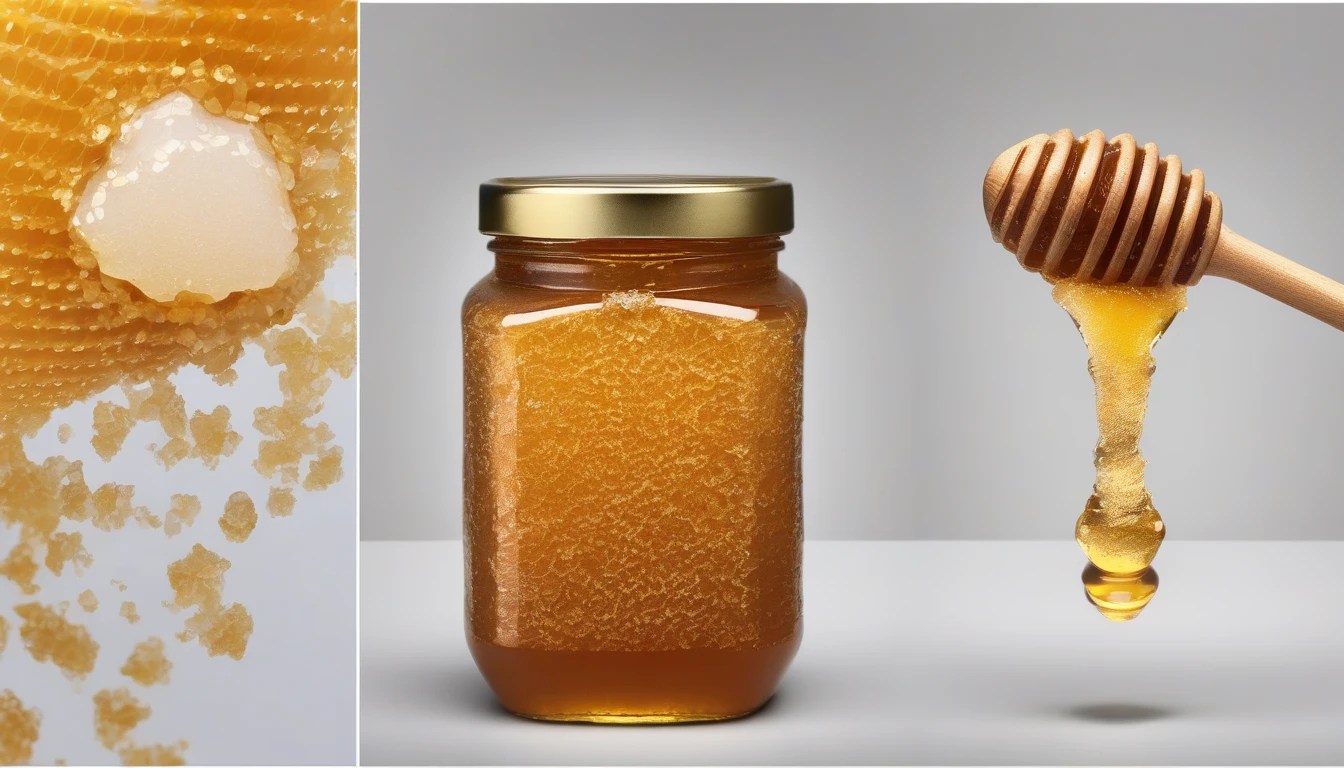
Crystallization is a completely natural process that occurs in virtually all raw honey — it is not a sign of spoilage, adulteration, or poor quality. In fact, crystallization is often an indicator that honey is raw and unprocessed, because ultra-filtered or heavily pasteurized honey has had the microscopic particles removed that serve as nucleation sites for crystals. Honey is a supersaturated sugar solution, meaning it contains more dissolved sugar than water can normally hold at room temperature. Raw honey is approximately 70% sugar (primarily glucose and fructose) and only 17-20% water. Because this ratio is unstable, glucose molecules naturally begin to precipitate out of solution and form crystals over time. The speed of crystallization depends on the glucose-to-fructose ratio: honeys high in glucose (like clover, alfalfa, cotton, and dandelion) crystallize quickly — sometimes within weeks — while honeys high in fructose (like acacia, tupelo, sage, and black locust) can remain liquid for years. Temperature plays a critical role: crystallization occurs fastest between 50-59°F (10-15°C), which is why honey stored in a cool pantry crystallizes faster than honey kept at room temperature. Other factors include pollen and wax particles (which act as seed crystals), air bubbles, and the honey's moisture content. Honey with less than 17% water crystallizes faster because the solution is more oversaturated. Interestingly, some beekeepers intentionally induce controlled crystallization to create "creamed honey" — a smooth, spreadable product with very fine crystals.
Key Takeaways
- Crystallization is natural — it means your honey is likely raw and minimally processed
- Honey is 70% sugar in only 17-20% water — a supersaturated, unstable solution
- High-glucose honeys (clover, alfalfa) crystallize fast; high-fructose honeys (acacia, tupelo) stay liquid
- Fastest crystallization occurs at 50-59°F (10-15°C) — cool pantries accelerate it
- Pollen, wax particles, and air bubbles serve as nucleation sites for crystal growth
- Crystallized honey retains all its nutrition, enzymes, flavor, and health benefits
How to Decrystallize Honey with a Warm Water Bath (Best Method)
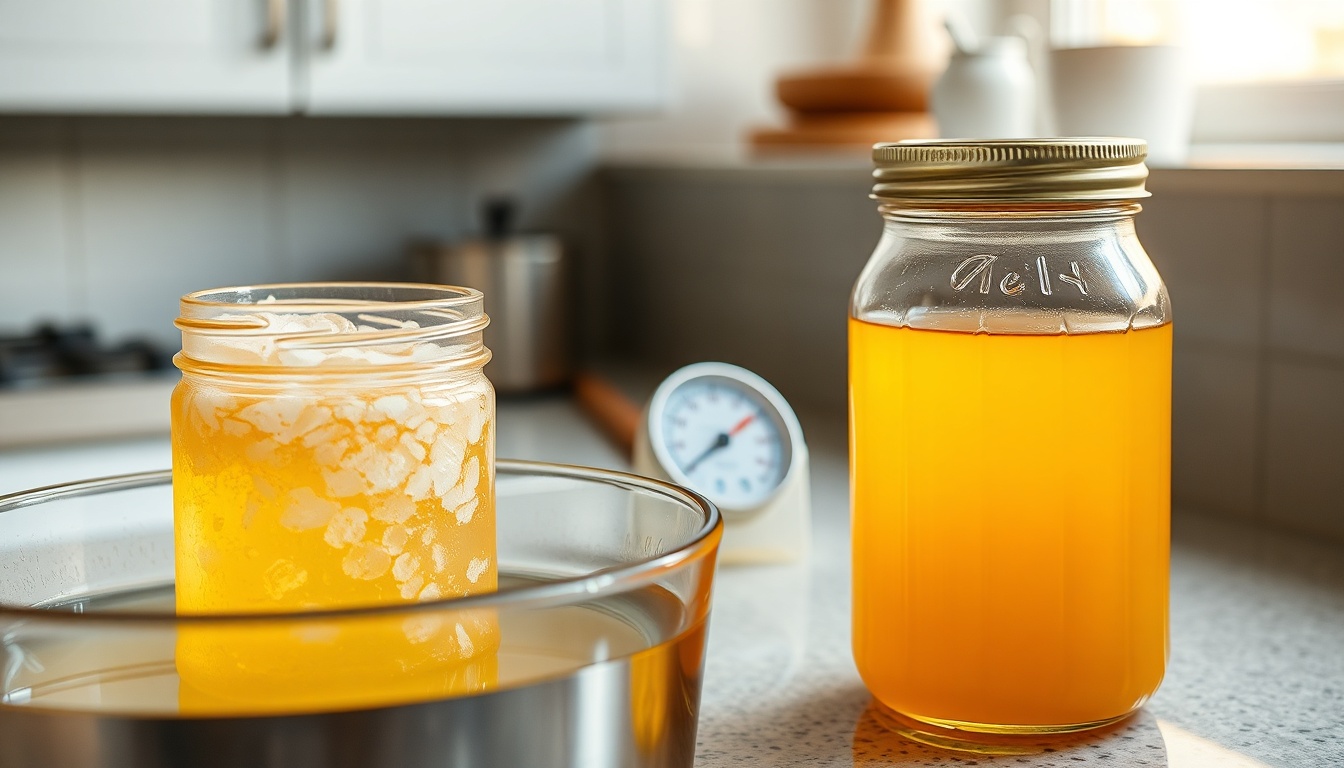
The warm water bath is the gold standard for decrystallizing honey because it provides gentle, even heat that dissolves crystals without damaging honey's beneficial enzymes, vitamins, or antioxidants. Fill a pot or large bowl with warm water — the ideal temperature is 95-110°F (35-43°C), which is warm to the touch but not hot enough to hurt. Place the honey jar (with the lid loosened to allow expansion) into the water, ensuring the water level reaches the honey line. Let the jar sit for 20-30 minutes, stirring the honey every 5-10 minutes to distribute heat evenly and speed up the process. If the water cools, replace it with fresh warm water. For a fully crystallized jar, you may need to repeat this process two or three times over the course of an hour. The key is patience — never rush the process by using hotter water. Water above 140°F (60°C) begins to degrade the enzyme diastase, and temperatures above 160°F (71°C) destroy glucose oxidase, the enzyme responsible for honey's antibacterial hydrogen peroxide production. A candy thermometer or instant-read thermometer takes the guesswork out of temperature control. Once the honey is fully liquid and clear, dry the jar thoroughly and store at room temperature (70-80°F / 21-27°C) to delay recrystallization. This method works for glass jars, plastic squeeze bottles (use lower temperatures, around 95-100°F, for plastic), and even honey in ceramic pots.
Key Takeaways
- Fill a pot with warm water at 95-110°F (35-43°C) — warm to touch, not hot
- Place the jar in water with lid loosened, water level at the honey line
- Stir every 5-10 minutes to distribute heat; repeat with fresh water as needed
- Total time: 20-60 minutes depending on crystallization level
- Never exceed 140°F (60°C) — higher temperatures destroy enzymes and antioxidants
- Use a thermometer for precision — this is the single most important variable
Alternative Methods: Microwave, Slow Cooker, and Sunlight
While the warm water bath is best, several alternative methods can work in a pinch. The microwave method is fastest but riskiest: transfer crystallized honey to a microwave-safe container (never microwave a plastic honey bear), heat in 10-second bursts at 50% power, and stir between each burst. Stop as soon as the honey is pourable — microwaves create hot spots that can exceed 200°F in localized areas, rapidly destroying enzymes and darkening the honey. Only use this method if you plan to consume the honey quickly for cooking, not for therapeutic or health purposes. The slow cooker method is gentler: fill a slow cooker with water, set it to the "warm" setting (typically 140-165°F), place the honey jar inside with the lid loosened, and leave for 2-8 hours, checking periodically. Be aware that some slow cookers run hotter than expected on the "warm" setting — test yours with a thermometer first. The sunlight method works well in warm climates: place the sealed jar in direct sunlight for several hours on a warm day (80°F+ ambient temperature). The glass acts as a greenhouse, warming the honey gently to around 100-120°F. This is perhaps the most natural approach, similar to how honey exists in a sun-warmed hive, but it is slow and weather-dependent. For beekeepers with larger quantities, a honey warming cabinet or heat blanket designed for 5-gallon buckets maintains a steady 100-110°F and is the professional solution for decrystallizing bulk honey without quality degradation.
Key Takeaways
- Microwave: 10-second bursts at 50% power, stir between — fastest but destroys enzymes in hot spots
- Slow cooker on "warm" setting: 2-8 hours — test temperature with thermometer first
- Sunlight method: place sealed jar in direct sun for several hours on warm days (80°F+)
- Professional option: honey warming cabinet at 100-110°F for bulk quantities
- Microwave is acceptable for cooking honey but not for medicinal or health use
- All methods: patience and low heat are always better than speed and high heat
How to Prevent Honey from Crystallizing
While you cannot permanently prevent crystallization in raw honey (it is an inherent property of supersaturated sugar solutions), you can significantly slow the process. The most effective strategy is temperature control: store honey at 70-80°F (21-27°C), which is above the rapid crystallization zone (50-59°F) but below temperatures that degrade quality. Avoid storing honey in the refrigerator — the cold temperatures dramatically accelerate crystal formation, and many honeys will crystallize within days in a fridge. Keep honey in a tightly sealed container to prevent moisture absorption, which changes the sugar-water ratio and can trigger crystallization. Glass containers are ideal because they are non-reactive, easy to warm in a water bath, and allow you to see the honey's condition. If you strongly prefer liquid honey, choose varieties that naturally resist crystallization: acacia honey can stay liquid for two or more years, tupelo honey rarely crystallizes due to its exceptionally high fructose content, sage honey maintains its liquid state for extended periods, and black locust honey is similarly resistant. Conversely, avoid clover, canola, alfalfa, and lavender honey if you dislike crystals — these can solidify within weeks. Some producers sell "creamed honey" that has been pre-crystallized with very fine, uniform crystals — this gives a smooth, spreadable texture that won't develop the coarse, gritty crystals of uncontrolled crystallization. Another tip: buy smaller containers and use honey faster. Once opened, honey is exposed to air and moisture that can accelerate crystallization.
Key Takeaways
- Store at 70-80°F (21-27°C) — never refrigerate honey, cold accelerates crystallization
- Keep jars tightly sealed to prevent moisture absorption that triggers crystal formation
- Choose naturally resistant varieties: acacia, tupelo, sage, and black locust honey
- Avoid fast-crystallizing types if you prefer liquid: clover, canola, alfalfa, lavender
- Use glass containers — non-reactive, easy to rewarm, and allows visual monitoring
- Buy smaller quantities and use honey faster to minimize storage time
Is Crystallized Honey Still Good? Nutrition and Safety
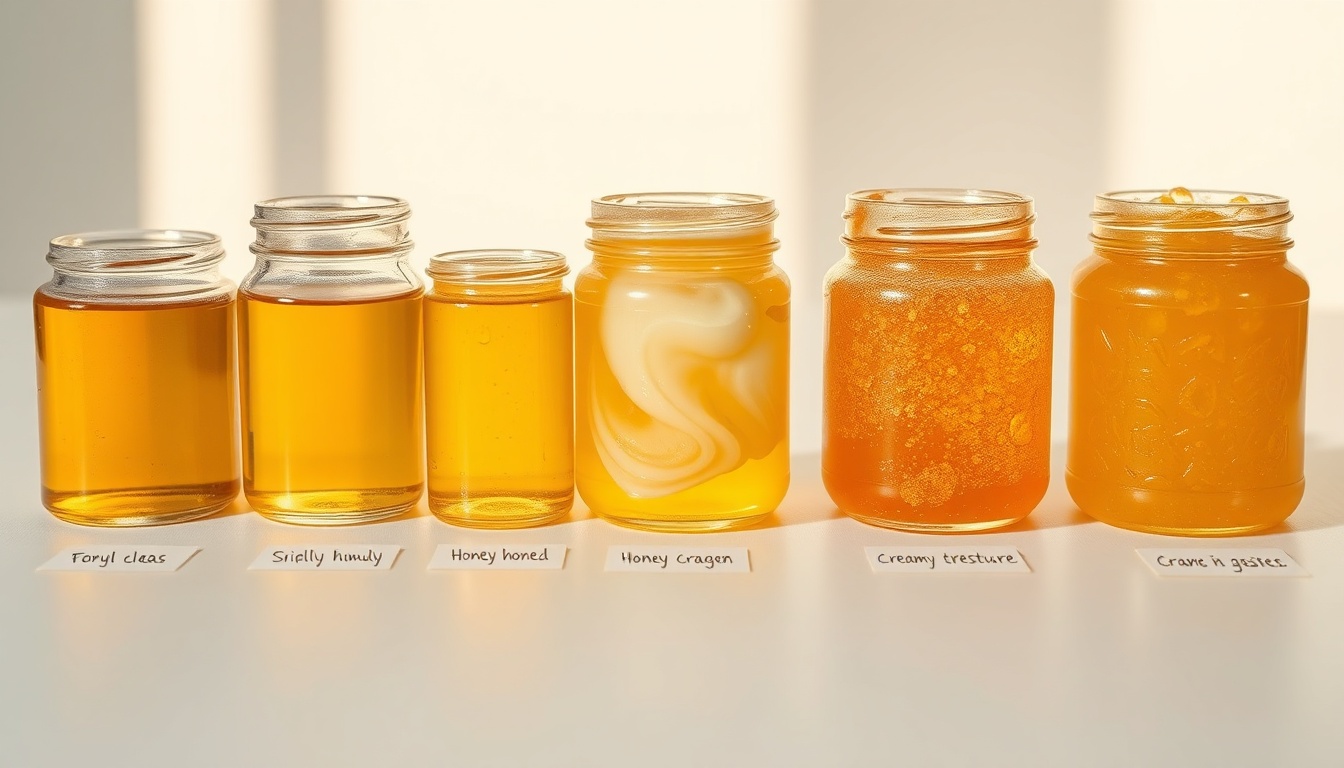
Crystallized honey is perfectly safe to eat and retains virtually all of its nutritional value, enzymes, antioxidants, and health benefits. The crystallization process is purely physical — glucose molecules are simply changing from a dissolved state to a solid crystal structure. No chemical change occurs, and no nutrients are lost. In fact, many honey connoisseurs and beekeepers prefer crystallized honey: the thicker texture makes it easier to spread on toast without dripping, it can be spooned into tea or coffee where it dissolves naturally, and the concentrated flavor is often described as richer and more complex than liquid honey. In many European countries, crystallized honey is the preferred form — French, German, and Italian consumers actively seek out creamed or naturally crystallized honey as a sign of quality and minimal processing. Crystallized honey also has practical advantages: it is less messy, doesn't drip off a spoon, is easier to use as a measured ingredient in cooking, and can be spread on bread like butter. The only situation where crystallized honey should be discarded is if it shows signs of fermentation — foamy bubbles on the surface, an off-putting sour or alcoholic smell, or a yeasty taste. Fermentation occurs when honey absorbs too much moisture (above 20% water content), allowing wild yeasts to multiply. This is unrelated to crystallization itself. If your honey smells and tastes normal but has simply turned solid or grainy, it is completely fine to eat as-is or decrystallize using the methods above.
Key Takeaways
- Crystallized honey is 100% safe — no nutrients, enzymes, or antioxidants are lost
- Crystallization is physical (not chemical) — glucose molecules form solid crystals
- Many prefer crystallized honey: easier to spread, less messy, richer flavor
- European markets often prefer crystallized or creamed honey as a quality indicator
- Only discard honey showing fermentation signs: foam, sour smell, or alcoholic taste
- Fermentation comes from excess moisture (>20% water), not from crystallization
Common Mistakes to Avoid When Decrystallizing Honey
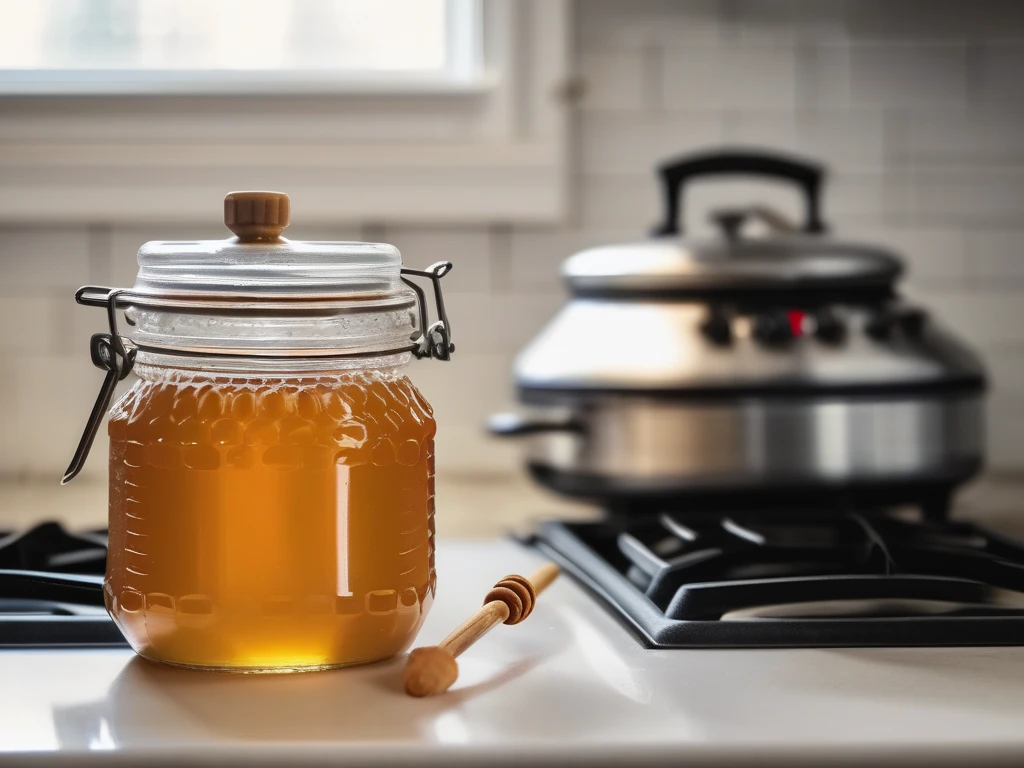
The biggest mistake people make when decrystallizing honey is using excessive heat. Boiling water, stovetop direct heat, or running honey under hot tap water (which can reach 140°F+ in some homes) will decrystallize the honey quickly but at a steep cost: temperatures above 140°F begin degrading the enzyme diastase (used as a quality marker in international honey standards), and temperatures above 160°F destroy glucose oxidase, eliminating honey's natural antibacterial hydrogen peroxide production. At 170°F+, hydroxymethylfurfural (HMF) levels begin to spike — HMF is a chemical marker of heat damage used by the international Codex Alimentarius to grade honey quality. Essentially, overheated honey becomes nutritionally equivalent to sugar syrup. Another common mistake is repeatedly decrystallizing the same jar — each heat cycle degrades enzymes further, even if each individual cycle stays within safe temperatures. Decrystallize only the amount you'll use in the near term, or better yet, learn to enjoy crystallized honey. Don't shake or agitate crystallized honey vigorously before warming — this introduces air bubbles that act as additional nucleation sites and can cause the honey to recrystallize faster after treatment. Don't add water to thin out crystallized honey — this raises the moisture content above the safe threshold and can lead to fermentation. And don't try to decrystallize honey in its original plastic squeeze bottle using very hot water — plastic can leach chemicals at elevated temperatures and may warp, making the bottle difficult to use.
Key Takeaways
- Never use boiling water or direct stovetop heat — stay below 140°F (60°C)
- Avoid repeated decrystallization cycles — each heat cycle degrades enzymes further
- Don't shake crystallized honey vigorously — air bubbles accelerate recrystallization
- Never add water to thin honey — excess moisture (>20%) causes fermentation
- Don't use very hot water with plastic bottles — risk of chemical leaching and warping
- Overheated honey loses its health benefits and becomes nutritionally similar to sugar syrup
Frequently Asked Questions
How do you decrystallize honey without ruining it?
Is crystallized honey still good to eat?
Why does honey crystallize?
Can you microwave honey to decrystallize it?
How do you prevent honey from crystallizing?
Does decrystallized honey crystallize again?
Edited by Sam French · Raw Honey Guide Editorial Team
Source reviewed against primary literature and official guidance where available. Health content is educational, not medical advice, and does not replace a licensed clinician.
Get the Honey Buyer's Cheat Sheet (free PDF)
16 varieties on one page — color, flavor, best use and what a fair price looks like — from the 268 honeys we track.
Related Guides
Storage & Preservation
Store honey for maximum freshness.
Read GuideDoes Honey Expire?
Why honey never truly spoils.
Read GuideHoney Types Explained
Raw, filtered, pasteurized, creamed, and more.
Read GuideRelated Articles
Why Does Honey Crystallize? (And How to Fix It)
Discover why honey crystallizes, which honeys crystallize fastest, and 3 safe methods to decrystallize honey without destroying its nutrients.
Read ArticleIs Heated Honey Toxic? What Science Says About Honey and Heat
Is heated honey toxic? The science on HMF formation, enzyme loss, Ayurvedic claims, and safe cooking temperatures.
Read ArticleHow to Store Honey: The Complete Guide to Proper Honey Storage
How to store honey properly — best containers, ideal temperature, crystallization fixes, and tips to preserve nutrients.
Read ArticleLooking for honey that stays liquid longer?