Why Proper Honey Storage Matters
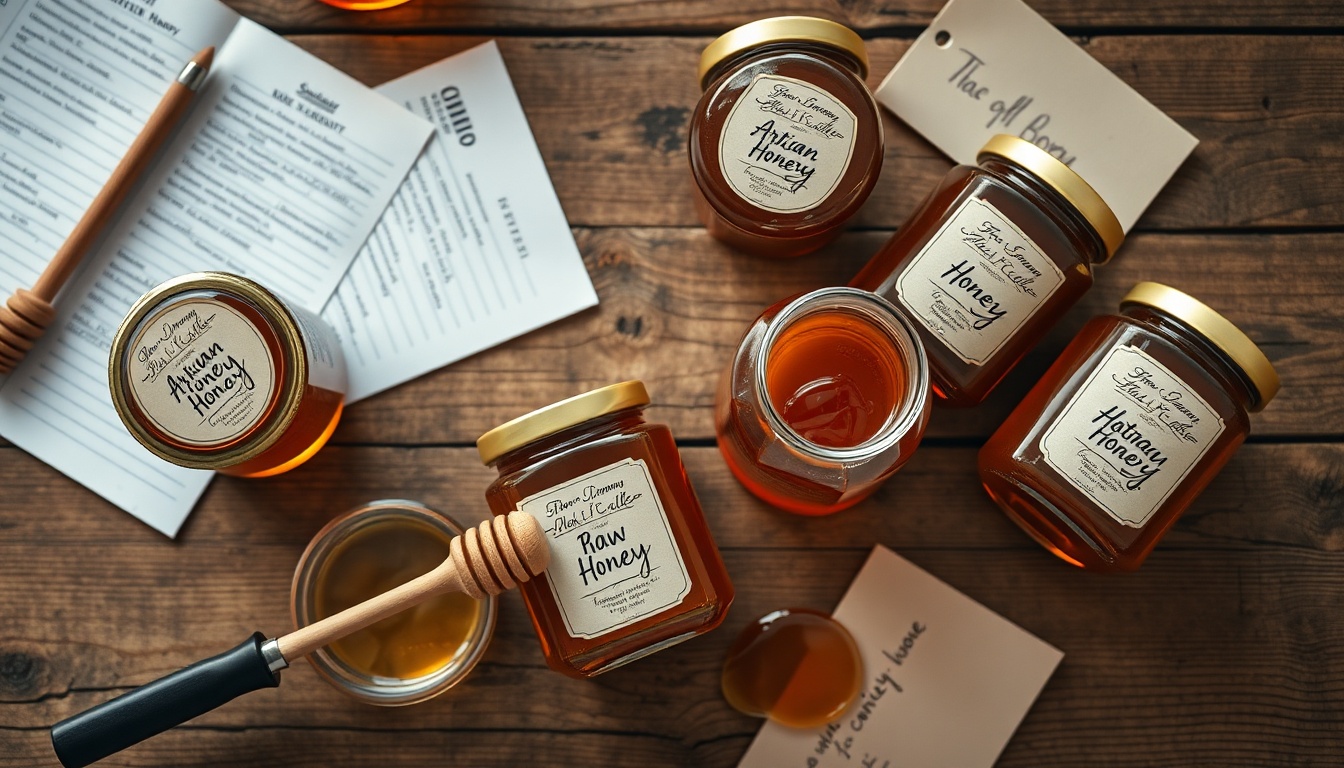
Honey is one of the few foods that can last indefinitely when stored correctly. Chemical analysis of 3,000-year-old honey from Egyptian tombs confirmed its composition was fully intact. But "indefinitely" comes with a caveat: improper storage can degrade honey's flavor, destroy its beneficial enzymes, introduce moisture that leads to fermentation, or allow it to absorb odors from surrounding foods.
If you're buying raw honey for its health benefits — the enzymes, antioxidants, and prebiotic compounds — storage conditions directly impact whether those benefits survive. Heat destroys enzymes like glucose oxidase and diastase. Moisture above 18% enables yeast fermentation. Light degrades antioxidant polyphenols. Understanding these factors lets you preserve everything that makes quality honey worth buying.
The good news: proper honey storage is simple once you understand a few basic principles. This guide covers everything from everyday kitchen storage to long-term preservation for beekeepers and bulk buyers.
The Best Containers for Honey Storage
Your container choice affects honey quality more than most people realize.
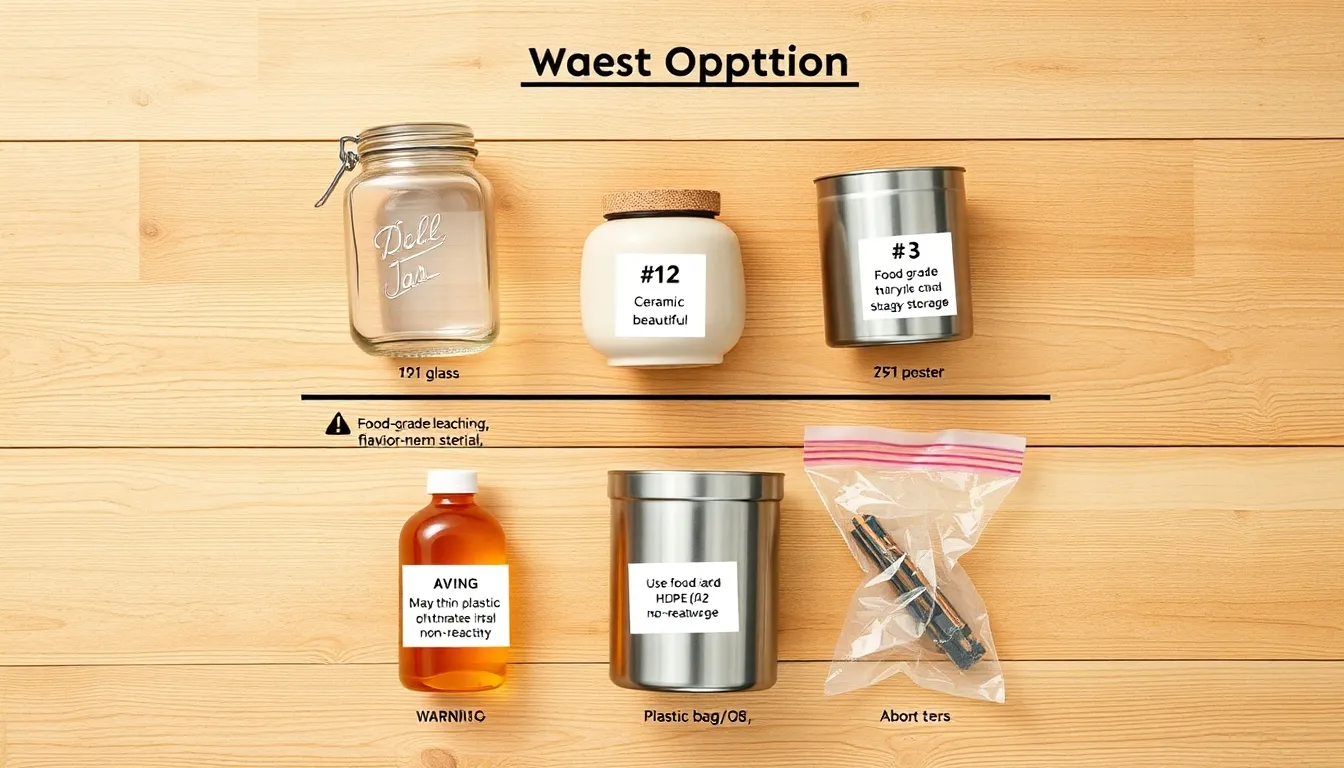
- Glass jars (best overall) — Non-reactive, impermeable to air and moisture, doesn't absorb or leach flavors, easy to see honey level and condition. Mason jars with two-piece lids are ideal. Glass doesn't scratch like plastic, which means bacteria can't hide in micro-abrasions. The only downside: glass breaks if dropped and is heavier for transport.
- Food-grade plastic (BPA-free HDPE or PP) — Acceptable for short-to-medium-term storage (up to a year). Lighter than glass, won't break, and squeeze bottles are convenient. However, over time plastic can absorb honey flavors and may leach chemicals at higher temperatures. Not recommended for long-term storage or for honey stored in warm areas.
- Food-grade stainless steel — Excellent for bulk storage and beekeeping operations. Non-reactive, durable, lightproof. Stainless steel pails are what many commercial honey packers use. Downside: you can't see the honey inside, and lower-grade stainless can impart a metallic taste.
- Avoid: reactive metals (copper, iron, zinc, non-food-grade aluminum) which can corrode in honey's acidic environment (pH 3.2-4.5) and contaminate it. Also avoid containers previously used for chemicals, non-food items, or strongly scented foods. Honey readily absorbs odors through permeable containers.
Pro Tip
Whatever container you use, make sure the lid or seal is airtight. Honey is hygroscopic — it actively absorbs moisture from the air. In humid environments, unsealed honey can absorb enough water to raise its moisture content above the 18% fermentation threshold.
Get the Honey Buyer's Cheat Sheet (free PDF)
16 varieties on one page — color, flavor, best use and what a fair price looks like — from the 268 honeys we track.
Ideal Temperature for Honey Storage
Temperature is the single most important storage factor, especially for raw honey where enzyme preservation matters. Different honey varieties respond to temperature changes differently — buckwheat honey with its dense enzyme content and wildflower honey with complex volatile compounds are particularly sensitive to heat damage.
The ideal storage temperature for honey is 50-70°F (10-21°C) — a cool room temperature. At this range, honey maintains its flavor, retains enzymes, resists crystallization, and stays at optimal viscosity. Clover honey and acacia honey remain perfectly pourable, while manuka honey preserves its therapeutic MGO activity.
- Below 50°F (10°C) — Honey crystallizes faster, especially in the 50-59°F (10-15°C) "crystallization zone" where glucose molecules arrange into crystals most readily. Clover honey and wildflower honey crystallize quickly at these temperatures due to their high glucose content, while acacia honey and tupelo honey resist crystallization longer. Crystallization doesn't harm honey but changes its texture.
- 70-80°F (21-27°C) — Normal room temperature. Fine for daily-use honey that you'll consume within a few months. Slightly accelerates minor quality loss over years but negligible for normal consumption timelines.
- 80-100°F (27-38°C) — Accelerated degradation. HMF (hydroxymethylfurfural) levels begin rising, indicating quality decline. Enzyme activity starts decreasing. Honey darkens faster. Avoid storing near ovens, dishwashers, or south-facing windows in warm climates.
- Above 100°F (38°C) — Significant enzyme destruction. Glucose oxidase is denatured above 104°F (40°C), and diastase activity drops measurably. Raw honey stored in hot garages or attics during summer can lose its raw properties within weeks.
Pro Tip
A pantry, basement, or interior closet away from heat sources is ideal. If your kitchen runs warm from cooking, don't store honey near the stove or on a countertop that gets afternoon sun.
Should You Refrigerate Honey?
In most cases, no. Refrigerating honey causes rapid crystallization and makes it thick and difficult to use. The typical refrigerator temperature of 35-40°F (2-4°C) is below the ideal range and pushes honey into crystallizing faster.
However, there are exceptions where refrigeration makes sense.
- Whipped or creamed honey — Already crystallized intentionally with a smooth, spreadable texture. Refrigeration keeps it firm and spreadable. At room temperature, creamed honey can soften excessively or begin separating.
- Very warm climates — If your home regularly exceeds 85°F (29°C) and you have no cool storage area, the refrigerator may be the lesser of two evils. Crystallization is reversible; enzyme destruction from heat is not.
- Infused honey — Honey infused with fresh ingredients like garlic, ginger, or herbs may need refrigeration depending on the water activity of the additions. Fresh ingredient infusions that raise moisture content above 18% require cooler storage to prevent fermentation. Dried herb infusions are generally fine at room temperature.
- Fermented honey garlic — During active fermentation, room temperature is correct. Once you want to slow fermentation after a few weeks, move it to the refrigerator.
Pro Tip
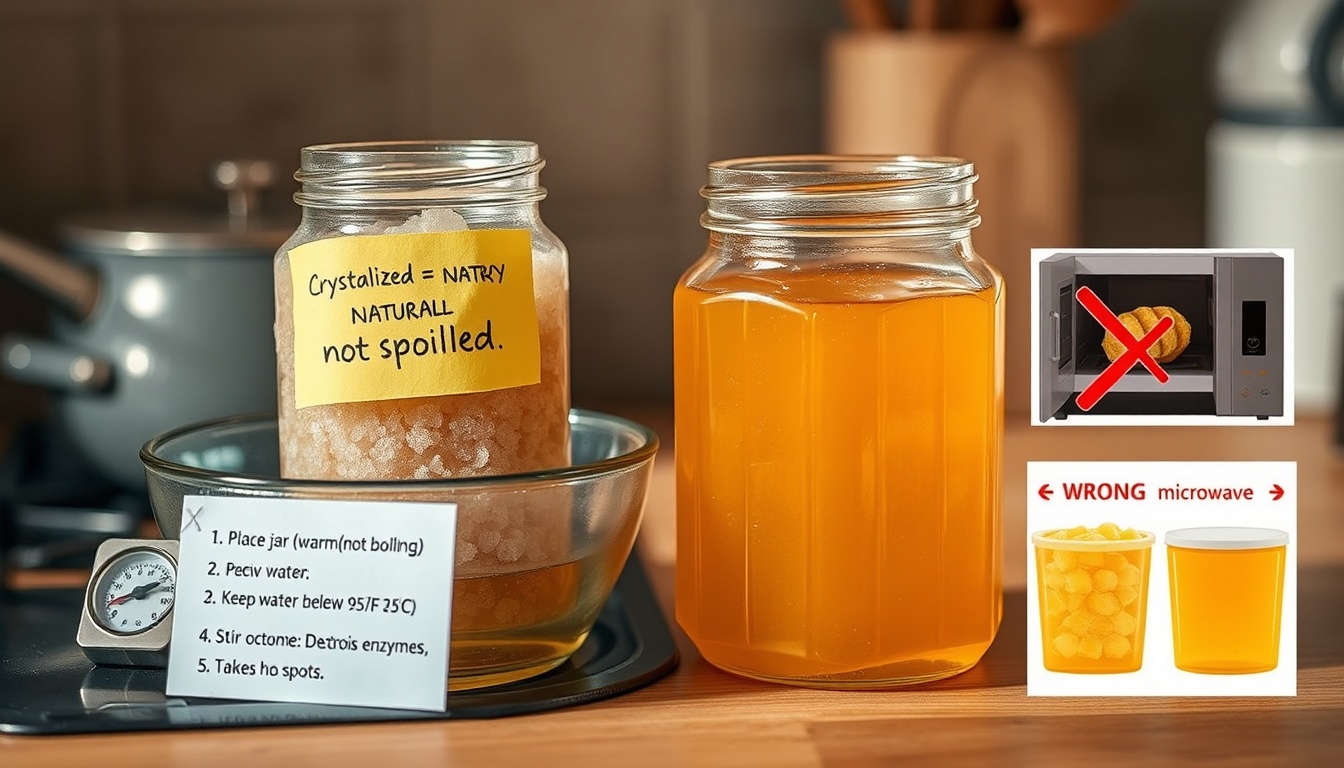
If you do refrigerate honey and it crystallizes, you can gently warm the jar in a warm water bath (not exceeding 104°F/40°C) to reliquefy it without destroying enzymes. Never microwave honey — it creates hot spots that denature enzymes unevenly.
Protecting Honey from Light and Moisture
Light and moisture are honey's two biggest enemies after heat.
UV light and even strong ambient light degrade honey's antioxidant compounds over time. A 2017 study in the Journal of Food Science and Technology found that honey stored in clear containers under fluorescent lighting lost measurably more phenolic content over 6 months compared to honey in dark storage. The polyphenols that give honey its health benefits — chrysin, pinocembrin, quercetin — are photosensitive.
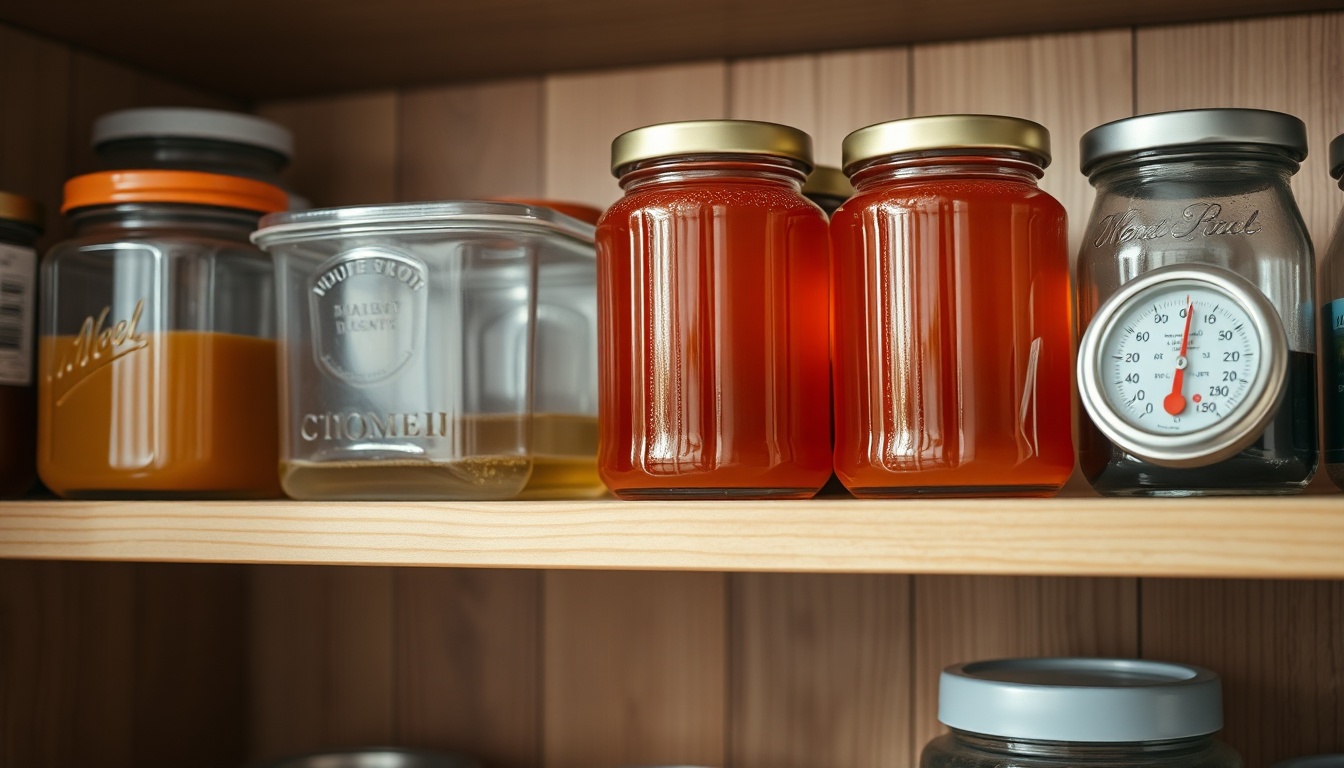
For light protection: store honey in a dark pantry or cabinet rather than on an open shelf. If you use clear glass jars, keep them in a closed cupboard. Amber or dark glass provides additional protection if your honey will be exposed to light regularly.
Moisture is equally critical. Honey naturally has a moisture content of 14-18% — low enough that bacteria and yeast can't grow. Premium varieties like manuka honey and buckwheat honey typically have moisture content at the lower end of this range, providing greater resistance to spoilage. But honey is hygroscopic, meaning it actively pulls water from the air. Wildflower honey and clover honey are particularly hygroscopic due to their fructose content. In humid environments (above 60% relative humidity), unsealed honey will gradually absorb moisture. Once honey exceeds 18% moisture, wild yeasts present in raw honey can begin fermenting, producing off-flavors, bubbles, and a slightly alcoholic smell.
- Always seal the container tightly after each use — don't leave the lid off while you cook or pour tea.
- In very humid climates (coastal, tropical), consider secondary containment like storing jars inside a sealed plastic bin.
- Never use a wet spoon or knife to scoop honey — even a small amount of water introduces moisture directly into the jar.
- If honey appears foamy on top or smells slightly alcoholic, it may have begun fermenting from excess moisture. This isn't dangerous but changes the flavor. Mildly fermented honey works well in cooking or marinades.
How Long Does Honey Last?
The honest answer: properly stored honey doesn't have a meaningful expiration date. Honey's natural properties — low moisture content, low pH (3.2-4.5), hydrogen peroxide production, and high sugar concentration — create an environment where bacteria and mold simply cannot grow.
Honey doesn't truly expire, but it does change over time. Here's what to expect.
- 0-12 months — Peak quality. Flavor is most vibrant, enzymes are fully active, color is truest to the varietal. Orange blossom honey citrus notes and lavender honey floral aromatics are most pronounced during this period. Best window for enjoying raw honey straight.
- 1-2 years — Still excellent. Slight darkening may occur. Some varieties may begin crystallizing, especially those with higher glucose ratios like clover honey or wildflower honey. Buckwheat honey may deepen in color but maintains its robust flavor profile. Enzymes remain active if stored properly.
- 2-5 years — Good quality. Noticeable darkening, increased likelihood of crystallization. HMF levels rise slowly. Flavor profile may shift slightly toward caramel notes. Still perfectly safe and nutritious.
- 5+ years — Safe to eat but quality has decreased. Significant darkening, enzyme activity reduced, stronger caramel flavor. Fine for cooking and baking where you're adding honey as a sweetener rather than showcasing its varietal character.
- Indefinitely — Technically safe if properly sealed and stored, but quality degrades continuously. The Egyptian tomb honey had intact chemistry but certainly didn't taste like fresh wildflower honey.
Pro Tip
The "best by" dates on commercial honey jars (typically 2 years) are about quality, not safety. Honey stored properly doesn't become unsafe — it just gradually loses the nuances that make a specific varietal special.
Dealing with Crystallized Honey
Crystallization is the most common "storage problem" people encounter — but it's not actually a problem. Crystallization is a natural process that occurs when glucose molecules come out of solution and form crystals. It doesn't indicate spoilage, reduced quality, or fake honey. In fact, crystallization can be a sign of raw, unprocessed honey because ultra-filtered commercial honey crystallizes more slowly.
- To decrystallize — Place the jar in a warm water bath at 95-104°F (35-40°C). Stir occasionally. Most crystallized honey will reliquefy within 15-30 minutes. Don't exceed 104°F if you want to preserve raw enzymes.
- To prevent crystallization — Store honey at stable room temperature (avoid temperature fluctuations, which trigger crystallization). Acacia honey, tupelo honey, and sage honey are naturally resistant to crystallization due to their high fructose-to-glucose ratios. In contrast, clover honey, wildflower honey, and orange blossom honey crystallize more readily and benefit from consistent temperature control.
- To embrace crystallization — Some people prefer crystallized honey on toast or biscuits. Creamed honey is intentionally crystallized with controlled seed crystals for a smooth, spreadable texture. You can make your own by mixing 10% creamed honey into liquid honey and storing at 57°F (14°C) for 1-2 weeks.
Storage Tips for Beekeepers and Bulk Buyers
If you're harvesting your own honey or buying in bulk (5+ pounds), storage needs differ from a kitchen jar.
- Food-grade 5-gallon buckets with gamma seal lids — The standard for home beekeepers. Gamma lids provide a threaded, resealable opening that's fully airtight. Much easier to access than snap-on bucket lids and maintain a better seal over repeated openings.
- Pre-filter adequately before long-term storage — Strain honey through a 400-micron (fine) mesh to remove wax particles, bee parts, and debris while preserving pollen. Wax particles in stored honey can act as crystallization nucleation points, accelerating solidification.
- Fill containers as full as possible — Minimizing headspace reduces the air volume (and moisture) in contact with the honey surface. This is especially important in humid climates.
- Label everything — Record varietal/floral source, harvest date, hive location, and moisture reading (if you have a refractometer). Wildflower honey from spring versus fall harvests can taste completely different, while clover honey from different regions varies significantly in intensity. Buckwheat honey should be clearly marked since its bold flavor can overpower other varieties if mixed accidentally. You'll want to know which is which 6 months later.
- Consider splitting into smaller containers — Rather than opening a 60-pound bucket repeatedly (introducing air and moisture each time), decant into quart or half-gallon jars for kitchen use. Keep the bulk container sealed.
- Monitor moisture content — If you have a honey refractometer (available for $25-50), check that moisture is below 18% before sealing for long-term storage. Honey harvested from uncapped frames may have moisture above 18% and should be dried or used quickly.
Pro Tip
If you harvest honey with moisture above 18%, you can reduce it by spreading it in a shallow pan and running a dehumidifier in a closed room for 24-48 hours before jarring. Some beekeepers use food dehydrators on the lowest setting with the trays removed.
Special Storage Situations
Some common scenarios require different approaches.
- Honeycomb — Store at room temperature in an airtight container. Honeycomb stored in the open will attract ants and absorb odors. Don't refrigerate — cold makes the wax hard and unpleasant to chew. Use within 1-2 months for best texture, though it remains safe much longer.
- Honey for wound care — If using honey for wound healing, store medical-grade honey per package directions (usually room temperature, sealed, away from light). Don't use kitchen honey for open wounds unless specifically medical-grade and sterile.
- Honey in baked goods — Already baked or cooked honey follows the storage rules of whatever you baked. The honey's own preservation properties don't apply once it's part of a cookie or bread recipe. Substitution ratios for baking include reducing liquid, so the finished product has normal moisture.
- Honey-based drinks — Honey water, honey tea, or honey lemon mixtures should be consumed within 24 hours or refrigerated. Once dissolved in water, honey's low-moisture preservation no longer applies.
- Travel — Glass jars risk breakage. Transfer to BPA-free squeeze bottles or silicone containers for travel. TSA allows honey in checked luggage without restriction. For carry-on, honey is considered a liquid/gel and subject to the 3.4 oz (100ml) limit.
Common Honey Storage Mistakes
These errors don't make honey dangerous but do reduce quality.
- Storing near the stove or oven — Repeated heat exposure during cooking degrades enzymes and accelerates HMF formation. Move honey to a cool cabinet away from heat-generating appliances.
- Using a wet spoon — Introducing even small amounts of water raises local moisture content and can create fermentation pockets. Always use a dry utensil.
- Leaving the lid off — Even 10 minutes of exposure in a humid kitchen measurably increases surface moisture. Cap the jar immediately after use.
- Storing in the car — Summer car interiors can reach 140-170°F (60-77°C), which rapidly destroys enzymes and dramatically increases HMF. Don't leave purchased honey in a hot car for more than the drive home.
- Mixing different honeys in one container — While not harmful, combining varieties makes it impossible to enjoy each honey's unique varietal character. The bold flavor of buckwheat honey will overwhelm delicate acacia honey, while wildflower honey's complexity gets muddled with clover honey's mild profile. Premium varieties like manuka honey should never be mixed since their therapeutic properties and price point warrant individual storage.
- Freezing without headspace — Honey expands slightly when frozen. Leave 1-2 inches of headspace in glass jars to prevent cracking. Plastic containers handle expansion better.
Can You Freeze Honey?
Yes — freezing is actually an excellent long-term preservation method that many people overlook. Honey doesn't freeze solid at typical freezer temperatures (0°F/-18°C). Instead, it becomes extremely thick and viscous but retains a scoopable, almost taffy-like consistency.
Freezing essentially halts all quality degradation. Enzyme activity pauses rather than being destroyed (unlike heat damage). This is particularly valuable for enzyme-rich varieties like buckwheat honey and wildflower honey. HMF formation stops. Crystallization doesn't occur because the temperature is too low for glucose molecules to form crystal lattices (crystallization peaks at 50-59°F/10-15°C). Even crystallization-prone varieties like clover honey and orange blossom honey remain liquid when frozen. Flavor and nutritional content remain virtually unchanged for years.
- Use freezer-safe containers with headspace — Glass mason jars work if you leave room for expansion. Wide-mouth jars are easier to scoop from.
- Portion before freezing — Freeze honey in the amounts you'll actually use. Repeatedly thawing and refreezing a large container introduces condensation moisture.
- Thaw at room temperature — Don't microwave or hot-water-bath frozen honey. Let it come to room temperature gradually to avoid condensation forming on the surface.
- Ideal for bulk purchases and beekeeper surplus — Buy that 5-pound jug of farmer's market honey, portion into jars, and freeze what you won't use in the next few months.
Pro Tip
Freezing is the only storage method that genuinely preserves raw honey at peak quality for years. If you find a honey variety you love, buying extra and freezing the surplus is the best strategy.
Quick Reference: Honey Storage Dos and Don'ts
A summary of everything above for quick reference.
- Do: Store in glass or food-grade containers with airtight lids.
- Do: Keep in a cool (50-70°F), dark, dry location like a pantry or cabinet.
- Do: Use dry utensils to scoop honey.
- Do: Freeze surplus honey for long-term preservation.
- Do: Label containers with variety, source, and date.
- Don't: Store near heat sources (stove, oven, dishwasher, sunny windows).
- Don't: Refrigerate liquid honey (causes crystallization) unless in a very hot climate.
- Don't: Leave the lid open or use wet spoons.
- Don't: Store in reactive metal containers.
- Don't: Leave in a hot car after purchasing.