Tupelo Honey Benefits: The Champagne of Honeys
Evidence-based guide to tupelo honey — America's rarest premium honey. Why it never crystallizes, its low glycemic index, the narrow Apalachicola River harvest window, culinary pairings, how to spot fakes, and where to buy authentic tupelo.
Last updated:
Tupelo honey is one of the rarest and most prized honeys in the world, produced exclusively from white tupelo (Nyssa ogeche) blossoms in the river swamps of the Florida-Georgia border during a 2-3 week bloom in late April. Its extraordinarily high fructose-to-glucose ratio (~1.65:1; White 1975) means it virtually never crystallizes — a unique property among honeys. Tupelo has a lower glycemic index (estimated 40-55) than most honeys, a smooth buttery texture, and a refined flavor with notes of pear and melon. Annual production is only 100-200 tons globally, which drives prices to $25-50 per pound. Due to its rarity, tupelo is frequently adulterated — buy from Apalachicola River region beekeepers and verify authenticity with the crystallization test. Best enjoyed straight, with soft cheeses, in light teas, or as a finishing drizzle.

What Makes Tupelo Honey Different from Other Honeys?
Tupelo honey is a rare, premium monofloral honey produced by bees foraging almost exclusively on white tupelo (Nyssa ogeche) blossoms in the river swamps of the southeastern United States — primarily the Apalachicola, Chipola, and Ochlockonee river basins along the Florida-Georgia border. Often called "the champagne of honeys," tupelo is prized for its exceptionally smooth, buttery texture, light golden-amber color with a subtle greenish cast, and a flavor profile that balances mild sweetness with delicate floral and fruity notes reminiscent of pear and ripe melon. What makes tupelo truly unique among honeys is its extraordinary fructose-to-glucose ratio — approximately 1.65:1 (White 1975), one of the highest of any honey variety. This sugar composition gives tupelo its most celebrated property: it virtually never crystallizes. While most honeys granulate within weeks to months, a jar of pure tupelo honey can remain liquid for years or even decades. The white tupelo tree blooms for only 2-3 weeks in late April through early May, and beekeepers must time their harvest with precision — removing honey supers before and after the bloom to ensure purity. This narrow harvest window, combined with the tree's limited geographic range (essentially confined to a 200-mile stretch of river swamp), makes tupelo one of the rarest commercial honeys in the world. Florida and Georgia produce the vast majority of the global supply, with annual production estimated at only 100-200 tons in good years — weather disruptions can cut yields dramatically.
Key Takeaways
- Produced from white tupelo (Nyssa ogeche) blossoms in Florida-Georgia river swamps — 200-mile geographic range
- Fructose-to-glucose ratio of ~1.65:1 (White 1975) — highest of any common honey, preventing crystallization
- Virtually never crystallizes — can remain liquid for years or decades unlike most honeys
- Extremely narrow 2-3 week harvest window in late April through early May
- Annual global production only 100-200 tons — one of the rarest commercial honeys in the world
- Light golden-amber color with greenish cast, buttery texture, delicate pear and melon notes
What Are the Evidence-Based Health Benefits of Tupelo Honey?
Tupelo honey shares the broad health benefits documented for raw honeys in general, with some variety-specific advantages stemming from its unique sugar composition and bioactive profile. Its most significant health-related distinction is its low glycemic index — estimated at 40-55, among the lowest of any natural honey. The high fructose-to-glucose ratio means tupelo honey causes a slower, more gradual blood sugar rise compared to higher-GI honeys like clover (~69) or buckwheat (~73-83). A 2004 study published in the Journal of the American College of Nutrition found that high-fructose foods produced significantly lower postprandial glucose and insulin responses compared to high-glucose equivalents, which is consistent with tupelo honey's observed gentle glycemic effect. While this does NOT make tupelo honey "safe" for diabetics — it is still a concentrated sugar — it may be a preferable choice for people managing blood sugar levels under medical guidance. Tupelo honey also contains a moderate antioxidant profile. Its phenolic content ranges from approximately 30-60 mg gallic acid equivalents (GAE) per 100g — higher than very light honeys like acacia (20-35 mg GAE) but lower than dark varieties like buckwheat (100-200 mg GAE). The specific polyphenols include quercetin, kaempferol, chrysin, and pinocembrin, all of which have demonstrated anti-inflammatory and cardioprotective properties in laboratory studies. Like all raw honeys, tupelo contains the enzyme glucose oxidase, which produces hydrogen peroxide and gives honey its antimicrobial properties — effective against common pathogens including Staphylococcus aureus and Escherichia coli. The 2020 BMJ Evidence-Based Medicine systematic review of 14 studies confirmed that honey is superior to usual care for upper respiratory infections, reducing cough frequency by 36% — an effect that applies to quality raw honeys including tupelo.
Key Takeaways
- Low glycemic index (estimated 40-55) — among the lowest of any natural honey due to high fructose ratio
- Slower blood sugar rise than higher-GI honeys like clover (~69) — may be preferable for blood sugar management
- Moderate phenolic content: 30-60 mg GAE/100g — includes quercetin, kaempferol, chrysin, pinocembrin
- Antimicrobial glucose oxidase activity effective against S. aureus and E. coli
- BMJ Evidence-Based Medicine 2020 systematic review: raw honey reduces cough frequency by 36% vs usual care for URIs
- Anti-inflammatory polyphenols modulate NF-κB pathway — cardioprotective in laboratory studies
What Are the Best Culinary Uses for Tupelo Honey?
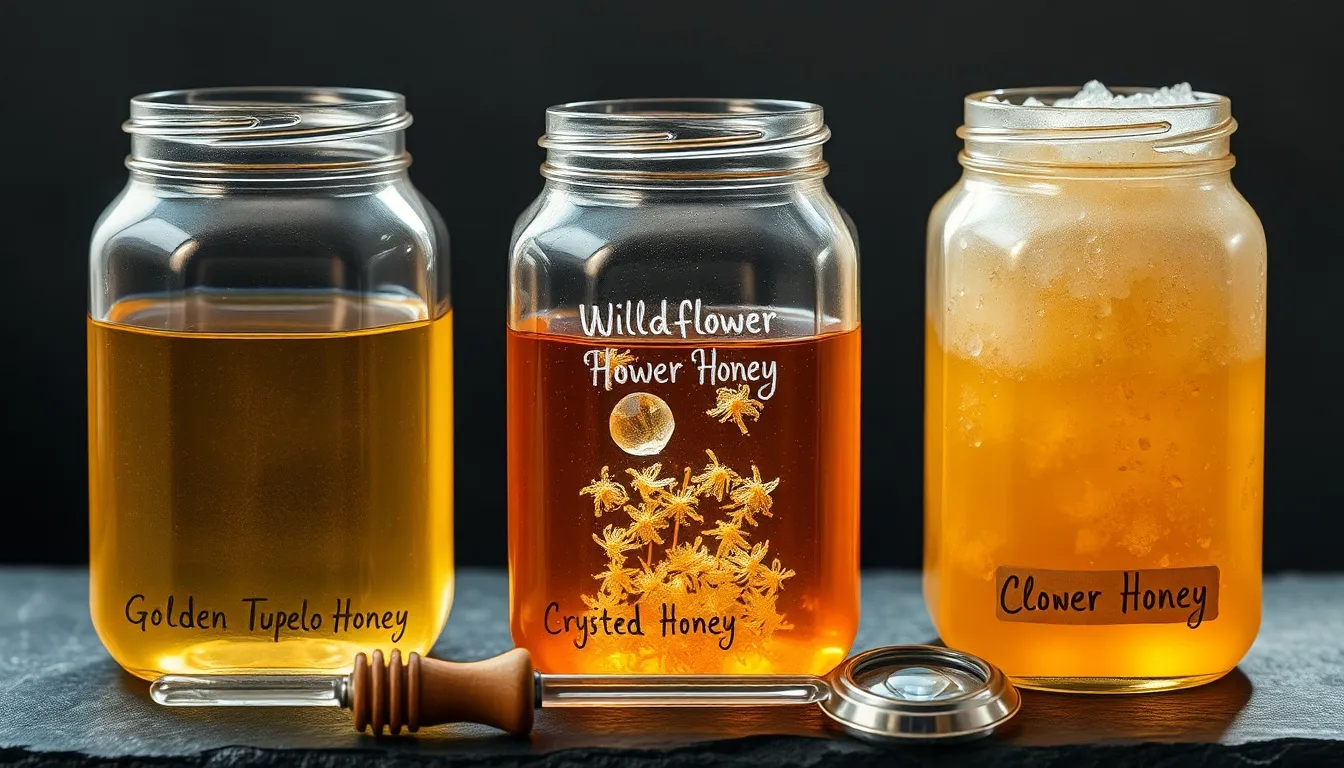
Tupelo honey's delicate flavor, smooth texture, and liquid consistency make it one of the most versatile premium honeys in the kitchen — but its high price point means it's best reserved for applications where its qualities truly shine. Straight tasting is how many honey connoisseurs first experience tupelo: drizzle a small spoonful onto a clean palate to appreciate the subtle pear, melon, and floral notes that develop across the tongue. For cheese boards, tupelo pairs exceptionally with soft, creamy cheeses — ricotta, fresh chèvre, burrata, brie, and triple-cream varieties — where its mild sweetness complements without overwhelming delicate dairy flavors. Blue cheese and aged cheddar can also benefit from tupelo's gentle contrast. In beverages, tupelo dissolves instantly (no crystallization issues) and adds clean sweetness to light teas (white tea, green tea, chamomile), craft cocktails, and sparkling water. Its mild profile won't overpower subtle drink flavors the way buckwheat or chestnut honey would. For baking, tupelo is prized for its ability to keep baked goods moist longer — the high fructose content is more hygroscopic (moisture-attracting) than glucose, which means tupelo-sweetened cakes, muffins, and quick breads retain moisture better during storage. Use the standard honey-for-sugar substitution: replace 1 cup sugar with 3/4 cup tupelo honey, reduce other liquids by 3 tablespoons, add 1/4 teaspoon baking soda, and lower oven temperature by 25°F. For finishing applications, a light drizzle of tupelo honey over fresh fruit, yogurt, oatmeal, or vanilla ice cream delivers understated elegance. It also makes an excellent base for simple syrups and honey vinaigrettes where you want sweetness without assertive honey flavor.
Key Takeaways
- Best for straight tasting — subtle pear, melon, and floral notes develop across the palate
- Ideal cheese board honey — pairs with ricotta, chèvre, burrata, brie, and soft creamy cheeses
- Dissolves instantly in beverages — excellent in light teas, craft cocktails, and sparkling water
- Superior baking moisture retention — high fructose is more hygroscopic than glucose
- Baking substitution: 3/4 cup tupelo per 1 cup sugar, reduce liquids by 3 tbsp, add 1/4 tsp baking soda, lower oven 25°F
- Perfect for finishing: yogurt, oatmeal, fresh fruit, vanilla ice cream, vinaigrettes
How to Buy Authentic Tupelo Honey and Avoid Fakes?
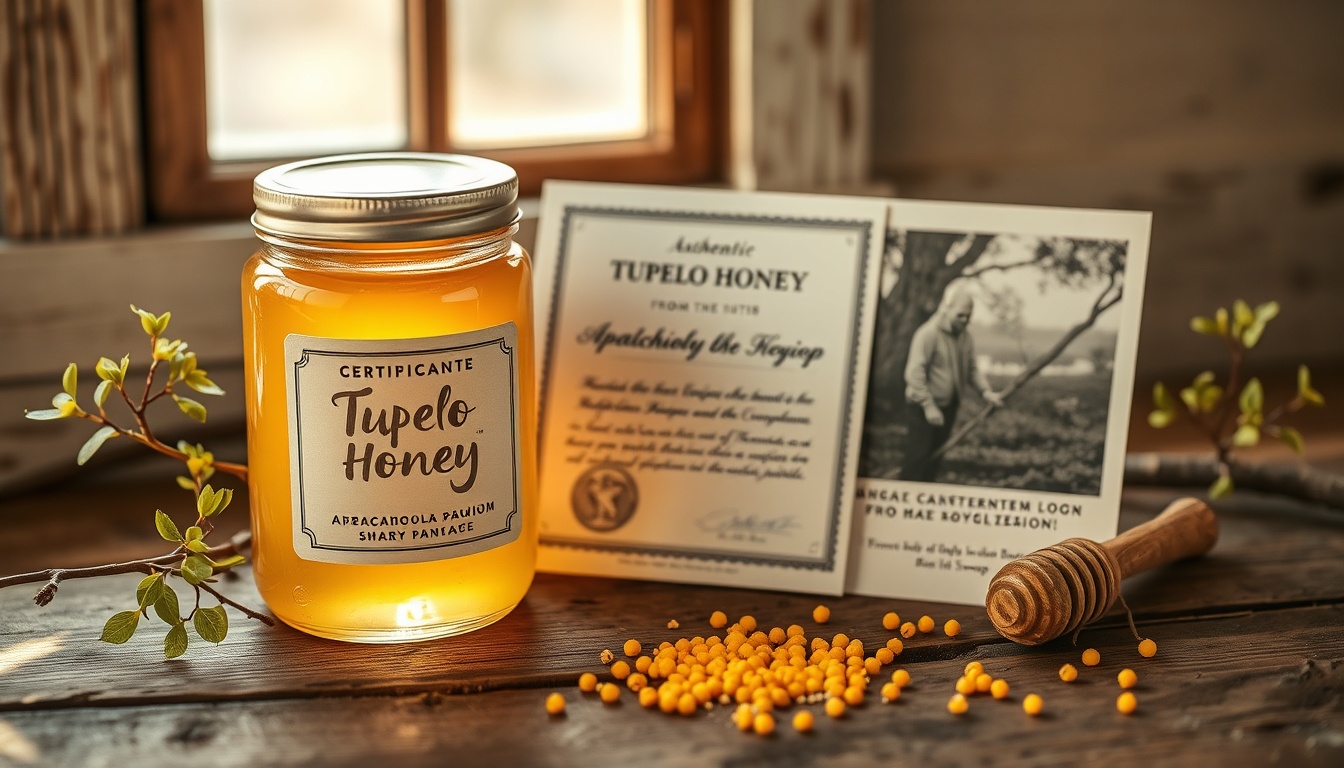
The rarity and premium price of tupelo honey make it one of the most commonly adulterated honeys in the United States. The Florida Department of Agriculture requires that honey labeled "tupelo" must be predominantly from Nyssa ogeche nectar, but enforcement is limited and the label "tupelo blend" or "tupelo style" may contain minimal actual tupelo. To buy authentic tupelo honey, the single best indicator is the source: look for beekeepers located along the Apalachicola, Chipola, or Ochlockonee rivers in the Florida panhandle or southwestern Georgia. Established tupelo beekeepers include multi-generational operations like L.L. Lanier and Sons (Wewahitchka, Florida), Smiley Honey (Bristol, Florida), and the Tupelo Honey Festival vendors in Wewahitchka — the self-proclaimed "Tupelo Honey Capital of the World," which holds an annual festival each May. Price is another authenticity signal: genuine tupelo honey costs $25-50 per pound ($12-25 per 8oz jar). If you find "tupelo honey" for under $10 per pound, it is almost certainly blended or fraudulent. The crystallization test is the most reliable home verification method: genuine pure tupelo honey will remain liquid at room temperature for years. If your "tupelo" honey crystallizes within a few months, it has been blended with glucose-dominant honeys like clover or wildflower. For certified purity, look for pollen analysis certificates (melissopalynology reports) that confirm Nyssa ogeche pollen dominance — some premium sellers include these. The Florida State Beekeepers Association also maintains records of legitimate tupelo producers. Buy directly from beekeepers or reputable specialty food retailers rather than mass-market retailers, where mislabeling is more common.
Key Takeaways
- Buy from Apalachicola/Chipola/Ochlockonee river beekeepers — the only region where tupelo is produced
- Expect $25-50/lb — "tupelo" under $10/lb is almost certainly blended or fraudulent
- Crystallization test: genuine tupelo stays liquid for years — crystallization means blending
- Look for pollen analysis certificates confirming Nyssa ogeche pollen dominance
- Wewahitchka, FL is the "Tupelo Honey Capital of the World" — annual festival in May
- Buy direct from beekeepers or specialty retailers — mass-market "tupelo" is often mislabeled
What Are the Safety Precautions for Tupelo Honey?
Tupelo honey shares the same fundamental safety considerations as all honeys, with a few variety-specific notes. Never give tupelo honey — or any honey — to infants under 12 months. The risk of infant botulism from Clostridium botulinum spores is the same regardless of honey variety, color, or price. While cases are rare (fewer than 200 per year in the US), infant botulism can be life-threatening. After 12 months, the gut microbiome is mature enough to handle spores safely. Despite its lower glycemic index (estimated 40-55), tupelo honey is still a concentrated sugar — each tablespoon contains approximately 64 calories and 17 grams of carbohydrates. People with diabetes should still talk to their doctor about how tupelo honey fits their diet. The lower GI may result in a gentler blood sugar curve, but it does not eliminate the glycemic impact. The American Heart Association recommends limiting added sugars to 6 teaspoons (25g) per day for women and 9 teaspoons (36g) per day for men — 2 tablespoons of tupelo honey approaches half the daily limit. A tupelo-specific safety concern is fraud-related: if you purchase mislabeled "tupelo" honey that is actually a blend, you may not get the low-GI benefit you expect. People who choose tupelo specifically for its lower glycemic impact should verify authenticity using the crystallization test and buy from known tupelo producers. Tupelo honey may rarely trigger allergic reactions in people with pollen sensitivities, though honey allergy is extremely uncommon. If you experience any symptoms after consuming tupelo honey (swelling, itching, difficulty breathing), seek medical attention. Store tupelo honey at room temperature in a sealed container away from direct sunlight — its non-crystallizing nature means it requires no special storage beyond standard honey care.
Key Takeaways
- Never give to infants under 12 months — botulism risk is the same regardless of honey variety or price
- Calorie awareness: 64 cal/tbsp — 2 tbsp approaches half the AHA daily added sugar limit for women
- Lower GI (40-55) does not make it "safe" for diabetics — talk to your doctor about how it fits your diet
- Fraud risk: mislabeled "tupelo" may not have the low-GI benefit — verify authenticity before relying on it
- Rare pollen allergy possible — seek medical attention if you experience swelling, itching, or breathing difficulty
- Store at room temperature in sealed container — no special storage needed due to non-crystallizing nature
Frequently Asked Questions
Why does tupelo honey never crystallize?
Tupelo honey has one of the highest fructose-to-glucose ratios of any natural honey — ~1.65:1 (White 1975). Crystallization is driven by glucose molecules, so honeys with more fructose than glucose resist crystallization. Pure tupelo honey can remain liquid at room temperature for years or even decades, unlike most honeys that crystallize within weeks to months. If your "tupelo" honey crystallizes, it has likely been blended with glucose-dominant varieties like clover.
Is tupelo honey good for diabetics?
Tupelo honey has a lower estimated glycemic index (40-55) than most honeys, thanks to its high fructose content which causes a slower blood sugar rise. However, it is NOT "safe" for diabetics — it is still a concentrated sugar with 64 calories and 17g carbohydrates per tablespoon. People with diabetes should talk to their doctor about how tupelo honey fits their diet. The lower GI may produce a gentler blood sugar curve compared to clover honey (~69), but consult your doctor before using any honey regularly.
How can I tell if tupelo honey is real?
Three ways to verify: (1) Source — authentic tupelo comes only from the Apalachicola, Chipola, or Ochlockonee river basins in the Florida panhandle and southwestern Georgia. (2) Price — genuine tupelo costs $25-50/lb; anything under $10/lb is almost certainly fake or blended. (3) Crystallization test — pure tupelo stays liquid indefinitely; if it crystallizes within months, it has been blended with cheaper honeys. For certified purity, look for pollen analysis (melissopalynology) certificates confirming Nyssa ogeche pollen dominance.
What does tupelo honey taste like?
Tupelo honey has a delicate, refined flavor often described as the most elegant of all honeys. It offers mild sweetness with subtle notes of ripe pear, melon, and gentle florals, without the bold intensity of dark honeys like buckwheat or the medicinal notes some perceive in Manuka. The texture is smooth and buttery. This refined profile makes tupelo the preferred honey for straight tasting, soft cheese pairings, light teas, and applications where honey should enhance rather than dominate.
Why is tupelo honey so expensive?
Tupelo honey costs $25-50 per pound due to extreme rarity. The white tupelo tree (Nyssa ogeche) grows only in a 200-mile stretch of river swamp along the Florida-Georgia border. It blooms for just 2-3 weeks per year, and beekeepers must time their harvest precisely to ensure purity. Global production is estimated at only 100-200 tons in good years — weather disruptions can slash yields. This geographic limitation, short harvest window, and small production volume make tupelo one of the rarest commercial honeys in the world.
How should I use tupelo honey?
Tupelo honey is best appreciated in applications that showcase its delicate flavor: straight tasting, drizzled over soft cheeses (ricotta, chèvre, brie, burrata), dissolved in light teas or craft cocktails, drizzled over yogurt, oatmeal, or fresh fruit, and in baking where its high fructose content keeps goods moist longer. Due to its premium price ($25-50/lb), it is best reserved for finishing and tasting rather than bulk cooking where a more affordable honey like clover or wildflower would work equally well.
Edited by Sam French · Raw Honey Guide Editorial Team
Source reviewed against primary literature and official guidance where available. Health content is educational, not medical advice, and does not replace a licensed clinician.
Get the Honey Buyer's Cheat Sheet (free PDF)
16 varieties on one page — color, flavor, best use and what a fair price looks like — from the 268 honeys we track.
Related Guides
Floral Sources Guide
Learn about honey varieties by floral origin.
Read GuideAcacia Honey Guide
Lowest GI honey (32) — stays liquid for years, blood sugar benefits, cheese boards, and buying tips.
Read GuideClover Honey Guide
America's most popular honey — mild flavor, health benefits, cooking uses, and buying tips.
Read GuideRelated Articles
Tupelo Honey Benefits: The Champagne of Honeys Worth Knowing
Tupelo honey never crystallizes and has one of the lowest glycemic indexes of any honey. Flavor, health benefits, and more.
Read ArticleMeadowfoam Honey Benefits: Why This Pacific Northwest Gem Is Worth Discovering
Meadowfoam honey: marshmallow-vanilla flavor, slow crystallization, and antioxidant-rich. A rare Pacific Northwest gem.
Read ArticleAcacia Honey Benefits: Why This Light, Low-GI Honey Stands Out
Acacia honey has the lowest glycemic index (32-35) of common honeys. Benefits for blood sugar, digestion, and inflammation.
Read ArticleReady to try tupelo honey?