What Makes Tupelo Honey Unique
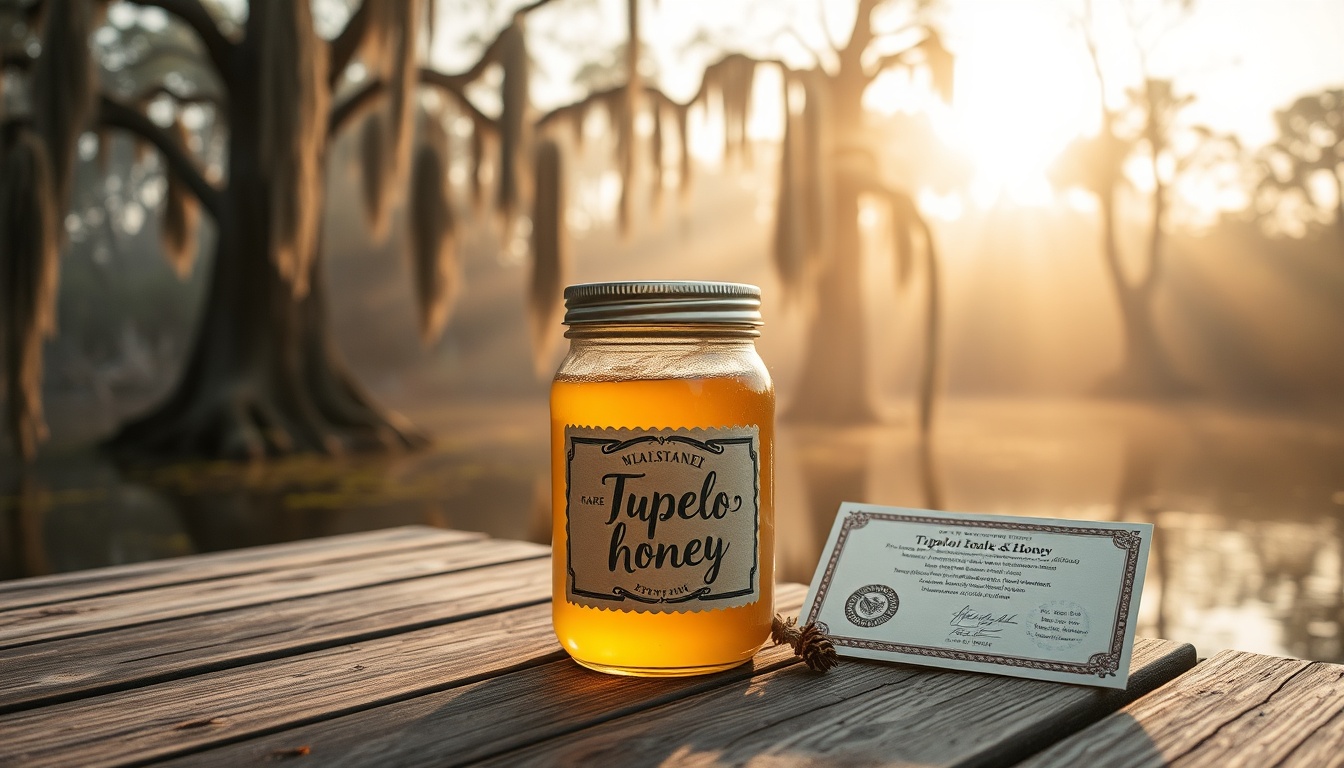
Tupelo honey is one of the rarest and most prized honey varieties in the world, produced exclusively from the nectar of white tupelo trees (Nyssa ogeche) that grow in the swamp forests of the Florida panhandle and southeastern Georgia. The tupelo bloom lasts just 2-3 weeks in mid-April to early May, giving beekeepers an extremely narrow harvest window that makes this honey scarce by nature.
Often called "the Champagne of honeys," tupelo honey has earned its premium reputation through a combination of exceptional properties: it has the highest fructose-to-glucose ratio of any widely available honey (approximately 1.65:1; White 1975), which gives it a low glycemic index, a distinctively smooth sweetness, and the remarkable ability to resist crystallization almost indefinitely.
Authentic tupelo honey has been a protected product of the Apalachicola River basin for over a century. Beekeeping families have harvested it from platform hives placed directly in the tupelo swamps — a practice that requires specialized knowledge, dangerous working conditions, and careful timing. This guide examines what research says about tupelo honey's health properties and why it commands $25-50+ per pound. For context on all varieties, see our types of honey guide.
1. Exceptionally Low Glycemic Index
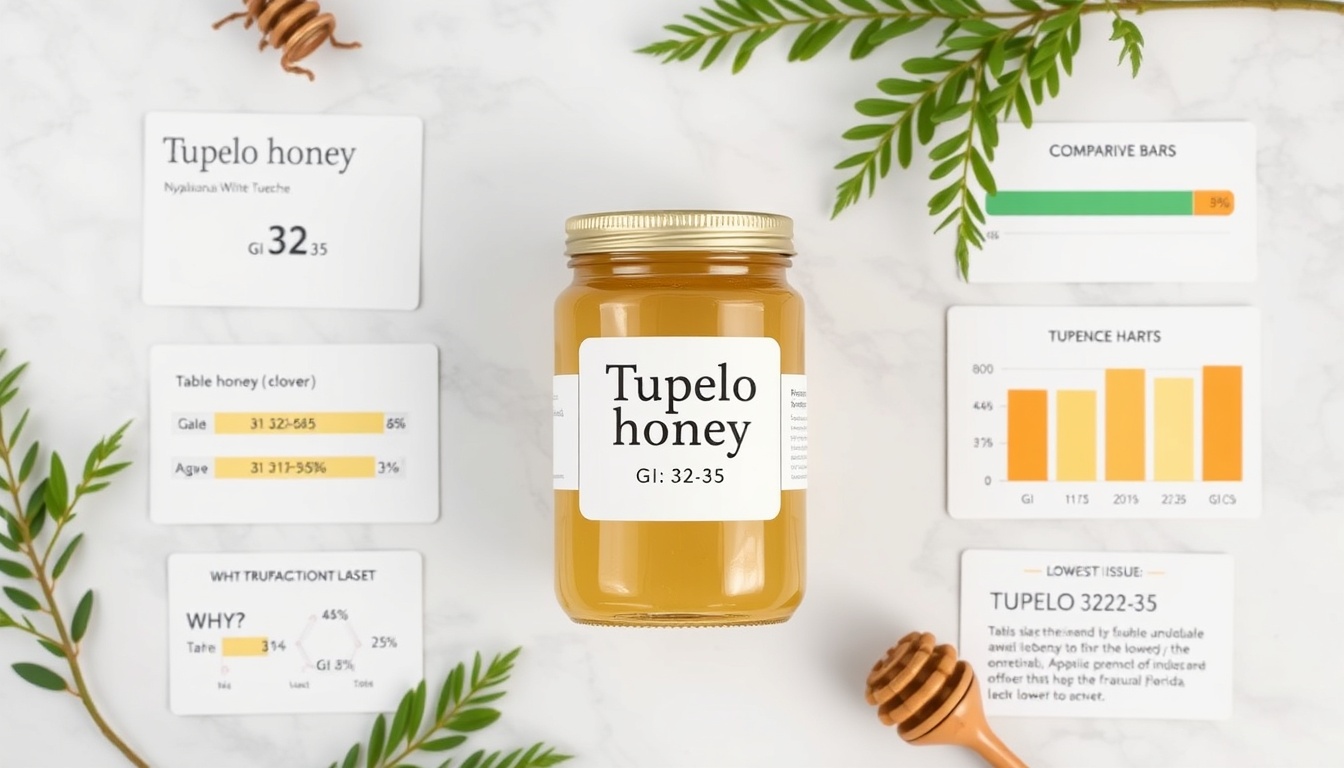
Tupelo honey's defining nutritional characteristic is its sugar composition: approximately 44-48% fructose and only 24-28% glucose, creating a fructose-to-glucose ratio of ~1.65:1 (White 1975) — higher than acacia honey's ~1.47:1 ratio (White 1975). This gives tupelo honey one of the lowest glycemic indexes of any honey variety, estimated at ~44 (Arcot & Brand-Miller 2005) — well below common clover honey (~69, $8-15/lb, Ischayek & Kern 2006) and table sugar (~65). Acacia honey (GI ~32-35, $12-20/lb) measures slightly lower than tupelo on the glycemic scale.
Because fructose is metabolized primarily in the liver without triggering the same insulin spike as glucose, tupelo honey produces a notably gradual blood sugar response. A 2004 study in the Journal of Medicinal Food comparing glycemic responses to different honey types found that honeys with higher fructose-to-glucose ratios consistently produced lower postprandial glucose spikes in both healthy adults and those with type 2 diabetes.
This section does not establish a universal or medical honey dose for this purpose. Use the daily added-sugar guide to count honey with other added or free sugars.
Practical note: tupelo honey's low GI also means it provides sustained energy rather than a spike-and-crash cycle, making it useful for athletes who want steady fuel and for pre-bed consumption to maintain stable liver glycogen through the night.
Get the Honey Buyer's Cheat Sheet (free PDF)
16 varieties on one page — color, flavor, best use and what a fair price looks like — from the 268 honeys we track.
2. Never Crystallizes (or Almost Never)
Tupelo honey's extremely high fructose ratio gives it a property no other common honey variety can match: it essentially does not crystallize under normal storage conditions. While most honeys begin forming crystals within weeks to months, genuine tupelo honey can remain perfectly liquid for years — even decades.
This happens because crystallization is driven by glucose, and tupelo honey simply doesn't contain enough glucose to form a crystal lattice. The supersaturated fructose solution remains stable at room temperature almost indefinitely. See why honey crystallizes for the full science.
This property has practical benefits beyond convenience: liquid honey is easier to use in tea, coffee, baking, and honey water. It also serves as an authenticity indicator — if honey labeled "tupelo" crystallizes within the first year, it's likely been adulterated with cheaper honey varieties that have higher glucose content.
The only other common honey approaching tupelo's crystallization resistance is acacia ($12-20/lb), but even acacia typically begins slow crystallization after 1-2 years. Tupelo's resistance is essentially permanent under proper storage.
Pro Tip
Tupelo honey's permanent liquid state makes it the ideal variety for applications where crystallization is problematic — honey dispensers, squeeze bottles, cooking syrups, and cold beverages where crystals won't dissolve.
3. Antioxidant and Polyphenol Content
While tupelo honey ($25-45/lb) falls in the light-to-medium color range (and lighter honeys generally contain fewer antioxidants than dark varieties), it has a respectable polyphenol profile that includes quercetin, kaempferol, p-coumaric acid, and ellagic acid — compounds with demonstrated antioxidant and anti-inflammatory activity.
A 2002 study by Gheldof and Engeseth in the Journal of Agricultural and Food Chemistry measured antioxidant capacity across 19 US honey varieties and found that total phenolic content correlated closely with color (r = 0.82 between color intensity and antioxidant capacity), with darker honeys scoring highest — but lighter honeys like tupelo still provided meaningful antioxidant levels, particularly when consumed as a daily replacement for refined sugar, which contributes zero antioxidants.
The 2022 Nutrition Reviews meta-analysis of 18 RCTs confirmed that replacing refined sugar with honey — regardless of variety — significantly improved inflammatory markers (CRP, fasting glucose, LDL cholesterol). Raw, unprocessed honeys showed the strongest effects, and tupelo honey is almost always sold raw because its liquid stability eliminates the need for heat processing.
Ellagic acid, identified in tupelo honey, has been studied for anti-cancer and cardioprotective properties. A 2018 review in Phytotherapy Research documented ellagic acid's effects on lipid metabolism, oxidative stress, and cell cycle regulation. While these are primarily laboratory findings, the presence of this compound adds to tupelo honey's antioxidant value beyond what its moderate color would suggest.
For maximum antioxidant potency, buckwheat honey ($15-25/lb, ORAC 16,000+) remains the leader. But tupelo offers a combination of antioxidant benefit, low glycemic impact, and permanent liquid state that no other single variety matches. See our honey nutrition facts guide for detailed comparisons.
4. Antimicrobial Properties
Tupelo honey exhibits antibacterial activity through the hydrogen peroxide mechanism common to all raw honeys — glucose oxidase converts glucose to gluconic acid and H₂O₂ when the honey is diluted. Despite tupelo's lower glucose content, the enzymatic activity remains sufficient for meaningful antimicrobial effects.
A 2010 study in the Journal of Medicinal Food tested multiple US-origin honeys (including tupelo) against wound-relevant pathogens and found that all raw, unprocessed honeys demonstrated significant antibacterial activity, with the key variable being whether the honey was raw (retaining active enzymes) rather than floral source.
Tupelo honey's additional osmotic effect (its concentrated sugar content draws water from bacterial cells) and low pH (~3.4-3.9) contribute to its antimicrobial properties. These mechanisms make it effective for sore throat relief and minor wound first aid.
For serious wound infections, MRSA, or clinical antimicrobial applications, medical-grade manuka honey ($35-60+/lb for UMF 10+) with verified MGO levels remains the evidence-based choice. Tupelo honey's antimicrobial strength lies in everyday prevention and immune support rather than clinical potency. See our honey for immune system guide for protocols.
5. Digestive and Prebiotic Benefits
Like all raw honeys, tupelo honey contains fructo-oligosaccharides (FOS) and other non-digestible carbohydrates that function as prebiotics — selectively feeding beneficial Bifidobacterium and Lactobacillus species in the gut. These prebiotic effects have been documented across honey varieties in multiple studies, including a 2020 review in Nutrients.
Tupelo honey's high fructose content may offer a particular advantage for people with sensitive digestive systems: its gentle sweetness and low glucose load are less likely to trigger rapid fermentation in the upper GI tract compared to high-glucose honeys that can cause bloating in sensitive individuals.
However, for people with fructose malabsorption (a subset of FODMAP sensitivity), tupelo honey's very high fructose content could actually be a disadvantage. The excess fructose (fructose beyond matching glucose for co-transport absorption) may reach the large intestine unabsorbed, causing gas and discomfort. If you have diagnosed fructose malabsorption, clover honey ($8-15/lb) with its more balanced sugar ratio may be a better choice.
For general prebiotic support and gut health optimization, tupelo honey provides the same core benefits as other raw honeys. See our honey and gut health guide for evidence-based protocols, and our honey for constipation guide for digestive-specific applications.
6. Cardiovascular Benefits
The 2022 Nutrition Reviews meta-analysis found that honey consumption improved cardiovascular markers — reduced LDL cholesterol, total cholesterol, and triglycerides while increasing HDL cholesterol — with raw honey outperforming processed varieties across all endpoints.
Tupelo honey's specific cardiovascular advantage lies in its glycemic profile. The low insulin response from its high-fructose composition means less contribution to insulin resistance — a major driver of metabolic syndrome and cardiovascular disease. Over time, replacing refined sugar with a low-GI sweetener like tupelo honey reduces the cumulative insulin load that promotes arterial inflammation and dyslipidemia.
Quercetin, one of the polyphenols identified in tupelo honey, has been extensively studied for cardiovascular protection. A 2016 meta-analysis in the Journal of the American Heart Association found that quercetin supplementation significantly reduced blood pressure in hypertensive subjects. While the quantities in honey are lower than supplemental doses, the consistent cardiovascular improvements seen in honey clinical trials suggest that the combination of multiple bioactive compounds produces meaningful cumulative effects.
For more on honey's heart health effects, see our guides on honey and blood pressure and honey and cholesterol.
Flavor Profile and Culinary Uses
Tupelo honey's flavor is often described as buttery, smooth, and delicately floral with hints of cinnamon, green apple, and pear. It has a clean, lingering sweetness without the sharpness of darker honeys or the neutrality of acacia. Many honey connoisseurs rank it among the most complex and enjoyable eating honeys in the world.
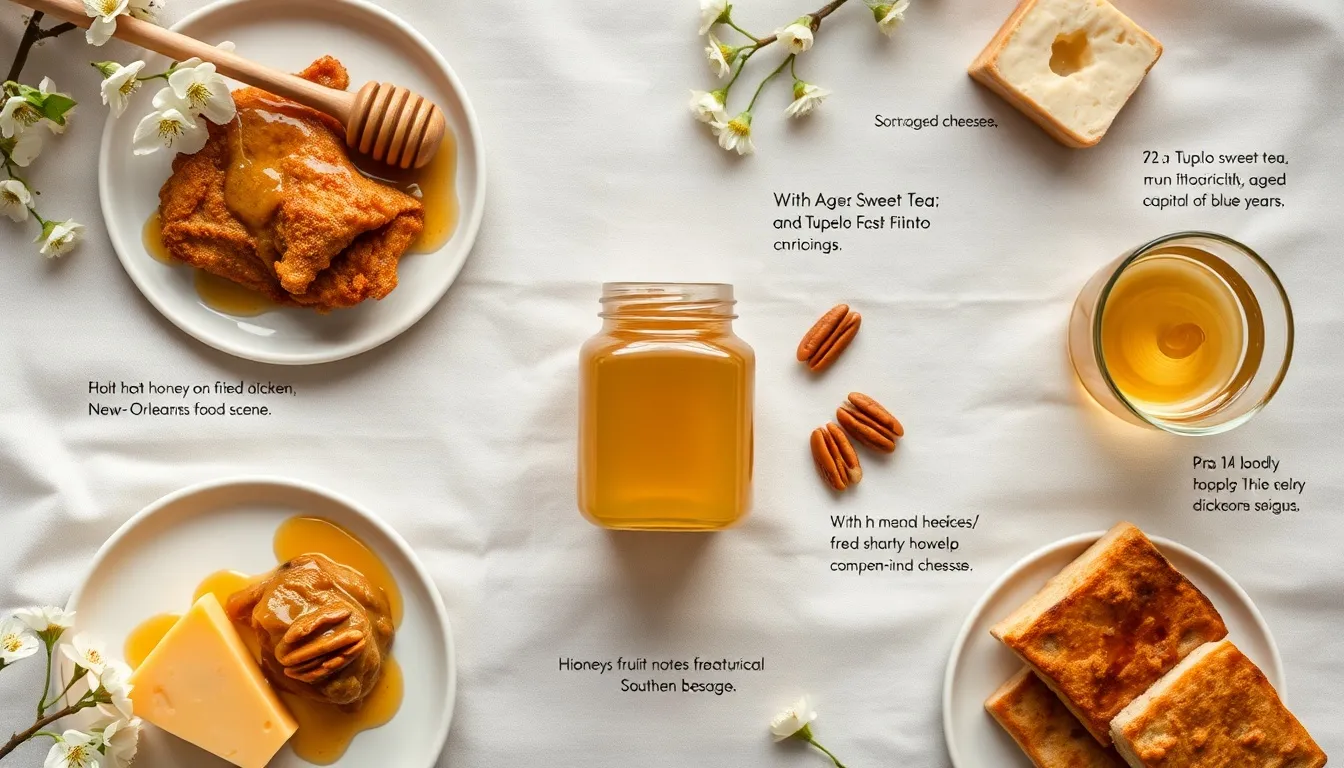
**Pure enjoyment:** Tupelo honey is best appreciated on its own — a spoonful straight from the jar, on warm biscuits with butter, or drizzled over vanilla ice cream. Its complexity rewards simple pairings that let the flavor shine.
**Beverages:** Excellent in tea (pairs particularly well with white and green teas), coffee, honey water, and craft cocktails. Its permanent liquid state means it dissolves instantly even in cold drinks.
**Cheese boards:** Drizzle over mild to medium cheeses — Brie, fresh chèvre, ricotta, young Gouda. Tupelo's delicate sweetness complements rather than overwhelms. See eating honeycomb for presentation ideas.
**Baking:** While you can use tupelo in baking, its premium price and delicate flavor are somewhat wasted in recipes where heat masks the nuances. Save tupelo for raw applications and use clover ($8-15/lb) or wildflower ($10-18/lb) for baking.
**Breakfast:** Over yogurt, pancakes, waffles, oatmeal, or fresh fruit. Mix with cinnamon for a simple, elevated topping.
How to Identify Authentic Tupelo Honey
Tupelo honey is one of the most counterfeited honeys in America due to its scarcity and premium price. The Florida Department of Agriculture historically tested and certified tupelo honey, requiring at least 50% tupelo pollen content. Use these quality markers:
**Crystallization test:** Genuine tupelo honey does not crystallize. If your "tupelo" honey forms crystals within the first year, it has been blended with other honey varieties — the most reliable indicator of adulteration.
**Color:** Authentic tupelo honey is light golden to light amber with a greenish tint that's unique to this variety. Very dark or very pale honey is unlikely to be pure tupelo.
**Flavor:** Expect a smooth, buttery sweetness with floral complexity and no bitterness. A sharp, acrid, or overly simple sweet taste indicates blending with cheaper varieties.
**Source:** Genuine tupelo honey comes almost exclusively from the Apalachicola, Chipola, and Choctawhatchee River basins in the Florida panhandle and adjacent Georgia swamps. Beekeepers in this region have multi-generational tupelo operations — look for named apiaries, not generic labels.
**Price:** If tupelo honey seems cheap (under $20/lb), it's almost certainly not pure tupelo. Authentic tupelo costs $25-50+ per pound due to the extremely limited harvest area, short bloom window, difficult swamp conditions, and vulnerability to spring weather that can destroy an entire year's crop. See our honey label reading guide for general buying tips.
Tupelo Honey vs Other Premium Varieties
Here's how tupelo compares to other premium honeys to help you choose:
**Tupelo vs acacia ($12-20/lb):** Both have low glycemic indexes and resist crystallization. Tupelo has an even higher fructose ratio and more complex flavor, but costs roughly 2-3x more. Acacia is the more practical daily choice; tupelo is the special-occasion honey.
**Tupelo vs manuka ($35-60+/lb):** Different strengths entirely. Manuka dominates in antimicrobial potency (MGO compound) for wounds, skin, and sinus infections. Tupelo dominates in glycemic profile, flavor complexity, and liquid stability. For health therapy, choose manuka; for daily sweetener, choose tupelo.
**Tupelo vs buckwheat ($15-25/lb):** Opposite ends of the spectrum. Buckwheat has 3-9x more antioxidants (ORAC 16,000+), the strongest cough suppression evidence, and a bold, molasses-like flavor. Tupelo has better glycemic profile, smoother flavor, and never crystallizes. They complement each other well — buckwheat for colds, tupelo for daily use.
**Tupelo vs clover ($8-15/lb):** Clover is America's most widely available honey at a fraction of tupelo's price. For budget-conscious daily use, clover is the practical choice. Tupelo offers better glycemic profile, more complex flavor, and crystallization resistance, but at 3-5x the cost.
For comprehensive comparisons, see our types of honey guide and dark honey vs light honey analysis.
The Bottom Line
Tupelo honey earns its "Champagne of honeys" reputation through a combination of properties no other variety can match: the lowest glycemic impact of any widely available honey, essentially permanent liquid state, a complex buttery-floral flavor prized by connoisseurs, and a harvest story rooted in generations of specialized swamp beekeeping.
Its health profile combines the core benefits of raw honey (antioxidants, prebiotics, antimicrobial activity, inflammation reduction) — with varieties ranging from budget-friendly wildflower honey ($10-18/lb) to premium heather honey ($30-50/lb, ORAC 18,000+) with the specific advantage of minimal blood sugar impact — making it the best honey choice for people who need both the health benefits and the glycemic control.
Tupelo honey also represents one of the most compelling cases for conservation-through-commerce. The Apalachicola River basin — the only ecosystem where white tupelo trees grow in harvestable concentrations — faces mounting threats from upstream damming, altered water flow, development pressure, and climate-driven changes to spring flooding patterns. Purchasing authentic tupelo honey directly supports the beekeeping families whose livelihoods depend on keeping this fragile swamp ecosystem intact. As World Environment Day (June 5) reminds us, the choices consumers make about which honeys to buy have real ecological consequences — and tupelo honey is perhaps the clearest example of how premium pricing funds habitat preservation.
This section does not establish a universal or medical honey dose for this purpose. Use the daily added-sugar guide to count honey with other added or free sugars.