How Many Types of Honey Are There?
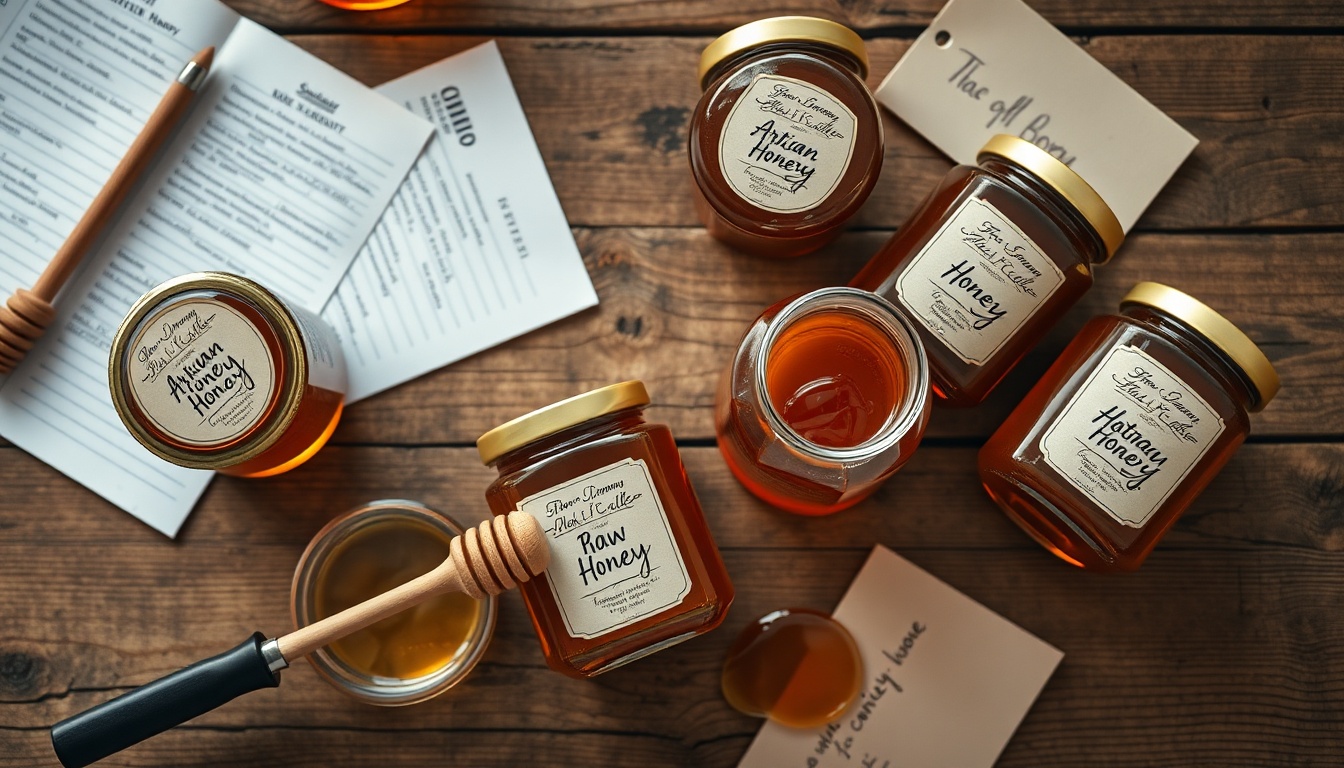
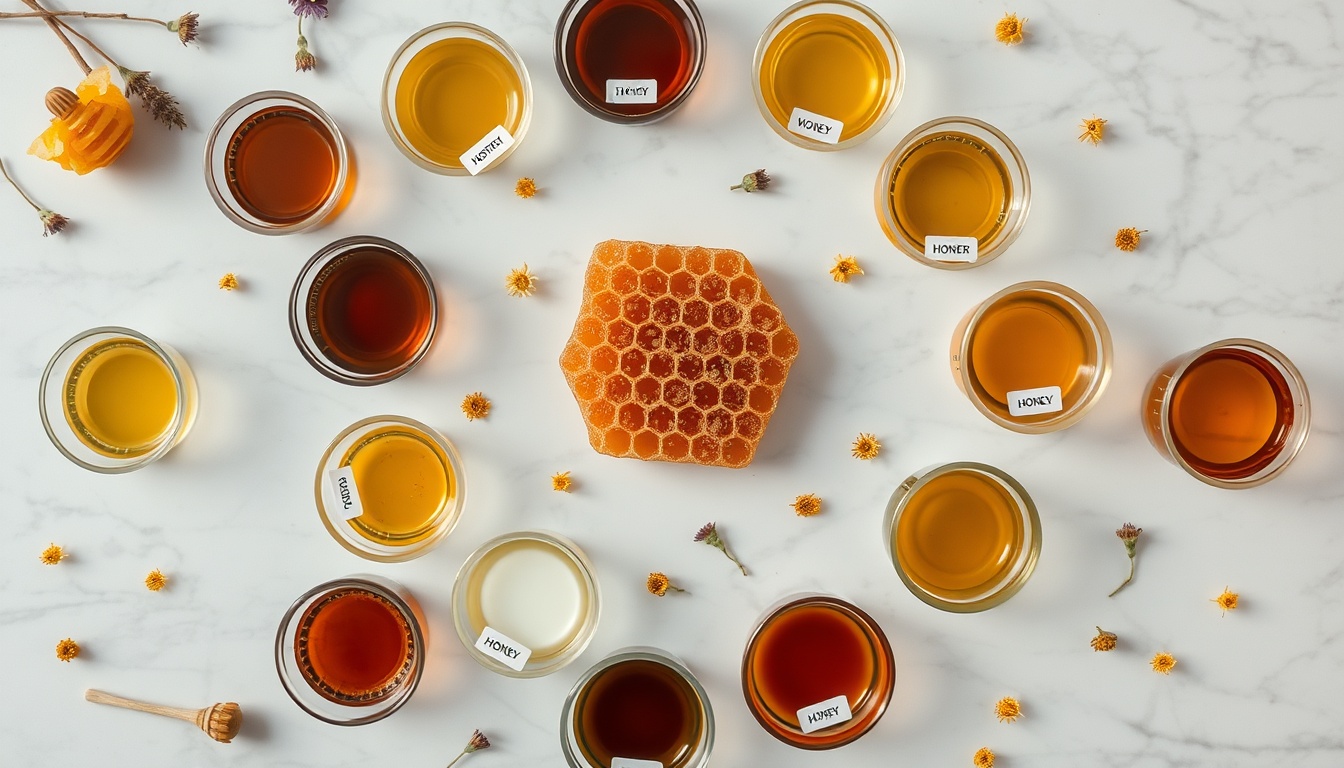
There are over 300 distinct honey varieties produced worldwide, each shaped by the flowers bees visit to collect nectar. In the United States alone, beekeepers harvest more than 100 unique types. Every variety has its own color, flavor, aroma, nutritional profile, and best uses in the kitchen or medicine cabinet.
Honey types are classified in three main ways: by floral source (monofloral vs polyfloral), by processing method (raw vs pasteurized, filtered vs unfiltered), and by physical form (liquid, creamed, comb, chunk). Understanding these categories makes it much easier to choose the right honey for any purpose.
This guide covers the 20+ most popular and widely available honey varieties, organized by color and intensity — from the lightest, mildest honeys to the darkest, most robust.
Light and Mild Honeys
Light-colored honeys tend to have the mildest, most delicate flavors. They are the most popular for everyday use — sweetening tea, drizzling on yogurt, or eating straight from the spoon. Though lighter honeys have somewhat fewer antioxidants than their darker counterparts, they are still rich in enzymes, trace minerals, and beneficial compounds when purchased raw.
Get the Honey Buyer's Cheat Sheet (free PDF)
16 varieties on one page — color, flavor, best use and what a fair price looks like — from the 268 honeys we track.
Acacia Honey
Acacia honey (technically from black locust trees, Robinia pseudoacacia) is one of the lightest, most transparent honeys available. Its flavor is very mild and floral with vanilla notes, making it a favorite for people who find other honeys too strong. It has one of the highest fructose-to-glucose ratios of any honey, which means it stays liquid much longer and resists crystallization for a year or more.
Acacia is a top choice for sweetening tea without overpowering delicate flavors, and its low glycemic index (GI ~32) makes it a popular option for those monitoring blood sugar. Major sources include Hungary, Italy, and the Pacific Northwest of the US. Price: $12-20/lb.
Clover Honey
Clover honey is the most commonly sold honey in North America, accounting for roughly a third of all US honey production. It comes from the nectar of white clover, red clover, or alsike clover — all widespread across the Midwest, Great Plains, and Pacific Northwest. Its flavor is mild, clean, and lightly floral with a pleasant sweetness that most people consider "classic" honey flavor.
Because of its neutral profile, clover honey is extremely versatile: ideal for baking, cooking, honey water, and as a general-purpose sweetener. It crystallizes at a moderate pace (3-6 months). Clover is also the most affordable raw honey variety, typically $8-15/lb from local beekeepers.
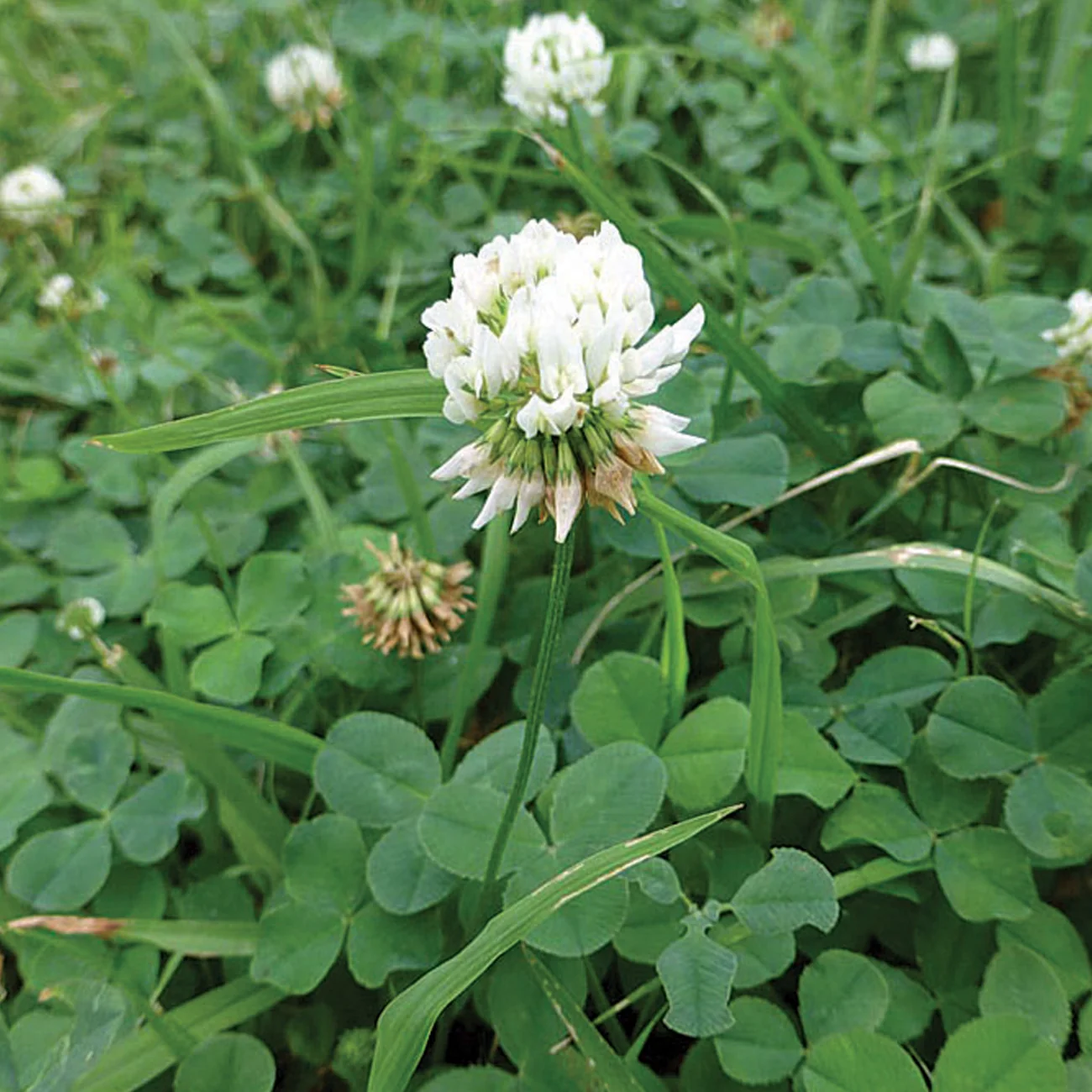
Photo: Queen Right Colonies, used with permission
Orange Blossom Honey
Harvested primarily from citrus groves in Florida, California, Texas, and the Mediterranean, orange blossom honey has a distinctly citrusy, floral aroma and a light, slightly fruity flavor. The color ranges from water-white to light amber depending on the exact citrus mix.
Orange blossom is excellent for baking where you want a hint of citrus without adding actual citrus ingredients. It pairs beautifully with green and herbal teas, and is often used in vinaigrettes and marinades. Price: $12-20/lb.
Sage Honey
Produced mainly in California from wild sage plants, sage honey is light in color with a mild, slightly herbal flavor and an exceptionally smooth texture. It is one of the slowest honeys to crystallize, staying liquid for well over a year. GI ~48 — lower than most honeys.
Sage honey was historically one of the most prized American honeys, though production has declined as California sage habitats have shrunk. It is a great choice for people who want a premium, slow-crystallizing honey with a subtle flavor that works in anything from coffee to cheese boards. Price: $15-25/lb.
Acacia, Fireweed, and Other Ultra-Light Varieties
Other notable light honeys include fireweed honey (harvested in the Pacific Northwest and Alaska after wildfire regrowth, with a delicate buttery flavor), alfalfa honey (a mild, light honey from Western US alfalfa fields), and basswood/linden honey (a water-white honey with a distinctive minty finish popular in European and Midwestern beekeeping). All are excellent all-purpose honeys that crystallize relatively slowly.
Medium-Bodied Honeys
Medium-amber honeys strike a balance between mild everyday use and more pronounced character. They tend to have more complex flavor profiles while remaining approachable and versatile.
Wildflower Honey
Wildflower honey (also called polyfloral honey) is made from the nectar of multiple wildflower species rather than a single plant. Its flavor, color, and aroma vary by region and season — spring wildflower from Vermont will taste completely different from autumn wildflower from Texas. This is what makes wildflower honey endlessly interesting and why many connoisseurs seek out region-specific batches.
Because wildflower honey is polyfloral, it contains a broader diversity of pollen grains, antioxidants, and trace compounds than most monofloral honeys. This is also why local wildflower honey is the variety most often recommended (though with limited evidence) for seasonal allergy relief. Price: $10-18/lb from local sources.
Tupelo Honey
Tupelo honey is harvested during a narrow 2-3 week bloom window from white Ogeechee tupelo trees along river swamps in the Florida panhandle and southern Georgia. It is widely regarded as one of America's finest and most distinctive honeys — light golden with green tints, a buttery smooth texture, and a complex floral flavor with hints of pear, cinnamon, and jasmine.
Like acacia, tupelo has an unusually high fructose content (GI ~45), so it almost never crystallizes. Genuine tupelo is relatively rare and commands premium prices ($25-45/lb). Its limited harvest window and specific geography make it one of the most terroir-driven honeys in the world.
Pro Tip
Real tupelo honey should come from a beekeeper in the Apalachicola River basin area. If the price seems too good to be true, it may be blended with cheaper honeys.
Sourwood Honey
Sourwood honey comes from sourwood trees (Oxydendrum arboreum) in the Appalachian Mountains, primarily in western North Carolina, eastern Tennessee, and northern Georgia. It is a medium amber honey with a distinctive caramel-like flavor, hints of anise, and a gingerbread aftertaste. Sourwood has won more awards at honey competitions than any other American variety.
The sourwood bloom lasts only 3-4 weeks in July, and trees must grow at specific elevations (1,500-3,500 feet) to produce nectar. These constraints make genuine sourwood honey scarce and expensive ($20-35/lb). It is phenomenal on biscuits, pancakes, and cornbread.
Lavender Honey
Lavender honey is produced primarily in Provence (France), Spain, and increasingly in the American Pacific Northwest and California. It has a medium amber color, a distinctive floral-herbal aroma, and a smooth, slightly perfumed flavor that tastes exactly like you would hope lavender honey would taste.
It is a favorite for face masks, hair treatments, and skin care due to lavender's calming and anti-inflammatory properties. In the kitchen, it is stunning in desserts, on cheese boards, and as a before-bed remedy drizzled into chamomile tea. You can also make infused lavender honey at home. Price: $15-25/lb.
Dark and Robust Honeys
Dark honeys are where things get really interesting for both flavor and nutrition. A 2004 study in the Journal of Agricultural and Food Chemistry found that dark honeys contain up to 9 times more antioxidants than light varieties, along with significantly more minerals (iron, potassium, manganese). The trade-off is a much stronger, more assertive flavor that not everyone enjoys straight from the spoon.
Buckwheat Honey
Buckwheat honey is the darkest common honey variety — nearly black in color with a bold, malty, molasses-like flavor and slight bitterness. It has the highest antioxidant content of any widely available honey (ORAC 16,000+) and performed better than dextromethorphan (the active ingredient in most cough syrups) in a landmark 2007 pediatric cough study.
Buckwheat honey is an acquired taste but incredibly versatile: excellent in BBQ sauces, baked beans, gingerbread, dark bread, and robust recipes where its intensity is an asset. It is also the preferred honey for cough and sore throat relief. Major sources include New York, Ohio, the Upper Midwest, and eastern Canada. Price: $15-25/lb.
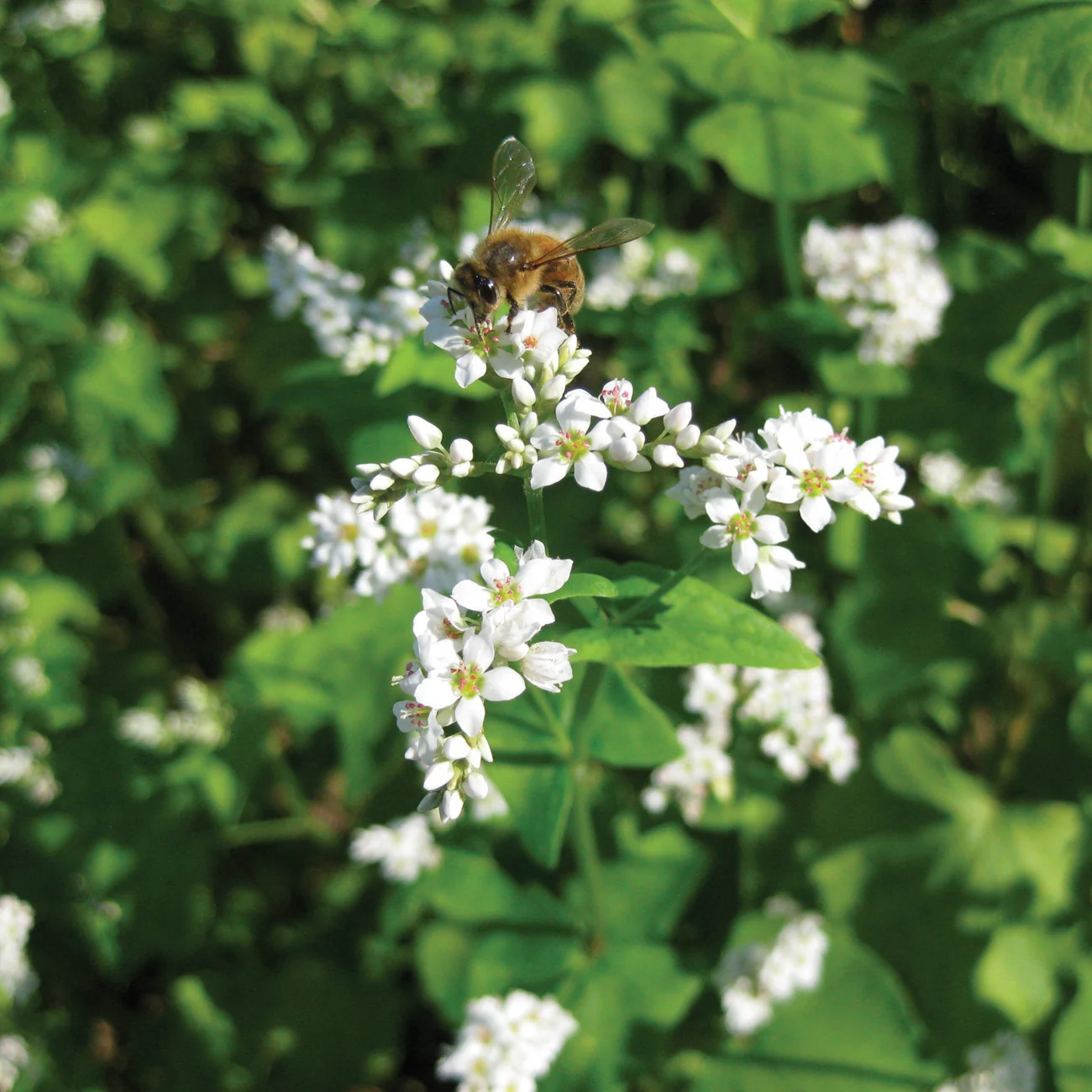
Photo: Queen Right Colonies, used with permission
Manuka Honey
Manuka honey comes exclusively from the Leptospermum scoparium bush native to New Zealand (and parts of Australia). What makes manuka unique is methylglyoxal (MGO), a compound that gives it antibacterial activity far beyond what other honeys achieve through hydrogen peroxide alone. Medical-grade manuka is FDA-cleared for wound treatment.
Manuka grading systems (UMF, MGO, KFactor) rate antibacterial potency. For general wellness, UMF 5-10 is sufficient. For therapeutic use, UMF 15+ is recommended. Manuka is the most expensive common honey ($35-60+/lb depending on grade), but research supports specific benefits for gut health, sinus infections, eczema, and wound care that other honeys don't match.
Read our detailed raw honey vs manuka honey comparison to decide whether manuka is worth the premium for your needs.
Chestnut Honey
Chestnut honey is a dark, strongly flavored European honey with a slightly bitter, tannic taste and woodsy aroma. Popular in Italy, France, and Turkey, it is less sweet than most honeys and has a complex, almost savory quality that pairs exceptionally well with strong cheeses (gorgonzola, pecorino), walnuts, and charcuterie.
Its high mineral content (particularly iron and manganese) and robust antioxidant profile make it one of the most nutritionally dense honeys available. Price: $20-35/lb.
Other Dark Varieties
Other notable dark honeys include avocado honey (dark amber with a buttery, molasses-like flavor from California avocado orchards), eucalyptus honey (bold and slightly medicinal, popular in Australia and California), and meadowfoam honey (from Oregon, with a unique marshmallow-vanilla flavor despite its amber color). All offer higher antioxidant and mineral content than their lighter counterparts.
Specialty and Rare Honeys
Beyond common grocery store varieties, the world of honey includes some truly exceptional specialty types worth seeking out.
Sidr Honey (Jujube Honey)
Sidr honey is harvested from the jujube tree (Ziziphus spina-christi) in Yemen, Pakistan, and parts of the Middle East. Yemeni sidr is considered one of the most prestigious and expensive honeys in the world ($50-200/lb), prized for its rich butterscotch flavor and traditional medicinal uses. It has been used in Unani and Ayurvedic medicine for centuries and is valued particularly in Gulf countries.
Leatherwood Honey
Leatherwood honey comes exclusively from Tasmania, where the ancient Eucryphia lucida tree grows in pristine temperate rainforests. It has a distinctive spicy, floral flavor unlike any other honey, with notes of musk and citrus. Leatherwood is protected by its unique geography and Tasmanian rainforest conservation laws, making it a true terroir product.
Honeydew Honey
Unlike all other honeys on this list, honeydew honey is not made from flower nectar. Instead, bees collect sweet secretions left on leaves by aphids and scale insects. Popular in Germany, Greece, and Turkey (where it is called "forest honey"), honeydew honey is very dark, less sweet, higher in minerals, and has a unique malty, woody flavor. It is particularly valued for its strong antibacterial and anti-inflammatory properties.
Types by Processing Method
How honey is processed after harvest dramatically affects its quality, nutrition, and flavor. Understanding processing labels is just as important as knowing the floral source.
- **Raw honey** — Extracted from the comb and strained to remove wax and debris, but never heated above natural hive temperatures (~95°F). Retains all enzymes, pollen, and beneficial compounds. This is the gold standard for health benefits. See raw honey benefits for the full evidence.
- **Pasteurized honey** — Heated to 150-170°F to kill yeast cells, slow crystallization, and create a uniform liquid product. This destroys most heat-sensitive enzymes and degrades antioxidants. Most supermarket honey is pasteurized.
- **Raw vs organic** — "Raw" describes processing; "organic" describes the sourcing environment (pesticide-free forage, no synthetic treatments). They are independent qualities — honey can be raw but not organic, organic but not raw, both, or neither.
- **Filtered vs unfiltered** — Standard straining removes wax debris while preserving pollen. Ultra-filtration (used by industrial processors) forces honey through fine filters under pressure, removing all pollen — which is why reading labels matters.
- **Creamed honey** — Raw honey that has been seeded with fine crystals and churned to control crystallization, producing a smooth, spreadable texture. Creamed honey retains all the benefits of raw honey.
Types by Physical Form
Honey also comes in different physical forms, each with its own appeal and best uses.
- **Liquid honey** — The most common form. Extracted from the comb by centrifuge and strained. Best for cooking, baking, and beverages.
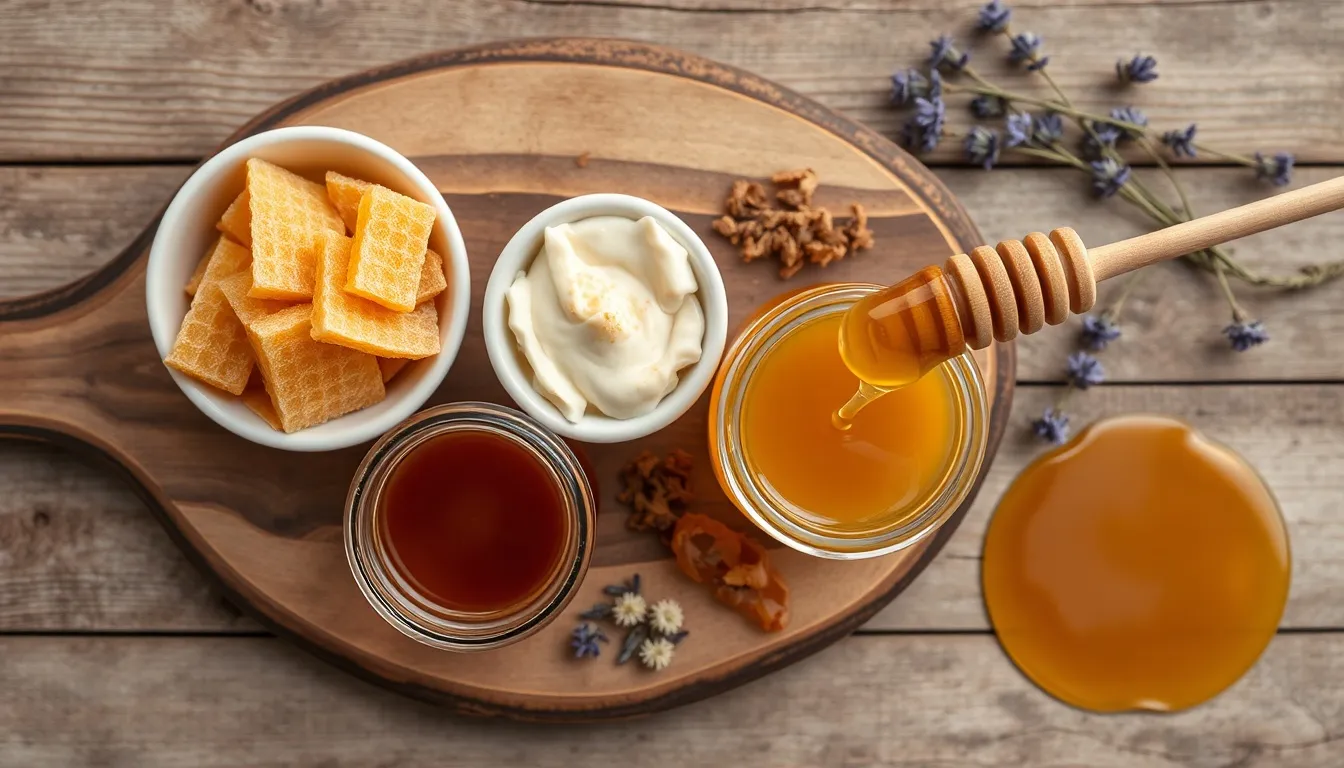
- **Comb honey** — Honey still sealed in the beeswax comb, exactly as the bees made it. Eating honeycomb is completely safe and provides additional beeswax fatty alcohols and propolis traces. The ultimate guarantee of purity.
- **Chunk honey** — Pieces of honeycomb suspended in liquid honey. Combines the visual appeal and purity guarantee of comb with the convenience of liquid honey.
- **Whipped/creamed honey** — Liquid honey that has been controlled-crystallized into a smooth, butter-like spread. Popular in Canada and Europe.
How to Choose the Right Type of Honey
With so many options, the best approach is to match the honey to your primary use case:
- **Everyday sweetener:** Clover $8-15 or wildflower $10-18 — affordable, versatile, and widely available raw.
- **Tea and beverages:** Acacia $12-20 (delicate, GI ~32) or orange blossom $12-20 (fruity). See our honey tea pairing guide.
- **Baking:** Clover or wildflower for neutral flavor; buckwheat for dark baked goods. Follow our baking conversion guide.
- **Health and immunity:** Manuka (UMF 10+, $35-60+) for antibacterial power, or buckwheat $15-25 for maximum antioxidants (ORAC 16,000+) and cough relief.
- **Skin and beauty:** Manuka or lavender $15-25 for face masks and hair treatments.
- **Cheese and charcuterie:** Chestnut $20-35, buckwheat, or sourwood $20-35 — bold flavors that stand up to strong cheeses.
- **Gifts:** Tupelo $25-45, sourwood $20-35, or a sampler set of 4-5 varieties.
- **Best value:** Buy directly from local beekeepers at farmers markets — better prices and guaranteed freshness.
Pro Tip
The single most important choice is raw vs processed. Any raw honey — regardless of floral source — will have significantly more enzymes, antioxidants, and beneficial compounds than pasteurized honey. Start by switching to raw, then explore varieties based on taste.
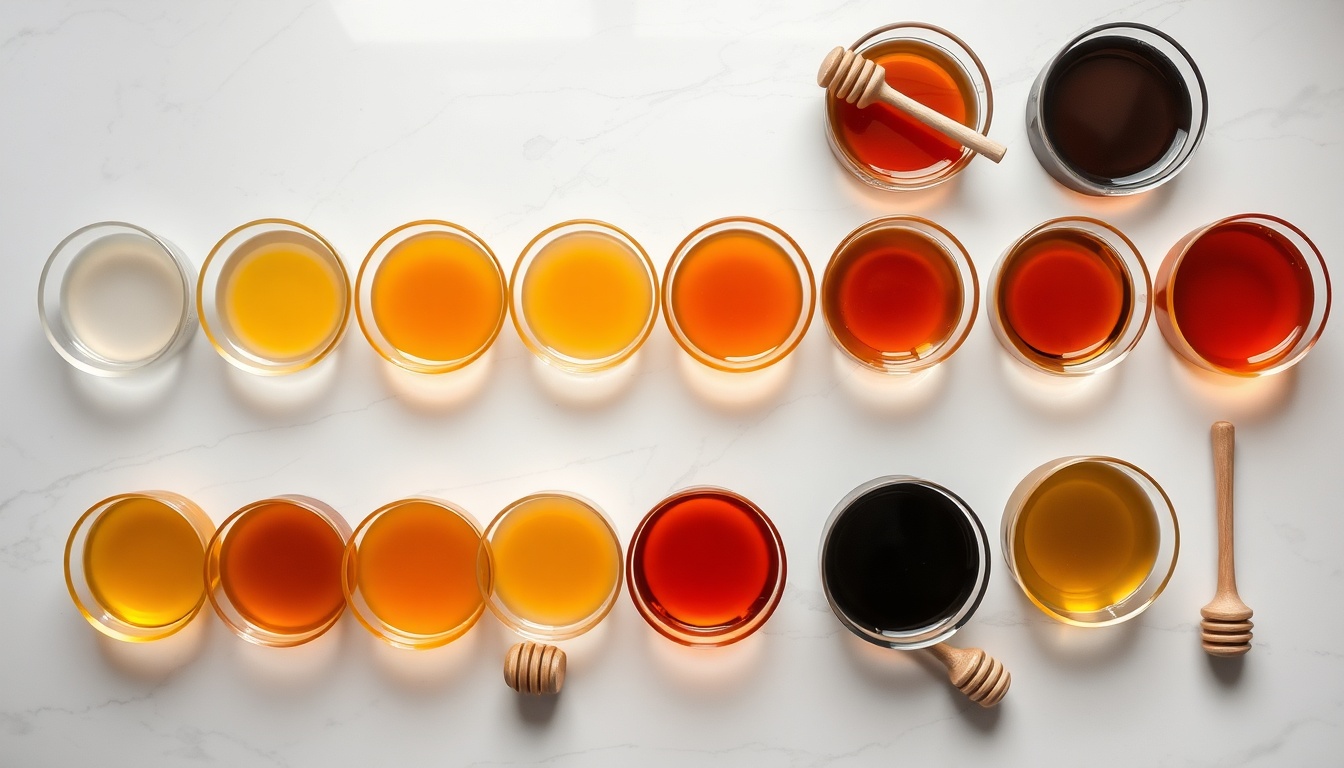
Honey Color Chart: What Color Tells You
The USDA classifies honey into seven color grades using the Pfund scale (measured in millimeters): water white, extra white, white, extra light amber, light amber, amber, and dark amber. Color is determined almost entirely by the nectar source, though processing and age can also affect it.
As a general rule: lighter honeys are milder in flavor, higher in fructose, and slower to crystallize. Darker honeys are bolder in flavor, higher in antioxidants and minerals, and crystallize somewhat faster. Neither is inherently "better" — it depends entirely on your intended use.
The Bottom Line
The world of honey extends far beyond the generic squeeze bear on your grocery shelf. Each floral source produces a genuinely different product — different flavor, different color, different nutritional profile, different best uses. Exploring different types of honey is one of the simplest and most rewarding ways to upgrade your kitchen and your health.
Start with a variety that matches your main use case, always choose raw over processed, and consider buying from local beekeepers to support your community and get the freshest product possible. For a side-by-side look at any two varieties, explore our honey comparison pages.
This section does not establish a universal or medical honey dose for this purpose. Use the daily added-sugar guide to count honey with other added or free sugars.