Why Honey Type Matters in Tea
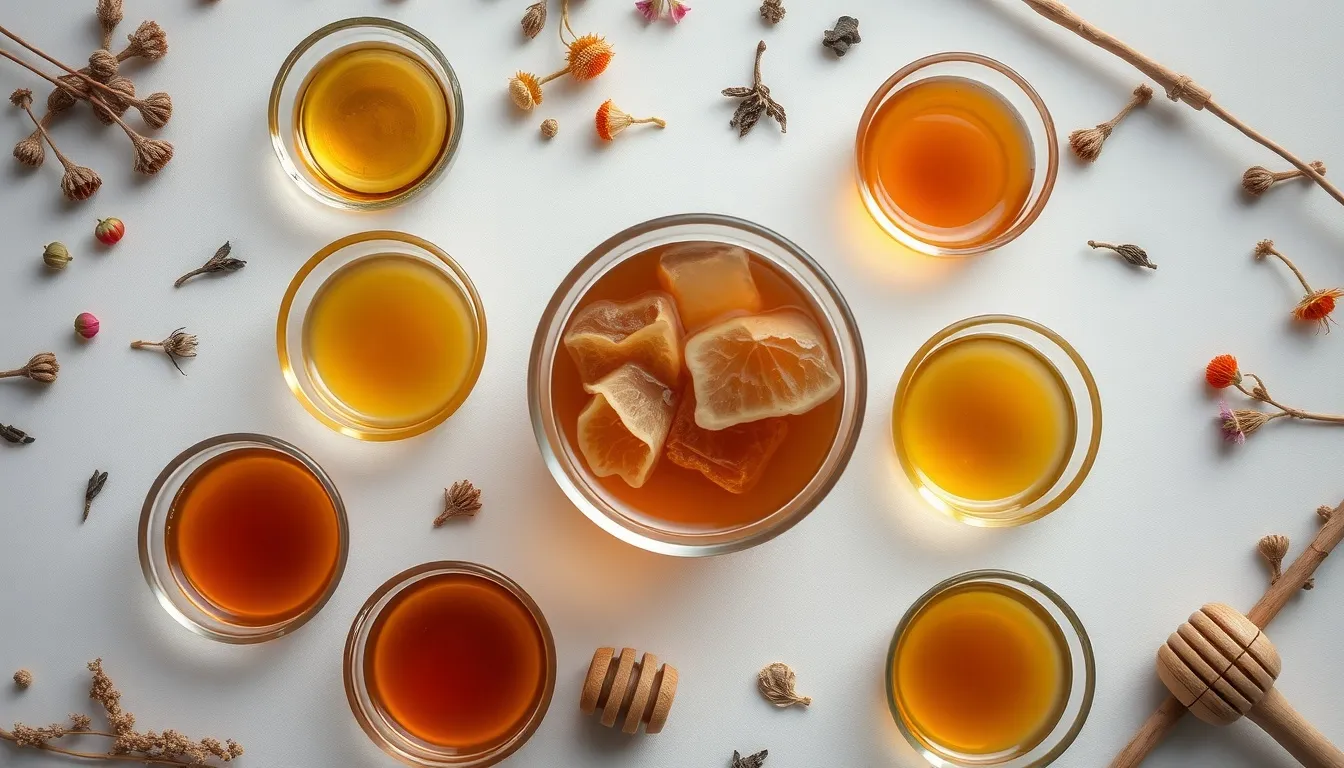
Not all honeys taste the same in tea. A bold buckwheat honey will overpower a delicate white tea, while mild acacia honey might disappear in a strong chai. The right pairing enhances both the tea and the honey — the wrong one wastes both.
This guide matches specific honey varieties to specific tea types based on flavor intensity, complementary tasting notes, and how each honey behaves when dissolved in hot water. Whether you're a daily tea drinker or a serious tea enthusiast exploring different honey types, these pairings will change how you sweeten your cup.
The Golden Rule: Match Intensity to Intensity
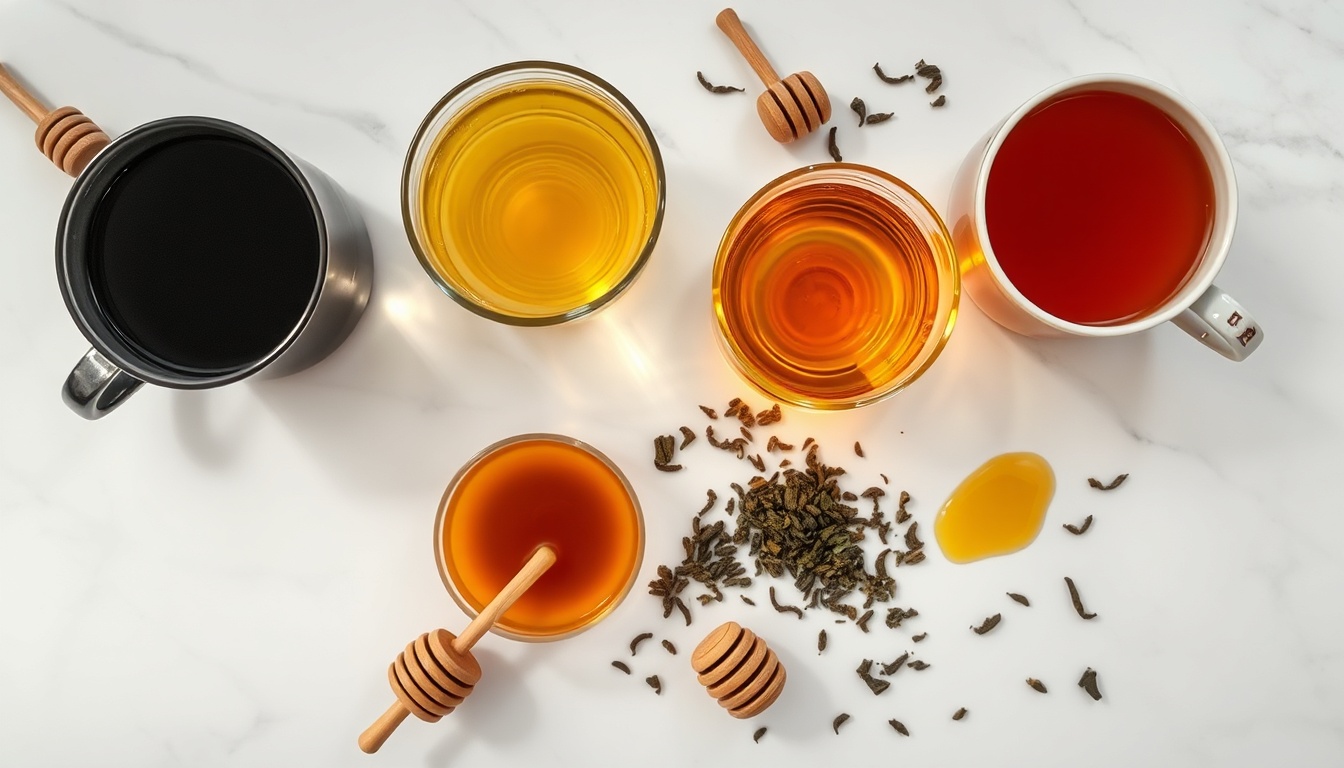
The simplest principle for honey-tea pairing: match the strength of the honey to the strength of the tea. Light, mild honeys pair with delicate teas. Dark, robust honeys pair with bold teas. This prevents either flavor from drowning out the other.
- Delicate teas (white, light green, light oolong) → Light honeys: acacia, clover, orange blossom
- Medium teas (green, jasmine, earl grey, chamomile) → Medium honeys: wildflower, lavender, tupelo, linden
- Bold teas (black, chai, pu-erh, rooibos) → Dark honeys: buckwheat, manuka, chestnut, avocado
Pro Tip
When in doubt, wildflower honey is the safest all-around choice. Its balanced sweetness and mild floral notes complement almost any tea without dominating.
Get the Honey Buyer's Cheat Sheet (free PDF)
16 varieties on one page — color, flavor, best use and what a fair price looks like — from the 268 honeys we track.
Best Honey for Black Tea
Black tea — whether it's English Breakfast, Assam, Darjeeling, or Ceylon — has a robust, tannic character that needs a honey with enough personality to stand up to it.
- Wildflower honey ($10-18) — the classic choice; mild sweetness rounds out tannins without adding competing flavors
- Buckwheat honey ($15-25) — for those who like their tea strong and bold; its malty, molasses-like depth pairs beautifully with Assam and Irish Breakfast
- Clover honey ($8-15) — clean, straightforward sweetness that lets the tea's character shine through; the most budget-friendly go-to for everyday black tea
- Chestnut honey ($20-35) — slightly bitter, nutty notes that complement smoky teas like Lapsang Souchong
Best Honey for Green Tea
Green tea's grassy, vegetal, or slightly nutty flavors are more delicate than black tea. Heavy honey will mask these subtle notes. Go light and floral.
- Acacia honey ($12-20) — the gold standard for green tea; nearly transparent with pure, clean sweetness and zero bitterness, with the lowest GI (~32) of any common variety
- Linden honey ($12-20) — delicate herbal notes that echo green tea's own grassiness
- Orange blossom honey ($12-20) — light citrus undertones brighten sencha and dragonwell
- Tupelo honey ($25-45) — buttery and smooth with gentle sweetness; perfect for high-quality Japanese greens, never crystallizes
Pro Tip
Let green tea cool to about 160-170°F (70-75°C) before adding honey. This preserves both the tea's flavor and the honey's beneficial enzymes.
Best Honey for Herbal Tea and Tisanes
Herbal teas are caffeine-free infusions with wide-ranging flavors — from soothing chamomile to sharp peppermint to fruity hibiscus. Match the honey to the herb.
- Chamomile + lavender honey ($15-25) — floral meets floral in the most relaxing cup imaginable; a perfect bedtime combination
- Peppermint + eucalyptus honey ($12-22) — both have cooling, mentholated notes that amplify each other; excellent for cold season
- Ginger tea + buckwheat honey ($15-25) — the honey's dark, malty intensity matches ginger's spicy heat; add lemon for a cold-fighting powerhouse
- Hibiscus + wildflower honey ($10-18) — fruity and tart hibiscus balances beautifully against wildflower's neutral sweetness
- Rooibos + clover honey ($8-15) — rooibos is naturally sweet and nutty, so a mild honey like clover enhances without overwhelming
Best Honey for Chai Tea
Chai is a different category entirely. The combination of strong black tea, milk, and warm spices (cinnamon, cardamom, ginger, cloves) creates a rich, complex drink that can handle — and benefits from — bold honey choices.
- Buckwheat honey ($15-25) — its dark, molasses-like richness complements chai spices like they were made for each other
- Manuka honey ($35-60+) — earthy, slightly medicinal notes that add complexity to spiced chai; also adds the immune-supporting properties Manuka is known for
- Cinnamon-infused honey — doubles down on chai's warming character; try it if you can find it at a local beekeeper
- Wildflower honey — a safe, reliable choice that sweetens without fighting the spice blend
Raw Honey vs. Regular Honey in Tea: Does It Matter?
This is one of the most common questions tea-and-honey drinkers ask. Raw honey contains beneficial enzymes, antioxidants, and trace nutrients that processed honey has lost through heating and filtering. Adding raw honey to boiling-hot tea does destroy some of these compounds.
The practical compromise: let your tea cool for 2-3 minutes after pouring (to roughly 140-160°F / 60-70°C) before stirring in raw honey. The tea is still plenty warm to dissolve the honey, but cool enough to preserve most of the beneficial enzymes. You'll still get more nutrients from raw honey than processed, even in warm tea.
If you're drinking tea primarily for flavor (not health benefits), this distinction matters less. Use whichever honey tastes best to you. And if you prefer coffee, the same principles apply to honey in coffee.
Honey Tea for Health: Functional Pairings
Beyond flavor, certain honey-tea combinations deliver specific health benefits worth considering. Honey and cinnamon in black tea creates a blood-sugar-stabilizing drink — cinnamon improves insulin sensitivity while honey provides a lower-glycemic sweetener than sugar. For cold and flu season, buckwheat honey in ginger tea combines the most clinically validated cough suppressant with ginger's anti-nausea and anti-inflammatory properties.
If you're drinking honey tea for sore throat relief, manuka honey (UMF 10+) in warm chamomile provides the strongest antimicrobial coating for irritated throat tissue. For a bedtime routine, lavender honey in chamomile supports the honey-before-bed sleep mechanism through liver glycogen replenishment and the tryptophan-melatonin pathway. Understanding honey's full nutritional profile helps explain why these functional pairings work — the polyphenols, enzymes, and trace minerals in raw honey complement tea's own catechins and L-theanine.
How Much Honey to Add to Tea
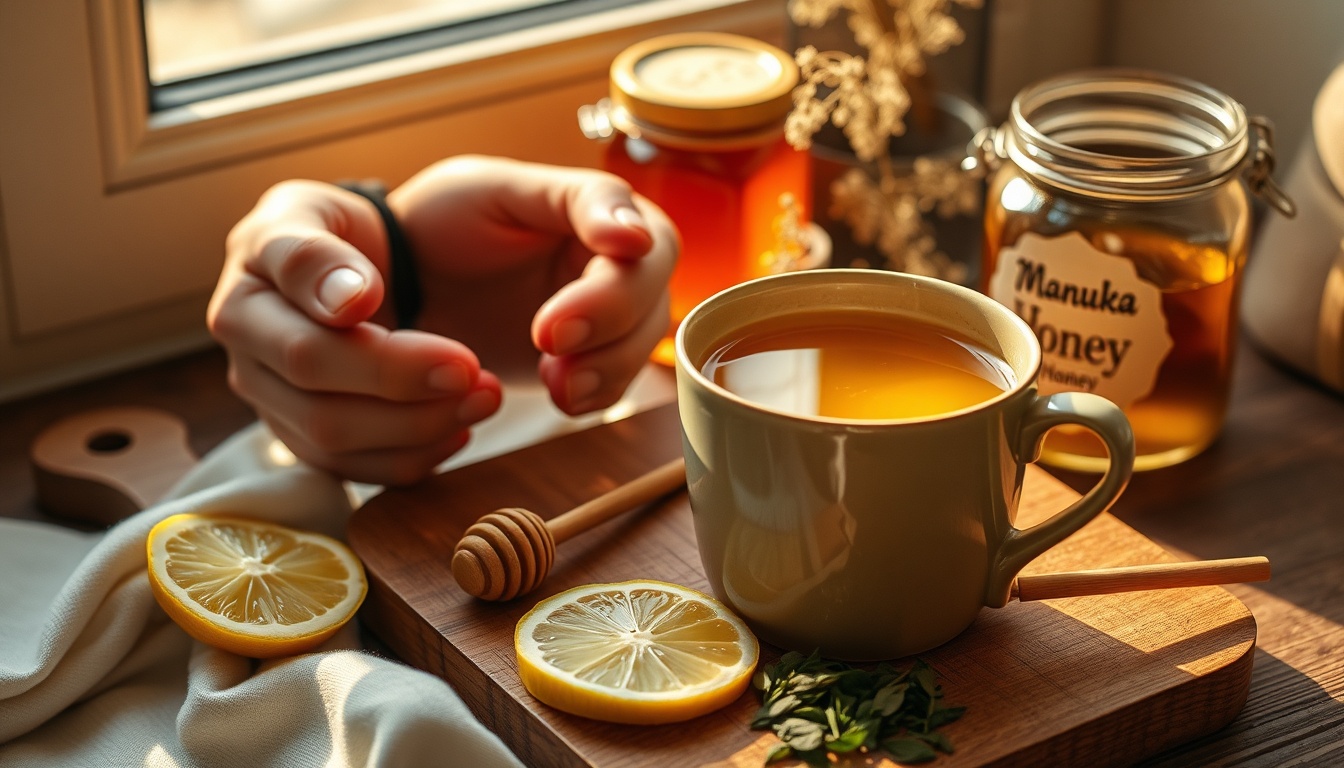
Start with one teaspoon per cup (8 oz) and adjust from there. This gives noticeable sweetness without masking the tea. Dark honeys (buckwheat, manuka) have stronger flavors, so you may want slightly less. Light honeys (acacia, clover) are more neutral, so you might use a full tablespoon.
One tablespoon of honey contains about 64 calories and 17g of sugar — roughly the same as a tablespoon of white sugar. The advantage of honey isn't fewer calories; it's the more complex flavor, variety-dependent GI (acacia ~32 to clover ~69; average ~58–70 vs sugar's 65), and trace nutrients.
Quick Reference: Tea-Honey Pairing Chart
Keep this cheat sheet handy next time you reach for the honey jar:
- English Breakfast / Assam → Wildflower or Buckwheat
- Earl Grey → Orange Blossom or Lavender
- Darjeeling → Acacia or Linden
- Sencha / Green → Acacia or Tupelo
- Matcha → Clover (dissolve in warm milk before adding)
- Chamomile → Lavender
- Peppermint → Eucalyptus or Clover
- Ginger → Buckwheat or Manuka
- Chai → Buckwheat or Manuka
- Rooibos → Clover or Wildflower
- Hibiscus → Wildflower or Orange Blossom