Why Honey Works for Hair
Honey has been used as a hair treatment for centuries — and unlike many folk remedies, this one has solid scientific backing. Raw honey is a natural humectant, meaning it draws moisture from the air into your hair shaft. This is the same property that makes honey effective in face masks and wound care.
But honey does more than just moisturize. Its unique combination of sugars, enzymes, vitamins, and minerals addresses multiple hair concerns simultaneously.
- Humectant properties — Honey's high sugar content (primarily fructose and glucose) attracts and retains moisture. A 2014 study in the Journal of Cosmetic Dermatology confirmed that honey-based formulations significantly increased hair moisture content compared to controls.
- Emollient effect — Honey smooths the hair cuticle, reducing frizz and increasing shine. The natural sugars fill in gaps along damaged cuticle layers, creating a smoother surface that reflects light better.
- Antibacterial and antifungal activity — The glucose oxidase enzyme in raw honey produces hydrogen peroxide, which helps control dandruff-causing fungi (Malassezia) and scalp infections. A 2001 study in the European Journal of Medical Research found that crude honey applied to the scalp significantly reduced scaling, itching, and hair loss in patients with seborrheic dermatitis.
- Antioxidant protection — Honey's polyphenols and flavonoids protect hair from UV damage and environmental oxidative stress. Darker honeys like buckwheat contain 3-9 times more antioxidants than lighter varieties.
- Gentle cleansing — Honey's mild acidity (pH 3.2-4.5) helps remove product buildup without stripping natural oils. This makes it suitable as a co-wash or clarifying treatment.
Best Honey Types for Hair Care
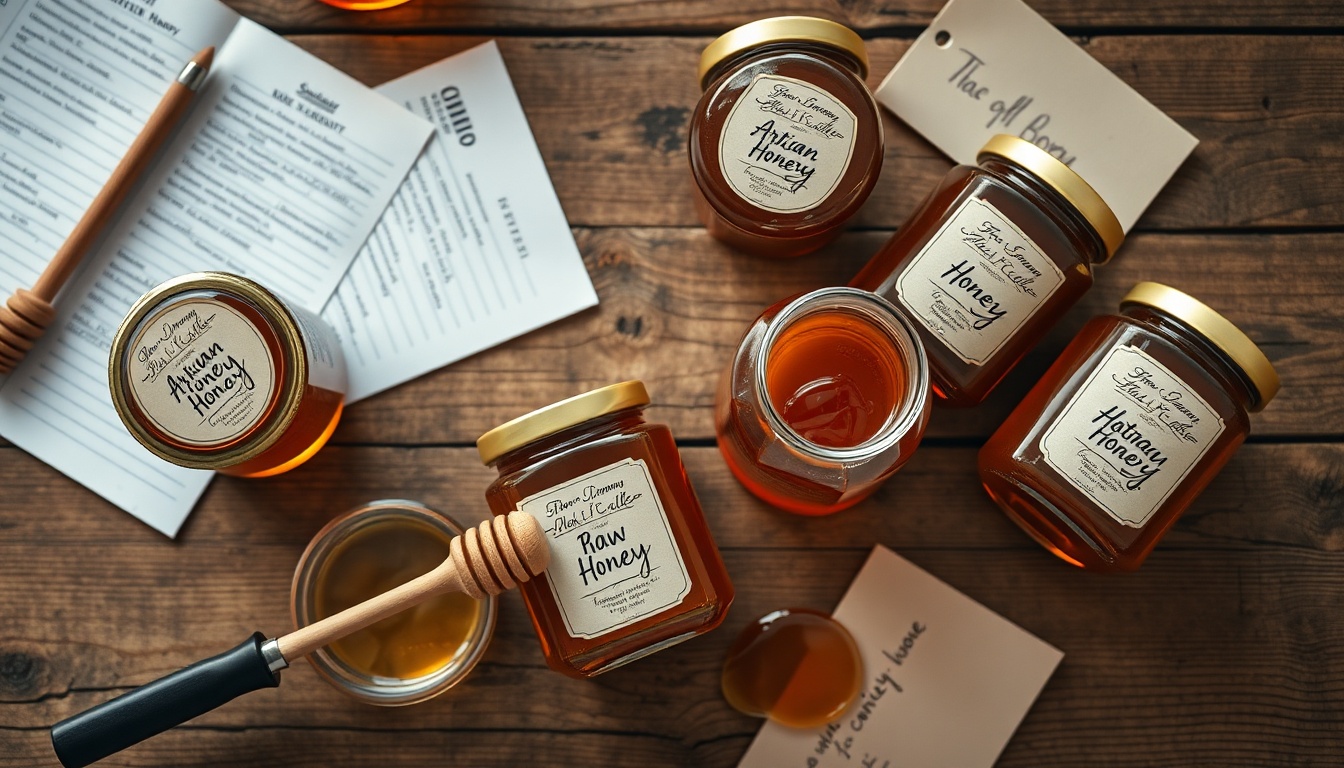
Not all honey is equally effective for hair treatments. The type you choose matters — and processed supermarket honey won't deliver the same results as raw varieties.
- Raw Manuka honey (UMF 10+, $35-60+) — The gold standard for scalp treatments. Its high MGO (methylglyoxal) content provides the strongest antibacterial action against dandruff-causing fungi. UMF 10+ is ideal. Expensive, but a little goes a long way in a hair mask.
- Raw wildflower honey ($10-18) — The best all-purpose choice for regular hair conditioning. Its diverse pollen profile provides a wide range of nutrients. Thick consistency makes it easy to apply without dripping. Budget-friendly for frequent use.
- Acacia honey ($12-20) — Best for fine or oily hair. Its lighter, more liquid consistency won't weigh hair down. Low pollen content means it's less likely to cause irritation on sensitive scalps.
- Buckwheat honey ($15-25, ORAC 16,000+) — Best for damaged or color-treated hair. Contains the highest antioxidant levels of common honeys, protecting against oxidative damage. Dark color and strong flavor don't matter in a topical application.
- Avoid: pasteurized, ultra-filtered, or "honey blend" products — Heat processing destroys the glucose oxidase enzyme that produces hydrogen peroxide, eliminating honey's antibacterial benefits. Ultra-filtering removes pollen, propolis traces, and beneficial proteins. If the label says "blend" or the honey is crystal clear, it won't work well for hair care.
Pro Tip
Always do a patch test on a small section of hair before applying any new honey mask to your entire head. While allergic reactions to topical honey are rare, they can occur — especially if you have a known bee product allergy.
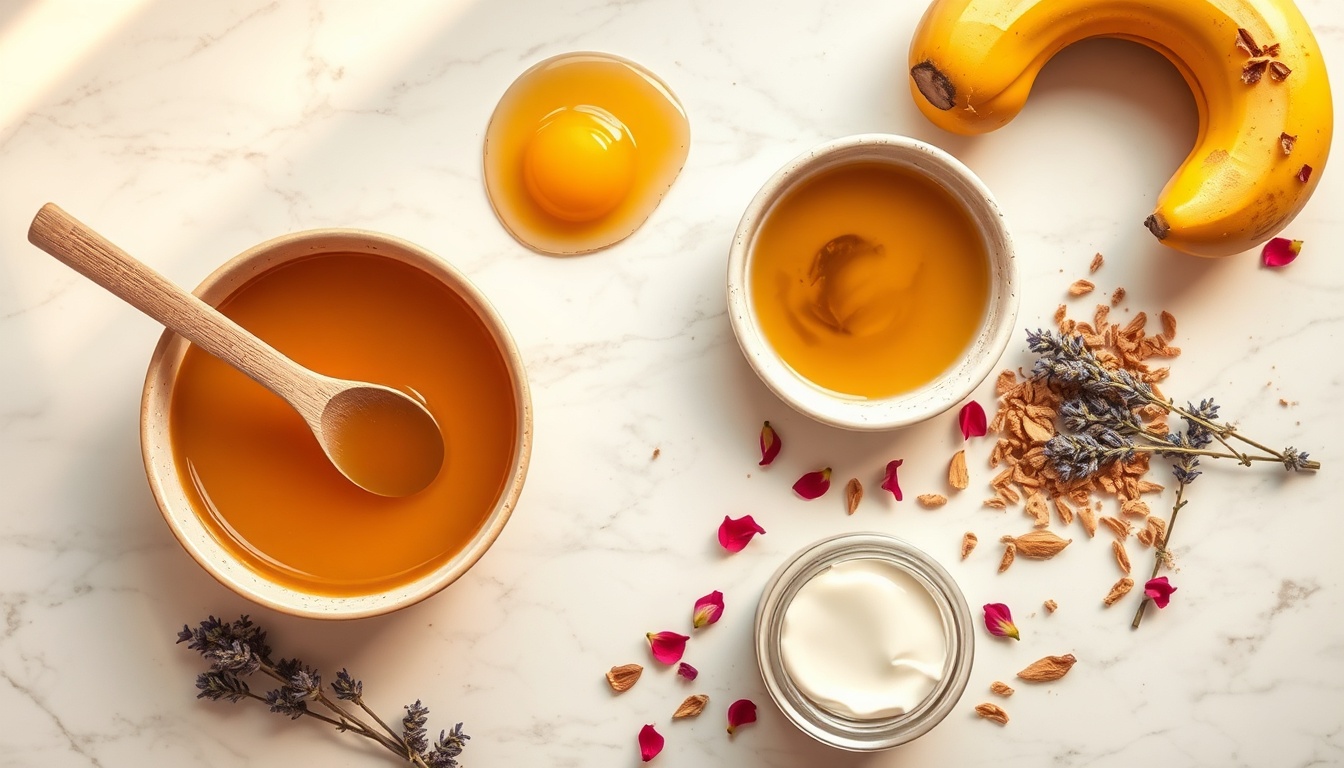
Get the Honey Buyer's Cheat Sheet (free PDF)
16 varieties on one page — color, flavor, best use and what a fair price looks like — from the 268 honeys we track.
Mask #1: Classic Honey Moisture Mask (Dry Hair)
This is the foundational honey hair mask — simple, effective, and perfect for dry, dehydrated hair that lacks shine. The combination of honey and olive oil creates a powerful moisture barrier.
- Ingredients: 2 tablespoons raw wildflower or clover honey + 1 tablespoon extra virgin olive oil + 1 teaspoon apple cider vinegar
- Mix honey and olive oil until smooth. Warm slightly (10 seconds in microwave or 30 seconds in a bowl of warm water) to make it easier to spread — do not overheat, as this destroys honey's enzymes.
- Add apple cider vinegar and stir. The ACV helps close the hair cuticle for extra shine and removes mineral buildup from hard water.
- Apply to damp, freshly washed hair from mid-length to ends. Avoid the roots if your scalp is oily.
- Cover with a shower cap and leave on for 20-30 minutes. Body heat under the cap helps the honey penetrate deeper.
- Rinse thoroughly with cool water (not hot — hot water opens the cuticle you just smoothed). Shampoo lightly if needed, but many people find the honey rinses clean.
Pro Tip
Use this mask once a week for consistently dry hair, or every 2 weeks for maintenance. Results are typically visible after 2-3 applications.
Mask #2: Honey and Egg Protein Mask (Damaged Hair)
If your hair is damaged from heat styling, chemical processing, or coloring, it needs protein as much as moisture. Egg provides keratin-like proteins that temporarily fill in gaps along the damaged hair shaft, while honey seals in the repair.
- Ingredients: 2 tablespoons raw buckwheat honey (best for antioxidant repair) or wildflower honey + 1 whole egg (or 2 yolks for extra dry hair) + 1 tablespoon coconut oil
- Whisk the egg first, then blend in honey and melted (not hot) coconut oil until fully combined.
- Apply to damp hair, focusing on the most damaged areas — typically the ends and any sections that feel rough or straw-like.
- Leave on for 15-20 minutes. Do not leave protein masks on longer — over-proteining can make hair stiff and brittle.
- Rinse with cool to lukewarm water only. Hot water will cook the egg in your hair, which is extremely difficult to remove.
- Follow with a light conditioner if needed.
Pro Tip
Limit protein masks to once every 2 weeks. Hair needs a balance of protein and moisture — too much protein causes breakage just like too little. Alternate this with the moisture mask above.
Mask #3: Honey and Yogurt Scalp Treatment (Oily Hair / Dandruff)
Oily hair and dandruff are often linked to an overgrowth of Malassezia yeast on the scalp. This mask targets the scalp specifically, using honey's antifungal properties and yogurt's lactic acid to rebalance scalp health without over-drying.
The 2001 European Journal of Medical Research study that demonstrated honey's effectiveness against seborrheic dermatitis used a diluted crude honey solution applied to the scalp for 3 hours, 3 times per week. This mask is a more practical adaptation of that protocol.
- Ingredients: 2 tablespoons raw Manuka honey (or raw wildflower) + 3 tablespoons plain unsweetened yogurt + 1 teaspoon lemon juice
- Mix all ingredients until smooth. The yogurt should be full-fat Greek yogurt for best results — the probiotics and lactic acid complement honey's antimicrobial action.
- Part your hair into sections and apply directly to the scalp using your fingers or a tint brush. Massage gently for 2-3 minutes.
- Work any remaining mask through the lengths of your hair.
- Cover with a shower cap and leave for 30-45 minutes.
- Rinse thoroughly and shampoo with a gentle, sulfate-free shampoo.
Pro Tip
For persistent dandruff, some find repeated use over several weeks helpful before judging results. If dandruff doesn't improve, see a dermatologist — the cause may require medical treatment.
Mask #4: Honey and Banana Deep Conditioner (Curly Hair)
Curly hair is structurally more prone to dryness because the natural oils from the scalp have a harder time traveling down the hair shaft. This rich mask provides intense hydration that curly hair craves, without weighing down the curl pattern.
- Ingredients: 2 tablespoons raw honey + 1 ripe banana (mashed until completely smooth) + 1 tablespoon avocado oil
- Mash the banana thoroughly with a fork — any lumps will be impossible to rinse out. Better yet, blend it in a food processor or blender until it's a smooth paste.
- Mix in honey and avocado oil until combined. Avocado oil is rich in oleic acid, which penetrates the hair shaft better than most oils.
- Apply generously to damp hair, scrunching upward to encourage curl formation as you go.
- Cover with a shower cap and leave for 30-45 minutes. For deeper penetration, sit under a hooded dryer or wrap a warm towel around the shower cap.
- Rinse thoroughly with cool water, checking that no banana residue remains. Follow with your normal curl styling routine.
Pro Tip
The banana must be fully ripe (brown spots on the skin). Underripe bananas are harder to mash and contain more astringent tannins that can dry out hair. Overripe bananas are actually ideal — more sugars and easier to blend smooth.
Mask #5: Honey Rinse for Color-Treated Hair
Color-treated hair needs gentle treatment that preserves color while restoring moisture lost during the coloring process. Honey is ideal because its acidity (pH 3.2-4.5) helps seal the cuticle and lock in color pigments, while its antioxidant content protects against color-fading UV damage.
This is a rinse rather than a thick mask, making it quick and easy to incorporate into your regular wash routine.
- Ingredients: 1 tablespoon raw acacia honey (light, won't tint hair) or clover honey + 1 cup warm water + 1 tablespoon apple cider vinegar + 3 drops argan oil (optional)
- Dissolve honey in warm (not hot) water. Stir until fully dissolved — this takes about 30 seconds of vigorous stirring.
- Add apple cider vinegar and argan oil. The ACV seals the cuticle for color retention; argan oil adds shine without buildup.
- After shampooing and conditioning as normal, pour the rinse slowly over your hair as a final step.
- Massage through hair for 1-2 minutes, ensuring even coverage.
- Do not rinse out. Gently squeeze excess liquid from hair and style as normal. The honey residue is light enough to leave in and continues working as it dries.
Pro Tip
Wait at least 72 hours after coloring before using any honey treatment. Hair color needs time to fully oxidize and set. After that, this rinse is safe to use 2-3 times per week and may actually extend the time between color touch-ups.
Honey for Hair Growth: What the Evidence Says
Let's address the most common question directly: can honey make your hair grow faster? The honest answer is that honey does not directly stimulate hair growth. No topical application of any natural substance significantly speeds up the rate at which hair grows from the follicle.
However, honey can indirectly support healthier hair growth in several ways. By reducing scalp inflammation and dandruff (which can cause hair loss), strengthening existing hair so it breaks less (making it appear to grow faster since you're retaining more length), and improving scalp circulation through massage during mask application.
The 2001 study on honey and seborrheic dermatitis did find that patients experienced reduced hair loss during the treatment period. But this was because the underlying scalp condition was being treated — not because honey has magical growth properties.
If you're experiencing significant hair loss or thinning, see a dermatologist. Hair loss has many causes (hormonal, nutritional, medical) that no hair mask can address. Honey masks are a complement to healthy hair care, not a replacement for medical treatment when needed.
Common Mistakes to Avoid
Honey hair treatments are straightforward, but these common mistakes can reduce their effectiveness or cause problems.
- Using processed honey — This is the most common mistake. Ultra-filtered, pasteurized "honey" from squeeze bottles lacks the enzymes, proteins, and antimicrobial compounds that make honey effective for hair. Always use raw, unfiltered honey. Learn how to tell if your honey is real.
- Applying to dry hair — Honey works best on damp hair because it needs water molecules to act as a humectant. On dry hair, honey can actually draw moisture out of the hair shaft instead of into it.
- Overheating the honey — Warming honey makes it easier to apply, but temperatures above 104°F (40°C) start destroying the glucose oxidase enzyme. A brief, gentle warm is fine — microwaving for 30+ seconds is not.
- Leaving masks on too long — More time does not equal better results. Most of the beneficial absorption happens in the first 20-30 minutes. Leaving honey on for hours or overnight creates diminishing returns and can attract dust, lint, and even ants.
- Not rinsing thoroughly — Honey residue left in hair can make it feel sticky and attract dirt. Rinse until your hair feels clean, and follow with a light shampoo if needed.
- Using honey every day — Even good things can be overdone. Daily honey treatments can lead to hygral fatigue (over-hydration that weakens the hair shaft). Stick to 1-2 times per week maximum.
Internal Nutrition for External Hair Health
Hair is essentially a protein fiber nourished by blood supply to the follicle — so what you eat matters as much as what you put on your hair. Raw honey consumed daily provides trace minerals like zinc, iron, and copper that directly support hair biology. Zinc is a cofactor for keratin synthesis and hair follicle cycling; iron carries oxygen to follicle cells; copper contributes to melanin production (hair pigment) and cross-linking of keratin fibers for structural strength.
The gut-hair connection is an emerging area of trichological research. A 2019 study in Experimental Dermatology demonstrated that gut dysbiosis triggered hair loss in mice through increased systemic inflammation and disrupted hair follicle cycling. Honey's prebiotic oligosaccharides support the Bifidobacterium species that produce biotin (vitamin B7) — one of the most commonly recommended supplements for hair health — as a metabolic byproduct. Rather than taking isolated biotin supplements, supporting the gut bacteria that naturally produce it may be a more effective long-term strategy.
Chronic low-grade inflammation is another internal factor that undermines hair health. Inflammatory conditions like telogen effluvium (stress-related hair shedding) and alopecia areata (autoimmune hair loss) involve dysregulated NF-κB signaling — the same pathway that honey's polyphenols modulate. While no one should rely on honey alone for clinical hair loss, combining topical honey masks for scalp health with daily oral honey for anti-inflammatory and prebiotic support creates a comprehensive approach. Adding propolis, which contains the potent NF-κB inhibitor CAPE, may further benefit those with inflammatory scalp conditions like seborrheic dermatitis or psoriasis.