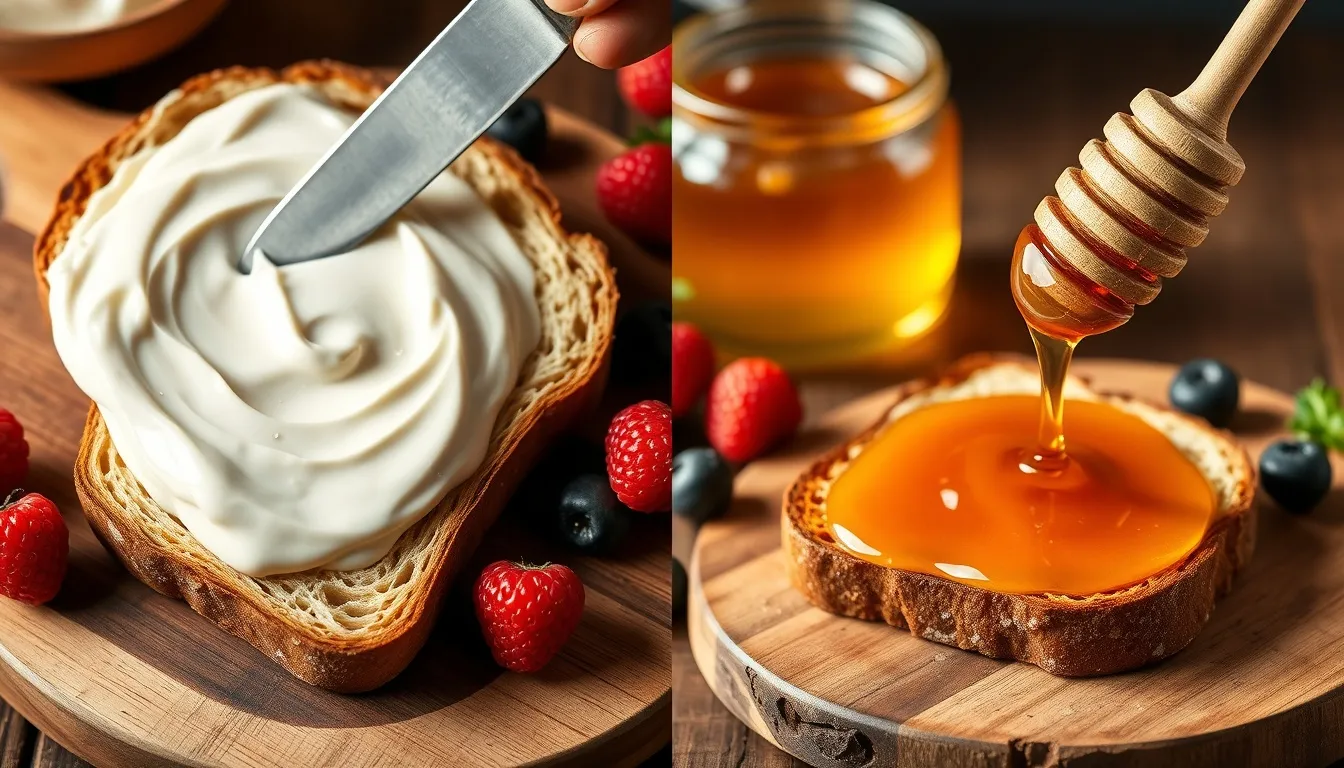
The Confusion Between Creamed and Raw Honey
Walk into any farmers market or specialty grocery store and you'll see jars labeled "raw honey" next to jars labeled "creamed honey." They look completely different — one is liquid and golden, the other is opaque and thick like butter. But the relationship between these two types confuses a lot of people.
Can creamed honey be raw? Is raw honey better than creamed? Are they even the same product? This guide breaks down exactly what each term means, how they differ, and which one is the better choice depending on what you need it for.
What Is Raw Honey, Exactly?
"Raw" describes how honey was processed after leaving the hive. Raw honey has not been heated above natural hive temperatures (roughly 95°F / 35°C) and has not been ultra-filtered. It retains its natural enzymes, pollen, propolis traces, and other compounds that high-heat pasteurization destroys.
Raw honey can be liquid, crystallized, or anything in between — the term refers to processing, not texture. A jar of crystallized raw honey and a jar of smooth liquid raw honey are both equally "raw" as long as neither was heated or ultra-filtered.
Pro Tip
The FDA does not regulate the term "raw" for honey. There's no legal standard. Most producers and consumers agree it means unheated and unfiltered, but always check with the producer if you're unsure.
Get the Honey Buyer's Cheat Sheet (free PDF)
16 varieties on one page — color, flavor, best use and what a fair price looks like — from the 268 honeys we track.
What Is Creamed Honey?
Creamed honey (also called whipped honey, spun honey, or set honey) is honey that has undergone controlled crystallization to produce a smooth, spreadable texture. The process was perfected by Elton Dyce at Cornell University in the 1930s.
Here's how it works: all honey eventually crystallizes as glucose molecules form crystals. If crystallization happens naturally, the crystals tend to be large and gritty. Creamed honey is made by "seeding" liquid honey with a small amount of finely crystallized honey, then holding it at about 57°F (14°C). The seed crystals act as templates, and the entire batch crystallizes into tiny, uniform crystals that feel smooth on the tongue.
The result is a thick, opaque, butter-like honey that spreads easily and doesn't drip. The flavor is the same as the liquid version — only the texture changes.
Can Creamed Honey Be Raw?
Yes — and this is the key point most people miss. "Raw" and "creamed" describe two completely different things. Raw describes processing temperature. Creamed describes texture. They're not mutually exclusive.
A beekeeper can take raw, unheated honey, seed it with finely crystallized raw honey, and hold it at 57°F. The result is creamed honey that is also raw. No heat was applied, no enzymes were destroyed, no pollen was removed. Many small-batch and artisan producers make raw creamed honey exactly this way.
However, some commercial producers heat honey to dissolve existing crystals before starting the creaming process, which means the result is creamed but no longer raw. The label should tell you — look for "raw creamed honey" specifically, and buy from producers who are transparent about their methods.
Pro Tip
If a jar says "creamed honey" but doesn't say "raw," it may have been heated during production. If raw status matters to you, look for "raw creamed" or ask the producer directly.
Nutritional Comparison
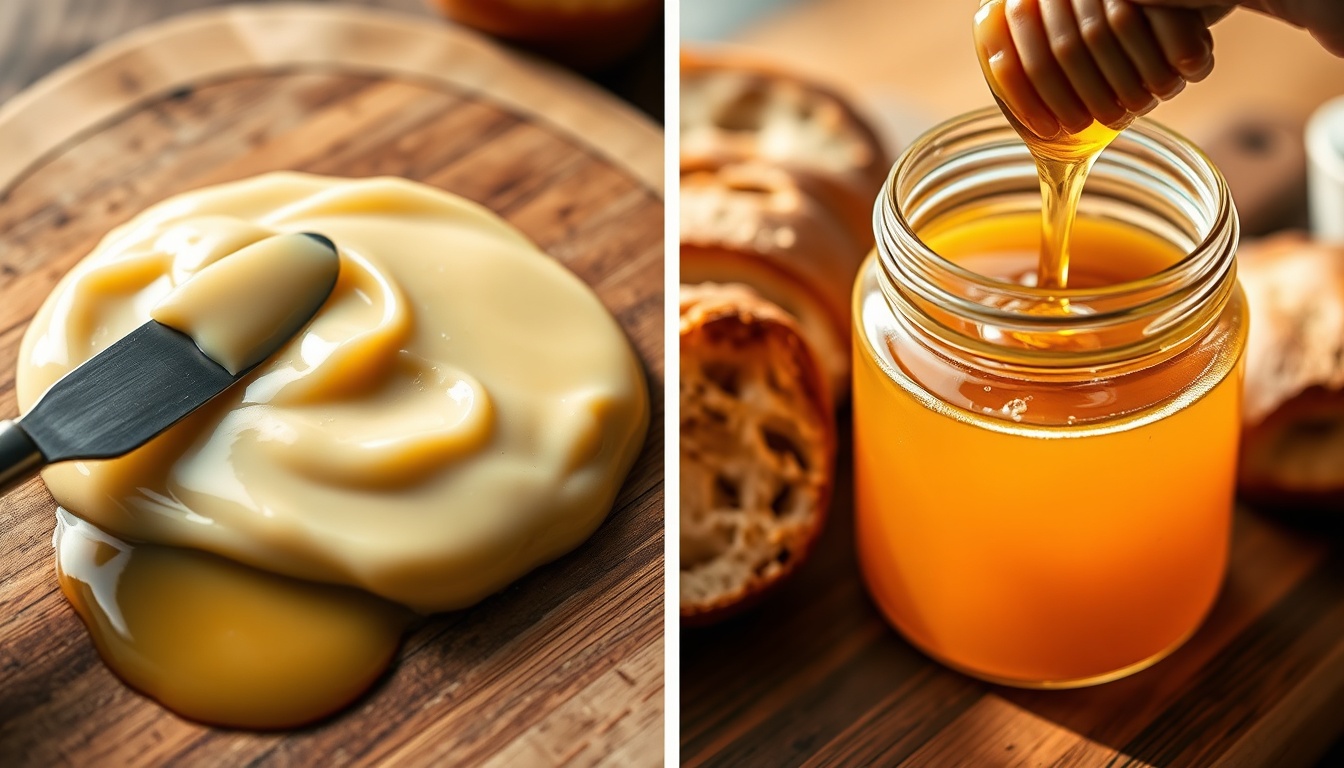
The calorie and sugar content of creamed and raw honey are identical — creaming doesn't add or remove anything. One tablespoon of either has about 64 calories and 17 grams of sugar. The macro profile is the same because creaming is a physical process, not a chemical one.
Where differences can emerge is in the enzyme content, but this depends on whether the honey was heated — not whether it was creamed. Raw creamed honey retains the same enzymes (diastase, invertase, glucose oxidase) as liquid raw honey. Heated creamed honey may have reduced enzyme activity.
- Calories per tablespoon: identical (~64 kcal)
- Sugar composition: identical (fructose, glucose, traces of sucrose)
- Enzymes: same if both are raw; reduced in heated creamed honey
- Pollen content: same if both are unfiltered
- Enzymes: same if both are raw; may be reduced by heat
- Minerals and vitamins: identical — creaming doesn't affect micronutrient content
Taste and Texture Differences
Flavor-wise, creamed and liquid raw honey from the same floral source taste essentially the same. If you cream wildflower honey ($10-18), it tastes like wildflower honey. The volatile aromatic compounds that create flavor differences between honey varieties are not affected by controlled crystallization.
The texture difference is dramatic. Liquid raw honey flows, drips, and can be messy. Creamed honey is thick, smooth, and spreadable — it stays where you put it. Many people find creamed honey more pleasant to eat straight from the spoon because of its fudge-like consistency.
One subtle difference: because creamed honey's crystals dissolve more slowly on the tongue, the sweetness perception can feel slightly more gradual compared to liquid honey, which hits immediately.
Best Uses for Each Type
The best choice depends entirely on how you plan to use the honey. Neither is universally "better" — they excel in different situations.
- Toast and bread — creamed honey wins. It spreads like butter without dripping off the edge. Clover honey ($8-15) and orange blossom honey ($12-20) both cream into a smooth, spreadable texture
- Tea and hot drinks — liquid raw honey wins. It dissolves quickly and evenly. Acacia honey ($12-20) is ideal — it rarely crystallizes and adds clean, delicate sweetness
- Cooking and baking — liquid raw honey wins. Easier to measure and mix into batters
- Cheese boards — creamed honey wins. Elegant presentation, easy to portion, doesn't run. Creamed buckwheat honey ($15-25, ORAC 16,000+) pairs exceptionally with aged cheeses
- Drizzling on yogurt or oatmeal — either works. Liquid for thin drizzle, creamed for a thick dollop
- Face masks and skincare — liquid raw honey wins. Spreads more easily on skin
- Straight from the spoon — creamed honey wins for most people. Smooth, satisfying texture
- Gift giving — creamed honey wins. Looks beautiful in jars and feels premium
Shelf Life and Storage
Both raw and creamed honey are shelf-stable essentially forever when stored properly. Honey's low moisture content and acidic pH prevent microbial growth. Chemical analysis of honey from Egyptian tombs over 3,000 years old has confirmed its characteristic sugar composition and antimicrobial properties were fully intact.
Creamed honey is actually more stable in terms of texture than liquid raw honey. Liquid raw honey will eventually crystallize on its own (sometimes within weeks for high-glucose varieties), and the natural crystals can be gritty. Creamed honey is already crystallized, so its texture stays consistent for months or years.
Store both types at room temperature away from direct sunlight. Don't refrigerate — cold temperatures make honey thicker and harder to use without improving shelf life. If your liquid raw honey crystallizes and you want it liquid again, warm the jar gently in a warm water bath (under 110°F / 43°C to preserve raw enzymes).
Pro Tip
If you buy raw honey and it crystallizes on you, consider it a feature, not a bug. Crystallized honey is proof that the honey hasn't been ultra-processed. You can even make your own creamed honey by blending crystallized honey until smooth.
How to Choose: A Decision Framework
Start with one question: does "raw" matter to you? If you specifically want unheated, enzyme-intact honey, make sure whatever you buy — liquid or creamed — says "raw" on the label. Buy from producers who explain their methods.
Next, consider how you'll use it. If you mostly drizzle honey in tea or cook with it, liquid raw honey is more practical. If you spread honey on toast, add it to cheese boards, or eat it by the spoonful, creamed honey is more enjoyable. Many honey lovers keep both on hand.
Finally, consider variety. Creamed honey is an excellent way to try crystallization-prone varieties like canola or clover ($8-15) that tend to go gritty as liquid honey. The creaming process turns what would be an unpleasant texture into a smooth, luxurious one.
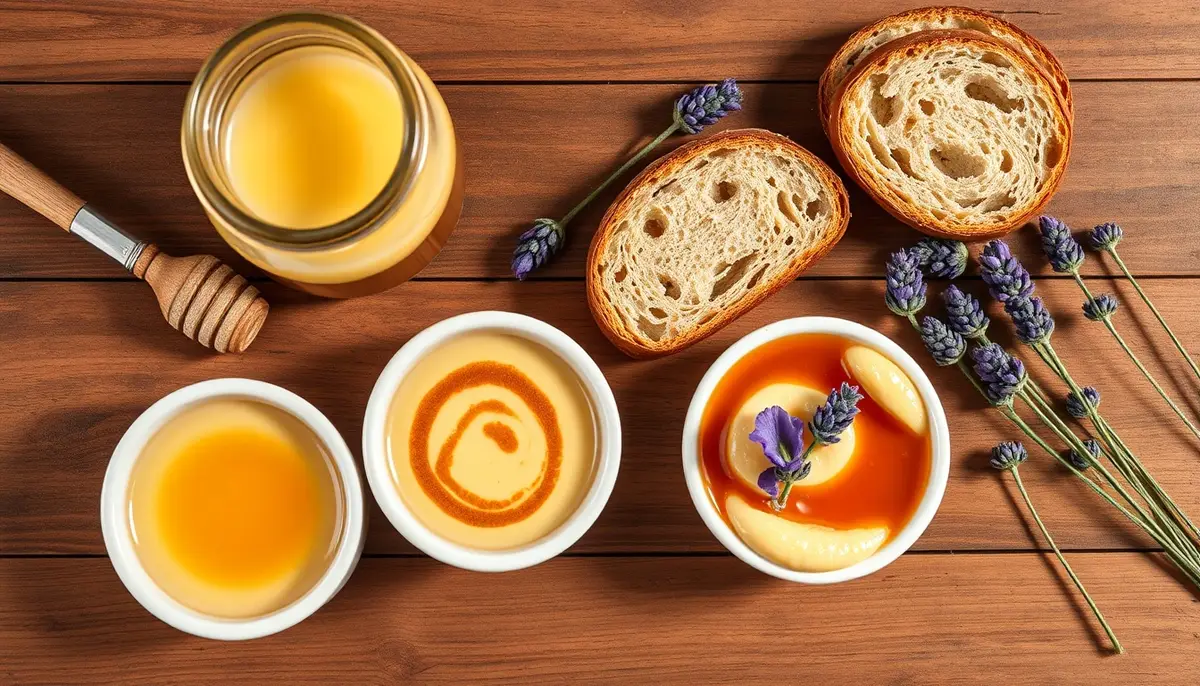
When buying liquid raw honey, acacia honey ($12-20) stays liquid longest due to its high fructose-to-glucose ratio. For creamed honey, clover ($8-15) and orange blossom ($12-20) are classic choices — affordable and they cream to a silky texture. For a premium gift, try creamed sourwood ($20-35) or lavender honey ($15-25). Manuka honey ($35-60+, UMF 10+) is available in both liquid and creamed forms with the same MGO grading in either texture.
Whichever form you choose, raw honey keeps more of its natural aroma and enzyme activity than pasteurized varieties (see raw honey benefits). If you are also weighing the "organic" question, our raw honey vs organic honey guide explains why "raw" and "organic" describe completely different things and which label matters more when you shop.
