What Makes Wildflower Honey Unique
Wildflower honey — also called polyfloral or multifloral honey — is produced from the nectar of multiple flowering plant species rather than a single dominant source. Unlike monofloral varieties such as clover honey, buckwheat honey, or manuka honey, wildflower honey reflects the full botanical diversity of a region and season.
This diversity is wildflower honey's defining advantage. Each batch contains a broader spectrum of polyphenols, flavonoids, and bioactive compounds than any single-source honey, because different plants contribute different phytochemicals. A 2019 study in Food Chemistry found that polyfloral honeys contained significantly higher total phenolic diversity than monofloral samples, even when the total concentration was similar.
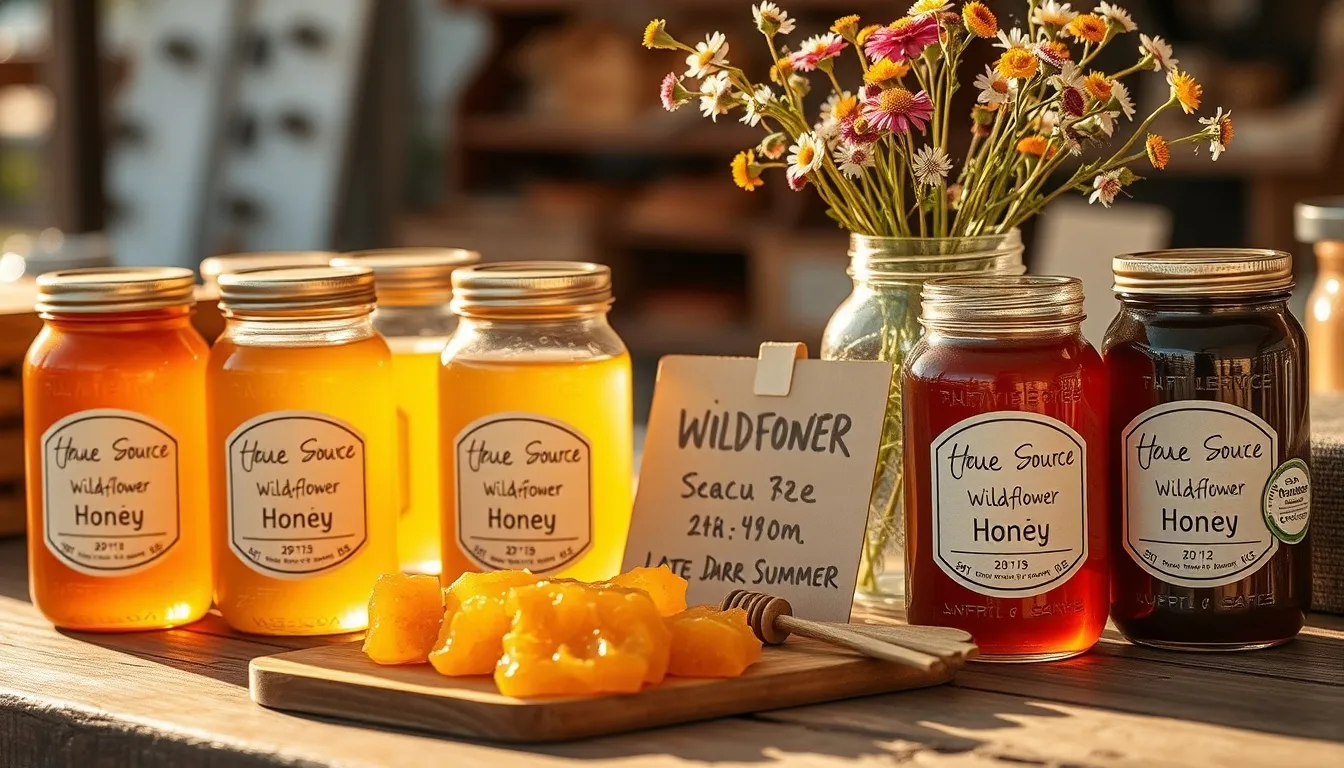
Wildflower honey varies in color from light gold to deep amber depending on which flowers bloomed during the harvest period. Spring batches tend to be lighter and milder (dominated by clover, fruit tree blossoms, and wildflowers), while late-summer and fall batches are typically darker and more complex (influenced by goldenrod, aster, and knotweed). This seasonal variation means no two jars of wildflower honey taste exactly alike — a feature that honey enthusiasts value highly.
This guide examines what research says about wildflower honey's health benefits, when it's the best choice, and when a specific variety might serve you better.
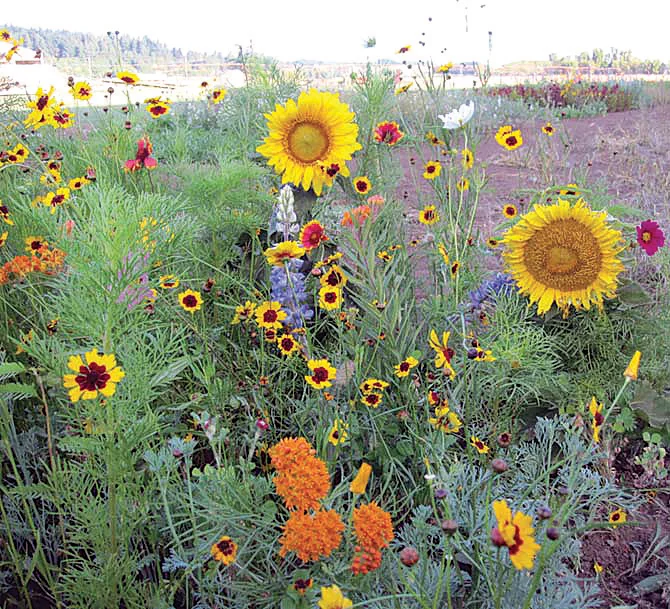
Photo: Queen Right Colonies, used with permission
1. Broader Antioxidant Profile Than Monofloral Honeys
Wildflower honey's greatest nutritional advantage is its antioxidant diversity. While monofloral honeys contain high concentrations of a narrow set of polyphenols, wildflower honey provides a wider array of antioxidant compounds — each from different plant species in the blend.
A 2018 study in the Journal of Food Science and Technology compared the antioxidant profiles of polyfloral and monofloral honeys and found that polyfloral samples had higher DPPH radical scavenging diversity, meaning they neutralized a broader range of free radical types. The total antioxidant capacity depended heavily on which flowers contributed — darker wildflower blends rivaled buckwheat honey in ORAC scores.
The 2022 Nutrition Reviews meta-analysis of 18 RCTs confirmed that replacing refined sugar with honey (including polyfloral varieties) significantly reduced markers of oxidative stress, including LDL cholesterol oxidation and inflammatory biomarkers like C-reactive protein. The researchers noted that raw, unprocessed honey showed stronger effects than commercial processed honey.
This matters because different antioxidants target different biological pathways. Chrysin and pinocembrin (common in lighter honeys) inhibit NF-κB inflammatory signaling, while quercetin and kaempferol (common in darker honeys) are potent free radical scavengers. Wildflower honey is more likely to contain both sets than any monofloral variety.
Pro Tip
For the highest antioxidant content in wildflower honey, look for darker batches — typically late-summer or fall harvests. Dark honeys contain 3-9x more antioxidants than lighter ones.
Get the Honey Buyer's Cheat Sheet (free PDF)
16 varieties on one page — color, flavor, best use and what a fair price looks like — from the 268 honeys we track.
2. Seasonal Allergy Support
Wildflower honey is the variety most commonly associated with the "local honey for allergies" theory — the idea that consuming honey made from local pollen can help desensitize the immune system to airborne allergens. The evidence for this is mixed but worth understanding.
The key argument: wildflower honey is more likely to contain trace amounts of wind-borne pollen from grasses, trees, and weeds (the actual allergens) compared to monofloral honeys, because bees visiting diverse floral sources may inadvertently collect some airborne pollen. A 2011 Finnish study found that patients consuming birch pollen-enriched honey had 60% fewer allergy symptoms and twice as many symptom-free days compared to conventional honey.
However, the full evidence picture is more nuanced. Most airborne allergens come from wind-pollinated plants (grasses, ragweed, oak), while bees primarily visit insect-pollinated flowers. Standard wildflower honey contains minimal wind-borne pollen. The Finnish study used intentionally enriched honey, not off-the-shelf wildflower honey.
What wildflower honey can reliably help with during allergy season: soothing an irritated throat, suppressing cough from post-nasal drip, reducing respiratory inflammation via polyphenol NF-κB inhibition, and supporting immune function through prebiotic and antioxidant mechanisms. These secondary benefits make it a practical complement to evidence-based allergy treatments.
3. Gut Health and Prebiotic Effects
Composition and laboratory studies identify oligosaccharides and antimicrobial compounds in some polyfloral honeys, but they do not establish that eating wildflower honey changes the human microbiome or treats digestive disease.
Do not use honey to treat suspected H. pylori, C. difficile, inflammatory bowel disease, or persistent digestive symptoms; those conditions require appropriate testing and clinical care.
4. Antibacterial and Wound-Healing Properties
Wildflower honey shares the fundamental antibacterial mechanisms common to all raw honeys: glucose oxidase-generated hydrogen peroxide, low pH (3.2-4.5), high osmolarity, and polyphenol-mediated bactericidal effects. These mechanisms make it effective against a broad range of bacteria including Staphylococcus aureus, E. coli, and Pseudomonas aeruginosa.
The polyfloral nature of wildflower honey may offer an antibacterial advantage: different plant nectars contribute different antimicrobial compounds, creating a cocktail effect. A 2017 study in the International Journal of Biological Macromolecules found that polyfloral honeys showed comparable or superior antimicrobial activity to several monofloral varieties when tested against clinical wound pathogens.
For practical wound care, wildflower honey can be applied to minor cuts, burns, and abrasions as a first-aid measure. Its moisture-retaining properties create a moist healing environment while its antibacterial activity reduces infection risk. For serious wounds, burns, or post-surgical care, medical-grade manuka honey with certified UMF/MGO activity remains the evidence-based standard.
Wildflower honey also makes an effective ingredient in DIY face masks and hair treatments, combining humectant, antibacterial, and anti-inflammatory properties for skin and scalp health.
5. Cough and Respiratory Support
Honey's effectiveness for cough suppression is one of its most well-documented benefits, supported by the 2020 BMJ Evidence-Based Medicine systematic review of 14 studies. The landmark 2007 Archives of Pediatrics study used buckwheat honey specifically.
Wildflower honey's effectiveness for cough and sore throat comes from multiple mechanisms: coating and soothing irritated mucous membranes, stimulating salivation (thinning mucus), triggering sensory nerve endings that suppress the cough reflex, and providing antimicrobial activity against respiratory pathogens.
Its diverse polyphenol profile may also support broader respiratory health through anti-inflammatory effects on bronchial tissue and mucous membranes. The NF-κB inhibition pathway is particularly relevant during upper respiratory infections, where excessive inflammation drives symptoms like congestion and sore throat.
Many people take raw wildflower honey for cough — straight or in warm water with lemon. For sinus congestion, honey in steam inhalation or warm drinks can provide relief through its antimicrobial and anti-inflammatory mechanisms.
6. Carbohydrate and Batch Variability
Wildflower honey can contain nectar from different plants across harvests, so the name does not establish a fixed sugar profile or predictable response for a particular jar.
It remains a fast-acting carbohydrate, and no wildflower blend is medically preferred for diabetes. Use the honey carbohydrate and label guide to compare the product's serving-size total carbohydrate and added sugars within an individualized care plan.
Choose a wildflower honey for its batch-specific flavor and origin rather than an assumed cardiovascular or glucose effect.
Wildflower Honey vs Other Varieties: When to Choose What
Wildflower honey occupies a unique middle ground in the honey world — more complex and diverse than monofloral honeys, but less predictable in its specific bioactive profile.
**Choose wildflower honey when:** you want the broadest antioxidant diversity from a single honey, you enjoy complex and variable flavor profiles, you want a good all-purpose raw honey for daily use, you're looking for local honey that reflects your region's flora, you want a natural sweetener for tea or coffee with character.
**Choose manuka honey when:** you need targeted antibacterial activity (wounds, eczema, sinus infections), you want the strongest clinical evidence for specific health conditions. Premium Manuka UMF 15+ ($45–80) delivers verified methylglyoxal antibacterial activity.
**Choose buckwheat honey when:** you want the highest antioxidant concentration (ORAC 16,000+), you need documented cough suppression for children (Penn State 2007), you prefer bold, molasses-like flavors ($15–25).
**Choose clover honey when:** you want the mildest flavor for baking, you need the most affordable raw honey option ($8–15), you prefer consistency between batches.
**Choose acacia honey when:** you need the lowest glycemic index (GI ~32), you prefer the most delicate, clean flavor, you want honey that stays liquid longest without crystallizing ($12–20).
How to Choose Quality Wildflower Honey
Not all wildflower honey is created equal. Because it's a catch-all category, some lower-quality commercial honeys are labeled "wildflower" by default when the floral source is unknown or when multiple cheap honeys are blended. Here's how to find the good stuff:
**Buy local and seasonal.** The best wildflower honey comes from beekeepers who can tell you exactly where their hives are located and what bloomed during the harvest season. Farmers markets are ideal — see our buying guide for what questions to ask.
**Look for "raw" on the label.** Processing destroys the enzymes, polyphenols, and beneficial compounds that make wildflower honey worth buying. Raw wildflower honey retains its full bioactive profile. See how to read honey labels for decoding label claims.
**Expect variation.** Legitimate wildflower honey changes color, flavor, and aroma between seasons and years. If every jar looks identical, it's likely a blended commercial product. Embrace the variability — it reflects genuine botanical diversity.
**Check for True Source Certified.** This third-party certification verifies honey origin and traceability, reducing the risk of adulterated or fake honey. While not a guarantee of quality, it's a useful baseline.
Pro Tip
Ask your local beekeeper about spring vs fall wildflower honey — they're often dramatically different in color, flavor, and nutritional profile. Many enthusiasts keep both on hand for different uses.
Storing Wildflower Honey
Wildflower honey follows the same storage principles as all honey: room temperature, tightly sealed, away from direct sunlight and moisture. Properly stored, it never truly expires — chemical analysis of honey from Egyptian tombs over 3,000 years old has confirmed its characteristic sugar composition was fully intact.
Because wildflower honey often has a more balanced glucose-to-fructose ratio than high-fructose varieties like acacia, it may crystallize at a moderate rate. Crystallization is a sign of real, unprocessed honey — not spoilage. Gently warm the jar in warm water (under 110°F/43°C) to return it to liquid state without destroying beneficial enzymes.
Wildflower Honey and Pollinator Conservation
Wildflower honey has a unique relationship with conservation that monofloral honeys do not share. Because it depends on diverse native plant communities, buying wildflower honey directly funds the beekeepers who maintain hives in biodiverse habitats rather than industrial monoculture fields. Every jar of regional wildflower honey ($10–18) represents a landscape where multiple plant species bloom across seasons — exactly the kind of habitat that pollinators need to survive.
This connection is especially relevant around World Environment Day (June 5) and National Pollinator Week (June 22–28). The 2026 WED theme "Accelerating Land Restoration for Drought Resilience" speaks directly to the wildflower meadows that produce the best wildflower honey. Restored grasslands and native meadows support more diverse bee populations, produce more complex honey profiles, and sequester carbon — a triple benefit that starts with consumer purchasing choices.
When you choose wildflower honey over processed blends, you are supporting the full ecological chain: native plant communities provide forage, local beekeepers manage hives sustainably, and the resulting honey captures the botanical diversity of a specific place and season. Compare this to the monofloral alternative: clover honey ($8–15) is excellent and reliably mild, but it typically comes from agricultural clover fields. Buckwheat honey ($15–25) delivers exceptional antioxidants (ORAC 16,000+) from a single late-season crop. Wildflower honey uniquely reflects the entire ecosystem rather than one part of it.
For the most conservation impact, buy from local beekeepers through farmers markets or our 1,500+ local source directory. Ask about their hive locations and what blooms during their harvest season. The honey that varies most between batches — shifting color, aroma, and flavor with the seasons — is the honey from the most biodiverse habitat. That variability is not a flaw; it is proof that the ecosystem behind your honey is alive and thriving.