Honey Water Benefits: The Complete Guide
Everything you need to know about honey water — evidence-based health benefits, easy recipes, the best time to drink it, which honey to use, and important safety considerations.
Last updated:
Honey water (raw honey dissolved in warm water) is a simple drink some people enjoy as part of a daily routine. It may support gut health through prebiotic oligosaccharides, contributes natural electrolytes, and delivers antioxidants. A 2020 BMJ Evidence-Based Medicine analysis found honey generally favorable for upper respiratory symptoms compared with usual care. There's no established best time to drink it — some people prefer it in the morning, before meals, or in the evening. Use raw, unfiltered honey and water below 140°F to preserve beneficial enzymes.
What Is Honey Water and Why Do People Drink It?
Honey water is simply raw honey dissolved in warm or room-temperature water — one of the oldest functional beverages in human history. Ancient Egyptians, Greeks, and Ayurvedic practitioners used honey water (known as "madhu jala" in Sanskrit) as a daily health tonic thousands of years ago. The drink has experienced a modern resurgence as people seek natural alternatives to sugary beverages and artificial energy drinks. At its simplest, honey water is 1-2 teaspoons of raw honey stirred into 8 ounces of warm water until fully dissolved. Variations include adding lemon juice (honey lemon water), ginger, cinnamon, apple cider vinegar, or turmeric. The appeal lies in honey's unique composition: unlike table sugar, honey contains over 200 bioactive compounds including enzymes (glucose oxidase, diastase, invertase), antioxidants (flavonoids and phenolic acids), amino acids, B vitamins, and trace minerals like potassium, calcium, magnesium, and zinc. When dissolved in water, these compounds become more bioavailable — the water acts as a carrier that helps the body absorb honey's nutrients more efficiently than eating honey straight from the jar. The glucose and fructose in honey provide a gentler, more sustained energy boost than refined sugar because they are absorbed at different rates. Honey water is typically consumed warm but not hot — heating above 140°F (60°C) degrades heat-sensitive enzymes like glucose oxidase and diastase, reducing some of the health benefits. For maximum benefit, use raw, unfiltered honey that retains its full spectrum of enzymes, pollen, and antioxidants.
Key Takeaways
- One of the oldest functional beverages — used for thousands of years in Ayurvedic and Egyptian medicine
- Simple recipe: 1-2 teaspoons raw honey in 8 oz warm (not hot) water
- Contains 200+ bioactive compounds: enzymes, antioxidants, amino acids, vitamins, and minerals
- Water increases bioavailability — helps the body absorb honey's nutrients more efficiently
- Provides gentler, more sustained energy than refined sugar drinks
- Use warm water below 140°F to preserve heat-sensitive enzymes like glucose oxidase
What Are the Evidence-Based Health Benefits of Honey Water?
Honey water offers several evidence-based health benefits supported by clinical research. Digestive health is one of the strongest areas of evidence: honey's prebiotic oligosaccharides feed beneficial Bifidobacteria and Lactobacilli in the gut, and a 2006 study in BMC Complementary Medicine found that diluted honey stimulated the growth of these beneficial bacteria by up to 10-fold compared to artificial sweeteners. <Link to="/honey/wildflower-honey" className="text-amber-600 hover:text-amber-700 font-medium">Wildflower honey</Link> provides diverse oligosaccharides from multiple floral sources, while <Link to="/honey/clover-honey" className="text-amber-600 hover:text-amber-700 font-medium">clover honey</Link> offers reliable prebiotic activity for everyday gut health support. Drinking warm honey water on an empty stomach may help soothe gastric irritation — a 2015 Saudi Journal of Biological Sciences study demonstrated that honey reduces gastric acid secretion and protects the stomach lining through its antioxidant activity. For hydration, honey water provides electrolytes (potassium, sodium, magnesium) that plain water lacks, making it a natural alternative to sports drinks for mild activity. A 2007 Journal of the International Society of Sports Nutrition study found that honey-based drinks maintained blood glucose and performance comparable to commercial sports gels during endurance exercise. Regarding immune support, honey's hydrogen peroxide production (from glucose oxidase activated in dilution) creates a mild antimicrobial environment, and a 2020 BMJ Evidence-Based Medicine systematic review of 14 studies found honey superior to usual care for upper respiratory symptoms. Honey water may also support weight management when used as a replacement for caloric beverages — substituting a 150-calorie soda with honey water (approximately 20-40 calories per serving) reduces daily caloric intake while providing sustained energy and reducing sugar cravings. The antioxidant benefits are notable: honey's phenolic compounds (caffeic acid, chrysin, galangin, quercetin) have demonstrated free radical scavenging activity in multiple studies, and their bioavailability increases when honey is dissolved in water. <Link to="/honey/buckwheat-honey" className="text-amber-600 hover:text-amber-700 font-medium">Buckwheat honey</Link> provides the highest antioxidant density (up to 20× higher than light honeys), while <Link to="/honey/wildflower-honey" className="text-amber-600 hover:text-amber-700 font-medium">wildflower honey</Link> offers diverse antioxidant profiles from multiple botanical sources.
Key Takeaways
- Digestive health: prebiotic oligosaccharides increase beneficial gut bacteria up to 10-fold
- Gastric protection: reduces acid secretion and protects stomach lining via antioxidant activity
- Natural hydration: provides electrolytes (potassium, sodium, magnesium) that plain water lacks
- Immune support: BMJ Evidence-Based Medicine review of 14 studies found honey superior to usual care for respiratory symptoms
- Weight management: 20-40 calories per serving vs 150 for soda — reduces sugar cravings
- Antioxidant boost: phenolic compounds show increased bioavailability when dissolved in water
When Is the Best Time to Drink Honey Water?
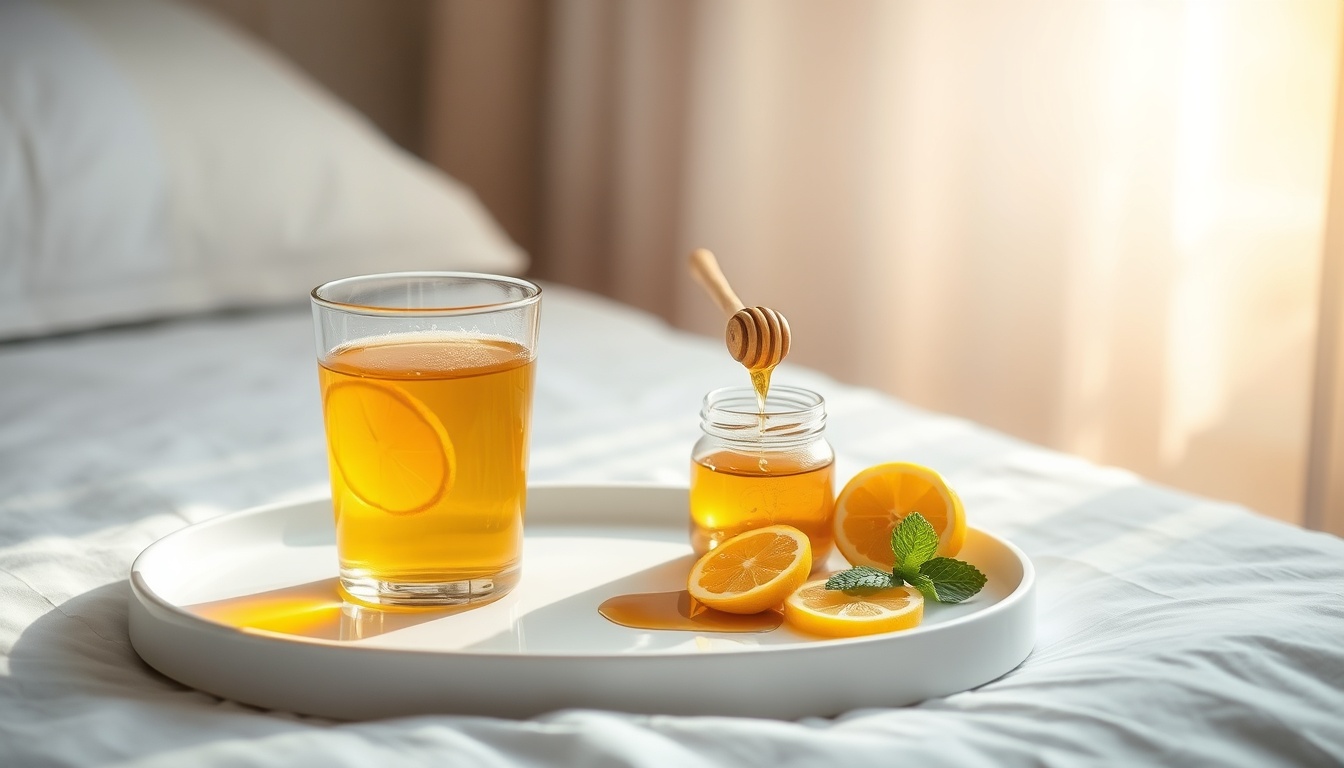
The optimal timing for honey water depends on your health goals. Morning on an empty stomach is the most popular time — drinking warm honey water 20-30 minutes before breakfast may kickstart digestion by stimulating gastric juice production, provide gentle energy to start the day, and help establish a consistent hydration habit. The glucose in honey replenishes liver glycogen stores depleted overnight, which may help reduce the cortisol spike that occurs on waking. Before meals (15-30 minutes prior) is recommended for digestive support — the warm water and honey combination may prepare the digestive system by stimulating enzyme production and bile flow, potentially improving nutrient absorption from the meal that follows. For exercise, drinking honey water 30 minutes before a workout provides readily available glucose for sustained energy, and consuming it during endurance exercise (lasting 60+ minutes) maintains blood glucose levels comparably to commercial sports drinks. After exercise, honey water helps replenish glycogen stores and provides natural electrolytes for rehydration. Before bed is another popular time — the fructose in honey slowly replenishes liver glycogen during sleep, which may prevent the middle-of-the-night cortisol spike that disrupts sleep. A 2014 study in the International Journal of Food Sciences and Nutrition found that honey consumption before bed improved sleep quality scores in children with upper respiratory infections. During illness, some people find sipping warm honey water throughout the day soothing for an irritated throat and helpful for easy calories when appetite is poor. There's no required frequency — sip as often as feels comfortable, and see a doctor if you're too unwell to eat or drink normally. Consistency matters more than timing — the benefits of honey water compound with regular daily consumption over weeks and months.
Key Takeaways
- Morning (empty stomach): kickstarts digestion, replenishes liver glycogen, gentle energy boost
- Before meals (15-30 min prior): stimulates enzyme and bile production for better nutrient absorption
- Pre-workout (30 min before): provides sustained glucose for endurance exercise
- Before bed: fructose replenishes liver glycogen, may prevent sleep-disrupting cortisol spikes
- During illness: some people find sipping it throughout the day soothing for the throat and easy on the stomach
- Consistency matters most — benefits compound with regular daily consumption over weeks
How to Make Honey Water: 5 Easy Recipes
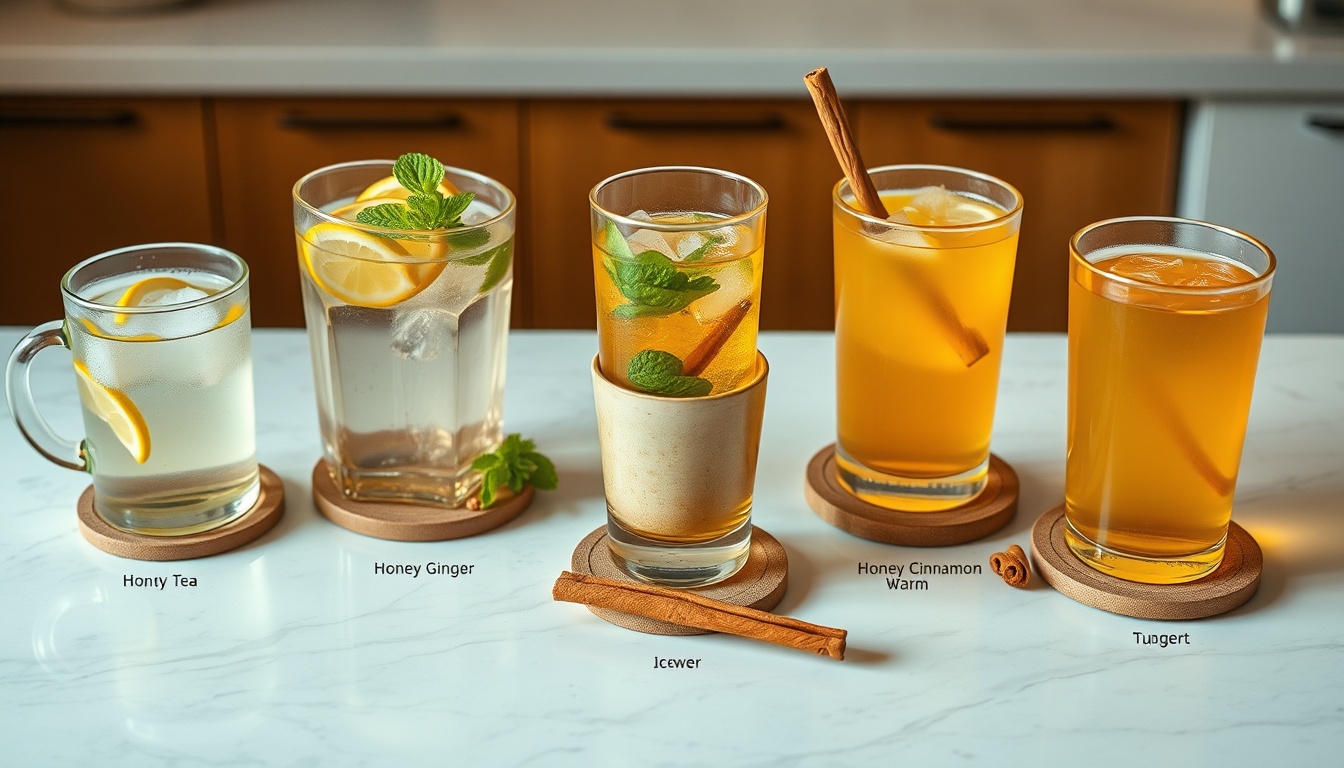
The foundation recipe is effortless: stir 1-2 teaspoons of raw honey into 8 ounces of warm water (100-130°F / 38-54°C) until fully dissolved. Use warm, not boiling, water to preserve honey's heat-sensitive enzymes. From this base, five popular variations target different needs. Classic Honey Lemon Water: add the juice of half a fresh lemon to the base recipe. The vitamin C (about 18 mg per half lemon) complements honey's antioxidants, and the citric acid may improve mineral absorption. This is the most researched combination and the most popular worldwide. Honey Ginger Water: steep 1 tablespoon of freshly sliced ginger in hot water for 5-10 minutes, let it cool to 130°F, then stir in honey. Ginger has a long history of traditional use for nausea. If you're pregnant and considering ginger for morning sickness, talk to your OB-GYN about what amount is appropriate. Honey Cinnamon Water: stir ¼ teaspoon of Ceylon cinnamon into warm honey water. Ceylon cinnamon contains less coumarin than cassia cinnamon, making it safer for daily use. This combination may help moderate blood sugar response — a 2019 Clinical Nutrition meta-analysis found cinnamon reduced fasting blood glucose by 7.8 mg/dL. Honey Mint Water: muddle 5-6 fresh mint leaves in warm honey water. The menthol in mint acts as a natural muscle relaxant for the digestive tract and may relieve bloating. This version is particularly refreshing when served chilled in summer. Cold Honey Water: dissolve honey in a small amount of warm water first, then add ice and cold water. Add cucumber slices or fresh berries for a naturally flavored alternative to sugary drinks. For all recipes, use raw, unfiltered honey for maximum benefit — pasteurized honey has been heated to 161°F which destroys many enzymes and reduces antioxidant content by 30-50%.
Key Takeaways
- Base recipe: 1-2 tsp raw honey in 8 oz warm water (100-130°F) — stir until dissolved
- Honey Lemon Water: add juice of half a lemon for vitamin C and improved mineral absorption
- Honey Ginger Water: steep fresh ginger 5-10 min, cool, add honey — great for nausea and inflammation
- Honey Cinnamon Water: ¼ tsp Ceylon cinnamon — may help moderate blood sugar response
- Honey Mint Water: muddle 5-6 fresh mint leaves — relieves bloating and aids digestion
- Always use raw, unfiltered honey — pasteurized honey loses 30-50% of its antioxidant content
Which Honey Is Best for Honey Water?
The type of honey you use significantly impacts honey water's flavor and health benefits. Raw, unfiltered honey is essential — it retains the full spectrum of enzymes (glucose oxidase, diastase, invertase), pollen, propolis traces, and antioxidants that pasteurization destroys. For everyday honey water, raw <Link to="/honey/wildflower-honey" className="text-amber-600 hover:text-amber-700 font-medium">wildflower honey</Link> offers the best balance of flavor, nutrition, and value. It provides a complex antioxidant profile from multiple floral sources and typically costs $8-15 per pound. <Link to="/honey/clover-honey" className="text-amber-600 hover:text-amber-700 font-medium">Clover honey</Link> is another excellent everyday choice — mild, sweet, and widely available in raw form. For maximum antibacterial benefit (during illness or for gut health), <Link to="/honey/new-zealand-manuka-umf-15" className="text-amber-600 hover:text-amber-700 font-medium">Manuka honey</Link> (UMF 10+ / MGO 263+) is the gold standard, though it is significantly more expensive ($30-60+ per pound). Its unique methylglyoxal compound provides non-peroxide antibacterial activity that survives dilution better than the hydrogen peroxide produced by other honeys' glucose oxidase. For antioxidant power, <Link to="/honey/buckwheat-honey" className="text-amber-600 hover:text-amber-700 font-medium">buckwheat honey</Link> stands out — research published in the Journal of Agricultural and Food Chemistry found that buckwheat honey contains up to 20 times more antioxidants than lighter honeys, comparable to vitamin C on a per-gram basis. Its dark, bold, molasses-like flavor pairs well with ginger and cinnamon variations. <Link to="/honey/orange-blossom-honey" className="text-amber-600 hover:text-amber-700 font-medium">Orange blossom honey</Link> offers a light, citrusy flavor that works beautifully in honey lemon water. <Link to="/honey/acacia-honey" className="text-amber-600 hover:text-amber-700 font-medium">Acacia honey</Link> is the mildest option — ideal for those who want subtle sweetness without overpowering flavor. Avoid "honey blends," "honey sauce," or products listing corn syrup or added sugars on the label. True honey water requires 100% real honey. If buying from a grocery store, choose honey in glass jars (better preservation) from brands that specify "raw" and "unfiltered" on the label, or buy directly from local beekeepers at farmers markets.
Key Takeaways
- Raw, unfiltered honey is essential — pasteurization destroys enzymes, pollen, and antioxidants
- <Link to="/honey/wildflower-honey" className="text-amber-600 hover:text-amber-700 font-medium">Wildflower honey</Link>: best everyday option — complex antioxidant profile, $8-15/lb
- <Link to="/honey/new-zealand-manuka-umf-15" className="text-amber-600 hover:text-amber-700 font-medium">Manuka honey</Link> (UMF 10+): best for illness and gut health — unique methylglyoxal antibacterial activity
- <Link to="/honey/buckwheat-honey" className="text-amber-600 hover:text-amber-700 font-medium">Buckwheat honey</Link>: up to 20x more antioxidants than lighter honeys — rich, bold flavor
- <Link to="/honey/orange-blossom-honey" className="text-amber-600 hover:text-amber-700 font-medium">Orange blossom honey</Link>: light, citrusy flavor — pairs beautifully with lemon water
- Avoid "honey blends" or products with added corn syrup — look for "raw" and "unfiltered" on labels
Are There Any Risks or Side Effects of Drinking Honey Water?
Honey water is safe for most adults when consumed in moderation, but several important precautions apply. Never give honey or honey water to infants under 12 months — honey can harbor Clostridium botulinum spores that cause infant botulism, a rare but potentially fatal condition. Infants' immature digestive systems cannot neutralize these spores the way older children and adults can. Calorie awareness is important: each teaspoon of honey contains about 21 calories and 5.7 grams of sugar. Drinking multiple cups of honey water daily can add 60-120+ calories of sugar, which undermines weight management if not accounted for. The American Heart Association recommends no more than 6 teaspoons (25 grams) of added sugar daily for women and 9 teaspoons (36 grams) for men — even natural sugars count toward this limit. Tooth enamel is a concern with any acidic or sugary beverage. Honey water (especially with lemon) creates an acidic environment that can erode enamel over time. To minimize damage, drink through a straw, rinse your mouth with plain water afterward, and wait at least 30 minutes before brushing your teeth. People with diabetes should monitor blood glucose responses — while honey GI varies significantly by variety (<Link to="/honey/acacia-honey" className="text-amber-600 hover:text-amber-700 font-medium">acacia honey</Link> ~32, <Link to="/honey/tupelo-honey" className="text-amber-600 hover:text-amber-700 font-medium">tupelo honey</Link> ~45, <Link to="/honey/wildflower-honey" className="text-amber-600 hover:text-amber-700 font-medium">wildflower honey</Link> ~50-65, <Link to="/honey/clover-honey" className="text-amber-600 hover:text-amber-700 font-medium">clover honey</Link> ~69 vs table sugar at 65, <Link to="/honey/buckwheat-honey" className="text-amber-600 hover:text-amber-700 font-medium">buckwheat honey</Link> ~83), it still raises blood sugar and should be factored into carbohydrate management plans. Consult your healthcare provider before adding honey water to your routine if you take diabetes medications, as it may require dosage adjustments. Honey allergies are rare but possible — people with severe pollen allergies may react to raw, unfiltered honey that contains pollen particles. Start with a small amount if you have pollen allergies and have never consumed raw honey before. Finally, avoid exaggerated health claims: honey water is a healthful beverage but it is not a "detox," "cleanse," or cure for diseases. No peer-reviewed evidence supports claims that honey water "flushes toxins," "melts belly fat," or "cures cancer." The benefits are real but modest — honey water works best as part of an overall healthy diet and lifestyle, not as a magic remedy.
Key Takeaways
- Never give to infants under 12 months — risk of infant botulism from Clostridium botulinum spores
- Calorie awareness: 1-2 tsp = 20-40 calories — multiple daily cups can add up significantly
- Protect tooth enamel: drink through a straw, rinse with water, wait 30 min before brushing
- Diabetics should monitor blood sugar — <Link to="/honey/clover-honey" className="text-amber-600 hover:text-amber-700 font-medium">clover honey</Link> (~69) near table sugar vs <Link to="/honey/acacia-honey" className="text-amber-600 hover:text-amber-700 font-medium">acacia honey</Link> (~32) lowest-GI choice
- Rare pollen allergy risk with raw, unfiltered honey — start small if you have pollen sensitivities
- Not a "detox" or miracle cure — benefits are real but modest; avoid exaggerated health claims
Edited by Sam French · Raw Honey Guide Editorial Team
Source reviewed against primary literature and official guidance where available. Health content is educational, not medical advice, and does not replace a licensed clinician.
Get the Honey Buyer's Cheat Sheet (free PDF)
16 varieties on one page — color, flavor, best use and what a fair price looks like — from the 268 honeys we track.
Related Guides
Honey for Digestion
Evidence-based guide to honey for gut health — prebiotic benefits, IBS, gastritis, H. pylori, and best types.
Read GuideHoney and Lemon
Benefits, recipes, and best practices.
Read GuideHealth Benefits
Nutritional and therapeutic benefits of honey.
Read GuideRelated Articles
Honey Water Benefits: What Happens When You Drink It Daily
Is daily honey water good for you? Evidence on digestion, immunity, sore throats, and energy — plus myths debunked.
Read ArticleHoney on an Empty Stomach: Benefits, Risks, and What Science Says
Honey on an empty stomach: review the evidence on digestion, metabolism, and blood sugar. Real benefits vs common myths.
Read ArticleHoney for Energy: How It Works and When to Use It
How honey provides sustained energy through dual-speed sugar delivery. Best types, timing, and everyday use.
Read ArticleHoney for Hangover: Does It Really Work? What Science Says
Can honey cure a hangover? The science on fructose and alcohol metabolism, what studies show, and practical remedy tips.
Read ArticleHoney Lemon Water: Simple Daily Recipe (5 Boosted Variations)
Easy honey lemon water recipe with the right ratios, temperature tips, and 5 boosted variations. Best honey types, when to drink it, and what the...
Read ArticleRelated Honey Guides
Frequently Asked Questions
What are the benefits of drinking honey water?
Honey water supports digestive health (prebiotic oligosaccharides increase beneficial gut bacteria up to 10-fold), provides natural hydration with electrolytes, supports upper respiratory health (BMJ Evidence-Based Medicine meta-analysis found honey superior to usual care for upper respiratory symptoms), offers antioxidant protection from phenolic compounds, and provides gentle, sustained energy from natural glucose and fructose.
When is the best time to drink honey water?
The best time depends on your goals. Morning on an empty stomach kickstarts digestion and replenishes liver glycogen. Before meals (15-30 minutes prior) improves nutrient absorption. Before workouts (30 minutes) provides sustained energy. Before bed, the fructose replenishes liver glycogen and may prevent sleep-disrupting cortisol spikes. During illness, sip every 2-3 hours.
How do you make honey water?
Stir 1-2 teaspoons of raw honey into 8 ounces of warm water (100-130°F / 38-54°C) until dissolved. Use warm, not boiling, water to preserve heat-sensitive enzymes. Popular variations include adding lemon juice, fresh ginger, Ceylon cinnamon, or fresh mint leaves. Always use raw, unfiltered honey for maximum benefit.
What is the best honey for honey water?
Raw, unfiltered honey is essential — pasteurization destroys enzymes and reduces antioxidants by 30-50%. Raw <Link to="/honey/wildflower-honey" className="text-amber-600 hover:text-amber-700 font-medium">wildflower honey</Link> is the best everyday option for complex antioxidant profile. <Link to="/honey/new-zealand-manuka-umf-15" className="text-amber-600 hover:text-amber-700 font-medium">Manuka honey</Link> (UMF 10+) is best during illness for its unique antibacterial properties. <Link to="/honey/buckwheat-honey" className="text-amber-600 hover:text-amber-700 font-medium">Buckwheat honey</Link> provides up to 20 times more antioxidants than lighter honeys. <Link to="/honey/clover-honey" className="text-amber-600 hover:text-amber-700 font-medium">Clover honey</Link> offers mild, reliable sweetness. Avoid products with added corn syrup or sugars.
Can you drink honey water every day?
Yes, 1-2 cups of honey water daily is safe for most adults. Each teaspoon of honey adds about 21 calories, so 1-2 cups per day adds 20-80 calories. Monitor your total added sugar intake — the AHA recommends no more than 25g (women) or 36g (men) daily. People with diabetes should monitor blood sugar responses with variety selection: <Link to="/honey/acacia-honey" className="text-amber-600 hover:text-amber-700 font-medium">acacia honey</Link> (GI ~32) vs <Link to="/honey/clover-honey" className="text-amber-600 hover:text-amber-700 font-medium">clover honey</Link> (GI ~69) and consult their healthcare provider.
Is honey water safe for babies and children?
Never give honey or honey water to infants under 12 months old. Honey can contain Clostridium botulinum spores that cause infant botulism — a rare but potentially fatal condition. Children over 12 months can safely have honey water; talk to your pediatrician about appropriate amounts.
Ready to find the perfect honey for your honey water?