Why Honey and Turmeric Work Better Together
Honey and turmeric is a combination that spans at least 4,000 years of documented use. Ayurvedic medicine calls the mixture "golden honey" (Madhu Haridra) and prescribes it for respiratory infections, digestive complaints, and wound healing. Traditional Chinese Medicine uses it for blood stagnation and pain. Indonesian jamu drinks combine fresh turmeric root with honey as a daily wellness tonic.
The reason these traditions converge on the same pairing is pharmacological, not cultural coincidence. Turmeric's active compound curcumin is a potent anti-inflammatory and antioxidant, but it has a critical limitation: extremely poor bioavailability. Only about 1-2% of ingested curcumin reaches the bloodstream. Raw honey helps address this in two ways — its natural fats and sugars may enhance absorption, and honey's own polyphenols provide complementary anti-inflammatory activity through different molecular pathways.
This guide covers what the clinical evidence actually supports, where the claims outrun the data, and how to prepare the combination for maximum benefit.
6 Evidence-Based Benefits of Honey and Turmeric
The strongest evidence comes from studies on curcumin and honey individually. A smaller number of studies examine the combination directly.
- Anti-inflammatory effects through dual pathways — Curcumin inhibits NF-kB, the master inflammatory transcription factor, by blocking IKK enzyme activity. A 2016 Journal of Medicinal Food meta-analysis of 8 RCTs found curcumin significantly reduced CRP, a key inflammatory biomarker. Honey's polyphenols — chrysin, pinocembrin, and galangin — suppress NF-kB through a different mechanism, targeting upstream signaling molecules (IkBa phosphorylation). No trial has tested the two together for inflammation; the 2022 Nutrition Reviews 18-trial meta-analysis of honey measured fasting glucose and blood lipids, not CRP or other inflammation markers. Honey's polyphenol effects on NF-kB come from lab studies only.
- Joint and arthritis symptom support — A landmark 2014 Phytotherapy Research RCT compared curcumin (1,500 mg/day Meriva formulation) to diclofenac (a prescription NSAID) in 367 patients with knee osteoarthritis. Curcumin matched diclofenac for pain relief and functional improvement, with significantly fewer gastrointestinal side effects. A 2016 Journal of Medicinal Food systematic review of 8 RCTs confirmed curcumin's benefit for osteoarthritis pain scores. Adding honey provides additional anti-inflammatory support and makes the turmeric more palatable for daily use.
- Immune system modulation — Curcumin is immunomodulatory rather than simply immune-boosting — it enhances T-cell and natural killer cell activity when the immune system is underperforming, while dampening overactive immune responses in autoimmune and allergic conditions. A 2021 Frontiers in Immunology review described curcumin's ability to balance Th1/Th2 immune response. Honey contributes antimicrobial peptides (bee defensin-1), hydrogen peroxide production, and has demonstrated activity against over 60 bacterial species, providing direct pathogen defense alongside curcumin's immune regulation.
- Digestive health support — Curcumin stimulates bile production, which aids fat digestion and may reduce bloating. A 2020 Alimentary Pharmacology & Therapeutics RCT found curcumin improved IBS symptoms compared to placebo in 73 patients. Honey adds prebiotic oligosaccharides that selectively feed beneficial Bifidobacterium and Lactobacillus species. For acid reflux specifically, honey's viscosity may provide a temporary protective coating on esophageal tissue, though clinical evidence for this mechanism is limited.
- Antioxidant protection — Curcumin directly scavenges reactive oxygen species (ROS) and also upregulates the body's endogenous antioxidant enzymes (SOD, catalase, glutathione peroxidase) through the Nrf2 pathway. Dark honeys like buckwheat contain 3-9x more antioxidant polyphenols than light varieties. The combination provides both direct ROS neutralization and enhanced cellular antioxidant defenses — complementary mechanisms that may reduce oxidative stress more effectively than either alone.
- Skin health when applied topically — A 2016 Phytotherapy Research review found curcumin showed promise for psoriasis, eczema, and wound healing in preliminary studies. Honey is a clinically studied wound healer — a 2015 Cochrane review of 26 trials (3,011 participants) found honey superior to conventional dressings for partial-thickness burns. Honey-turmeric face masks combine curcumin's anti-inflammatory and antioxidant effects with honey's humectant and antibacterial properties. Note that turmeric will temporarily stain skin yellow — this fades within a few hours.
Get the Honey Buyer's Cheat Sheet (free PDF)
16 varieties on one page — color, flavor, best use and what a fair price looks like — from the 268 honeys we track.
What Honey and Turmeric Cannot Do
Some claims about this combination exceed the evidence.
- It will not cure cancer — Curcumin shows anticancer activity in cell studies and animal models. However, a 2019 Journal of Experimental & Clinical Cancer Research review noted that no large Phase III clinical trials have demonstrated curcumin as an effective cancer treatment in humans. Cell culture results routinely fail to translate to clinical outcomes.
- It is not a "natural antibiotic" that replaces medical treatment — While both honey and turmeric have antimicrobial properties, neither achieves the targeted, high-concentration bactericidal activity of prescription antibiotics. Do not use this combination to treat diagnosed bacterial infections instead of prescribed antibiotics.
- It will not "detox" your liver — Your liver detoxifies continuously without dietary intervention. While curcumin may have hepatoprotective properties in certain disease states (a 2019 Phytotherapy Research review found modest benefit in NAFLD), healthy people do not need liver detoxification.
- It will not dramatically whiten teeth — Despite social media claims, there is no clinical evidence that turmeric paste whitens teeth. In fact, curcumin is a potent yellow dye that temporarily stains enamel.
Pro Tip
The real benefits — anti-inflammatory effects, joint support, digestive aid, immune modulation, antioxidant protection — are substantial enough without exaggeration. Stick with the evidence.
The Bioavailability Problem and How to Solve It
Curcumin's greatest limitation is its extremely poor bioavailability. Studies consistently show that only 1-2% of ingested curcumin reaches the bloodstream — the rest is rapidly metabolized by the liver and intestinal wall (first-pass metabolism) and excreted.
Three evidence-based strategies significantly improve absorption.
- Add black pepper — Piperine, the active compound in black pepper, inhibits glucuronidation (a liver detoxification process that eliminates curcumin). A 1998 Planta Medica study found that just 20 mg of piperine (about 1/4 teaspoon of black pepper) increased curcumin bioavailability by 2,000%. This is the single most effective and accessible bioavailability enhancer.
- Consume with fat — Curcumin is fat-soluble. Taking it with dietary fat (coconut oil, ghee, whole milk, or even the natural lipids in full-fat yogurt) improves intestinal absorption. This is why traditional golden milk recipes always include a fat source.
- Heat turmeric briefly — Heating turmeric in liquid for 10-15 minutes increases the solubility of curcumin. This is another reason golden milk (which involves simmering) may deliver more curcumin than simply stirring turmeric powder into cold water.
Pro Tip
A golden milk recipe that includes black pepper, coconut oil or ghee, and simmering addresses all three bioavailability factors simultaneously. This is why golden milk is the optimal delivery method for this combination.
Best Honey Types for Turmeric Recipes
The type of honey affects both flavor and therapeutic potential. Turmeric has a warm, earthy, slightly bitter flavor that pairs differently with various honeys.
- Raw wildflower honey — The best all-purpose match. Complex floral notes complement turmeric's earthiness, and the diverse polyphenol profile adds to the anti-inflammatory effect. Widely available and affordable ($10-18/lb).
- Buckwheat honey — Dark honeys like buckwheat contain the highest antioxidant concentrations (ORAC 16,000+, 3-9x more than light varieties). The robust, molasses-like flavor stands up to turmeric's intensity ($15-25/lb). Best for maximizing anti-inflammatory potential.
- Manuka honey (UMF 10+) — Adds methylglyoxal antibacterial activity on top of turmeric's benefits. The earthy, medicinal flavor pairs naturally with turmeric ($35-60+/lb). Premium choice for immune support during cold season.
- Acacia honey — Light and delicate, acacia lets turmeric's flavor dominate ($12-20/lb). Best for golden milk where you want the turmeric warmth to be the star. Lowest glycemic index of common honeys (GI ~32), ideal for blood sugar-conscious consumers.
- Clover honey — Mild and widely available, clover honey provides gentle sweetness without competing with turmeric ($8-15/lb). A good entry-level choice that keeps costs down while still delivering raw honey's enzyme and polyphenol benefits.
Pro Tip
Always use raw, unprocessed honey — pasteurized honey loses the heat-sensitive enzymes (glucose oxidase, diastase) and many polyphenols that make this combination effective. Add honey after the liquid has cooled below 140-160°F to preserve these compounds.
5 Honey and Turmeric Recipes
From the classic golden milk to concentrated pastes, these recipes cover daily wellness and targeted use.
1. Classic Golden Milk (Haldi Doodh)
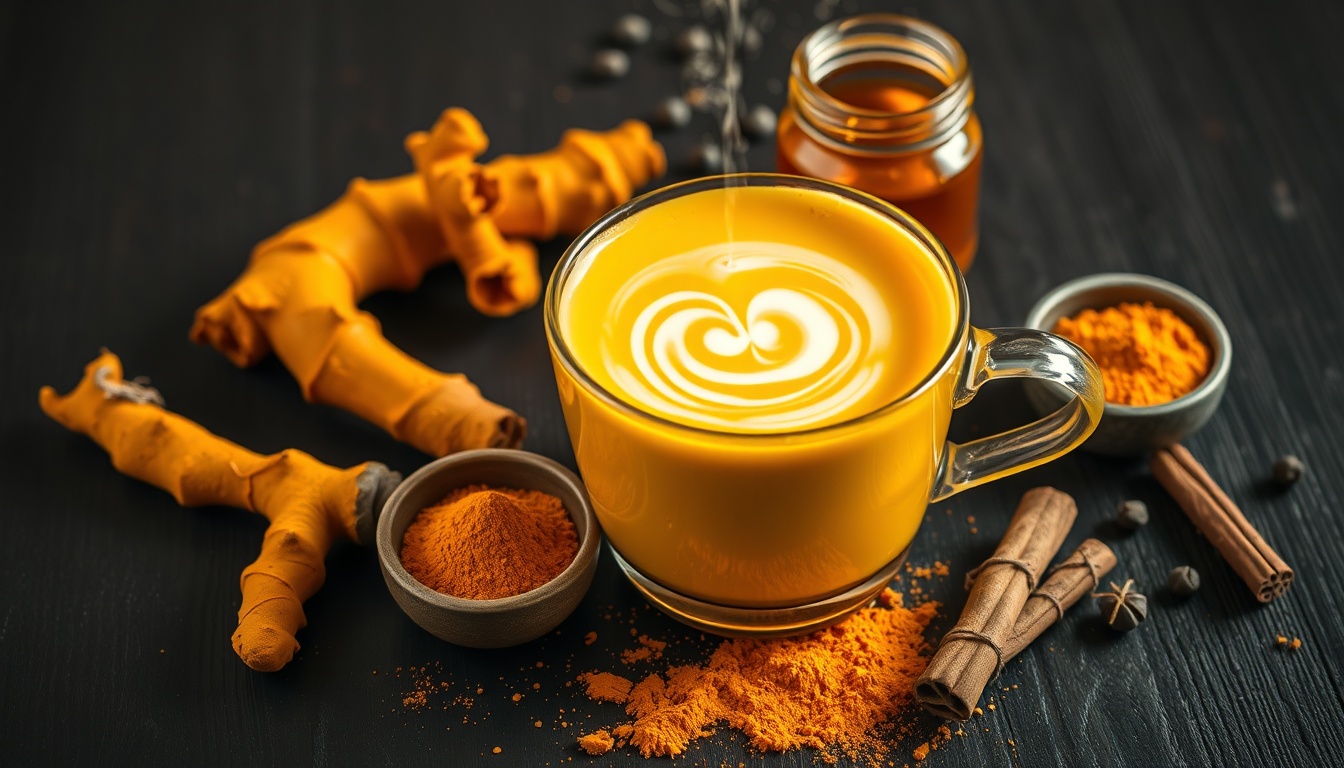
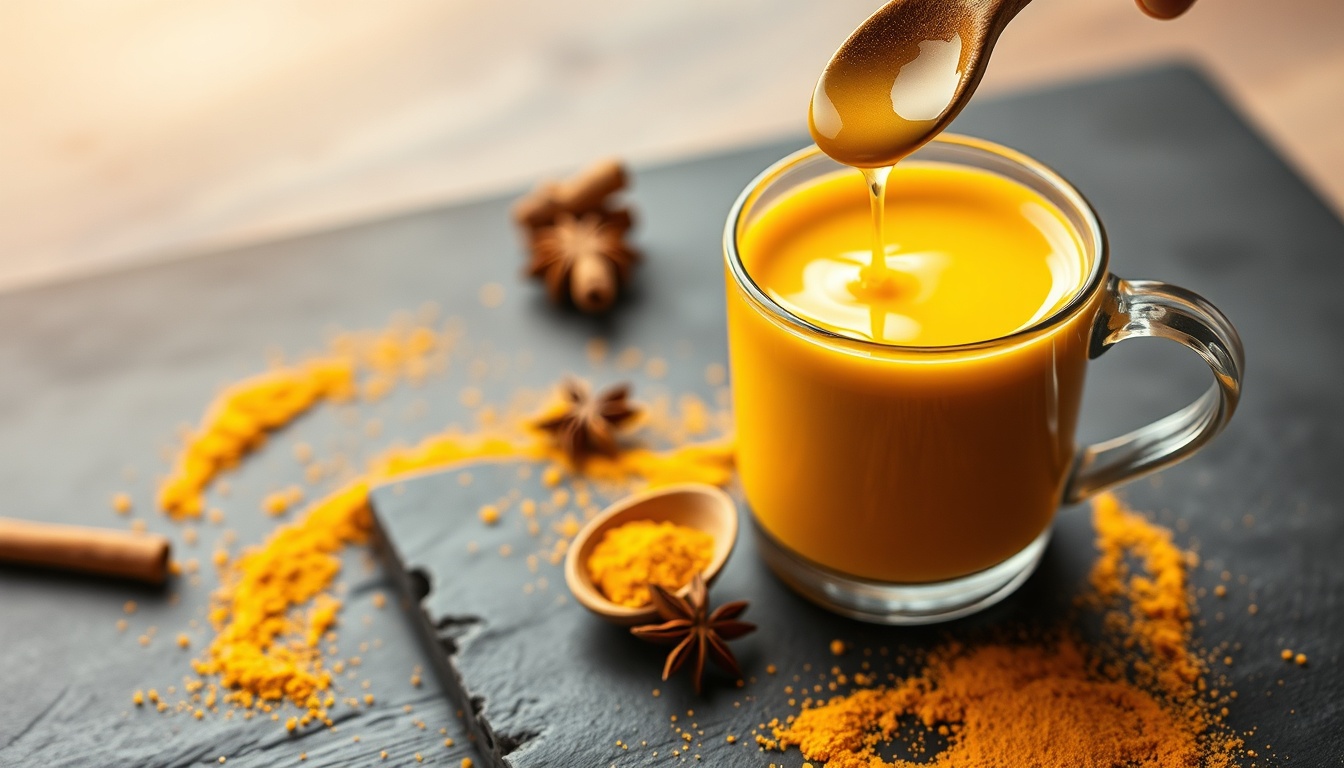
The flagship recipe. Heat 1.5 cups of whole milk (or coconut/oat milk for dairy-free) in a small saucepan over medium heat. Add 1 teaspoon ground turmeric, 1/2 teaspoon ground cinnamon, 1/4 teaspoon ground ginger, a pinch of black pepper, and 1 teaspoon coconut oil or ghee. Whisk continuously and simmer for 5 minutes — do not boil. Remove from heat, let cool to a comfortable drinking temperature (below 160°F), then stir in 1-2 tablespoons of raw honey.
Best for: daily anti-inflammatory support, evening wind-down ritual, sleep support. The combination of warm milk, honey's tryptophan-melatonin pathway, and turmeric's calming properties makes this an excellent bedtime drink.
Pro Tip
For a richer golden milk, add a cinnamon stick while simmering and use full-fat coconut milk. The higher fat content improves curcumin absorption.
2. Golden Honey Paste (Concentrated)
A concentrated preparation for therapeutic use. Mix 1/4 cup ground turmeric with 1/2 cup raw honey and 1 teaspoon freshly ground black pepper in a clean glass jar. Stir thoroughly until smooth. Store in the refrigerator for up to 2 weeks.
This paste can be taken by the spoonful, straight or dissolved in warm water or tea. For sore throat and cough, let it dissolve slowly in the mouth to coat the throat.
3. Iced Golden Honey Latte
A refreshing summer version. Prepare a concentrated turmeric base: whisk 2 teaspoons ground turmeric, 1/4 teaspoon black pepper, and 1 teaspoon coconut oil into 1/4 cup hot water until dissolved. Let cool completely. In a glass, combine the turmeric base with 1 cup cold milk of choice, 1 tablespoon raw honey, and a generous amount of ice. Stir well or shake in a jar.
Best for: summer wellness drink, post-workout anti-inflammatory recovery, or as an afternoon pick-me-up. For extra flavor, add a shot of espresso for a golden turmeric latte.
4. Honey-Turmeric Face Mask
Mix 1 tablespoon raw honey with 1/2 teaspoon ground turmeric and 1 teaspoon plain yogurt (the lactic acid provides gentle exfoliation). Apply to clean, dry skin avoiding the eye area. Leave on for 15-20 minutes, then rinse with warm water. Follow with moisturizer.
Curcumin's anti-inflammatory and antioxidant properties combined with honey's humectant and antibacterial effects may help with dull skin and uneven tone; many use it about once a week. Persistent or severe acne is best managed with a dermatologist rather than a DIY mask. Warning: turmeric will temporarily tint skin yellow — the yogurt helps minimize staining, and any remaining color fades within a few hours.
Pro Tip
Use a dedicated towel and apply the mask over the sink. Curcumin permanently stains fabric and can stain light-colored countertops.
5. Honey-Turmeric Salad Dressing
Whisk together 2 tablespoons raw honey, 3 tablespoons extra virgin olive oil, 2 tablespoons apple cider vinegar, 1 teaspoon ground turmeric, 1/2 teaspoon ground ginger, a pinch of black pepper, and a pinch of salt. The olive oil provides fat for curcumin absorption, and the ACV adds its own digestive benefits.
Best for: daily turmeric intake without changing your routine. Drizzle over mixed greens, roasted vegetables, grain bowls, or grilled chicken. Makes about 1/2 cup — enough for 4-5 salads. Store in the refrigerator for up to 1 week.
Turmeric and Honey: Food Use and Safety
Combining turmeric with honey does not establish a wellness or medical treatment.
- Turmeric in food and concentrated curcumin products are not interchangeable; use product-specific clinical guidance where relevant.
- Curcumin supplements — Concentrated extracts typically contain 500-1,000 mg curcumin per capsule. Clinical studies showing benefits for arthritis and inflammation generally used 500-2,000 mg/day of curcumin (not turmeric). If using supplements, follow label directions and discuss with your doctor, especially if you take medications.
- This comparison does not establish a recommended daily honey serving. Use the daily added-sugar guide to count honey with other added or free sugars.
- Black pepper can irritate the digestive tract and alter drug exposure; more is not inherently better.
Who Should Be Cautious
While generally safe for most adults, some groups should exercise caution with concentrated turmeric preparations.
- Blood thinner users — Curcumin has mild antiplatelet activity. If you take warfarin, heparin, or other anticoagulants, consult your doctor before taking curcumin supplements. Culinary amounts of turmeric (1-2 teaspoons/day) are generally considered safe, but discuss with your prescriber.
- Gallbladder disease — Curcumin stimulates bile production. People with gallstones or bile duct obstruction should avoid concentrated curcumin supplements, though dietary turmeric is generally tolerated.
- Pregnant and nursing women — Culinary amounts of turmeric are safe during pregnancy. However, curcumin supplements (500+ mg) should be avoided during pregnancy as high doses may stimulate uterine contractions. Honey is safe for adults during pregnancy — the botulism concern applies only to infants under 12 months.
- Iron deficiency — Curcumin can bind iron and reduce its absorption. If you have iron-deficiency anemia, take turmeric at different times than iron supplements or iron-rich meals.
- Pre-surgery patients — Stop curcumin supplements 2 weeks before scheduled surgery due to the antiplatelet effect. Inform your surgeon about any curcumin supplement use.
- Diabetics on medication — Both curcumin and honey affect blood sugar. If you take insulin or oral hypoglycemics, monitor blood glucose more closely when adding this combination to your diet. The honey adds approximately 17g of sugar per tablespoon.
Pro Tip
When in doubt, start with small culinary amounts (1/2 teaspoon turmeric + 1 teaspoon honey in golden milk) and observe how your body responds before increasing the dose.
Fresh Turmeric Root vs Ground Powder
Both forms work, but they differ in curcumin concentration, flavor, and convenience.
- Ground turmeric powder — Contains approximately 3% curcumin by weight. More concentrated than fresh, easier to dose consistently, available year-round. Best for golden milk, golden paste, and cooking. Store in a cool, dark place — curcumin degrades with light and heat exposure over time.
- Fresh turmeric root — Contains approximately 0.5-1% curcumin by weight (less concentrated due to water content). Provides a brighter, more complex flavor with citrusy notes that dried turmeric lacks. Best for juices, smoothies, and when you want a fresher flavor. Grate or thinly slice for maximum surface area. Store in the refrigerator for up to 2 weeks, or freeze grated turmeric in ice cube trays.
- Which to choose — For therapeutic purposes (targeting inflammation, joint pain), use ground turmeric or curcumin supplements for consistent dosing. For culinary enjoyment and general wellness, fresh root provides a superior flavor experience. Using both in different applications is the best approach.
How Honey and Turmeric Compares to Other Honey Combinations
Several popular honey combinations target similar health goals. Here is how they compare.
- Honey and turmeric vs honey and ginger — Ginger is better for nausea (stronger clinical evidence from the 2020 JAND meta-analysis of 12 RCTs). Turmeric is better for joint pain and chronic inflammation (more RCTs showing benefit for osteoarthritis). Both have anti-inflammatory effects but through different pathways. They can be combined — golden milk with ginger is a common variation.
- Honey and turmeric vs honey and cinnamon — Cinnamon has stronger evidence for blood sugar regulation (multiple meta-analyses showing fasting glucose reduction). Turmeric has stronger evidence for inflammation and joint health. Cinnamon is easier to dose and has no bioavailability issues. Both work well in golden milk.
- Honey and turmeric vs honey and ACV — ACV has better evidence for acute blood sugar control after meals (acetic acid slows gastric emptying). Turmeric targets chronic inflammation and long-term health markers. Different use cases — ACV for metabolic support, turmeric for inflammatory conditions.
Pro Tip
These combinations are not mutually exclusive. A morning ACV-honey drink, an afternoon golden milk with ginger, and a honey-cinnamon bedtime drink could each serve different health goals throughout the day.