Honey and Turmeric: Benefits, Golden Paste Recipe & Best Practices
Honey and turmeric — known as "golden honey" in Ayurvedic medicine — is one of the most well-studied natural anti-inflammatory combinations. From reducing joint pain and boosting immunity to soothing sore throats and supporting digestion, here is what modern science says about this powerful pairing, plus golden paste recipes, dosage tips, and which varieties to choose.
Last updated:
Honey and turmeric (golden honey) is a time-tested Ayurvedic remedy backed by modern clinical research. Curcumin, turmeric's key compound, is a potent anti-inflammatory that matched ibuprofen for joint pain in clinical trials. Honey improves curcumin's poor bioavailability, adds antimicrobial properties, and makes turmeric palatable. Make golden paste by mixing 1/4 cup raw honey with 1 tablespoon turmeric and 1/4 teaspoon black pepper. Always include black pepper — piperine boosts curcumin absorption by up to 2,000%.
Why Do Honey and Turmeric Work So Well Together?
Honey and turmeric have been combined for millennia in Ayurvedic medicine, where the mixture is known as "golden honey" or Madhu Haridra — considered one of the most powerful natural remedies in the tradition. Traditional Chinese Medicine also pairs the two ingredients, and the combination appears in Indonesian jamu healing drinks dating back centuries. The synergy works because turmeric's primary bioactive compound, curcumin, has notoriously poor bioavailability — only about 1% is absorbed when consumed alone, according to a 2017 review in the Journal of Medicinal Chemistry. Honey helps solve this problem in two ways: its natural sugars and organic acids create a mildly acidic environment that stabilizes curcumin in the digestive tract, and honey's fructose content slows gastric emptying, extending turmeric's contact time with the intestinal lining where absorption occurs. A 2019 study in Food Chemistry found that honey-curcumin formulations showed significantly improved stability compared to curcumin in water. Black pepper's piperine further boosts curcumin absorption by up to 2,000% (Planta Medica, 1998), which is why many golden honey recipes include a pinch of black pepper. Beyond absorption, the combination offers complementary mechanisms: curcumin is a potent anti-inflammatory that inhibits NF-κB, COX-2, and LOX pathways, while honey contributes its own antimicrobial and antioxidant compounds — hydrogen peroxide from glucose oxidase, flavonoids, and phenolic acids. Together, the ORAC antioxidant value of the combination exceeds either ingredient alone.
Key Takeaways
- Known as "golden honey" (Madhu Haridra) in Ayurveda — used for thousands of years
- Curcumin has only ~1% bioavailability alone; honey improves stability and absorption
- Honey's fructose slows gastric emptying, extending curcumin contact with intestinal lining
- Black pepper's piperine boosts curcumin absorption by up to 2,000%
- Curcumin inhibits NF-κB, COX-2, and LOX inflammatory pathways
- Combined antioxidant value exceeds either ingredient consumed separately
What Are the Evidence-Based Health Benefits of Honey and Turmeric?
The health benefits of honey and turmeric are supported by extensive clinical research on both ingredients individually, with growing evidence for their combined effects. For inflammation and joint health, a landmark 2014 randomized controlled trial in Clinical Interventions in Aging found that curcumin (1,500 mg/day) was as effective as ibuprofen for knee osteoarthritis pain with fewer gastrointestinal side effects. A 2016 meta-analysis in the Journal of Medicinal Food analyzing 8 RCTs confirmed curcumin significantly reduces markers of inflammation including CRP, IL-6, and TNF-α. Honey contributes additional anti-inflammatory activity through its flavonoids — chrysin, quercetin, and kaempferol. For immune support, curcumin modulates the immune system by enhancing antibody responses and T-cell activity, while honey's oligosaccharides serve as prebiotics that support the 70-80% of immune cells residing in gut-associated lymphoid tissue. A 2020 study in Nutrients found curcumin improved immune cell function in healthy older adults. For digestive health, curcumin stimulates bile production and has been shown in a 2004 Journal of Alternative and Complementary Medicine RCT to reduce bloating and gas by 60% in patients with dyspepsia. Honey soothes the digestive lining and provides easily digestible energy. For respiratory health, a 2021 meta-analysis in Phytotherapy Research found curcumin supplementation improved lung function markers in patients with respiratory conditions, while honey was shown superior to usual care for upper respiratory infections in a 2020 BMJ Evidence-Based Medicine review. For skin health, both ingredients have wound-healing and antimicrobial properties — turmeric paste is traditionally applied to wounds in South Asian cultures, and a 2016 Phytotherapy Research review found curcumin accelerated wound healing by modulating collagen synthesis.
Key Takeaways
- Joint pain: curcumin matched ibuprofen for knee osteoarthritis with fewer side effects (2014 RCT)
- Inflammation: curcumin significantly reduces CRP, IL-6, and TNF-α across 8 RCTs
- Immune support: curcumin enhances T-cell and antibody responses; honey prebiotics feed gut immunity
- Digestion: curcumin reduced bloating/gas by 60% in dyspepsia patients (2004 RCT)
- Respiratory: curcumin improved lung function markers; honey outperforms usual care for URIs
- Skin health: curcumin accelerates wound healing by modulating collagen synthesis
How Do You Make Golden Honey Paste, Tea, and Other Recipes?
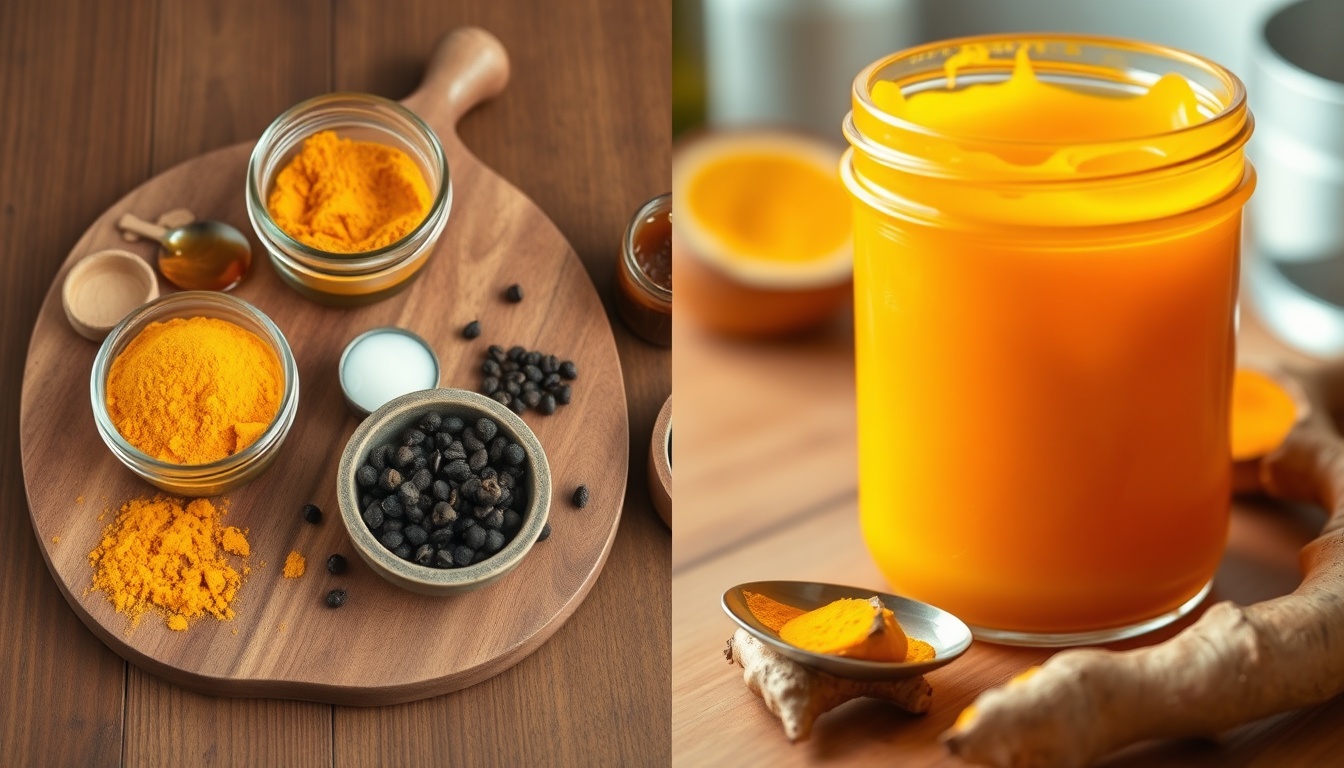
The classic golden honey paste is the most popular preparation. Mix 1/4 cup of raw honey ([wildflower honey](/honey/wildflower-honey) for everyday use with balanced antioxidants, [buckwheat honey](/honey/buckwheat-honey) for maximum anti-inflammatory power, or [clover honey](/honey/clover-honey) for mild, child-friendly preparations) with 1 tablespoon of ground turmeric and 1/4 teaspoon of freshly ground black pepper (for piperine absorption boost). Stir until smooth and store in a small glass jar in the refrigerator — the paste keeps for up to 2 weeks. For a stronger medicinal version, add 1/4 teaspoon of ground ginger and a pinch of Ceylon cinnamon. For golden milk (turmeric latte), warm 1 cup of milk or plant-based alternative (coconut milk works especially well with its healthy fats, which further improve curcumin absorption), whisk in 1 teaspoon of golden honey paste made with [clover honey](/honey/clover-honey) for creamy sweetness or [wildflower honey](/honey/wildflower-honey) for complex flavor depth, and heat gently without boiling. Never heat the honey above 140°F (60°C) to preserve its beneficial enzymes including diastase and glucose oxidase. For golden honey tea, steep 1/2 teaspoon of fresh grated turmeric root (or 1/4 teaspoon powder) in hot water for 5 to 10 minutes, let cool to a drinkable temperature, then stir in 1 tablespoon of [wildflower honey](/honey/wildflower-honey) for balanced flavor or [orange blossom honey](/honey/orange-blossom-honey) for citrus enhancement, plus a squeeze of lemon. For a golden honey face mask, combine 1 tablespoon of [wildflower honey](/honey/wildflower-honey) or [acacia honey](/honey/acacia-honey) (both gentle on sensitive skin) with 1/2 teaspoon of turmeric powder — apply for 15 to 20 minutes, rinse with warm water. Note that turmeric will temporarily stain skin yellow; adding a few drops of lemon juice helps reduce staining. For a variation using [Manuka honey](/honey/new-zealand-manuka-umf-15) (UMF 10+) in your golden paste, let 1 teaspoon dissolve slowly on the tongue. For smoothies, blend 1 teaspoon of golden honey paste made with [wildflower honey](/honey/wildflower-honey) or [clover honey](/honey/clover-honey) with banana, mango, coconut milk, and a pinch of black pepper for a tropical golden smoothie.
Key Takeaways
- Golden paste: 1/4 cup [wildflower honey](/honey/wildflower-honey) (everyday), [buckwheat](/honey/buckwheat-honey) (max antioxidants), or [clover honey](/honey/clover-honey) (mild) + 1 tbsp turmeric + 1/4 tsp black pepper
- Golden milk: [clover](/honey/clover-honey) or [wildflower honey](/honey/wildflower-honey) + warm coconut milk for enhanced curcumin absorption
- Manuka variation: [Manuka honey](/honey/new-zealand-manuka-umf-15) UMF 10+ paste, let dissolve slowly on the tongue
- Tea: [wildflower honey](/honey/wildflower-honey) for balance, [orange blossom honey](/honey/orange-blossom-honey) for citrus enhancement
- Face mask: [wildflower](/honey/wildflower-honey) or [acacia honey](/honey/acacia-honey) for sensitive skin applications
- Add black pepper to every recipe — piperine increases curcumin absorption by up to 2,000%
When Is the Best Time to Take Honey and Turmeric?
Timing preferences vary by why you're using it. Many people take golden honey paste or tea in the morning with or after breakfast for general wellness — consuming turmeric alongside healthy fats (coconut oil, olive oil, avocado, or nuts) improves curcumin absorption, since curcumin is fat-soluble. For joint pain and inflammation, consistency matters more than timing, as curcumin's anti-inflammatory benefits are believed to be cumulative rather than immediate. Talk to your doctor about whether golden honey or curcumin supplements make sense as part of your overall approach to joint pain, digestive discomfort, or sleep. Some people let golden paste dissolve slowly on the tongue for a sore throat, use a golden honey face mask as part of a skincare routine, or take golden milk before bed as a wind-down ritual — combining honey's tryptophan with curcumin, which a 2015 study in Phytotherapy Research linked to improved sleep quality scores in patients with chronic conditions.
Key Takeaways
- Morning with breakfast: best for general anti-inflammatory and immune support
- With healthy fats (coconut oil, avocado, nuts): curcumin is fat-soluble, absorption improves
- Before meals: curcumin stimulates bile production for digestive support
- For joint pain: consistency matters more than timing — talk to your doctor about whether golden honey fits your approach
- During illness: some people let a teaspoon dissolve slowly on the tongue
- Before bed: golden milk supports sleep via tryptophan and anti-inflammatory effects
Which Honey and Turmeric Types Should You Choose?
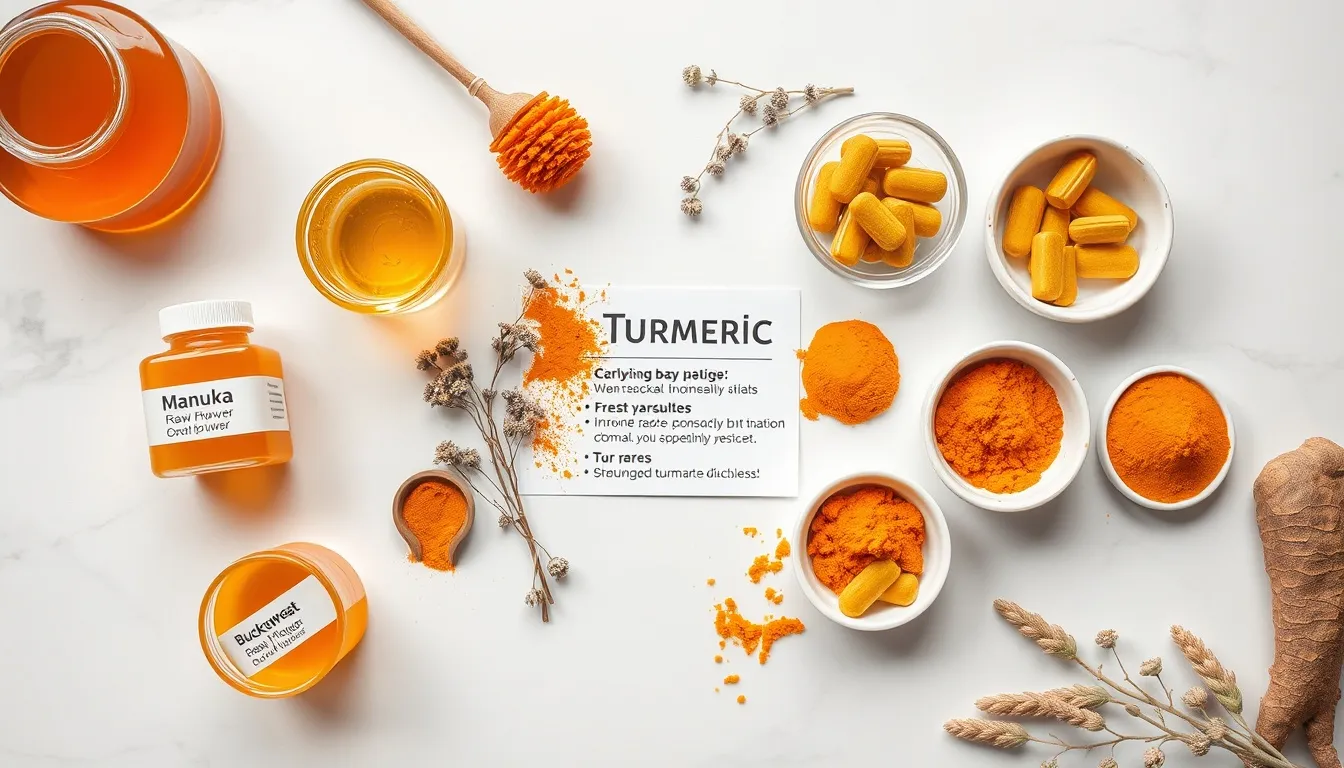
The quality of both ingredients significantly affects therapeutic value. For honey, always choose raw and unfiltered varieties — pasteurization destroys the enzymes (diastase, glucose oxidase), reduces antioxidant content by up to 30%, and strips out beneficial pollen. [Wildflower honey](/honey/wildflower-honey) is the best everyday choice for golden honey preparations: it offers a balanced antioxidant profile from diverse floral sources, pleasant flavor that complements turmeric's earthy bitterness, and is widely available at reasonable prices. For maximum antimicrobial activity (particularly for sore throats), [Manuka honey](/honey/new-zealand-manuka-umf-15) (UMF 10+ or MGO 263+) provides the strongest antibacterial effect thanks to its high methylglyoxal content, though its distinctly medicinal flavor and higher cost ($30-60 per jar) may not suit daily use. [Buckwheat honey](/honey/buckwheat-honey), with the highest antioxidant content of common varieties (up to 9× higher ORAC values than [clover honey](/honey/clover-honey)), pairs exceptionally well with turmeric's bold flavor profile and maximizes the combined anti-inflammatory potential. [Clover honey](/honey/clover-honey) offers gentle, mild sweetness ideal for children and golden honey beginners who find turmeric's bitterness challenging. [Orange blossom honey](/honey/orange-blossom-honey) provides citrus-floral enhancement that brightens the earthy turmeric flavor, while [acacia honey](/honey/acacia-honey) offers neutral sweetness that allows turmeric's medicinal properties to dominate the flavor profile. For turmeric, fresh turmeric root contains about 3% curcumin by weight and offers the fullest spectrum of beneficial compounds including turmerone, an essential oil with neuroprotective properties studied in Stem Cell Research & Therapy (2014). Choose firm, bright orange roots with smooth skin — wrinkled or dried roots are past their prime. Ground turmeric powder (standardized to 3-5% curcuminoids) is more concentrated and convenient for golden paste; look for organic certification to avoid pesticide residues and lead contamination, which has been documented in turmeric powder from some regions. For supplement-level doses, standardized curcumin extracts (95% curcuminoids) provide the dosages used in clinical trials — but for daily culinary use, whole turmeric powder is preferred because it contains the full matrix of beneficial compounds. Always pair turmeric with black pepper (piperine) and a source of fat for maximum absorption.
Key Takeaways
- Raw, unfiltered honey preserves enzymes and antioxidants destroyed by pasteurization
- [Wildflower honey](/honey/wildflower-honey): best everyday choice — balanced flavor from diverse floral sources that complements turmeric
- [Manuka UMF 10+](/honey/new-zealand-manuka-umf-15): strongest antibacterial activity for sore throat preparations
- [Buckwheat honey](/honey/buckwheat-honey): 9× higher antioxidants than [clover honey](/honey/clover-honey), maximizes anti-inflammatory potential
- [Clover honey](/honey/clover-honey): gentle, mild option for children and turmeric beginners
- [Orange blossom honey](/honey/orange-blossom-honey): citrus enhancement; [acacia honey](/honey/acacia-honey): neutral base for turmeric-dominant preparations
- Fresh turmeric root: ~3% curcumin, contains turmerone oils not found in powder
- Always pair with black pepper (piperine) and healthy fats for maximum curcumin absorption
What Are the Safety Precautions for Honey and Turmeric?
While honey and turmeric is safe for most adults at culinary doses, several important precautions apply. The most critical rule: never give honey to infants under 12 months due to the risk of infant botulism from Clostridium botulinum spores. For children over age 1, talk to a pediatrician before giving them golden honey preparations. Turmeric has blood-thinning properties — curcumin inhibits platelet aggregation and thromboxane A2 synthesis. People taking anticoagulant medications (warfarin, heparin, aspirin, or clopidogrel) should consult their doctor before taking more than culinary amounts of turmeric. Tell your doctor or surgeon about any turmeric or curcumin supplements before a scheduled surgery. Turmeric stimulates bile flow (cholagogue effect), so people with gallstones or bile duct obstruction should avoid concentrated turmeric preparations, as increased bile production could trigger gallbladder attacks. For people with iron deficiency, high doses of turmeric may inhibit iron absorption — take turmeric and iron supplements at separate times. Turmeric may lower blood sugar levels. People with diabetes should talk to their doctor before adding regular turmeric consumption to their routine. Pregnant women should talk to their doctor before taking concentrated turmeric or curcumin supplements. Turmeric may interact with certain medications. Talk to your doctor or pharmacist before adding regular turmeric or curcumin supplements if you take prescription medication. A 2022 review in Frontiers in Pharmacology also noted rare cases of liver injury with high-dose curcumin supplements (over 2,000 mg/day for extended periods). Finally, protect tooth enamel: honey is acidic (pH 3.2-4.5), so rinse with water after consuming and wait 30 minutes before brushing. Turmeric stains teeth yellow — drinking golden milk through a straw can help.
Key Takeaways
- NEVER give honey to infants under 12 months — risk of infant botulism
- Blood thinners: turmeric inhibits platelet aggregation — consult doctor if on anticoagulants
- Tell your doctor or surgeon about turmeric supplements before any scheduled surgery
- Gallstones: turmeric stimulates bile flow, which may trigger gallbladder symptoms
- Pregnancy: talk to your doctor before taking concentrated curcumin supplements
- Tooth enamel and staining: rinse mouth after consuming, use a straw for golden milk
Frequently Asked Questions
What are the benefits of honey and turmeric?
Honey and turmeric (golden honey) provides powerful anti-inflammatory support — curcumin matched ibuprofen for knee osteoarthritis pain in a 2014 RCT. The combination also supports immune function, aids digestion (60% bloating reduction in studies), promotes respiratory health, and offers antimicrobial properties for sore throats and wound healing.
How do you make golden honey paste?
Mix 1/4 cup raw honey with 1 tablespoon ground turmeric and 1/4 teaspoon freshly ground black pepper. Store in a glass jar in the refrigerator for up to 2 weeks. The black pepper is essential — its piperine increases curcumin absorption by up to 2,000%.
Can you take honey and turmeric every day?
Yes, daily consumption at culinary doses is safe for most adults. People on blood thinners, pregnant women, and those with gallstones should consult their doctor before adding concentrated golden honey preparations to their routine.
What is golden milk and how do you make it?
Golden milk (turmeric latte) is warm milk mixed with golden honey paste. Heat 1 cup of milk or plant-based alternative (coconut milk is ideal — its fats boost curcumin absorption), whisk in 1 teaspoon of golden honey paste, and heat gently without boiling. Never heat above 140°F to preserve honey's enzymes.
Does turmeric with honey really reduce inflammation?
Yes. A 2016 meta-analysis of 8 randomized controlled trials confirmed curcumin significantly reduces inflammatory markers CRP, IL-6, and TNF-α. Honey contributes additional anti-inflammatory flavonoids. Together with black pepper (which boosts curcumin absorption by 2,000%), this is one of the most well-studied natural anti-inflammatory combinations.
Which honey is best for turmeric golden paste?
[Wildflower honey](/honey/wildflower-honey) is the best everyday choice — its balanced antioxidant profile from diverse floral sources complements turmeric's earthy bitterness and retains all beneficial enzymes. For maximum therapeutic power, [buckwheat honey](/honey/buckwheat-honey) provides 9× higher antioxidants than [clover honey](/honey/clover-honey), amplifying the anti-inflammatory benefits. For sore throats, [Manuka honey](/honey/new-zealand-manuka-umf-15) (UMF 10+) provides the strongest antibacterial activity. [Clover honey](/honey/clover-honey) offers gentle sweetness perfect for children, while [orange blossom honey](/honey/orange-blossom-honey) adds citrus brightness. Always use raw, unfiltered honey, as pasteurization destroys key enzymes and reduces antioxidants by up to 30%.
Can I use clover honey for golden milk instead of expensive Manuka?
Absolutely! [Clover honey](/honey/clover-honey) works excellently for golden milk — its mild, reliable sweetness pairs beautifully with coconut milk and turmeric without overpowering the drink. While [Manuka honey](/honey/new-zealand-manuka-umf-15) offers superior antimicrobial properties for acute sore throats, [clover honey](/honey/clover-honey) provides consistent anti-inflammatory benefits at a fraction of the cost. For daily golden milk consumption, [wildflower honey](/honey/wildflower-honey) offers the best balance of diverse antioxidants and pleasant flavor complexity, while [buckwheat honey](/honey/buckwheat-honey) maximizes antioxidant density if you can handle its bold, malty taste.
Edited by Sam French · Raw Honey Guide Editorial Team
Source reviewed against primary literature and official guidance where available. Health content is educational, not medical advice, and does not replace a licensed clinician.
Get the Honey Buyer's Cheat Sheet (free PDF)
16 varieties on one page — color, flavor, best use and what a fair price looks like — from the 268 honeys we track.
Related Guides
Honey and Ginger
Benefits, recipes, and anti-inflammatory properties.
Read GuideHoney & Cinnamon Benefits
What science says about this combination.
Read GuideHealth Benefits
Nutritional and therapeutic benefits of honey.
Read GuideRelated Articles
Honey and Turmeric: Benefits, Golden Milk Recipe, and What Science Says
Honey and turmeric benefits for inflammation, joints, and immunity. Classic golden milk recipe plus 4 more combinations.
Read ArticleHoney for Inflammation: What the Science Actually Shows
Can honey reduce inflammation? Clinical evidence on polyphenols, NF-kB inhibition, and which honey types work best.
Read ArticleHoney for Joint Pain and Arthritis: What the Research Shows
Can honey help arthritis and joint pain? Evidence on anti-inflammatory mechanisms, osteoarthritis studies, and usage tips.
Read ArticleReady to find the perfect honey for your golden paste?