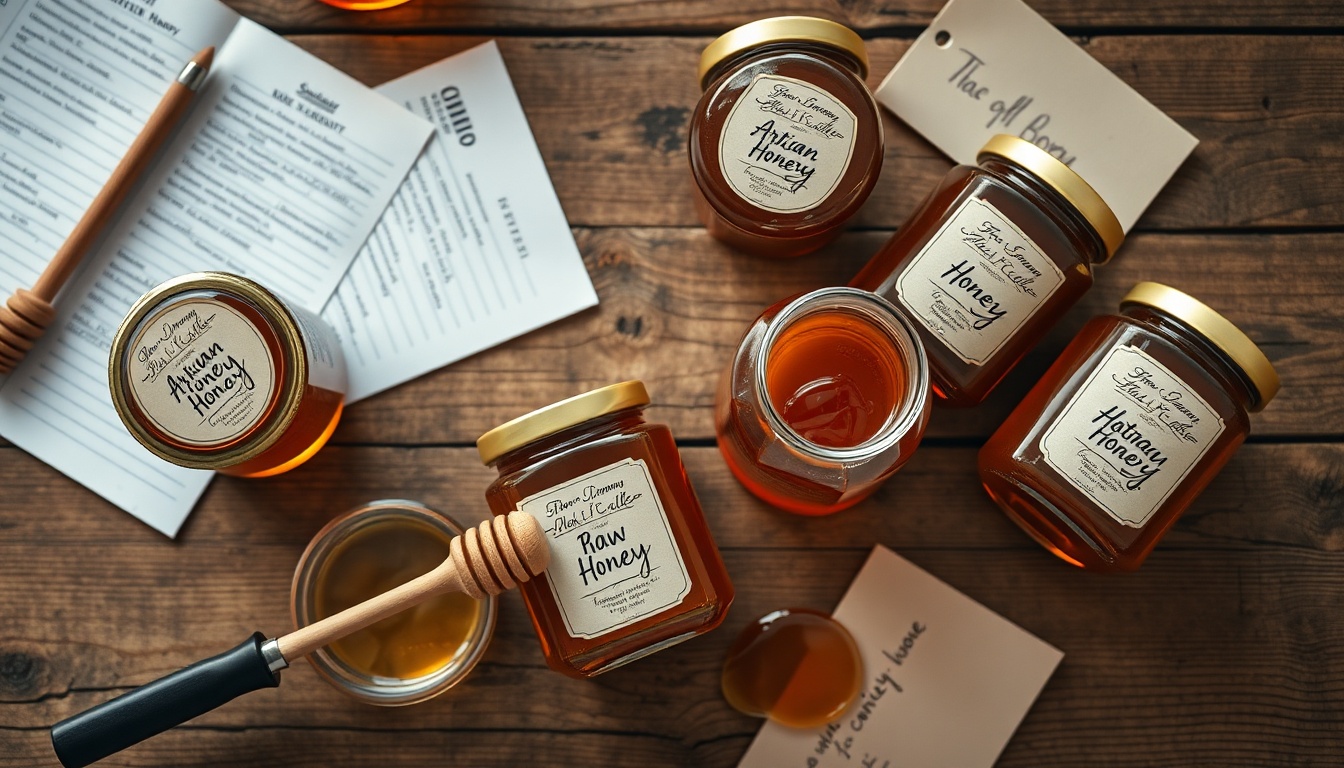
Why Honey Is One of the Best Natural Cold Remedies
When a cold or flu hits, honey is one of the few home remedies with genuine clinical evidence behind it. A landmark 2020 BMJ Evidence-Based Medicine systematic review and meta-analysis of 14 studies found that honey was superior to usual care for improving upper respiratory tract infection (URI) symptoms — particularly cough frequency, cough severity, and overall illness duration.
This wasn't a minor finding. The researchers concluded that honey should be recommended as an alternative to antibiotics for upper respiratory infections, which are predominantly viral and don't respond to antibiotics anyway. Given that antibiotic overprescription for colds and flu drives antimicrobial resistance, honey represents both an effective and responsible choice.
But honey doesn't just suppress coughs. It works through multiple mechanisms that address different cold and flu symptoms simultaneously — sore throat pain, inflammation, congestion, sleep disruption, and immune function. Understanding how each mechanism works helps you use honey more effectively when illness strikes.
How Honey Fights Cold and Flu Symptoms: 6 Mechanisms
**1. Cough Suppression** — Honey's thick, viscous texture coats the throat and stimulates saliva production, which triggers a swallowing reflex that suppresses the cough reflex. A 2007 Archives of Pediatrics & Adolescent Medicine study of 105 children found that buckwheat honey outperformed dextromethorphan (the active ingredient in most OTC cough medicines) for reducing nighttime cough frequency and severity. The 2020 BMJ Evidence-Based Medicine meta-analysis confirmed this finding across multiple studies.
**2. Sore Throat Relief** — Honey's high osmolarity (sugar concentration) draws moisture from inflamed tissue, reducing swelling. Simultaneously, its slightly acidic pH (3.2-4.5) creates an inhospitable environment for bacterial colonization of the already irritated throat. This dual action — physical coating plus antimicrobial protection — explains why honey provides longer-lasting sore throat relief than many medicated lozenges.
**3. Antimicrobial Defense** — While colds and flu are viral (and honey doesn't kill viruses directly), secondary bacterial infections of the throat, sinuses, and chest are common complications. Honey's hydrogen peroxide production, low pH, and high osmolarity inhibit bacteria including Streptococcus, Staphylococcus, and Haemophilus influenzae — the organisms most commonly responsible for secondary infections during a cold.
**4. Anti-Inflammatory Action** — Cold and flu symptoms are largely driven by your own immune system's inflammatory response, not by the virus itself. Honey's polyphenols (chrysin, pinocembrin, quercetin) inhibit the NF-κB inflammatory pathway and suppress pro-inflammatory cytokines including TNF-α, IL-1β, and IL-6. This helps reduce the excessive inflammation behind congestion, sinus pressure, headache, and body aches.
**5. Immune System Support** — Honey's prebiotic oligosaccharides (FOS and GOS) feed beneficial gut bacteria that produce short-chain fatty acids (SCFAs) including butyrate. Since approximately 70% of your immune system resides in gut-associated lymphoid tissue (GALT), this prebiotic support helps maintain the immune response needed to fight viral infections. The polyphenols also modulate immune cell activity, enhancing pathogen clearance without worsening inflammatory symptoms.
**6. Sleep Quality Protection** — Colds and flu dramatically disrupt sleep, which in turn impairs immune function and delays recovery. Honey addresses this in two ways: by suppressing nighttime cough (the primary sleep disruptor during illness) and by promoting natural melatonin production via the tryptophan-serotonin-melatonin pathway. The 2007 pediatric study specifically measured sleep quality and found honey significantly improved both child and parent sleep during illness.
Get the Honey Buyer's Cheat Sheet (free PDF)
16 varieties on one page — color, flavor, best use and what a fair price looks like — from the 268 honeys we track.
What the Research Actually Shows
The clinical evidence for honey as a cold and flu remedy is stronger than for most over-the-counter options:
**2020 BMJ Evidence-Based Medicine meta-analysis** — Analyzed 14 studies with 1,761 participants. Found honey superior to usual care for cough frequency (SMD -0.36), cough severity (SMD -0.44), and combined symptom scores. The researchers explicitly recommended honey as a "suitable alternative" to antibiotics for URIs.
**2007 Archives of Pediatrics study** — 105 children ages 2-18 with URIs. Buckwheat honey outperformed dextromethorphan for cough frequency, cough severity, bothersome nature of cough, and child/parent sleep quality. The dose was a single 2.5-10ml serving (age-dependent) before bed.
**2012 Pediatrics study** — 300 children ages 1-5 with URIs. Three honey types (eucalyptus, citrus, labiatae) all significantly reduced cough frequency and severity compared to placebo (silan date extract). Effects were observed after just one night of treatment.
**2014 Nigerian Journal of Clinical Practice study** — Honey-lemon combination significantly reduced cough severity and duration in children with acute URIs compared to standard care alone.
**2010 Journal of Alternative and Complementary Medicine** — Honey-based cough syrup (with herbal extracts) reduced cough severity as effectively as dextromethorphan and diphenhydramine in children with URIs.
Important context: most studies focus on cough — the symptom with the strongest evidence. Evidence for other cold/flu symptoms (congestion, body aches, fever) is more limited, though the anti-inflammatory mechanisms are biologically plausible.
Pro Tip
Honey and lemon in hot water is a traditional remedy some people use for cough and cold symptoms; talk to your doctor about what is appropriate for a persistent cough.
Best Honey Types for Colds and Flu
Not all honeys are equally effective for cold and flu symptoms. Here's how the main options compare:
**Buckwheat honey ($15-25/lb)** — The gold standard for cough suppression based on clinical trials. Its exceptionally high antioxidant content (ORAC 16,000+, 3-9x higher than lighter honeys) and thick viscosity make it particularly effective for coating irritated throats. Dark, bold flavor with strong molasses notes.
**Manuka honey (UMF 10+, $35-60+/lb)** — Best for preventing secondary bacterial infections due to its unique methylglyoxal (MGO) antibacterial activity. A 2008 University of Ottawa study showed manuka honey destroyed bacterial biofilms relevant to sinus infections — a common cold complication. More expensive but worthwhile if you're prone to sinus or chest infections after colds.
**Wildflower honey ($10-18/lb)** — A practical, widely available option with diverse antioxidant profiles from multiple nectar sources. The broad-spectrum polyphenol content provides good anti-inflammatory support. Best value for daily use during illness.
**Clover honey ($8-15/lb)** — The most accessible raw honey in the US. Milder flavor makes it easiest to take by the spoonful or mix into drinks. Good all-around choice, especially for children who may resist stronger-tasting honeys.
**Acacia honey ($12-20/lb, GI ~32)** — Mildest flavor and slowest to crystallize, making it ideal for mixing into warm drinks. Lowest glycemic index of common varieties. Lower antioxidant content than darker honeys but still effective for cough suppression and throat coating.
Pro Tip
Whatever type you choose, make sure it's raw and unprocessed. Pasteurized (commercial, clear) honey has reduced enzyme activity and lower polyphenol content — the very compounds responsible for honey's therapeutic effects.
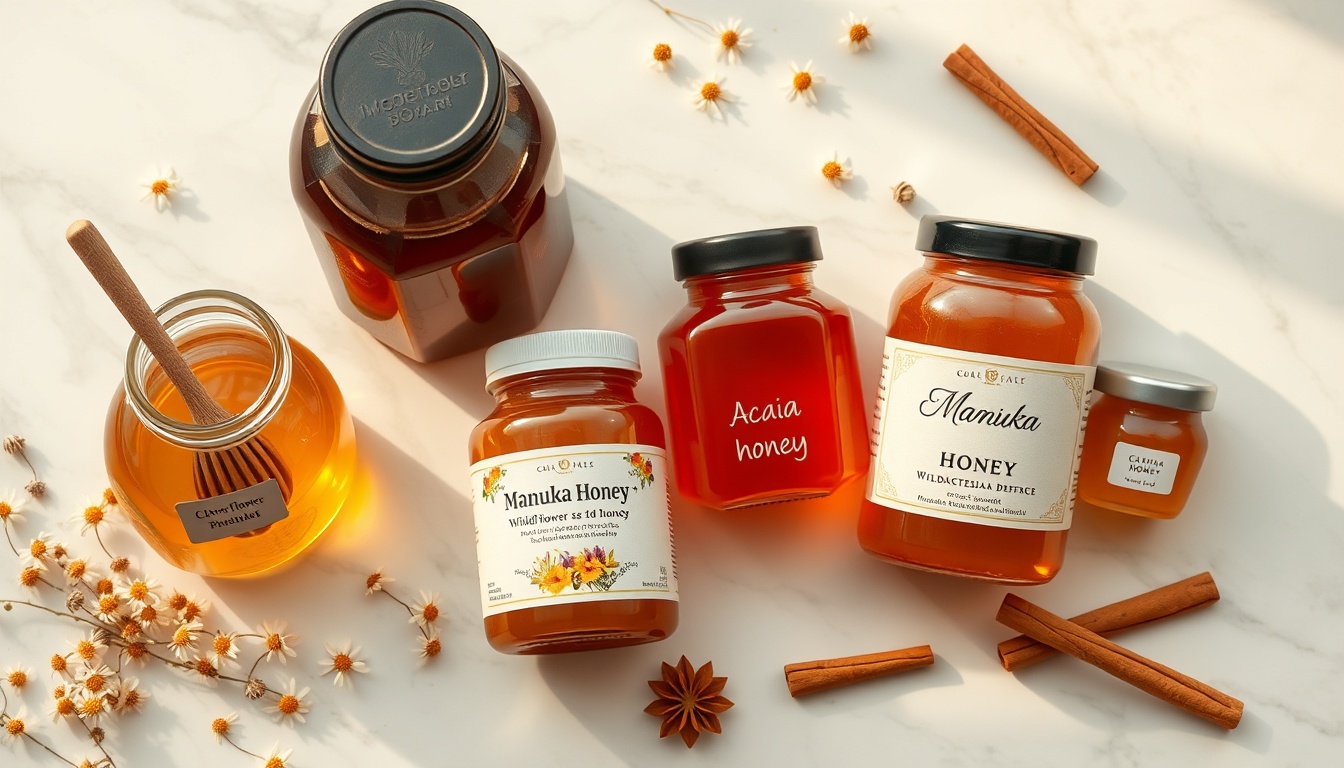
5 Honey Remedies for Cold and Flu
These evidence-informed recipes combine honey with other ingredients that complement its cold-fighting properties:
**1. Classic Honey-Lemon Hot Drink** — Mix 1-2 tablespoons raw honey into warm (not boiling) water with the juice of half a lemon. The vitamin C from lemon supports immune function while the warm liquid helps thin mucus. Many drink this several times a day during a cold.
**2. Honey-Ginger Immune Tea** — Steep 1 inch of fresh sliced ginger in hot water for 5-10 minutes. Cool slightly, then stir in 1-2 tablespoons honey. Ginger's gingerol compounds have anti-inflammatory and mild antiviral properties, while also settling nausea — common with flu.
**3. Honey-Cinnamon Throat Soother** — Mix 1 tablespoon honey with 1/4 teaspoon Ceylon cinnamon in warm water. Cinnamon's cinnamaldehyde has antimicrobial properties and may help with respiratory inflammation. Some take this before bed for nighttime cough relief.
**4. Honey-Turmeric Golden Milk** — Warm 1 cup milk (dairy or plant-based) with 1/2 teaspoon turmeric, a pinch of black pepper (for curcumin bioavailability), and 1 tablespoon honey. Turmeric's curcumin is a potent NF-κB inhibitor that complements honey's anti-inflammatory action. The milk provides tryptophan for sleep support.
**5. Honey-Garlic Immune Shot** — Crush 1-2 garlic cloves (let sit 10 minutes for allicin activation), mix with 1 tablespoon raw honey and a squeeze of lemon. Take as a shot. Garlic's allicin has broad-spectrum antimicrobial activity, and a 2001 Advances in Therapy RCT showed garlic supplementation reduced cold frequency by 63% and duration by 70%.
Pro Tip
Always add honey to warm — not boiling — liquids. Temperatures above 60°C (140°F) degrade honey's beneficial enzymes (glucose oxidase, diastase) and reduce its antibacterial activity.
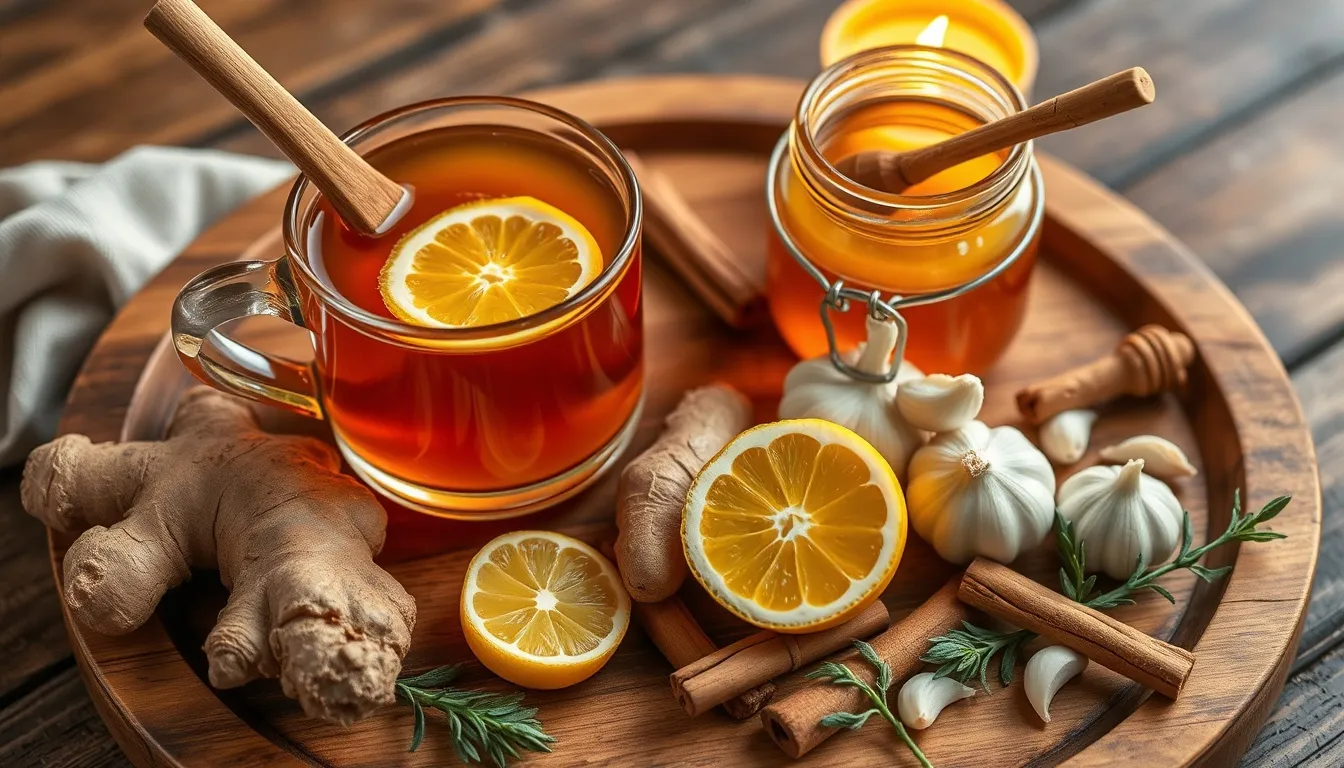
How to Take Honey When You're Sick: What to Know
The right amount depends on your age, the specific symptom you're targeting, and how you're consuming the honey:
**Adults (18+):** Raw honey can be taken directly or in warm liquid for throat coating and cough suppression, as needed during the day or before bed for nighttime cough. There is no single required amount or schedule, and this section does not set a universal or medical honey dose for this purpose — use the daily added-sugar guide for general context on how much added sugar is reasonable.
**Children (2-18):** Clinical studies used age-adjusted amounts, generally smaller for younger children. Ask your pediatrician about an appropriate amount for your child's age. Some parents give it before bed for nighttime cough.
**Children (1-2):** Consult your pediatrician before giving honey for illness at this age.
**Infants under 12 months:** NEVER give honey to infants under 12 months. Honey can contain Clostridium botulinum spores that cause infant botulism — a potentially life-threatening condition. This applies to all types of honey including pasteurized, raw, manuka, and honey in baked goods.
Pro Tip
For the best throat-coating effect, take honey straight on a spoon and let it slowly coat the back of your throat before swallowing — don't just gulp it down quickly.
Honey vs OTC Cold and Flu Medications
How does honey compare to what you'd find in the pharmacy aisle?
**Honey vs dextromethorphan (DM):** Clinical studies show honey is at least as effective as DM for cough suppression, with buckwheat honey outperforming it in the 2007 pediatric trial. DM has side effects (drowsiness, dizziness, nausea) that honey lacks. The American Academy of Pediatrics notes that DM has limited evidence of efficacy in children.
**Honey vs diphenhydramine (Benadryl):** One study found honey equally effective for cough. Diphenhydramine causes significant drowsiness and has anticholinergic effects that can actually thicken mucus — counterproductive during a cold.
**Honey vs acetaminophen/ibuprofen:** Honey doesn't replace pain relievers for fever and body aches. Use both — honey for cough/throat, acetaminophen or ibuprofen for fever and pain. They work through different mechanisms and don't interact.
**Honey vs decongestants (pseudoephedrine):** Honey doesn't directly relieve nasal congestion. For stuffiness, you can combine honey remedies with steam inhalation or saline rinses. Honey's anti-inflammatory effects may reduce sinus swelling over time.
**Honey vs antibiotics:** Antibiotics don't work on colds or flu (which are viral). The 2020 BMJ Evidence-Based Medicine review explicitly positions honey as a preferable alternative to inappropriately prescribed antibiotics for URIs. If you develop a secondary bacterial infection (persistent high fever, green/yellow discharge lasting 10+ days), see a doctor.
**Honey vs zinc lozenges:** Both have evidence for reducing cold duration, and they work through different mechanisms. You can use both together.
When to See a Doctor Instead
Honey is appropriate for mild to moderate cold and flu symptoms, but some situations require medical attention:
- Fever above 103°F (39.4°C) in adults, or any fever in infants under 3 months
- Symptoms worsening after 7-10 days or returning after initial improvement (suggests secondary infection)
- Difficulty breathing, shortness of breath, or persistent chest pain
- Severe sore throat with difficulty swallowing or drooling
- Signs of dehydration — dark urine, dizziness, dry mouth, no tears in children
- Flu symptoms in high-risk groups — adults 65+, pregnant women, immunocompromised individuals, or those with chronic lung/heart conditions
- Cough producing blood-tinged or rust-colored sputum
- Ear pain (may indicate secondary bacterial ear infection)
- Stiff neck with fever (possible meningitis — seek emergency care)
Flu: When Home Remedies Aren't Enough
For flu specifically, prescription antivirals like oseltamivir (Tamiflu) are most effective when started within 48 hours of symptom onset. If you suspect flu (sudden onset, high fever, severe body aches), see a doctor quickly rather than relying solely on home remedies.
Cold vs Flu: Does It Matter for Honey Use?
Colds and flu are both upper respiratory infections caused by different viruses, but they differ in severity. The good news: honey helps with both because it targets symptoms and immune support rather than the specific virus.
**Common cold** (rhinovirus, coronavirus, etc.): Gradual onset, mild-moderate symptoms, low-grade fever. Honey is often sufficient alongside rest and hydration. The cough and sore throat symptoms that honey targets most effectively are hallmarks of colds.
**Influenza** (influenza A/B): Sudden onset, high fever, severe body aches, extreme fatigue. Honey provides supportive care for cough and throat symptoms but shouldn't be your only treatment. See a doctor for potential antivirals, especially if you're in a high-risk group.
Both colds and flu benefit from honey's sleep-protecting and immune-supporting effects — and preventing sleep disruption is one of the most impactful things you can do for recovery from either illness.
How to Stock Your Honey Cold & Flu Kit
Keep these items on hand before cold and flu season so you're prepared when illness strikes:
- Raw buckwheat honey ($15-25/lb) — the most clinically studied for cough suppression, ORAC 16,000+ antioxidants
- Fresh ginger root — keeps 3-4 weeks refrigerated, or freeze peeled slices
- Fresh lemons — or keep pure lemon juice in the fridge
- Ceylon cinnamon sticks or powder
- Fresh garlic — or pre-peeled cloves for easier preparation when sick
- Turmeric powder and black peppercorns
- A good thermometer — to monitor fever
Pro Tip
Raw honey keeps indefinitely when stored properly in a sealed container at room temperature, so there's no waste in stocking up. If your honey crystallizes, it's still perfectly effective — crystallized honey actually coats the throat longer than liquid honey.
Can Honey Prevent Colds or Flu?
Research does not establish that regularly eating honey prevents colds or influenza. Laboratory findings about antioxidants, prebiotics, propolis, or pollen do not prove prevention in people.
Use vaccination, hand hygiene, ventilation, and condition-specific medical advice for prevention rather than a honey or bee-product routine.