Honey vs Date Syrup: Two Ancient Sweeteners Compared
Honey and date syrup (also called date molasses, date honey, or *silan* in Hebrew) are two of humanity's oldest sweeteners — both predate refined sugar by thousands of years. As more people move away from processed sugar, these two natural alternatives frequently end up in the same conversation.
But they're fundamentally different products with distinct nutritional profiles, flavors, and best uses. This guide compares them across every dimension that matters: nutrition, glycemic impact, health benefits, taste, cooking applications, and cost.
What Is Date Syrup?
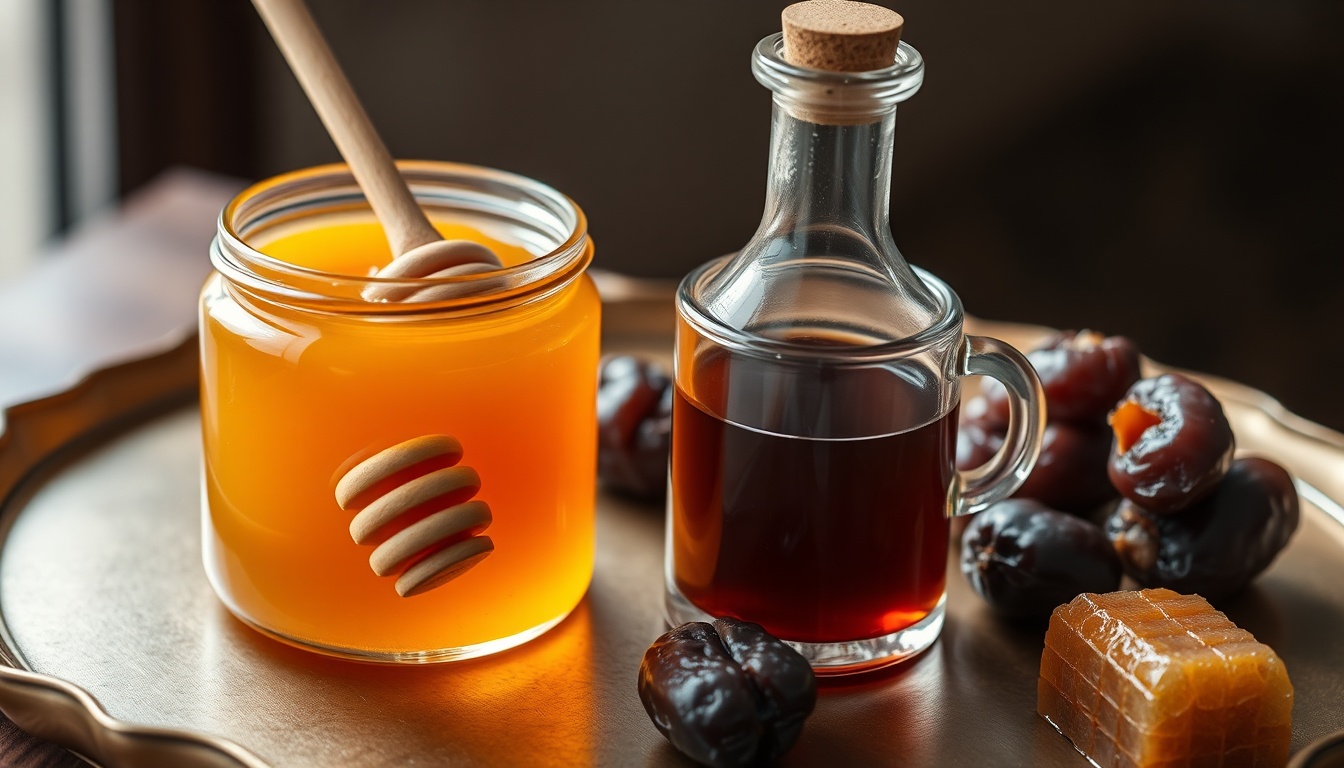
Date syrup is made by cooking dates (typically Medjool or Deglet Noor varieties) in water, then straining and reducing the liquid into a thick, dark syrup. Quality date syrups contain just one ingredient — dates — with no added sugar, preservatives, or thickeners.
Date syrup has been a staple sweetener in Middle Eastern, North African, and South Asian cuisines for millennia. It's sometimes called "date honey" (*dibs* in Arabic), though it contains no actual honey. In recent years, it's gained popularity in Western health food markets as a whole-food sweetener.
Unlike honey, which is produced by bees through enzymatic processing of flower nectar, date syrup is a straightforward fruit concentrate — essentially liquid dates with the fiber removed.
Get the Honey Buyer's Cheat Sheet (free PDF)
16 varieties on one page — color, flavor, best use and what a fair price looks like — from the 268 honeys we track.
Nutritional Comparison: Head to Head
Here's how one tablespoon (21g) of each sweetener compares nutritionally.
- **Calories** — Honey: 64 kcal. Date syrup: 60 kcal. Nearly identical.
- **Total sugar** — Honey: 17.2g (fructose 8.6g, glucose 7.5g, maltose 0.7g, sucrose 0.3g). Date syrup: 14.9g (primarily glucose, fructose, and sucrose in roughly equal proportions).
- **Fiber** — Honey: 0g. Date syrup: 0.3-0.6g (trace amounts survive processing).
- **Potassium** — Honey: 11mg (0.3% DV). Date syrup: 83mg (2.4% DV). Date syrup has 7-8x more potassium.
- **Iron** — Honey: 0.09mg (0.5% DV). Date syrup: 0.3mg (1.7% DV). Date syrup has 3x more iron.
- **Magnesium** — Honey: 0.4mg (<1% DV). Date syrup: 7mg (2% DV). Date syrup wins significantly.
- **Calcium** — Honey: 1.3mg (<1% DV). Date syrup: 9mg (1% DV). Date syrup has ~7x more.
- **Vitamin B6** — Honey: trace. Date syrup: 0.02mg (1% DV). Slight advantage to date syrup.
- **Antioxidants** — Honey: 30+ polyphenols including chrysin, quercetin, kaempferol, pinocembrin, CAPE. Date syrup: phenolic acids, flavonoids, carotenoids, tannins. Both are antioxidant-rich, but honey has greater variety and higher concentrations of specific bioactive compounds.
- **Enzymes** — Honey: glucose oxidase, diastase, invertase (destroyed by heating above 40°C/104°F). Date syrup: none (destroyed during cooking process).
- **Prebiotics** — Honey: fructo-oligosaccharides (FOS) and galacto-oligosaccharides (GOS). Date syrup: minimal (most prebiotic fiber stays in the pulp, not the syrup).
Pro Tip
Date syrup's mineral advantage comes from dates being one of the most mineral-dense fruits. However, you'd need to consume large amounts of either sweetener to get meaningful mineral intake — neither should be considered a significant source of vitamins or minerals.
Carbohydrate and Label Comparison
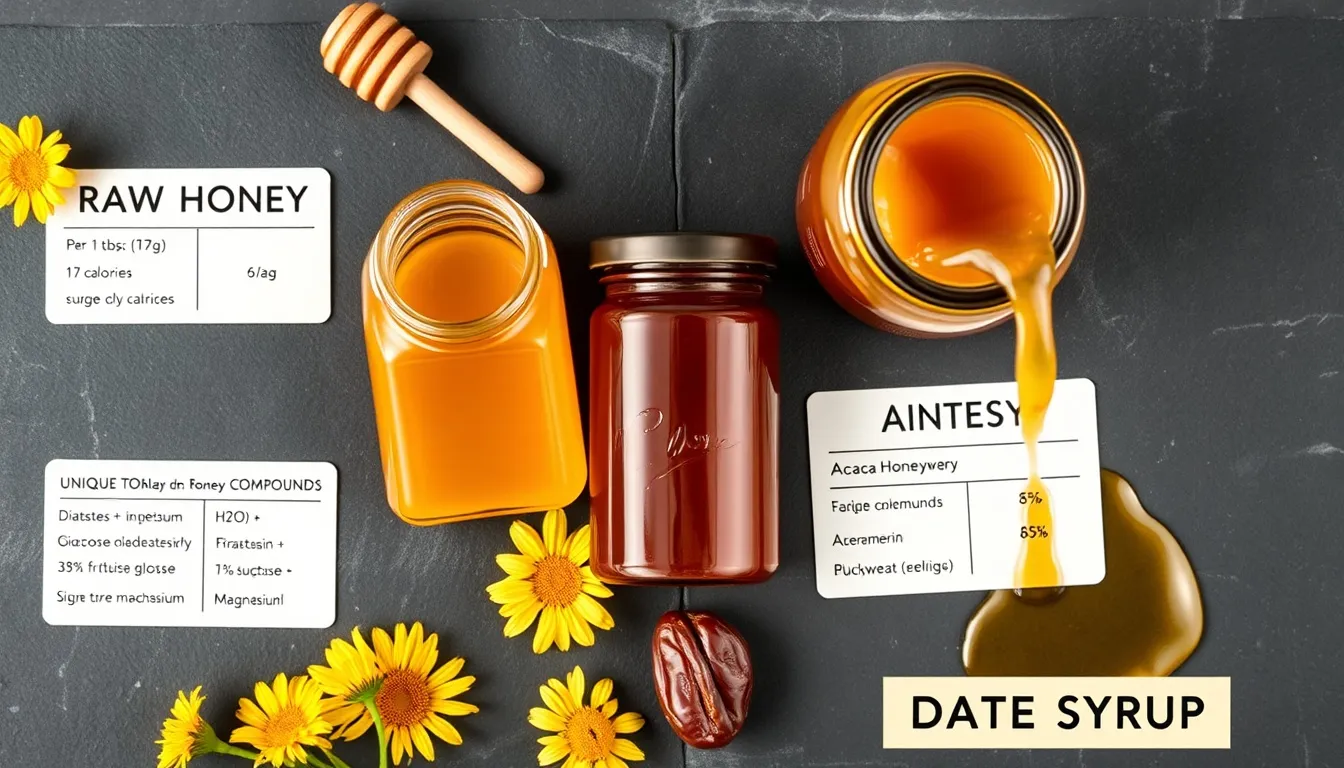
Honey and date syrup are both caloric liquid sweeteners that contribute carbohydrate and added sugar. Whole-date research cannot be assumed to describe a filtered syrup, and a floral-source label does not predict an individual honey jar.
Compare equal recipe servings using each product's Nutrition Facts panel. The honey carbohydrate and label guide explains serving-size total-carbohydrate counting and why neither sweetener is medically preferred for everyone.
For culinary use, compare flavor and viscosity separately from the carbohydrate decision.
Health Benefits Comparison
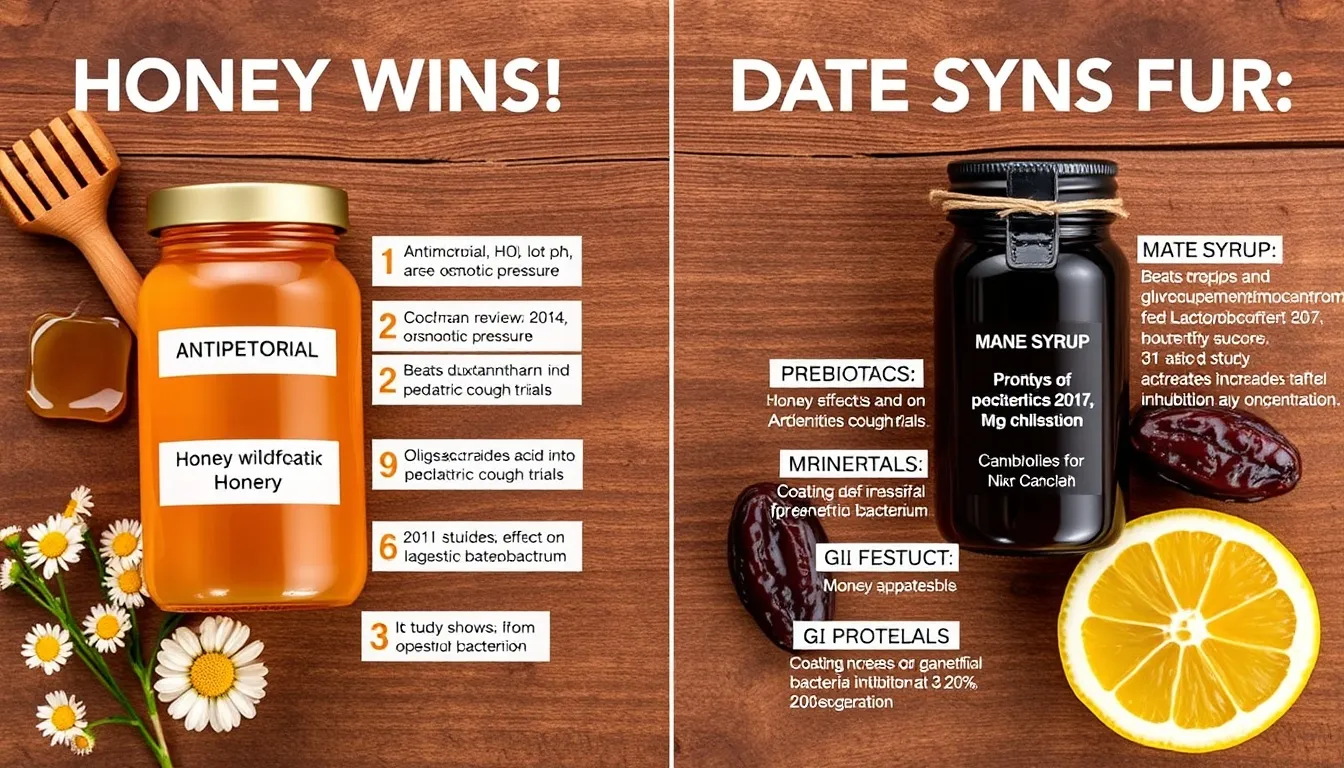
Both sweeteners offer health benefits beyond simple calories, but honey has significantly more clinical evidence behind its claims.
- **Antimicrobial activity** — Honey: extensively documented against 60+ bacterial species including MRSA, with multiple mechanisms (hydrogen peroxide generation, osmotic pressure, low pH, MGO in manuka). Date syrup: mild antimicrobial activity in some studies, but far less potent and less studied.
- **Gut health** — Honey: prebiotic FOS and GOS selectively feed *Bifidobacterium* and *Lactobacillus*, increase SCFA production. Date syrup: minimal prebiotic effect (fiber is mostly removed during processing; whole dates are much better for gut health).
- **Cough suppression** — Honey: shown effective in 2020 BMJ Evidence-Based Medicine systematic review of 14 studies, superior to some OTC medications. Date syrup: no clinical evidence for cough relief.
- **Wound healing** — Honey: FDA-cleared medical products (Medihoney, Activon), Cochrane review of 3,011 participants. Date syrup: not used for wound care.
- **Anti-inflammatory** — Honey: NF-κB pathway inhibition, COX-2 suppression, confirmed in meta-analyses. Date syrup: contains anti-inflammatory phenolics, but clinical evidence is limited to small studies on whole dates rather than syrup specifically.
- **Cardiovascular** — Honey: reduced LDL, triglycerides, and blood pressure in meta-analyses. Date syrup: potassium content may support heart health, but no clinical trials on cardiovascular outcomes.
- **Bone health** — Date syrup: higher mineral content (calcium, magnesium, potassium, copper) may offer modest skeletal benefits. Honey: trace minerals only.
Pro Tip
The evidence gap between honey and date syrup largely reflects research funding and historical interest — honey has been studied for therapeutic purposes for decades, while date syrup research is still emerging. Date syrup may have benefits that haven't been studied yet.
Taste and Flavor Profile
This is where personal preference matters most, and the two sweeteners taste nothing alike.
Honey's flavor varies enormously by variety — from acacia's delicate, almost vanilla sweetness to buckwheat's bold, molasses-like intensity. Floral notes, fruit undertones, and herbal characteristics make honey one of the most complex natural sweeteners. See our types of honey guide for the full flavor spectrum.
Date syrup has a consistent caramel-butterscotch flavor with notes of toffee and dark fruit. It's less sweet than honey (about 70% the sweetness of sugar, vs honey at 100-120%) and has a rich, almost smoky depth. The flavor is distinctive enough that date syrup is not a drop-in replacement for honey in most recipes.
In terms of sweetening power per tablespoon, you'll need about 1.3-1.5 tablespoons of date syrup to match the sweetness of 1 tablespoon of honey. This means date syrup adds more volume and moisture to recipes.
Cooking and Baking Applications
Both sweeteners work well in cooking, but their ideal applications differ.
- **Tea and hot drinks** — Honey dissolves faster and adds floral complexity. Date syrup adds a caramel note but can muddy lighter teas. Honey is better for green and white teas; date syrup works better in coffee, chai, and hot chocolate.
- **Baking** — Date syrup works well in baking substitutions for brownies, muffins, and dark cakes. Honey is more versatile across all baked goods. Both add moisture — reduce other liquids by 2-3 tablespoons per cup of sweetener.
- **Marinades and glazes** — Honey caramelizes beautifully at high heat, creating golden-brown crusts. Date syrup burns slightly faster due to higher glucose content. For grilling and roasting, honey has an edge.
- **Salad dressings** — Both work well. Honey provides clean sweetness; date syrup adds caramel depth. Match to your dressing style.
- **Smoothies and yogurt** — Date syrup blends more seamlessly (similar viscosity to other ingredients). Honey can clump in cold liquids. For smoothies, date syrup has a practical advantage.
- **Oatmeal and breakfast bowls** — Both excellent. Date syrup pairs naturally with nuts, cinnamon, and banana. Honey pairs better with berries and lighter flavors.
Price and Availability
Price is a practical consideration, especially if you're using sweeteners daily.
Conventional raw honey ranges from $0.40-0.80 per tablespoon. Premium varieties like manuka or sidr can reach $2-5+ per tablespoon. Mid-range artisanal raw honeys from local beekeepers typically cost $0.60-1.00 per tablespoon.
Date syrup ranges from $0.50-1.00 per tablespoon for quality brands. Organic date syrup tends toward the higher end. Because date syrup is less sweet per tablespoon (requiring 30-50% more to match honey's sweetness), the effective cost per "sweetness unit" is higher than it first appears.
Availability also differs. Honey is ubiquitous — available at grocery stores, farmers markets, and online. Date syrup is increasingly available in mainstream stores but may require a trip to a Middle Eastern grocery or an online order, depending on your location.
For home production, honey requires beekeeping infrastructure, while date syrup can be made in any kitchen by simmering pitted dates in water and straining. The DIY approach makes date syrup more accessible for the price-conscious.
Dietary and Ethical Considerations
Several dietary frameworks treat these sweeteners differently.
- **Vegan diets** — Date syrup is vegan. Honey is not (produced by bees). Date syrup is the clear choice for vegans.
- **Paleo diets** — Both honey and date syrup are generally accepted on paleo, though some strict paleo practitioners prefer honey as the more "ancestral" sweetener.
- **Keto diets** — Neither is truly keto-friendly due to high sugar content. However, honey (17.2g sugar per tbsp) and date syrup (14.9g) both exceed typical keto limits per serving.
- **Whole30** — Date syrup is not allowed (no added sweeteners including fruit syrups). Honey is also not allowed except in compliant recipes.
- **Low-FODMAP** — Honey is high-FODMAP due to excess fructose. Date syrup's FODMAP status depends on processing — some products retain fructans from dates. Neither is reliably low-FODMAP.
- **Infant safety** — Honey must not be given to children under 12 months due to botulism risk. Date syrup is safe for infants (no botulism spore risk), though added sugars are discouraged for children under 2.
- **Environmental impact** — Honey production supports pollinator populations (managed bee colonies). Date palms grow in arid climates with significant water requirements but low pesticide use. Both have relatively small environmental footprints compared to refined sugar production.
Which Should You Choose?
The best sweetener depends on what you're optimizing for.
- **Choose honey when:** You want proven antimicrobial and therapeutic benefits, you need a cough remedy or wound care, you prioritize gut health (prebiotic FOS/GOS), you want maximum flavor variety across different varieties, or you're cooking at high heat (marinades, glazes, roasting).
- **Choose date syrup when:** You follow a vegan diet, you're feeding a baby between 6-12 months, you want higher mineral content per serving (potassium, iron, magnesium), you prefer a consistent caramel-butterscotch flavor, or you're making Middle Eastern and North African dishes (where date syrup is traditional).
- **Use both:** Many kitchens benefit from keeping both on hand. Use honey for drinks, dressings, and health applications; use date syrup for baking, smoothies, and recipes calling for deep caramel sweetness.
The Bottom Line
Honey and date syrup are both legitimate, nutrient-containing alternatives to refined sugar — but they're not interchangeable. Honey brings a stronger evidence base for specific health benefits (antimicrobial, cough suppression, wound healing, gut health), a wider range of flavor profiles, and unique bioactive compounds like enzymes and methylglyoxal. Date syrup offers higher mineral density, vegan compatibility, infant safety, and a rich caramel flavor profile.
This section does not establish a universal or medical honey dose for this purpose. Use the daily added-sugar guide to count honey with other added or free sugars.